
VanEck has officially registered the Lido Staked Ethereum ETF in Delaware, fueling speculation about whether regulators are finally warming to yield-generating crypto products.
The filing comes at a time when investors are increasingly hungry for ways to access Ethereum staking rewards without navigating the complex world of wallets, validators, and lock-up periods.


VanEck Takes a Bold Step Forward
VanEck, already a pioneer with its spot Bitcoin and Ethereum ETFs, is pushing deeper into decentralized finance (DeFi) by targeting one of the most liquid staking solutions on the market: Lido’s stETH.
The registration of the Lido Staked Ethereum ETF as a statutory trust in Delaware signals the firm’s intent to package Ethereum staking yields into a product accessible on Wall Street.
This could mark a pivotal evolution in ETFs. Instead of passive exposure to crypto prices, the fund would allow investors to tap into staking rewards a kind of “crypto dividend.”
Why Lido Staked Ethereum Matters
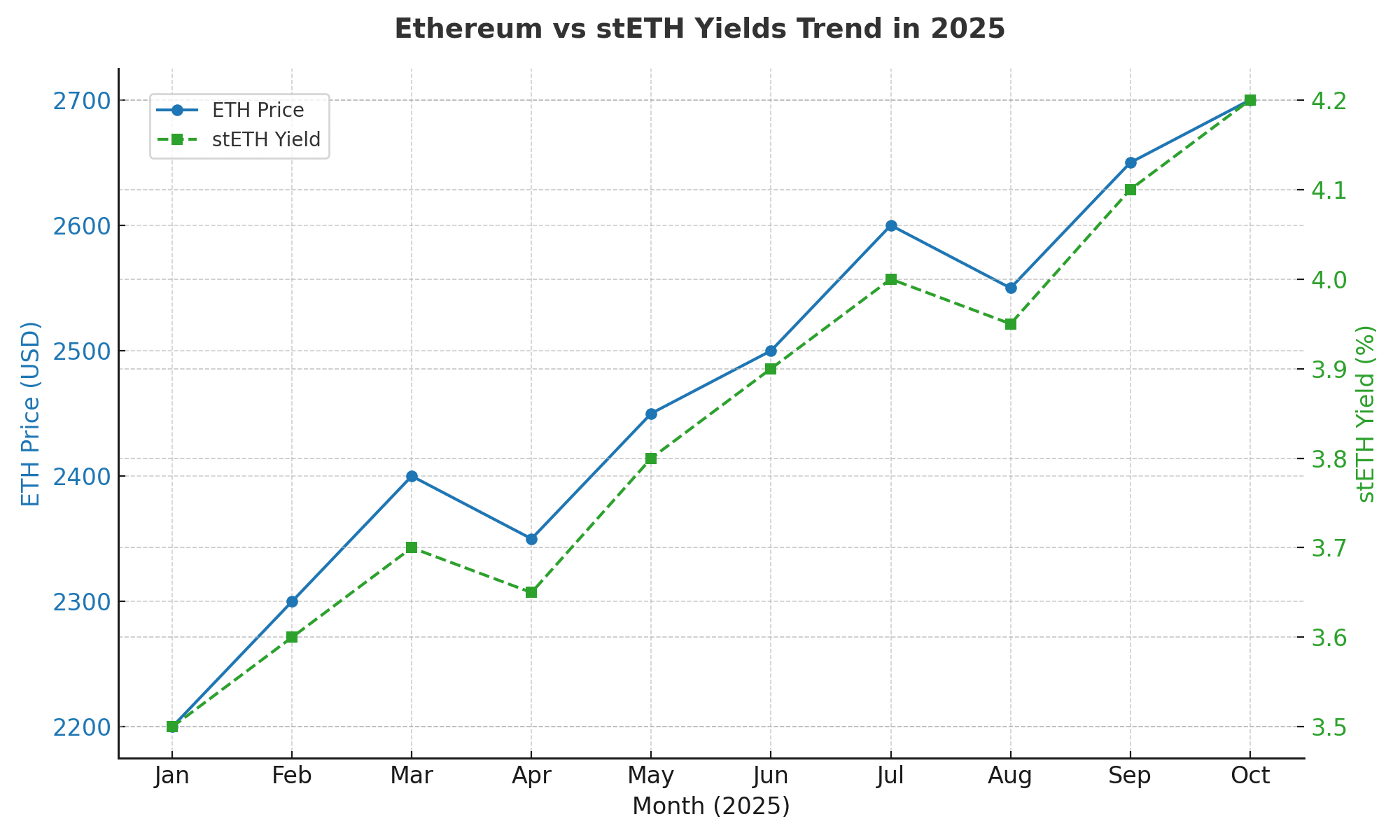
Lido, the leading liquid staking protocol, allows users to stake ETH and receive stETH in return. Unlike traditional staking, stETH remains liquid, meaning holders can trade or move their assets while still earning staking rewards.
By anchoring an ETF around this mechanism, VanEck is effectively bridging traditional finance with DeFi. It’s a development many investors see as inevitable.
As crypto analyst Ryan Sean Adams posted on X: “This is the ETF Wall Street was waiting for. Yield + ETH exposure. The TradFi game just leveled up.”
Regulatory Terrain: Still a Mountain to Climb
Despite registering in Delaware, VanEck still faces the SEC approval gauntlet. Regulators have historically been cautious about ETFs tied to staking, worried about classification issues and investor protections.
Recently, however, the SEC signaled a softer stance, clarifying that staking itself is not automatically a securities transaction. That nuance may be why VanEck believes now is the time to strike.
Matt Hougan, CIO of Bitwise, weighed in during an interview last week: “Ethereum staking ETFs are coming. The only question is who gets there first. VanEck’s move with the Lido Staked Ethereum ETF is a shot across the bow.”
Market Buzz: Token Prices React
News of the filing sent Lido’s token (LDO) surging more than 7%, hitting $1.29. Trading volume spiked across both spot and derivatives markets, underscoring how closely investors tie staking innovation to future adoption.
Ethereum itself held steady above $2,500, though analysts suggested a successful ETF approval could act as a catalyst for renewed ETH price strength.
What This Means for Investors
For institutional and retail investors alike, the Lido Staked Ethereum ETF could be a breakthrough. Instead of navigating DeFi protocols, investors would be able to access staking yields through a simple ticker symbol on a brokerage account.
This democratization of staking rewards is precisely what ETF structures are designed for making complex assets accessible, regulated, and tradable.


Conclusion
VanEck’s registration of the Lido Staked Ethereum ETF is more than paperwork it’s a signal that the lines between Wall Street and DeFi are blurring faster than regulators can keep up.
Whether the SEC greenlights the fund remains uncertain, but the message is clear: staking is no longer just a crypto-native game. The next evolution of ETFs is already in motion.
For more news, visit our flatform.
FAQs about Lido Staked Ethereum ETF
Q1: What is the Lido Staked Ethereum ETF?
It’s an ETF proposed by VanEck that would give investors exposure to Ethereum staking rewards via Lido’s stETH.
Q2: Has the SEC approved the ETF?
Not yet. It’s only registered in Delaware and awaits SEC review.
Q3: Why is Delaware important?
Delaware is a favorable jurisdiction for trust and fund registrations, often the first step before SEC filings.
Q4: How did markets react to the news?
Lido’s token (LDO) jumped 7%, showing strong investor excitement.
Glossary
-
ETF (Exchange-Traded Fund): A regulated investment fund that trades like a stock.
-
Staking: Locking up crypto to help secure a blockchain in return for rewards.
-
Lido: A protocol that lets users stake ETH while keeping liquidity via stETH.
-
stETH: A token representing staked ETH with rewards baked in.