
A subtle shift in US Treasuries demand during September has drawn the attention of global investors who are increasingly sensitive to macroeconomic cues. While the month’s fall was small, it came at a time when markets were grappling with currency headwinds, geopolitical uncertainties, and unclear rate expectations.
For many, the most recent stats are less concerning the data than the behavioral signal that send: that worldwide appetite for US debt may be shifting. This evolving picture of US Treasuries demand is now shaping conversations from Wall Street to major foreign reserve desks.


Foreign Holdings Dip as Investors Navigate Uncertainty
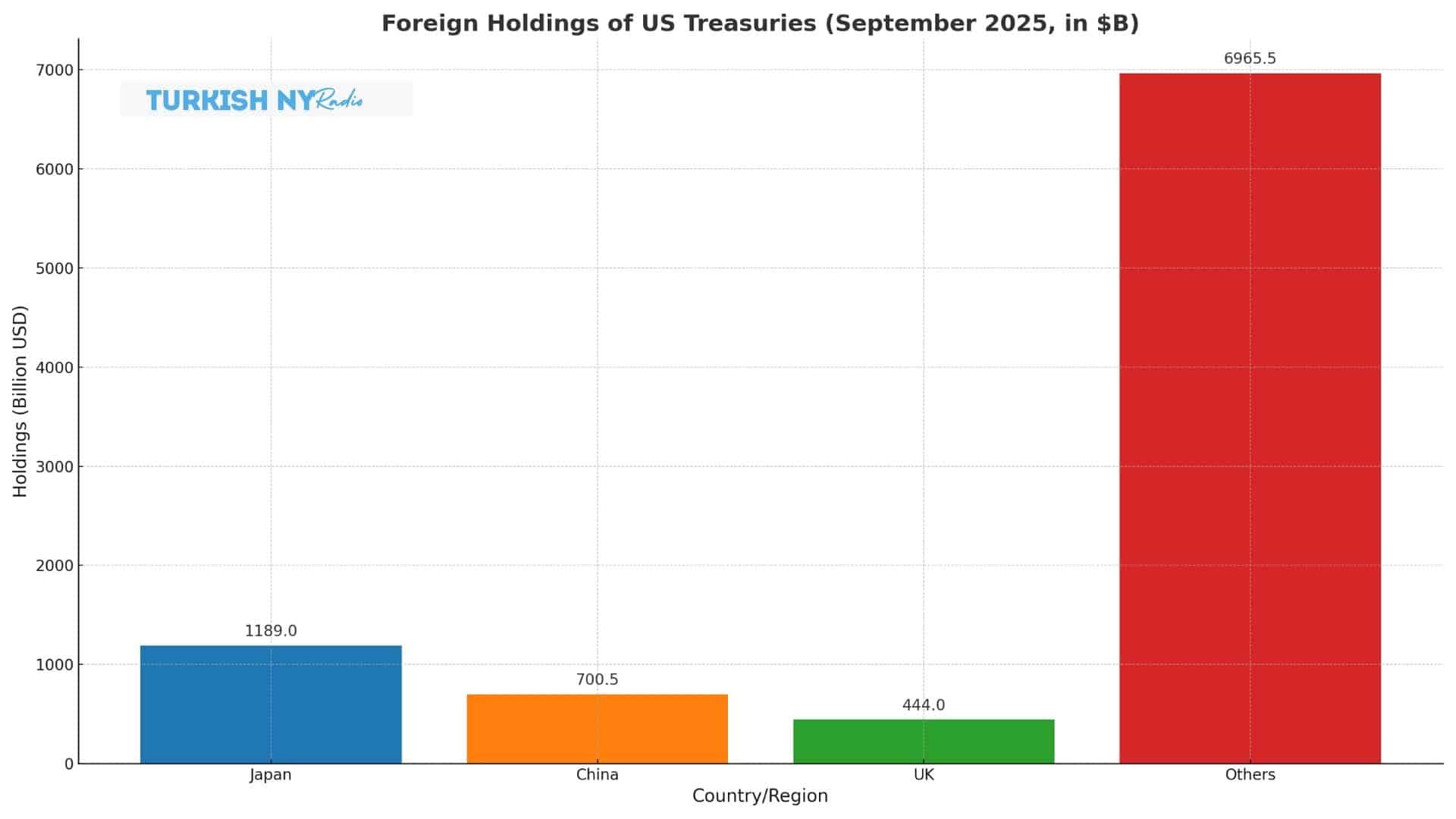
Foreign holdings of US government debt fell slightly from the amount of $9.262 trillion in Aug to $9.249 trillion in September. The numerical movement is minor, but researchers believe it provides an early indication of how worldwide investors are reconsidering risks. Some policymakers argue that easing US Treasury demand could reflect hesitation ahead of key monetary policy decisions.
Market strategist Lena Thornton said,
“Investors are nervous. Whenever US Treasuries demand softens, even slightly, it tells us that the world is thinking more carefully about where capital should sleep at night.”
Her view is shared across trading desks that are watching the bond market as a barometer of broader sentiment.
Also read: Fed’s 25 bps cut puts liquidity back in focus for Bitcoin ETFs
Japan Expands Purchases, Moving Against the Trend
Japan broke from the global pattern by lifting its holdings to $1.189 trillion, the highest level in more than two years. This increase in US Treasuries demand comes as Tokyo works to steady the yen after months of currency volatility.
Economist Jonathan Hale explained,
“Japan’s move feels intentional. Their renewed US Treasuries demand isn’t just financial positioning,China it’s a statement of confidence in the U.S. market’s reliability.”
For investors, Japan’s action serves as a reminder that not all major economies view the current environment through the same lens.

China Continues Gradual Pullback
China reduced its holdings again, down to $700.5 billion dollars in September. This controlled drop reflects a long-term goal to diversify holdings and lessen reliance on US assets. Beijing’s approach is cautious, but every adjustment in US Treasuries demand from China tends to spark broader debate about geopolitical realignment.
Currency analyst Melissa Chen noted,
“China moves quietly, but deliberately. Their reduced US Treasuries demand shows a steady shift in how they want to balance economic and strategic priorities.”
Her comments underscore the ripple effect that even slow Chinese divestment can have on global markets.
Investors are becoming more interested in American stocks
Despite volatility in the bond marketplace, foreign investors upped their purchases of US shares by $132.9 billions in September. This trend, indicating heightened risk appetite, implies that falling US Treasury demand may be releasing cash for higher-yielding assets.
In a month filled with mixed signals, equities emerged as the more attractive option for many global buyers.
Conclusion
September’s data paints a picture of cautious but deliberate adjustment across global markets. The modest easing of US Treasuries demand, combined with Japan’s substantial buying and China’s ongoing reductions, underscores a world navigating a delicate balance of risk and opportunity.
With central bank decisions looming and geopolitical pressures rising, the trajectory of US Treasuries demand will remain a central indicator for investors seeking clarity in an increasingly complex financial landscape.
Also read: How the Future of Work in Web3 Is Redefining Global Careers
Summary
September saw a modest fall in US Treasuries demand, despite Japan increasing its holdings to a two-year high and China continuing its sluggish disposal. The diverse trends reflect investors’ evolving worldwide strategy as they consider currency constraints, interest-rate anticipations and geopolitical risk.
Rising overseas interest in US shares provided another dimension to the picture, indicating a willingness to take risks. According to analysts, the shifting status of US Treasury demand will continue to be a major indicator of market direction until 2026.
Glossary of Key Terms
US Treasuries: U.S. government debt securities used for financing federal operations.
TIC Data: Treasury International Capital reports that track foreign investment flows.


Capital Inflows: Money entering a country from international investors.
Reserve Diversification: Strategy of spreading national reserves across multiple assets.
Risk Appetite: Willingness of investors to hold riskier assets.
FAQs for US Treasuries Demand Shows Signs of Cooling
1. Why should foreign demand for Treasury bonds fall in September?
A mix of rate turbulence, currency challenges, and cautious investor behavior.
2. Why might Japan increase its holdings?
To support the yen and strengthen the reserve strategy.
3. Why is Chinese minimizing exposure?
China is diversifying away from US assets for geopolitical and economic reasons.
4. Have investors shifted to other asset classes?
Yes, foreign investors raised their share purchases in the United States dramatically.
5. How essential is Treasury demand in global markets?
It is a significant predictor of global trust and liquidity.