• Home
  • About Us
  • Terms and Conditions
  • Privacy Policy
  • Disclaimer
  • Contact
20 June Saturday, 2026
  • tr Türkçe
  • en English
TurkishNY Radio
No Result
View All Result
  • Home
  • Cryptocurrency
  • Business
  • Economy
  • Home
  • Cryptocurrency
  • Business
  • Economy
No Result
View All Result
  • tr Türkçe
  • en English
TurkishNY Radio
No Result
View All Result
Bitcoin Bitcoin (BTC) $63,598.11 ↑ 1.90%
Ethereum Ethereum (ETH) $1,724.66 ↑ 2.11%
Tether USDt Tether USDt (USDT) $1.00 ↓ -0.02%
BNB BNB (BNB) $586.31 ↑ 2.49%
USDC USDC (USDC) $1.00 ↓ -0.01%
XRP XRP (XRP) $1.15 ↑ 2.10%
Solana Solana (SOL) $71.43 ↑ 4.84%
TRON TRON (TRX) $0.32 ↑ 0.77%
Hyperliquid Hyperliquid (HYPE) $70.55 ↑ 5.59%
Dogecoin Dogecoin (DOGE) $0.08 ↑ 1.94%
UNUS SED LEO UNUS SED LEO (LEO) $9.57 ↑ 0.39%
Zcash Zcash (ZEC) $468.95 ↑ 4.82%
Stellar Stellar (XLM) $0.22 ↓ -0.46%
Monero Monero (XMR) $316.44 ↓ -2.32%
Cardano Cardano (ADA) $0.16 ↑ 1.73%
Canton Canton (CC) $0.15 ↓ -1.68%
Chainlink Chainlink (LINK) $7.94 ↑ 1.59%
Dai Dai (DAI) $1.00 ↑ 0.00%
World Liberty Financial USD World Liberty Financial USD (USD1) $1.00 ↓ 0.00%
Ethena USDe Ethena USDe (USDe) $1.00 ↓ 0.00%
Gram (prev. Toncoin) Gram (prev. Toncoin) (GRAM) $1.59 ↓ -1.48%
Bitcoin Cash Bitcoin Cash (BCH) $197.87 ↑ 1.80%
MemeCore MemeCore (M) $2.84 ↓ -2.21%
Hedera Hedera (HBAR) $0.08 ↑ 1.57%
Litecoin Litecoin (LTC) $44.15 ↑ 1.80%
Sui Sui (SUI) $0.72 ↑ 0.98%
Global Dollar Global Dollar (USDG) $1.00 ↓ -0.01%
Shiba Inu Shiba Inu (SHIB) $0.00 ↓ -0.10%
PayPal USD PayPal USD (PYUSD) $1.00 ↑ 0.01%
NEAR Protocol NEAR Protocol (NEAR) $2.12 ↑ 0.64%
Cronos Cronos (CRO) $0.06 ↑ 0.82%
Avalanche Avalanche (AVAX) $6.16 ↑ 2.37%
Tether Gold Tether Gold (XAUt) $4,143.68 ↑ 0.29%
Bittensor Bittensor (TAO) $229.40 ↑ 1.57%
Worldcoin Worldcoin (WLD) $0.60 ↑ 0.25%
PAX Gold PAX Gold (PAXG) $4,151.11 ↑ 0.25%
Uniswap Uniswap (UNI) $3.00 ↓ -1.53%
World Liberty Financial World Liberty Financial (WLFI) $0.06 ↑ 0.91%
Mantle Mantle (MNT) $0.53 ↑ 1.49%
Aster Aster (ASTER) $0.64 ↑ 3.27%
Ondo Ondo (ONDO) $0.35 ↑ 0.17%
Polkadot Polkadot (DOT) $0.96 ↑ 1.55%
Ripple USD Ripple USD (RLUSD) $1.00 ↑ 0.01%
OKB OKB (OKB) $76.24 ↑ 4.39%
Pi Pi (PI) $0.13 ↑ 2.89%
USDD USDD (USDD) $1.00 ↓ -0.01%
Sky Sky (SKY) $0.06 ↓ -0.14%
DeXe DeXe (DEXE) $15.48 ↓ -6.33%
Internet Computer Internet Computer (ICP) $2.28 ↑ 3.07%
Bitget Token Bitget Token (BGB) $1.77 ↓ -0.13%
Ethereum Classic Ethereum Classic (ETC) $7.63 ↑ 6.55%
Pepe Pepe (PEPE) $0.00 ↑ 1.82%
Aave Aave (AAVE) $74.63 ↑ 3.40%
United Stables United Stables (U) $1.00 ↑ 0.01%
KuCoin Token KuCoin Token (KCS) $7.17 ↑ 0.96%
Morpho Morpho (MORPHO) $1.86 ↓ -1.84%
Cosmos Cosmos (ATOM) $1.79 ↓ -0.68%
Render Render (RENDER) $1.73 ↑ 4.67%
Polygon (prev. MATIC) Polygon (prev. MATIC) (POL) $0.08 ↑ 6.45%
Quant Quant (QNT) $70.41 ↑ 1.51%
Algorand Algorand (ALGO) $0.09 ↑ 2.56%
Kaspa Kaspa (KAS) $0.03 ↑ 1.24%
Ethena Ethena (ENA) $0.09 ↑ 0.84%
Stable Stable (STABLE) $0.03 ↓ -3.85%
JUST JUST (JST) $0.08 ↑ 8.65%
GateToken GateToken (GT) $6.68 ↑ 2.16%
币安人生 币安人生 (币安人生) $0.71 ↓ -1.49%
Venice Token Venice Token (VVV) $14.70 ↑ 4.00%
Jupiter Jupiter (JUP) $0.20 ↑ 7.40%
Flare Flare (FLR) $0.01 ↑ 0.52%
Filecoin Filecoin (FIL) $0.78 ↑ 1.77%
XDC Network XDC Network (XDC) $0.03 ↓ -0.41%
Humanity Humanity (H) $0.21 ↑ 0.31%
Arbitrum Arbitrum (ARB) $0.08 ↑ 2.05%
Midnight Midnight (NIGHT) $0.03 ↑ 3.86%
Aptos Aptos (APT) $0.64 ↑ 2.73%
Nexo Nexo (NEXO) $0.79 ↑ 1.36%
Injective Injective (INJ) $5.07 ↑ 0.52%
Audiera Audiera (BEAT) $1.76 ↓ -1.10%
TrueUSD TrueUSD (TUSD) $1.00 ↓ -0.03%
Pump.fun Pump.fun (PUMP) $0.00 ↑ 0.11%
Dash Dash (DASH) $36.79 ↑ 6.04%
Aerodrome Finance Aerodrome Finance (AERO) $0.49 ↑ 8.54%
PancakeSwap PancakeSwap (CAKE) $1.38 ↑ 2.85%
EURC EURC (EURC) $1.15 ↑ 0.02%
OFFICIAL TRUMP OFFICIAL TRUMP (TRUMP) $1.82 ↓ -0.87%
Artificial Superintelligence Alliance Artificial Superintelligence Alliance (FET) $0.19 ↓ -1.30%
Pudgy Penguins Pudgy Penguins (PENGU) $0.01 ↑ 4.44%
VeChain VeChain (VET) $0.00 ↑ 1.76%
Bonk Bonk (BONK) $0.00 ↑ 2.18%
Virtuals Protocol Virtuals Protocol (VIRTUAL) $0.61 ↑ 2.59%
Sei Sei (SEI) $0.05 ↑ 2.73%
Lighter Lighter (LIT) $1.55 ↑ 1.28%
Terra Classic Terra Classic (LUNC) $0.00 ↑ 0.92%
SKYAI SKYAI (SKYAI) $0.35 ↑ 3.13%
First Digital USD First Digital USD (FDUSD) $1.00 ↑ 0.02%
Jito Jito (JTO) $0.72 ↑ 0.99%
Celestia Celestia (TIA) $0.38 ↑ 0.09%
SPX6900 SPX6900 (SPX) $0.36 ↑ 2.04%
Sun [New] Sun [New] (SUN) $0.02 ↑ 0.30%
Home Cryptocurrency

US Bank Collapse Triggers Gold, Silver and Bitcoin Volatility

Areeba Rashid by Areeba Rashid
2 February 2026
in Cryptocurrency, Economy, News
Reading Time: 5 mins read
0
US Bank Failure

This article was first published on TurkishNY Radio.

A US bank failure late Friday entered official records during an intense market selloff. Illinois regulators closed Metropolitan Capital Bank and Trust, a small lender with $261 million in assets. Control was handed to the Federal Deposit Insurance Corporation. 

Table of Contents

Toggle
    • YOU MAY BE INTERESTED
    • How to Mine Bitcoin in 2026: A Step-by-Step Beginner’s Guide
    • Stablecoin Payment Rails Move Into Traditional Finance After $2.75B Transaction
  • FDIC Transfers Deposits as First US Bank Failure of 2026 Confirmed
  • Market Selloff Frames the Closure
  • FDIC Acts Under Standard Protocol
  • Why Small Bank Failures Still Matter
  • Commercial Real Estate Adds Pressure
  • Bitcoin and Liquidity Conditions
  • Interpreting the Timing
  • What Data Will Show Next
  • Conclusion
  • Appendix: Glossary of Key Terms
  • Frequently Asked Questions About US Bank Failure
    • 1- What caused the US bank failure in Illinois?
    • 2- Were depositors harmed by the US bank failure?
    • 3- Is the US bank failure linked to the metals crash?
    • 4- Why did Bitcoin fall after the US bank failure?
  • References

YOU MAY BE INTERESTED

How to Mine Bitcoin in 2026: A Step-by-Step Beginner's Guide

How to Mine Bitcoin in 2026: A Step-by-Step Beginner’s Guide

20 June 2026
stablecoin payments

Stablecoin Payment Rails Move Into Traditional Finance After $2.75B Transaction

19 June 2026

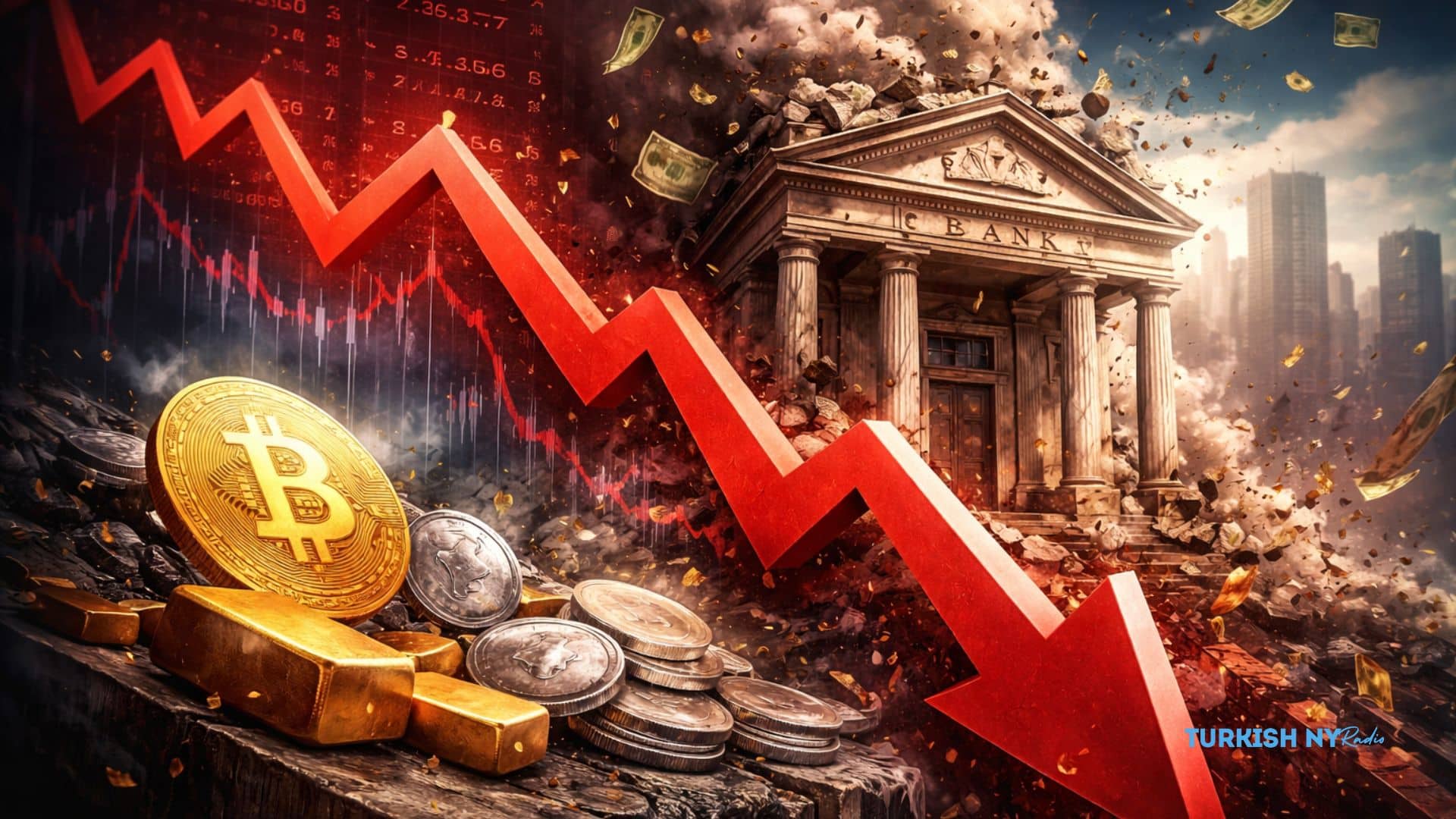
The US bank failure occurred as gold, silver, and Bitcoin dropped sharply, pulling a routine resolution into a wider financial shock.

State regulators said the bank was operating in an unsafe condition. Capital levels were too weak to support ongoing operations. The FDIC was appointed as receiver.

FDIC Transfers Deposits as First US Bank Failure of 2026 Confirmed

The agency confirmed that First Independence Bank of Detroit agreed to assume most deposits. Branches are expected to reopen under new ownership. The FDIC estimated a $19.7 million impact from the US bank failure on the Deposit Insurance Fund.

This US bank failure was the first recorded in 2026. The institution was small and had no national footprint. There was no reported bank run.

Crypto crash news

Under normal conditions, the story would have remained local. Instead, the timing aligned with violent market moves. That coincidence pushed the US bank failure into broader financial coverage.

Market Selloff Frames the Closure

Gold and silver fell sharply on the same day as the US bank failure. Silver recorded one of its steepest single-day declines in decades. Analysts cited forced selling and leveraged positions.

Bitcoin declined alongside other risk assets. Spot prices fell roughly 8% at the lows. The move reflected broader market stress rather than exposure to the failed bank.

FDIC Acts Under Standard Protocol

The FDIC followed its established resolution process after the US bank failure. It stepped in as receiver and arranged a purchase-and-assumption agreement. The process is designed to minimize disruption.

Officials said insured deposits remained protected. Customers retained access to their funds. The agency described the closure as orderly and contained.

Why Small Bank Failures Still Matter

A US bank failure does not need to involve a large institution to draw attention. Smaller banks often show stress earlier in restrictive environments. Higher funding costs increase pressure on weaker balance sheets.

Also Read: How Ripple’s Saudi Bank Partnership Supports Vision 2030

The FDIC has tracked unrealized losses across the system. As of the third quarter of 2025, those losses stood near $337.1 billion. This context explains why each US bank failure is closely watched.

Commercial Real Estate Adds Pressure

Commercial real estate remains a key risk area. Federal Reserve H.8 data places CRE loans near $3 trillion. Maturing loans face higher refinancing costs.

Vacancy rates and cash flows now matter more. Banks with concentrated exposure have limited flexibility. These factors add weight to concerns raised by any US bank failure.

Bitcoin and Liquidity Conditions

Bitcoin reacted quickly following the US bank failure. Analysts often describe BTC as sensitive to liquidity shifts. That sensitivity is amplified during volatile periods.

Research from the Bank for International Settlements has linked US monetary policy shocks to crypto markets. Stablecoin flows play a role in that transmission. Tight conditions often reduce available liquidity.

US Bank Failure

Interpreting the Timing

One view treats the US bank failure as isolated. The institution was small and resolved without disruption. Markets were already under pressure for separate reasons.

Another view focuses on alignment. A bank closure, metals crash, and crypto selloff occurred together. The shared backdrop was tighter financial conditions.

What Data Will Show Next

Regulators and investors will watch banking data closely. Deposit trends and funding sources remain key signals. The Federal Reserve’s weekly H.8 release will be monitored.

Additional US bank failure events would shift perception. For now, officials stress containment. Market sensitivity remains high.

Conclusion

The closure of Metropolitan Capital Bank does not signal systemic collapse. It does show how stress appears during volatile periods. This US bank failure gained attention because of timing, not size.

Gold, silver, and Bitcoin reacted to tightening conditions. The banking system relied on established safeguards. The importance of this US bank failure depends on what future data reveals.

Also Read: Why U.S. Stablecoin Regulation Matters for Banks, Exchanges, and Users

Appendix: Glossary of Key Terms

US Bank Failure: The shutting of an American bank by regulators because it is unable to meet the government’s minimum capital requirements for banks.

FDIC: A federal agency that insures deposits and handles the resolution of failed banks.

Deposit Insurance Fund: The fund that the FDIC uses for to pay off insured depositor losses.

Purchase-and-Assumption Deal: A resolution process in which another bank assumes the deposits and some of the assets.

Contributions of Commercial Real Estate: Bank loans backed by income-producing properties are susceptible to refinancing risk.

ADVERTISEMENT

Risk-Off Market: A market environment in which investors sell off risky assets as uncertainty increases.

Liquidity The accessibility of cash and larger credit, which is a determinant for market stability and asset values.

Frequently Asked Questions About US Bank Failure

1- What caused the US bank failure in Illinois?

Regulators cited unsafe operations and weak capital levels.

2- Were depositors harmed by the US bank failure?

No. Insured deposits were protected by the FDIC.

3- Is the US bank failure linked to the metals crash?

No direct link was reported. The events occurred on the same day.

4- Why did Bitcoin fall after the US bank failure?

Bitcoin moved lower with broader risk assets.

References

CryptoSlate

Tags: banking stress 2026Bitcoin selloffFDIC bank closurefinancial conditions tighteninggold silver crashIllinois bank shutdownUS bank failure
ShareTweetSharePinSend
Previous Post

Japan Bond Chaos Could Trigger Bitcoin Liquidations as Yields Surge

Next Post

China Pushes Renminbi Toward Global Reserve Status

Areeba Rashid

Areeba Rashid

SIMILAR NEWS

How to Mine Bitcoin in 2026: A Step-by-Step Beginner's Guide
Cryptocurrency

How to Mine Bitcoin in 2026: A Step-by-Step Beginner’s Guide

20 June 2026
stablecoin payments
World

Stablecoin Payment Rails Move Into Traditional Finance After $2.75B Transaction

19 June 2026
Ethereum Foundation leadership changes
Cryptocurrency

Ethereum Foundation Leadership Changes Deepen After Hsiao-Wei Wang Exit

19 June 2026

Leave a Reply Cancel reply

Your email address will not be published. Required fields are marked *

Search

No Result
View All Result
DMCA
PROTECTED

Categories

  • Business
  • Cryptocurrency
  • Economy
  • en
  • News
  • Politics
  • World

Recent Posts

  • How to Mine Bitcoin in 2026: A Step-by-Step Beginner’s Guide
  • Stablecoin Payment Rails Move Into Traditional Finance After $2.75B Transaction
  • Ethereum Foundation Leadership Changes Deepen After Hsiao-Wei Wang Exit
  • Celsius Crypto Fraud Fallout Deepens as Mashinsky Faces Permanent Market Ban
  • Ireland Launches Bold 30-Point Crypto Crime Action Plan to Tackle Financial Threats
TurkishNY Radio

Site Navigation

  • Home
  • About Us
  • Terms and Conditions
  • Privacy Policy
  • Disclaimer
  • Contact

TurkishNY Radio

Banner 1
Banner 2
No Result
View All Result
  • Home
  • Cryptocurrency
  • Business
  • Economy
  • tr Türkçe
  • en English

  • English