The United Kingdom is stepping up its digital finance game with an ambitious plan to reshape traditional markets through UK Market Tokenization. The government’s move to appoint a “digital markets champion” signals not just policy reform but a deeper transformation of how securities, debt, and market assets could soon exist, on the blockchain.
This initiative comes as nations race to modernize financial systems, and London doesn’t want to be left behind. The winds of change are blowing through the City, and tokenization is at the heart of it.


Government’s Digital Push
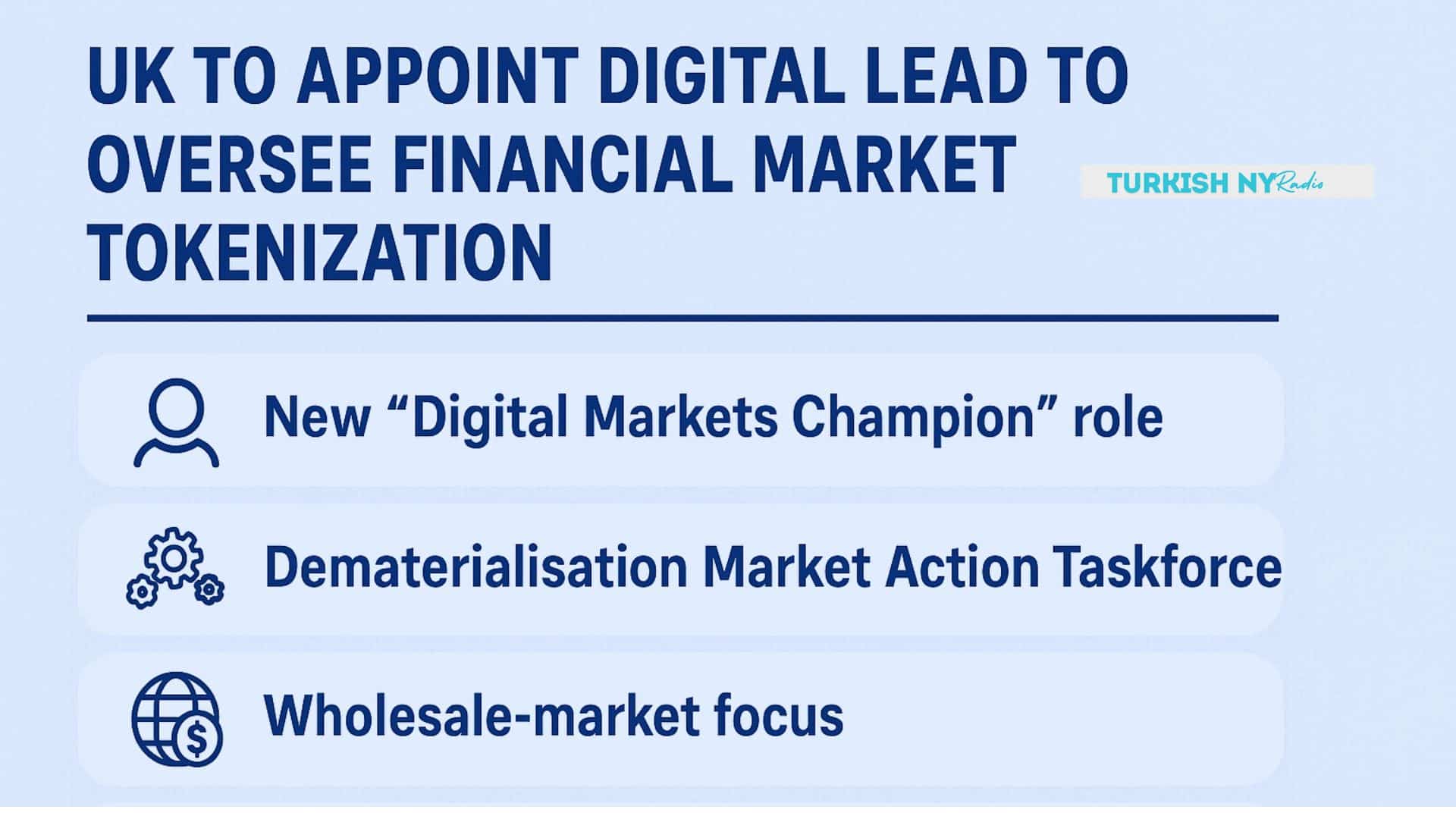
The Treasury’s announcement of UK Market Tokenization is more than a headline, it’s a signal of intent. The proposed “digital lead” will oversee tokenization efforts across wholesale financial markets, bridging regulators, fintech innovators, and institutions.
According to official sources, the role will focus on aligning market efficiency with technological innovation. “We’re not just adapting,” said one insider, “we’re rewriting the market’s operating code.”
Also read: Ripple Launches First Tokenized Money Market Fund on XRP Ledger
From Paper to Blockchain
The shift toward UK Market Tokenization includes plans to phase out paper-based share certificates through the Dematerialisation Market Action Taskforce. This group will ensure the transition to digital assets is smooth, compliant, and secure.
The move complements the upcoming “DIGIT” framework, an infrastructure to issue digital gilts on blockchain rails. That’s right, tokenized government debt may soon become a global benchmark.
“UK Banks Advance Tokenization of Deposits! – Major UK banks are pushing ahead to introduce tokenized deposits in 2026, following the Bank of England’s call to prioritize this over stablecoins.” formerly Twitter
Competing with Global Peers
The UK Market Tokenization initiative places Britain alongside leading jurisdictions like Singapore, France, and the United States, all of which are experimenting with tokenized bonds and securities.
Analysts suggest that tokenization could unlock trillions in previously illiquid assets. It’s about liquidity, transparency, and speed. The UK’s challenge will be to balance these benefits with regulation that still guards investors.
Industry Reactions
Crypto and fintech circles are buzzing with optimism. Many see UK Market Tokenization as a critical bridge between legacy systems and decentralized finance.
“It’s the missing link,” said a London-based blockchain strategist. “Once the UK tokenizes sovereign debt, private institutions will follow.” There’s cautious enthusiasm too, some warn that without interoperability, tokenized assets might end up in isolated silos.
The Bigger Picture
At its core, UK Market Tokenization is about redefining trust in a digital age. Tokenization doesn’t just represent ownership, it represents proof, speed, and reduced friction.
For everyday investors, the implications could be massive. Faster settlements, lower costs, and broader access to markets once limited to large institutions. The clock is ticking, and London seems eager to lead this new chapter of digital capitalism.
Conclusion
The appointment of a digital lead under UK Market Tokenization could mark a turning point in Britain’s financial evolution. The real question isn’t whether tokenization will reshape finance; it’s how fast the system can adapt.
As the UK readies itself for a tokenized future, one thing is clear: the old walls between traditional and digital finance are coming down brick by brick.
Also read: Why Tokenized Real Estate Could Make More Millionaires Than NFTs Ever Did
Summary
The UK’s latest move toward UK Market Tokenization highlights its ambition to modernize financial markets through blockchain integration. With a digital markets lead set to coordinate efforts across sectors, Britain aims to join global leaders in tokenized securities and sovereign debt.
If executed well, this initiative could cement the UK’s reputation as a global hub for regulated digital finance and set the tone for Europe’s next wave of financial innovation.
Glossary of Key Terms
Tokenization: Converting real-world assets (like shares or bonds) into digital tokens on a blockchain.
Digital Gilts: UK government bonds issued using blockchain technology.
Dematerialisation: The process of replacing paper-based certificates with digital versions.
Blockchain: A decentralized digital ledger used to record transactions securely.
Wholesale Markets: Financial markets where large-scale trading between institutions takes place.


FAQs for UK Market Tokenization
1. What is UK Market Tokenization?
It’s a UK government-led initiative to digitize and tokenize financial market instruments using blockchain.
2. Who will oversee this initiative?
A newly appointed “digital markets champion” will coordinate efforts across regulators and industries.
3. What assets will be tokenized first?
Initial focus is on wholesale instruments and potentially government bonds, known as digital gilts.
4. How does this compare globally?
The UK joins countries like Singapore and France in leading regulated tokenization efforts.
5. Why does it matter for crypto investors?
UK Market Tokenization could normalize blockchain infrastructure and pave the way for broader crypto-financial integration.