
• Home
  • About Us
  • Terms and Conditions
  • Privacy Policy
  • Disclaimer
  • Contact
10 April Friday, 2026
  • tr Türkçe
  • en English
TurkishNY Radio
No Result
View All Result
  • Home
  • Cryptocurrency
  • Business
  • Economy
  • Home
  • Cryptocurrency
  • Business
  • Economy
No Result
View All Result
  • tr Türkçe
  • en English
TurkishNY Radio
No Result
View All Result
Bitcoin Bitcoin (BTC) $73,093.13 ↑ 3.22%
Ethereum Ethereum (ETH) $2,248.37 ↑ 3.70%
Tether USDt Tether USDt (USDT) $1.00 ↑ 0.03%
XRP XRP (XRP) $1.36 ↑ 2.39%
BNB BNB (BNB) $606.88 ↑ 1.23%
USDC USDC (USDC) $1.00 ↑ 0.02%
Solana Solana (SOL) $85.15 ↑ 4.21%
TRON TRON (TRX) $0.32 ↓ -0.04%
Dogecoin Dogecoin (DOGE) $0.09 ↑ 3.15%
Hyperliquid Hyperliquid (HYPE) $41.99 ↑ 7.86%
UNUS SED LEO UNUS SED LEO (LEO) $10.12 ↑ 0.63%
Cardano Cardano (ADA) $0.26 ↑ 2.31%
Bitcoin Cash Bitcoin Cash (BCH) $444.78 ↑ 2.20%
Chainlink Chainlink (LINK) $9.14 ↑ 4.64%
Monero Monero (XMR) $346.39 ↑ 4.22%
Zcash Zcash (ZEC) $377.25 ↑ 20.85%
Ethena USDe Ethena USDe (USDe) $1.00 ↓ 0.00%
Canton Canton (CC) $0.15 ↑ 2.30%
Dai Dai (DAI) $1.00 ↑ 0.02%
Stellar Stellar (XLM) $0.16 ↑ 2.15%
Litecoin Litecoin (LTC) $55.28 ↑ 2.60%
World Liberty Financial USD World Liberty Financial USD (USD1) $1.00 ↑ 0.02%
Avalanche Avalanche (AVAX) $9.46 ↑ 4.13%
PayPal USD PayPal USD (PYUSD) $1.00 ↑ 0.01%
Hedera Hedera (HBAR) $0.09 ↑ 1.42%
Sui Sui (SUI) $0.95 ↑ 4.08%
Shiba Inu Shiba Inu (SHIB) $0.00 ↑ 2.58%
MemeCore MemeCore (M) $2.69 ↑ 0.40%
Toncoin Toncoin (TON) $1.29 ↑ 1.79%
Cronos Cronos (CRO) $0.07 ↑ 0.82%
Bittensor Bittensor (TAO) $270.53 ↓ -18.52%
Tether Gold Tether Gold (XAUt) $4,763.73 ↑ 0.70%
World Liberty Financial World Liberty Financial (WLFI) $0.08 ↓ -13.36%
PAX Gold PAX Gold (PAXG) $4,772.86 ↑ 0.59%
Mantle Mantle (MNT) $0.67 ↑ 2.76%
Polkadot Polkadot (DOT) $1.31 ↑ 5.25%
Global Dollar Global Dollar (USDG) $1.00 ↑ 0.02%
Uniswap Uniswap (UNI) $3.18 ↑ 3.08%
Sky Sky (SKY) $0.08 ↑ 2.23%
NEAR Protocol NEAR Protocol (NEAR) $1.38 ↑ 3.31%
OKB OKB (OKB) $84.71 ↑ 1.77%
Pi Pi (PI) $0.17 ↑ 0.84%
Aster Aster (ASTER) $0.67 ↑ 0.39%
USDD USDD (USDD) $1.00 ↑ 0.04%
Pepe Pepe (PEPE) $0.00 ↑ 3.78%
Aave Aave (AAVE) $91.70 ↑ 2.12%
Internet Computer Internet Computer (ICP) $2.53 ↑ 1.68%
Ripple USD Ripple USD (RLUSD) $1.00 ↑ 0.03%
Bitget Token Bitget Token (BGB) $1.92 ↑ 0.44%
Ethereum Classic Ethereum Classic (ETC) $8.59 ↑ 2.68%
Ondo Ondo (ONDO) $0.26 ↑ 2.35%
KuCoin Token KuCoin Token (KCS) $8.49 ↑ 2.44%
Render Render (RENDER) $2.05 ↑ 0.25%
United Stables United Stables (U) $1.00 ↑ 0.01%
Algorand Algorand (ALGO) $0.11 ↓ -3.05%
Quant Quant (QNT) $77.12 ↑ 6.43%
Cosmos Cosmos (ATOM) $1.84 ↑ 2.88%
Polygon (prev. MATIC) Polygon (prev. MATIC) (POL) $0.09 ↓ -0.94%
Kaspa Kaspa (KAS) $0.03 ↑ 4.27%
Worldcoin Worldcoin (WLD) $0.27 ↑ 3.19%
DeXe DeXe (DEXE) $10.03 ↑ 21.67%
Ethena Ethena (ENA) $0.09 ↑ 8.49%
GateToken GateToken (GT) $6.62 ↑ 2.13%
Morpho Morpho (MORPHO) $1.85 ↑ 4.38%
Filecoin Filecoin (FIL) $0.91 ↑ 3.47%
Midnight Midnight (NIGHT) $0.04 ↓ -0.50%
Aptos Aptos (APT) $0.85 ↑ 2.95%
OFFICIAL TRUMP OFFICIAL TRUMP (TRUMP) $2.89 ↓ -3.17%
Arbitrum Arbitrum (ARB) $0.11 ↑ 7.97%
Flare Flare (FLR) $0.01 ↑ 3.31%
LayerZero LayerZero (ZRO) $2.01 ↑ 6.01%
XDC Network XDC Network (XDC) $0.03 ↓ -0.51%
VeChain VeChain (VET) $0.01 ↑ 1.69%
Pump.fun Pump.fun (PUMP) $0.00 ↑ 4.84%
JUST JUST (JST) $0.07 ↑ 2.56%
Jupiter Jupiter (JUP) $0.16 ↑ 4.17%
Nexo Nexo (NEXO) $0.89 ↑ 1.27%
Stable Stable (STABLE) $0.03 ↑ 4.25%
Artificial Superintelligence Alliance Artificial Superintelligence Alliance (FET) $0.24 ↑ 0.04%
Dash Dash (DASH) $41.72 ↑ 30.65%
Bonk Bonk (BONK) $0.00 ↑ 4.27%
siren siren (SIREN) $0.71 ↑ 1.95%
PancakeSwap PancakeSwap (CAKE) $1.52 ↑ 2.30%
TrueUSD TrueUSD (TUSD) $1.00 ↑ 0.05%
Virtuals Protocol Virtuals Protocol (VIRTUAL) $0.68 ↑ 2.95%
Pudgy Penguins Pudgy Penguins (PENGU) $0.01 ↑ 6.10%
EURC EURC (EURC) $1.17 ↑ 0.48%
Chiliz Chiliz (CHZ) $0.04 ↑ 1.07%
First Digital USD First Digital USD (FDUSD) $1.00 ↑ 0.05%
Stacks Stacks (STX) $0.22 ↓ -0.85%
Decred Decred (DCR) $22.60 ↑ 9.78%
Tezos Tezos (XTZ) $0.36 ↑ 3.12%
Sei Sei (SEI) $0.06 ↑ 3.88%
Monad Monad (MON) $0.04 ↑ 19.37%
Venice Token Venice Token (VVV) $7.74 ↑ 8.69%
ether.fi ether.fi (ETHFI) $0.44 ↓ -0.27%
Sun [New] Sun [New] (SUN) $0.02 ↑ 2.54%
edgeX edgeX (EDGE) $0.98 ↑ 6.78%
Aerodrome Finance Aerodrome Finance (AERO) $0.37 ↑ 7.47%
Curve DAO Token Curve DAO Token (CRV) $0.22 ↑ 3.54%
Home Cryptocurrency

U.S. Stablecoin Regulation Could Shift Dollar Liquidity Across Crypto

Jonathan Swift by Jonathan Swift
9 April 2026
in Cryptocurrency, Economy, News
Reading Time: 5 mins read
0
U.S. Stablecoin Regulation Could Shift Dollar Liquidity Across Crypto

The latest Treasury proposal lands at a moment when stablecoins have become too important to ignore and too large to leave half regulated. What once looked like a useful trading tool now sits at the heart of crypto market plumbing, from exchange collateral and on-chain lending to settlement rails and cross-border dollar access. That is exactly why U.S. regulators are pressing harder.

Through a joint proposal from FinCEN and OFAC under the GENIUS Act, Washington wants permitted payment stablecoin issuers to carry full anti money laundering and sanctions responsibilities that look far more like banking obligations than startup-era crypto norms.


Table of Contents

Toggle
    • YOU MAY BE INTERESTED
    • Bitcoin Price Today Volatiles, ALGO Dip, and Chainlink $10 Target Collide as APEMARS Stage 15 Top Crypto Presale Crosses 22.9B Tokens
    • CZ Memoir Sparks Clash as OKX’s Xu Responds With Strong Accusations
  • Stablecoin regulation could redraw the issuer landscape
  • DeFi and cross-border users may feel the pressure too
  • The real crypto indicators to watch now
  • Conclusion
  • FAQs
    • Glossary of Key Terms

YOU MAY BE INTERESTED

image 195

Bitcoin Price Today Volatiles, ALGO Dip, and Chainlink $10 Target Collide as APEMARS Stage 15 Top Crypto Presale Crosses 22.9B Tokens

10 April 2026
Changpeng Zhao memoir Freedom of Money

CZ Memoir Sparks Clash as OKX’s Xu Responds With Strong Accusations

10 April 2026

The GENIUS Act was signed in July 2025 to establish a federal framework for payment stablecoins, including reserve requirements tied to specified safe assets. The new proposal extends that structure into compliance, monitoring, and enforcement. That means the market is now confronting a deeper truth. Stablecoins may still trade with crypto speed, but regulators increasingly want them governed with institutional discipline.

Stablecoin regulation could redraw the issuer landscape

The most immediate effect of stablecoin regulation will likely be felt by issuers themselves. Under the proposal, firms would need written AML programs, suspicious activity reporting, ongoing customer due diligence, testing, training, sanctions controls, and the ability to block or reject impermissible transactions across both primary and secondary market activity. That is a major lift, and not every issuer will be equally prepared.

U.S. Stablecoin Regulation Could Shift Dollar Liquidity Across Crypto

The result could be a sharper divide between firms built for compliance and firms built for growth at all costs. In earlier crypto cycles, speed to market often won the day. This time, stablecoin regulation may reward whoever can prove control, transparency, and operational maturity. It is a bit like moving from a crowded street market into a supervised financial district. Some businesses thrive under the lights. Others realize the paperwork alone can crush them.

That matters because not all stablecoins are interchangeable in practice. Traders care about depth, redemptions, exchange support, and chain integrations. Institutions care about reserve quality, legal certainty, and auditability. When stablecoin regulation tightens, these differences become more visible, and capital starts picking sides faster.

ADVERTISEMENT

DeFi and cross-border users may feel the pressure too

The proposal is aimed at permitted issuers, but the ripple effect could spread much further. DeFi protocols, payment apps, over the counter desks, and offshore trading venues all rely on stablecoins as neutral value carriers. If issuers must exercise stronger transaction controls, then the conversation around censorship resistance grows louder. Some users will welcome that as the price of legitimacy. Others will see it as a slow rewrite of what made crypto attractive in the first place.

This is where stablecoin regulation gets tricky. A compliant stablecoin can become more attractive to banks, payment firms, and large asset managers, yet less appealing to users who want open access with minimal gatekeeping. That tension does not go away with a policy memo. It becomes part of the product itself.
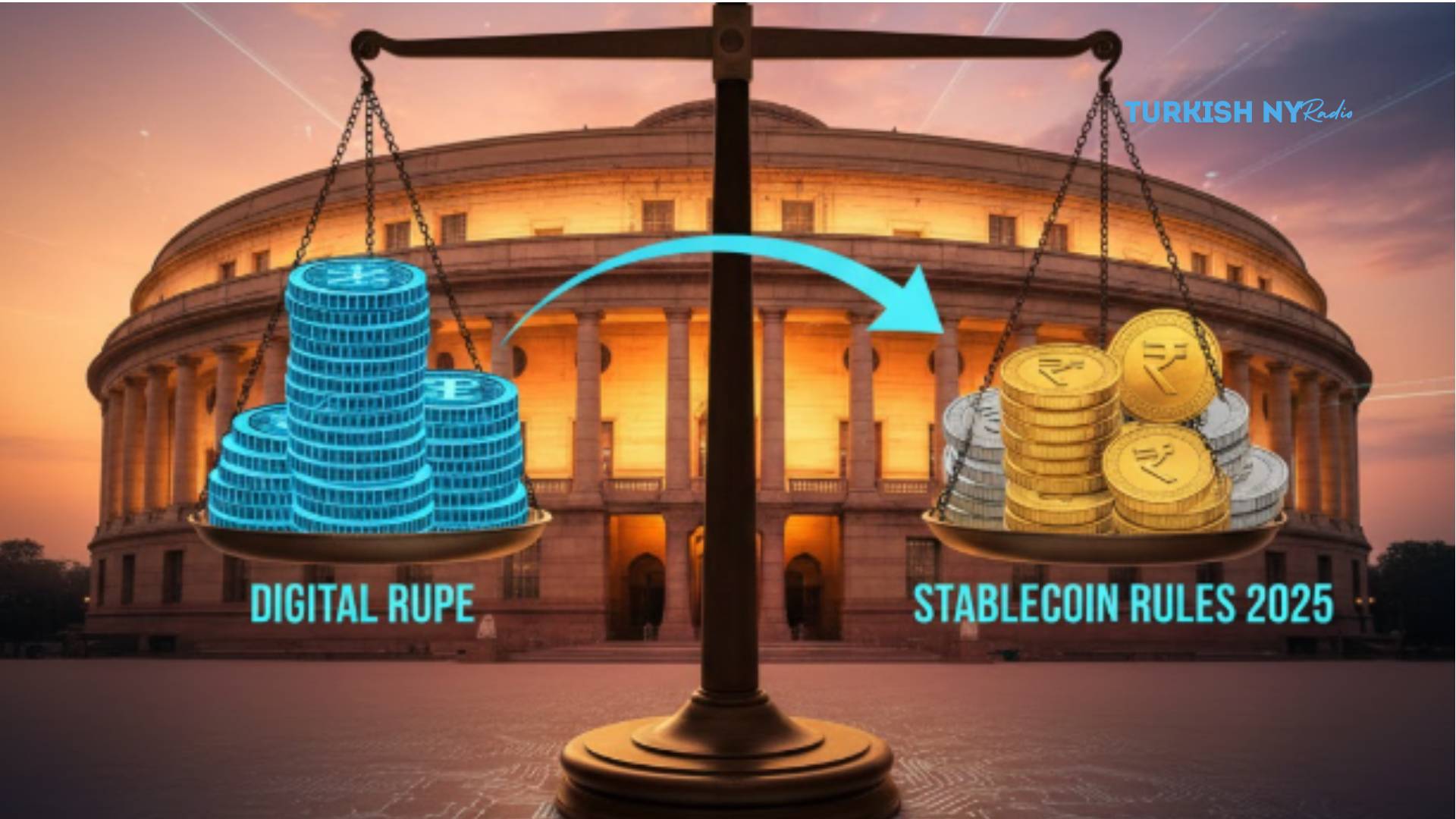
U.S. Stablecoin Regulation Could Shift Dollar Liquidity Across Crypto

Cross-border usage could be another pressure point. In many markets, stablecoins function as practical dollar substitutes for savings, payments, and business settlement. If compliance requirements become stricter at the issuer level, access patterns may change.

Some users may migrate toward the most regulated tokens for safety. Others may search for looser alternatives. Either way, stablecoin regulation is likely to affect the geography of crypto dollar demand, not just the legal status of issuers in the United States.

The real crypto indicators to watch now

Price charts alone will not explain the next phase of this story. The more useful indicators are structural. Analysts should watch whether issuers expand compliance teams, revise terms of service, or change redemption pathways. They should also watch stablecoin dominance, market share concentration, mint and burn activity, exchange pair depth, and whether volumes cluster around the most regulated names.

Another key signal is Treasury market linkage. Because the GENIUS Act framework ties reserves to specified assets including certain short-term Treasuries and similar instruments, stablecoin regulation is increasingly connected to real-world dollar infrastructure. That is one reason policymakers care so much. Stablecoins are not only crypto instruments anymore. They are evolving into a digital distribution layer for dollar liquidity.

Meanwhile, the proposal includes a 60-day public comment period, so industry lobbying will matter. Firms will likely argue over the scope of secondary-market obligations, reporting burdens, and how technical compliance should work across multiple chains. Even so, the broad policy direction already looks set. Stablecoin regulation is moving toward a world where trust is measured less by branding and more by legal readiness, transaction controls, and reserve credibility.

Conclusion

The Treasury proposal is not simply another Washington headline to skim and forget. It speaks to the future shape of dollar-backed crypto itself. If adopted largely as proposed, it could make the biggest stablecoin issuers more bank-like, make DeFi users more aware of control risk, and make institutional adoption more plausible at the same time.

That is the paradox at the center of stablecoin regulation. The tighter the rules become, the easier it may be for mainstream finance to participate. Yet the same process may push parts of crypto further into a debate over openness, privacy, and the cost of legitimacy. Either way, the market is past the point where stablecoins can be treated as a simple trading tool. They are now a policy battleground and a core pillar of digital dollar infrastructure.

FAQs

Why are stablecoin issuers facing tougher rules now?
Because the GENIUS Act required Treasury to build a formal compliance framework for permitted payment stablecoin issuers, and regulators have now proposed the AML and sanctions piece of that framework.

Would the proposal affect DeFi?
Indirectly, yes. If issuers gain stronger compliance obligations and more authority to block or reject certain transfers, DeFi users may feel the effect through liquidity access and transaction controls.

What is the biggest risk for smaller issuers?
The biggest risk is compliance burden. Firms that cannot build strong AML, sanctions, and reporting systems may lose competitiveness or face difficulty scaling.

Why does this matter beyond crypto?
Because stablecoins increasingly connect crypto markets to U.S. dollar liquidity, payments, and short-term reserve assets, making them relevant to the broader financial system.

Glossary of Key Terms

Stablecoin regulation: Rules governing how dollar-backed tokens are issued, backed, monitored, and used.

GENIUS Act: The U.S. law signed in July 2025 that created a federal framework for payment stablecoins.

Customer due diligence: A compliance process used to understand customers and monitor their risk profile.

Secondary market activity: Trading or transfers that happen after initial issuance, such as exchange activity or wallet-to-wallet movement.

Sanctions compliance: Procedures that help prevent transactions involving sanctioned persons, entities, or jurisdictions.

Sources

The White House

U.S. Department of the Treasury

Disclaimer: This article is for informational purposes only and does not constitute investment, legal, or financial advice.


Tags: cryptoGENIUS ActStablecoin regulationmarketstablecoinsUS Treasury
ShareTweetSharePinSend
Previous Post

Visa Introduces AI-Powered Payments for Automated Shopping and Checkout

Next Post

South Korea Bitcoin Security Tightens With Real-Time Exchange Monitoring

Jonathan Swift

Jonathan Swift

A crypto journalist with an understanding of blockchain technology. Skilled in simplifying complex topics for diverse audiences, from beginners to experts. Because I believe in words as they are the children of mind.

SIMILAR NEWS

image 195
Sponsored Article

Bitcoin Price Today Volatiles, ALGO Dip, and Chainlink $10 Target Collide as APEMARS Stage 15 Top Crypto Presale Crosses 22.9B Tokens

10 April 2026
Changpeng Zhao memoir Freedom of Money
Cryptocurrency

CZ Memoir Sparks Clash as OKX’s Xu Responds With Strong Accusations

10 April 2026
Cango Cuts Bitcoin Holdings by 2,000 BTC in Move Toward AI Expansion
Economy

Cango Cuts Bitcoin Holdings by 2,000 BTC in Move Toward AI Expansion

10 April 2026

Leave a Reply Cancel reply

Your email address will not be published. Required fields are marked *

Search

No Result
View All Result
DMCA
PROTECTED

Categories

  • Business
  • Cryptocurrency
  • Economy
  • en
  • News
  • Politics
  • Sponsored Article
  • World

Recent Posts

  • Bitcoin Price Today Volatiles, ALGO Dip, and Chainlink $10 Target Collide as APEMARS Stage 15 Top Crypto Presale Crosses 22.9B Tokens
  • CZ Memoir Sparks Clash as OKX’s Xu Responds With Strong Accusations
  • Cango Cuts Bitcoin Holdings by 2,000 BTC in Move Toward AI Expansion
  • All Eyes on Solana News Today As Its Price Hits $83, UNI Gains 12% While  APEMARS Leads Best Altcoins to Invest in 2026
  • Didn’t Ride the Crypto Boom of Pump.fun and Chiliz? Step Into APEMARS Stage 15 Before the Price Jumps in 24 Hours – Best Meme Coin Presale
TurkishNY Radio

Site Navigation

  • Home
  • About Us
  • Terms and Conditions
  • Privacy Policy
  • Disclaimer
  • Contact

TurkishNY Radio

Banner 1
Banner 2
No Result
View All Result
  • Home
  • Cryptocurrency
  • Business
  • Economy
  • tr Türkçe
  • en English

  • English