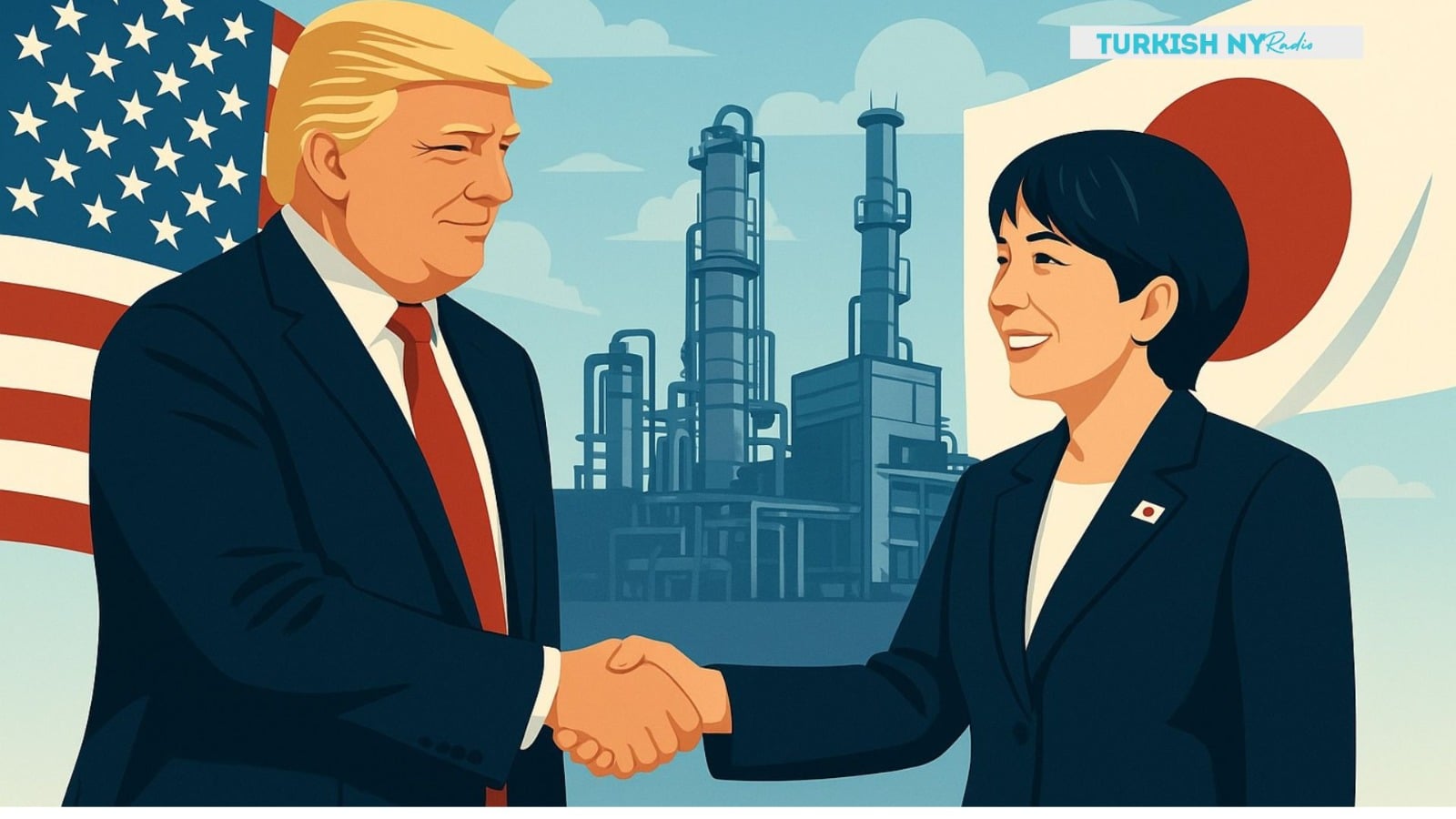
Tokyo, Japan in a scene brimming with symbolism and strategic weight, President Donald Trump and Japan’s newly elected Prime Minister Sanae Takaichi signed what’s being hailed as a historic rare earths deal one that could redefine global supply chains and U.S.-Japan relations for decades.
A New “Golden Age” of Alliance
“This marks the beginning of a golden age between Japan and the United States,” Takaichi declared at the Akasaka State Guest House.

The rare earths deal, signed amid pomp and precision, aims to secure mining and processing cooperation across both nations, reducing dependency on China, currently the world’s dominant rare earth supplier.
Strategic Moves in a Shifting Global Order
Trump called the agreement “a powerful step toward securing freedom through economic independence.”
The rare earths deal comes just days before Trump’s scheduled meeting with Chinese President Xi Jinping in Seoul, setting a confident tone before high-stakes trade talks.
As the White House confirmed, the deal seeks to “assist both countries in achieving resilience and security of critical minerals and rare earths supply chains.”
Beyond Minerals: Strengthening Military and Economic Ties
During the visit, Trump addressed U.S. troops stationed at Yokosuka Naval Base, praising Japan as “America’s strongest partner in Asia.” Takaichi echoed this, calling the U.S.–Japan security relationship “the greatest alliance in the world.”
The rare earths deal also aligns with Japan’s defense goals. Takaichi, the nation’s first female prime minister and a protégé of Shinzo Abe, is pushing for increased defense spending and deeper cooperation with the U.S. in the Indo-Pacific.
A Global Signal to China
Analysts see the rare earths deal as a clear signal to Beijing. Japan and the U.S. are diversifying away from China’s near-monopoly on minerals critical to electric vehicles, renewable energy, and advanced weapons.
“This isn’t just an economic move it’s a geopolitical statement,” said Dr. Emily Hartwell, an Asia policy expert at Georgetown University. “The U.S. and Japan are effectively redrawing the map of global resource power.”
Diplomatic Warmth and Symbolic Gestures
The visit wasn’t all hard politics. Trump and Takaichi reportedly watched part of a World Series game featuring Japanese star Shohei Ohtani and shared light-hearted exchanges.
Trump called former Prime Minister Shinzo Abe “a great friend who spoke so highly of Takaichi,” invoking nostalgia and continuity in the alliance.
Japan, in turn, reaffirmed plans to invest heavily in the U.S. economy including agricultural imports and infrastructure projects as part of the broader partnership surrounding the rare earths deal.
The Larger Stakes
Rare earths are essential to everything from smartphones and fighter jets to green energy systems. With global demand surging, the rare earths deal gives Washington and Tokyo a critical edge in controlling future technology supply chains.
In Trump’s words, “This deal isn’t about today it’s about securing tomorrow.”
Conclusion
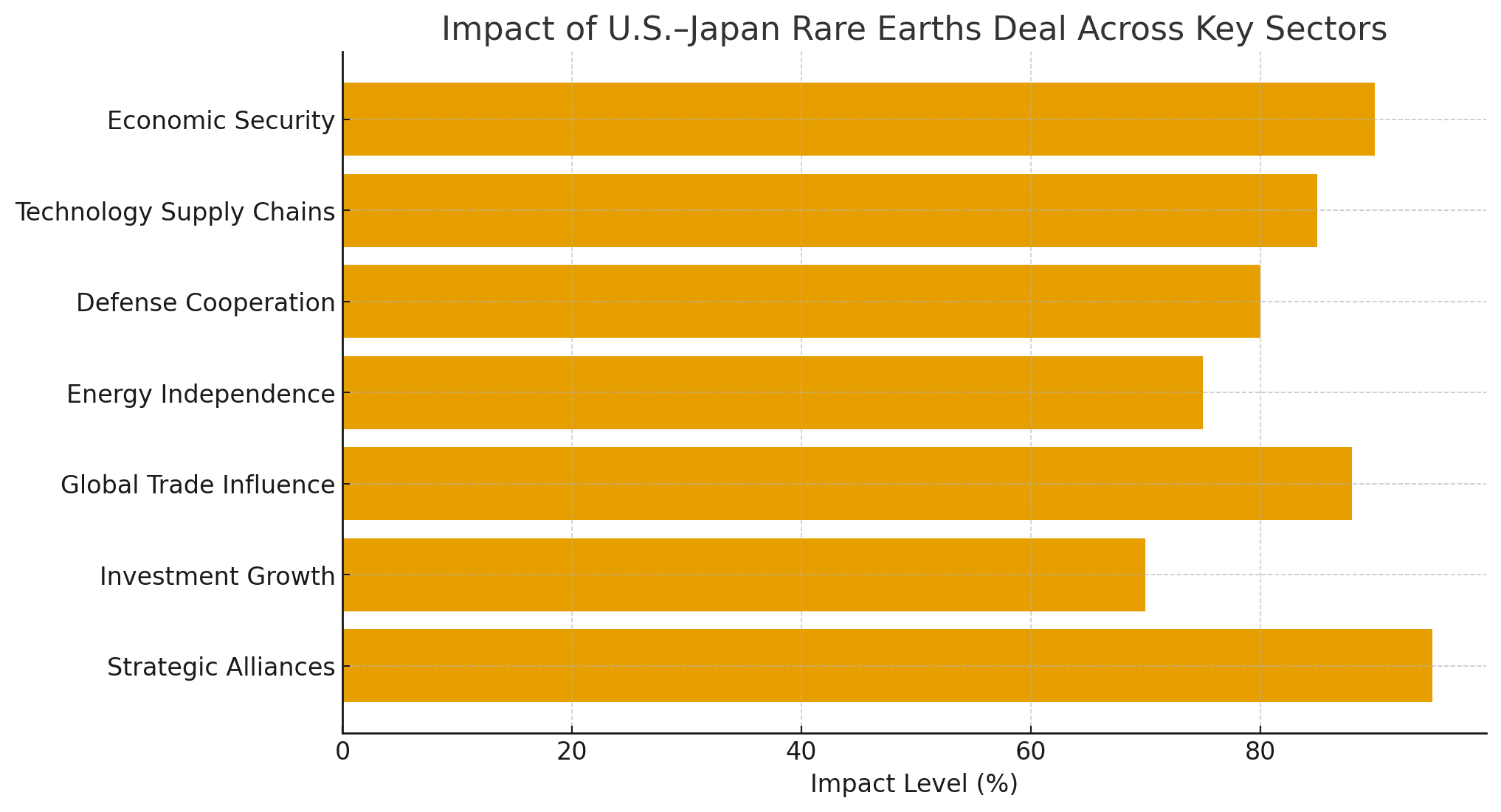
The rare earths deal marks a historic turning point in U.S.–Japan relations, strengthening both nations’ economic and strategic security.
It reinforces independence from China’s mineral dominance while boosting tech and defense cooperation.Trump and Takaichi’s partnership signals a confident new global balance.


This alliance highlights shared resilience, innovation, and trust.Together, the U.S. and Japan are shaping a stronger, more secure future.
For more news visit, our flatform.
FAQs about rare earths deal
Q1. What is the rare earths deal about?
It’s a U.S.–Japan agreement to secure and diversify the supply chain for rare earth minerals, reducing reliance on China.
Q2. Why are rare earths important?
They’re critical components in electronics, renewable energy systems, and defense technologies.
Q3. Who signed the deal?
President Donald Trump and Japan’s Prime Minister Sanae Takaichi signed it in Tokyo.
Q4. How does it affect global trade?
It strengthens U.S.–Japan economic security while challenging China’s dominance in rare earth exports.
Glossary
-
Rare Earths: 17 metallic elements vital for modern electronics and defense industries.
-
Critical Minerals: Essential materials for energy and tech sectors.
-
Supply Chain Security: The ability to safeguard and stabilize production and distribution systems.
-
Economic Alliance: A strategic partnership between nations to enhance trade and investment cooperation.