![Sun [New]](https://s2.coinmarketcap.com/static/img/coins/64x64/10529.png)



This article was first published on TurkishNY Radio.
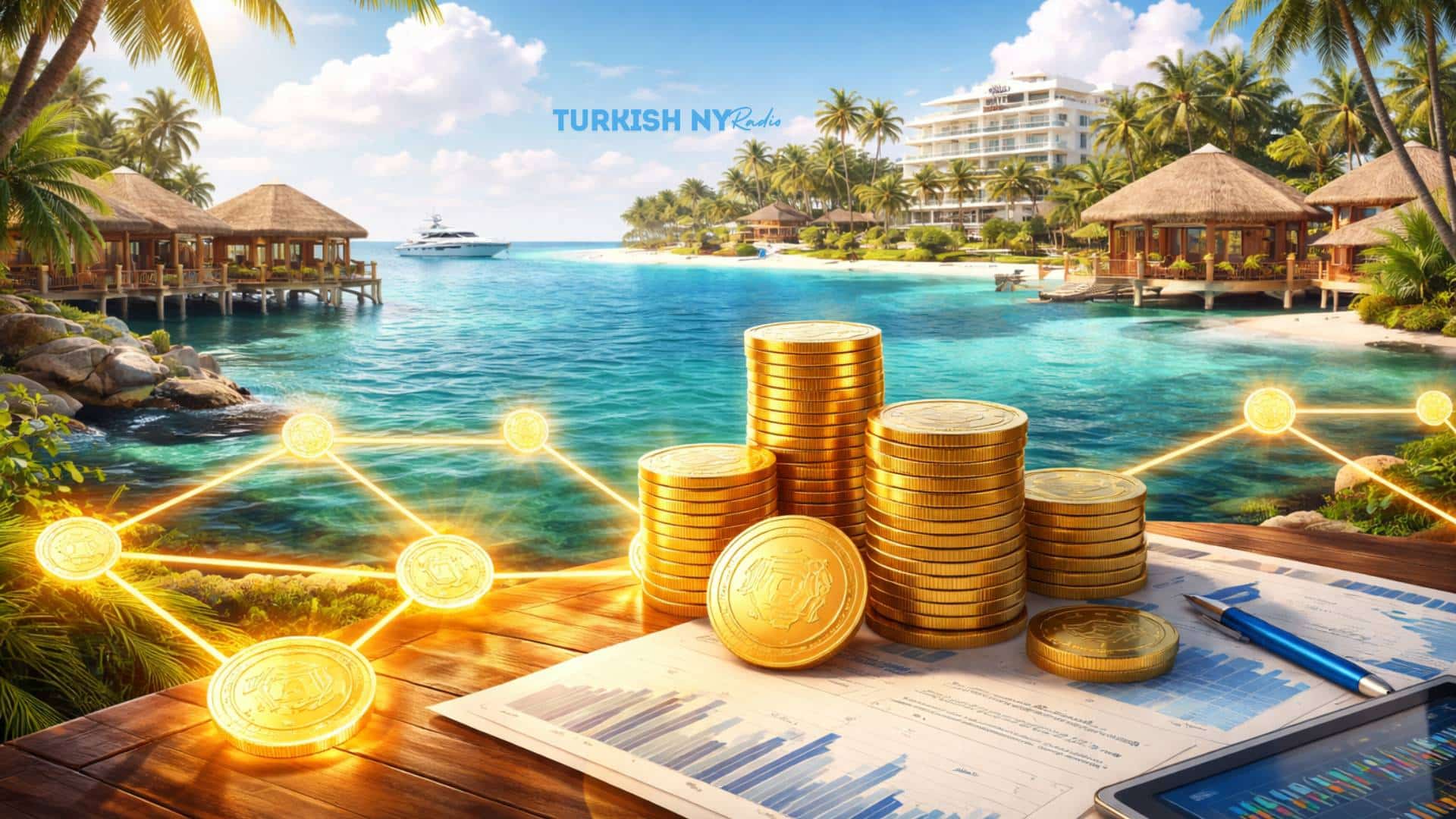
World Liberty Financial (WLFI), a Trump-linked crypto venture, says it will package loan-interest revenue connected to the Trump International Hotel & Resort Maldives into blockchain-based securities. The project is marketed with a 2030 completion target, but the investable idea is not real estate ownership. It is tokenized loan payments tied to development financing cashflows.


Tokenization, but in a credit wrapper
In simple terms, WLFI is not selling a piece of the building. It is selling an interest in the interest, meaning the share of loan revenue expected to be paid over time. That structure puts tokenized loan payments closer to private credit than to the usual “buy property on-chain” storyline, and it shifts the investor checklist toward credit quality, timelines, and servicing details.
Why Securitize and DarGlobal matter
The company says it is partnering with Securitize, a platform known for compliant tokenization of real-world assets, and with DarGlobal, the developer tied to the Maldives project. In practice, that signals a regulated distribution path where investor onboarding, transfer restrictions, and recordkeeping are built to fit securities rules, not casual token trading.
How tokenized loan payments can earn fees before yield arrives
Traditional finance already slices and repackages loan cashflows. The novelty here is that the issuance layer itself can produce revenue at launch, even if the underlying loan interest is years away.
Reporting based on company disclosures has highlighted that DT Marks DEFI, described as a Trump family-owned entity, is set to receive 75% of net revenue from WLFI token sales after costs. That detail matters because it separates the economics of selling the instrument from the economics of the resort paying interest later.
Who this is built for, and what to watch
Multiple reports describe the sale as aimed at accredited investors, consistent with private placement-style offerings and resale limits. For market watchers, the next signal is not a headline. It is the final term sheet: how tokenized loan payments are calculated, what happens if payments are delayed, how reporting works, and which protections, if any, sit inside the structure.


Market indicators investors will track
Even though the product uses blockchain rails, the core indicators look familiar. Buyers will likely watch the implied yield versus comparable private credit, the duration implied by the 2030 target, and any information on collateral or covenants that reduce default risk.
Liquidity is another tell, since a compliant token can trade rarely if transfer rules are tight. If WLFI publishes servicing updates, tokenized loan payments may also benefit from clearer cashflow reporting than off-chain private deals.
Conclusion
This deal is a neat snapshot of tokenization’s direction. It takes a familiar instrument, loan interest, wraps it as a regulated digital security, and uses crypto rails to distribute it. If WLFI executes cleanly, tokenized loan payments could look less like a meme and more like a new packaging format for private credit.
FAQs
Is this tokenized real estate?
No. WLFI describes the product as loan revenue interests, meaning exposure to financing cashflows rather than property equity.
Why does the 2030 timeline matter?
A long build schedule can push expected cashflows out, which changes both risk and liquidity assumptions for tokenized loan payments.
Glossary
Accredited investor: A buyer who meets regulatory income or net worth standards for certain private offerings.
Digital security: A blockchain-based instrument treated as a security under applicable laws.
Private credit: Loans made outside public bond markets, often used to finance projects.
Tokenization: Converting rights to an asset or cashflow into a blockchain-tracked record.
Sources