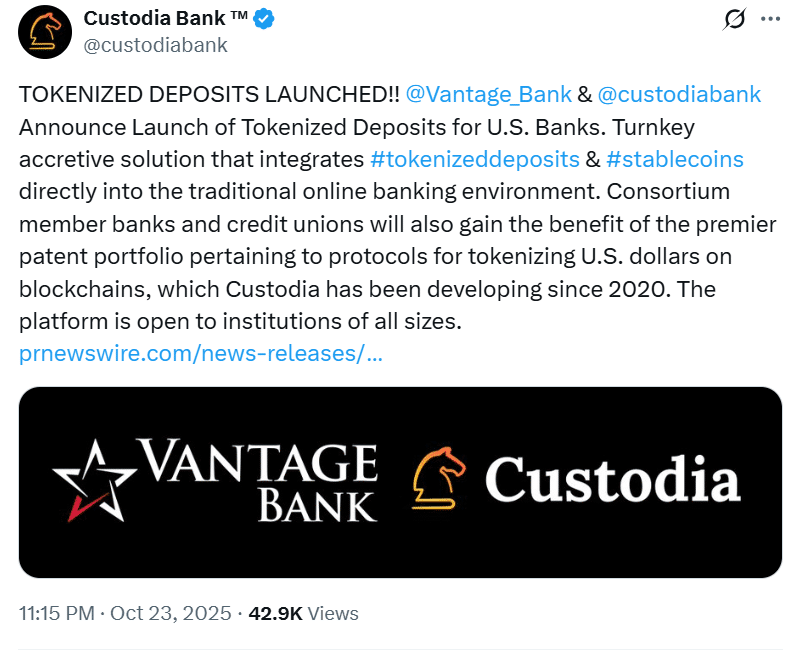
Custodia and Vantage Bank launched a blockchain platform for issuing tokenized deposits. It enables faster, cheaper transactions while keeping banks in control.
The move marks a major step forward for traditional finance. It brings the banking industry closer to embracing digital innovation and modern technology.


Partnership Powers Blockchain Banking
Custodia and Vantage joined forces to create an interoperable network for tokenization. The system combines Custodia’s blockchain framework with Vantage’s Interlace network.
It allows banks of all sizes to issue, manage, and redeem tokenized deposits under strict regulatory compliance. Both banks are testing the platform through pilot programs.
These pilots explore real-world uses such as cross-border payments, supply chain settlements, and milestone-based payments in construction. Early reports suggest tokenization make banking faster, cheaper, and more transparent.
What Tokenized Deposits Mean for Banks
Tokenized deposits are digital versions of traditional bank deposits recorded on a blockchain. They are backed one-to-one by U.S. dollars held in bank accounts. Unlike private stablecoins, tokenized deposits are issued by regulated banks.
Also Read: U.S. Bank Steps Into Digital Assets with New Tokenized Payments Division
The structure gives banks flexibility to serve customers in both traditional and digital financial systems. It also builds confidence among regulators and investors who worry about private stablecoins operating without oversight.
Why Banks Are Turning to Blockchain
The rise of stablecoins has challenged traditional banks. Many customers move funds into digital assets for faster transactions. Tokenization allows banks to compete by offering similar benefits within a regulated framework.


By adopting blockchain, banks can cut transaction costs, speed up transfers, and maintain customer trust. Tokenization also prevents deposit flight, a key concern as digital assets gain popularity.
Meeting Regulation and Risk Head-On
The Custodia and Vantage system is in accordance with that of the GENIUS Act, which governs secure, stablecoin-linked financial services. The platform guarantees that each tokenized deposit is 100% covered by fiat on a dedicated bank account.
This arrangement diminishes the risks associated with private stablecoins, while providing regulators with the visibility they require. For banks, it’s that they can innovate confidently without violating any compliance rules.
Pilot Programs Deliver Real Results
Custodia and Vantage’s pilot programs are already showing strong results. In cross-border transactions, tokenized deposits have cut processing times from days to minutes. In construction, milestone-based disbursements help align payments with project progress.
Supply chain settlements have also benefited from faster payments and better record-keeping. These tests demonstrate how tokenization can streamline global finance and improve efficiency across multiple industries.
The Road Ahead for Tokenized Banking
Some experts think tokenized deposits could be the next major change to finance. The market for stablecoins is expected to reach $2 trillion by 2028, and banks need a way to stay relevant. Tokenization is a bridge between the old systems and digital finance.
For banks, the advance means they can use blockchain without ceding control to the regulator. For consumers, that means speedier transactions and lower fees — and added trust in digital payments.
Conclusion
Custodia Bank and Vantage Bank bringing tokenization to market means that the turning point for traditional finance has arrived. Through the incorporation of blockchain technology and regulatory stringent compliance, both institutions have established a safe efficient route to digital transition.
As testing spreads, tokenization has the potential to transform how banks process transactions, manage liquidity, and compete in the digital age. The alliance shows that instead of replacing banks, the future of finance may rebuild them in new ways.
Also Read: VanEck Consults SEC Crypto Task Force on Tokenized ETFs
Appendix: Glossary of Key Terms
Tokenized Deposits – Digital versions of traditional bank deposits recorded on a blockchain and backed by real fiat currency.
Blockchain – A decentralized digital ledger that securely records and verifies transactions across multiple computers.
Stablecoin – A digital asset pegged to a stable value, such as the U.S. dollar, designed to reduce price volatility.
GENIUS Act – U.S. legislation that provides regulatory guidance for stablecoins and blockchain-based financial products.
Interlace Network – Vantage Bank’s blockchain system designed to connect banks for issuing and managing tokenized deposits.
Fiat Currency – Government-issued money, such as the U.S. dollar, used to back digital or tokenized assets.
Frequently Asked Questions About Tokenized Deposits
1- What are tokenized deposits?
Tokenized deposits are digital versions of bank deposits recorded on a blockchain and backed by real U.S. dollars.
2- How do tokenized deposits differ from stablecoins?
They are issued by regulated banks, not private firms, ensuring compliance and transparency.
3- Why are banks adopting tokenized deposits?
Banks want to offer fast, low-cost digital transactions while keeping control over customer deposits.
4- What role does regulation play?
The platform follows U.S. laws like the GENIUS Act, ensuring every deposit is fully backed and compliant.