The U.S. Securities and Exchange Commission is reportedly moving toward an innovation exemption that could allow tokenized stock trading on blockchain-based platforms, a shift that may bring public equities closer to crypto market infrastructure.
The reported plan arrives as regulators, brokers, exchanges, and digital asset firms debate whether tokenized versions of stocks can expand market access without weakening investor protection. For crypto, the signal is clear: real-world asset tokenization is no longer a side conversation. It is moving into the center of U.S. market policy.


Tokenized Stock Trading Enters a Regulatory Test
The reported exemption could permit trading of tokenized versions of publicly listed shares, potentially including products that track company stocks without direct approval from the issuers. That detail matters because tokenized stock trading is not the same as buying ordinary shares through a traditional brokerage account. Investors may receive price exposure, but they may not receive voting rights, dividends, or the same legal claim attached to common stock.
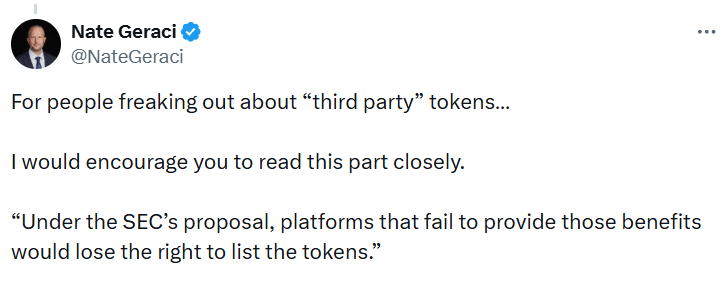
SEC Commissioner Hester Peirce previously framed the key question directly, asking whether “an innovation exemption [should] require a third party to obtain issuer consent to issue tokenized versions of existing equity securities.” That question now sits at the heart of the policy debate because third-party tokenization could create new liquidity channels, but it could also confuse investors about what they actually own.
Why Crypto Markets Are Watching Closely
For crypto firms, tokenized stock trading could support one of the industry’s strongest narratives: real-world assets moving on-chain. Faster settlement, broader access, and round-the-clock markets are the main selling points. In plain terms, it could make stock exposure behave more like crypto, with transfers and settlement happening through blockchain rails rather than traditional back-office systems.
Still, the market should not treat this as a free pass. Peirce has already warned, “Tokenized securities are still securities.” She also stated that blockchain technology does not have “magical abilities to transform the nature of the underlying asset.” That is a polite but firm regulatory line. A stock does not stop being a security because it is wrapped in a token.
Key Indicators for the Crypto Market
The first indicator is regulatory clarity, if the exemption defines custody, disclosures, investor eligibility, and platform duties, tokenized stock trading could attract serious institutional interest. If the rules are loose, the market may face legal friction before it gains scale.
The second indicator is liquidity as tokenized products need deep markets, reliable pricing, and clear redemption or settlement mechanics. Without that, price gaps may appear between tokenized products and the underlying shares.
The third indicator is investor rights as a token that tracks a stock price but does not carry shareholder rights is closer to synthetic exposure than direct equity ownership. That difference must be clear.
The fourth indicator is exchange competition. Traditional exchanges may see tokenized stock trading as a threat if crypto platforms gain access to equity-like products without the same infrastructure costs and rulebook.
Wall Street May Push Back
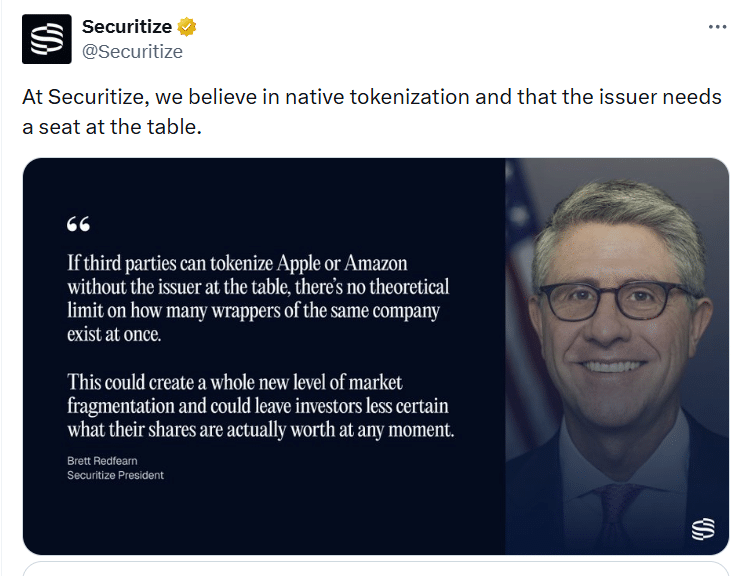
Market groups are likely to press for guardrails. Their concerns are not hard to understand. If tokenized stock trading grows outside established exchange systems, regulators must prevent fragmented markets, weak disclosures, and uneven investor protections. That is where the exemption’s structure will matter more than the headline.
The SEC’s own Crypto Task Force work shows the agency is trying to balance experimentation with safeguards. Peirce has asked what conditions should apply “to preserve the fundamental investor protections” and limit regulatory arbitrage. In other words, innovation may be welcome, but shortcuts will not be ignored.
Conclusion
The reported innovation exemption could become a defining moment for tokenized stock trading in the United States. If written carefully, it may give crypto platforms a lawful path to test on-chain equity markets while giving regulators real data instead of guesswork. If written poorly, it could create a messy market where investors confuse price exposure with ownership. The opportunity is real, but so is the risk. For now, tokenized stock trading is no longer just a crypto experiment. It is becoming a serious policy test for the future of financial markets.
Frequently Asked Questions
What is tokenized stock trading?
Tokenized stock trading means trading blockchain-based tokens that represent or track the value of public company shares.
Do tokenized stocks give full shareholder rights?
Not always. Some products may offer price exposure without voting rights, dividends, or direct ownership.
Why is the SEC involved?
The SEC regulates securities markets, and tokenized shares remain securities when they represent or track stocks.
Could this help crypto adoption?
Yes, if rules are clear. It could strengthen real-world asset tokenization and bring more traditional market activity on-chain.
Glossary of Key Terms
Innovation exemption: A limited regulatory framework that may let firms test new financial products under specific conditions.
Tokenized securities: Securities represented in digital token form on a blockchain.
Issuer consent: Approval from the company whose shares are being tokenized.
Settlement: The process of completing a trade and transferring ownership or value.
Regulatory arbitrage: Using gaps in rules to avoid stricter oversight.
Source
Disclaimer: This article is for informational purposes only and does not provide financial, legal, or investment advice. Readers should verify details with official regulatory sources and consult qualified professionals before making investment decisions.