This article was first published on TurkishNY Radio.
Will Altcoins Survive SEC Crypto Regulations?


Altcoins have always lived in the space between innovation and scrutiny. In 2026, that space feels narrower, louder, and far more expensive to operate in. What used to be a slow tug-of-war between builders and regulators has turned into something more direct: a survival exam.
And for many projects, the passing grade is not hype, community size, or exchange listings. It is legal clarity, operational discipline, and the ability to prove real-world utility without playing word games.
At the center of this pressure sits SEC crypto regulation, shaping how altcoins get issued, marketed, traded, and even how they talk to their own users. In practical terms, that pressure decides which tokens can comfortably serve U.S. customers, which ones will build offshore, and which ones will quietly shrink until they become irrelevant.
The bigger question is not whether altcoins will “die.” The more realistic question is which types of altcoins can still grow under U.S. rules that are tightening, evolving, and increasingly tied to investor protection expectations.
Why SEC crypto regulation is the 2026 survival test for altcoins
In late 2025, the SEC signaled a more structured approach to digital assets through public agenda items and direct statements about building clearer “rules of the road” for issuance, custody, and trading. That matters because for years the market operated on vibes, selective enforcement, and half-clear court interpretations.
Now the industry is dealing with a more formal direction. SEC leadership has described “Project Crypto” as an effort to apply federal securities laws to crypto assets with more consistency and practicality. Whether the market likes it or not, this is the regulatory weather altcoins trade under in 2026.
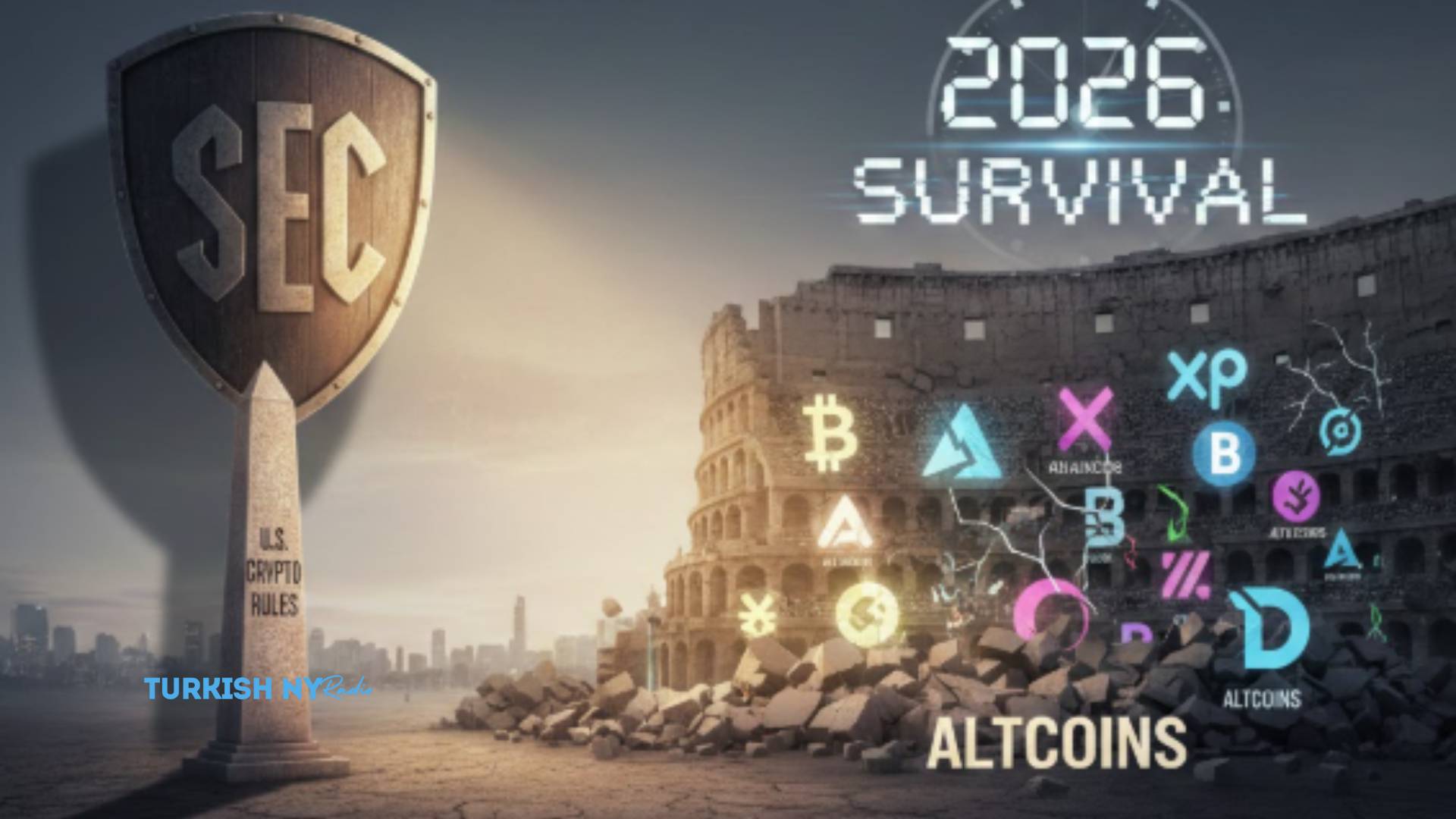
The survival test is simple: if a token behaves like a speculative investment product, and it is promoted like one, the SEC will treat it like one. If a token behaves like infrastructure, has real utility, and avoids the “profit-first” sales pitch, it has a better chance of lasting. That is why SEC crypto regulation in 2026 feels less like a headline and more like gravity.
The SEC is not “anti-altcoin”, it is anti-chaos
A lot of retail traders still see the SEC as an opponent of crypto itself. The reality is more boring, and that is exactly why it is dangerous for sloppy projects. The SEC’s consistent framing is investor protection, proper disclosures, and chasing outright fraud.
This is visible in enforcement updates and press releases that often focus on schemes aimed at retail investors, including fake platforms and misappropriation cases. When that is the baseline, an altcoin team that runs loose marketing, unclear token allocations, and “trust us” governance is basically volunteering for trouble.
In 2026, the SEC is also spending time on public roundtables around crypto trading, custody, and security status conversations, signaling that the agency wants the rules debate out in the open. That is not a free pass for altcoins, but it is an opportunity for the serious ones to align early, before the market forces them to.
The real killers: listings risk, liquidity shocks, and “silent delistings”
Altcoins do not usually collapse because a regulator posts a statement. They collapse because exchanges and market makers reprice risk overnight.
When exchanges fear that a token’s legal status could trigger liability, the response is rarely dramatic. It is quiet. A token gets removed from certain markets, limited in the U.S., loses trading pairs, or gets pushed into “sell-only” modes. Liquidity dries up, spreads widen, and the chart starts looking like a slow leak rather than a crash.
That is where SEC crypto regulation becomes a business model problem, not a philosophy debate. A token can have the best tech on Earth, but if it cannot maintain reliable U.S. liquidity, it becomes harder to attract builders, users, and long-term capital.
And in 2026, liquidity is everything. Most altcoins are not priced purely on fundamentals. They are priced on access, distribution, and confidence.
Market structure laws could change the game, but politics can stall everything
Here is where 2026 gets interesting. U.S. lawmakers have been pushing market structure bills aimed at defining whether digital assets fall under securities rules, commodities rules, or something in between. In January 2026, senators introduced draft legislation designed to reduce legal ambiguity and clarify regulator jurisdiction, including expanded oversight for spot crypto markets under the CFTC.
The same legislative effort also included restrictions around stablecoin rewards, trying to prevent “interest just for holding” models while still allowing some reward structures tied to activity.
At the same time, the political machinery is messy. A Senate committee markup on a major market structure proposal was delayed after public industry opposition, showing how fragile the consensus still is.
So yes, Congress could reduce pressure on altcoins by drawing bright lines. But delays keep the market in limbo, and limbo is where enforcement risk feels largest. In that environment, SEC crypto regulation continues to be the practical rulebook, even when it is not the cleanest one.
The compliance pivot: token design is changing in real time
The smartest shift is happening quietly, inside token design itself. In 2026, more projects are building around “use-first” mechanics instead of “speculate-first” mechanics. That includes:
Practical utility tied to network resources, fees, staking that supports security rather than marketing yield, and governance that is not just a shiny wrapper for centralized control. Teams are also being more careful about supply schedules, insider allocations, and how they communicate future value.
Because in the SEC’s world, perception matters. If the public message sounds like a promise of returns, the token starts looking less like infrastructure and more like an investment contract risk.
That is the invisible influence of SEC crypto regulation. It nudges the market away from meme-style fundraising and toward defensible product economics.
What “altcoin survival” looks like in 2026
Altcoins can survive, but the survivors will look different from the 2021 era.
Some will survive by becoming real networks with measurable usage and steady fee revenue. Some will survive by focusing on non-U.S. markets while staying compliant enough to avoid becoming toxic to U.S. exchanges. Others will survive through partnerships, where their tokens act like rails inside a broader ecosystem rather than standalone hype vehicles.
The altcoins most at risk share familiar traits: heavy insider ownership, aggressive price promotion, unclear token utility, and constant reinvention of the narrative every time the market cools.
This is why SEC crypto regulation does not “kill” altcoins equally. It kills weak structures first, the way a harsh winter takes out cheap construction before it touches the well-built homes.
Investors are adapting too: the 2026 checklist is sharper
The retail mindset is changing, even if slowly. In 2026, smarter participants watch for signals that a token can endure scrutiny.
They pay attention to whether token distribution is transparent, whether governance is documented, whether core contributors are identifiable, and whether the project has a legal strategy that is not just “ignore the U.S. and hope.” They also track whether the token’s value comes from usage or from attention cycles.
In that sense, SEC crypto regulation is acting like a filter. It pushes the market toward higher standards, even when traders complain about it in the moment.
Conclusion: Altcoins will survive, but the era of easy survival is over
Altcoins are not going extinct in 2026. They are maturing under pressure. The winners will not just be the loudest, the funniest, or the fastest movers on social media. They will be the ones built to withstand legal review, exchange risk controls, and investor skepticism. They will ship products people actually use, structure tokens like tools instead of lottery tickets, and communicate in a way that holds up in daylight.
That is the honest takeaway: SEC crypto regulation is forcing altcoins to grow up. Some will. Many will not. The market will look smaller in token count, but stronger in quality, and that may be the healthiest outcome the space has had in years.
Frequently Asked Questions (FAQs)
Will U.S. regulation wipe out most altcoins in 2026?
A complete wipeout is unlikely. What is more realistic is a shakeout where weak, overhyped projects lose listings and liquidity, while stronger networks adapt and remain accessible to U.S. users.


What types of altcoins have the best chance to survive SEC pressure?
Projects with clear utility, transparent token distribution, credible governance, and responsible marketing tend to carry less regulatory risk than tokens promoted primarily as profit opportunities.
Does a market structure bill change everything for altcoins?
It could, especially if it clearly defines jurisdiction and token categories. But delays in legislation keep uncertainty in place, and that uncertainty keeps enforcement risk high.
Glossary of Key Terms
Altcoin
Any cryptocurrency that is not Bitcoin, often tied to a specific network, application, or ecosystem.
Investment contract
A legal concept often used in securities analysis, commonly tied to whether buyers expect profit based on the efforts of others.
Market structure bill
Legislation designed to define how digital assets are regulated and which agency has authority over different parts of crypto markets.
Delisting
When an exchange removes a token from trading, often due to low liquidity, compliance risk, or regulatory concerns.
Token utility
The practical function of a token inside its network, such as paying fees, securing a chain, or accessing services.
Disclosure
Clear public information about risks, token supply, governance, and project operations, similar in spirit to what traditional markets expect.
Project Crypto
A framework described by SEC leadership focused on applying securities laws to crypto assets with more structured clarity.
References