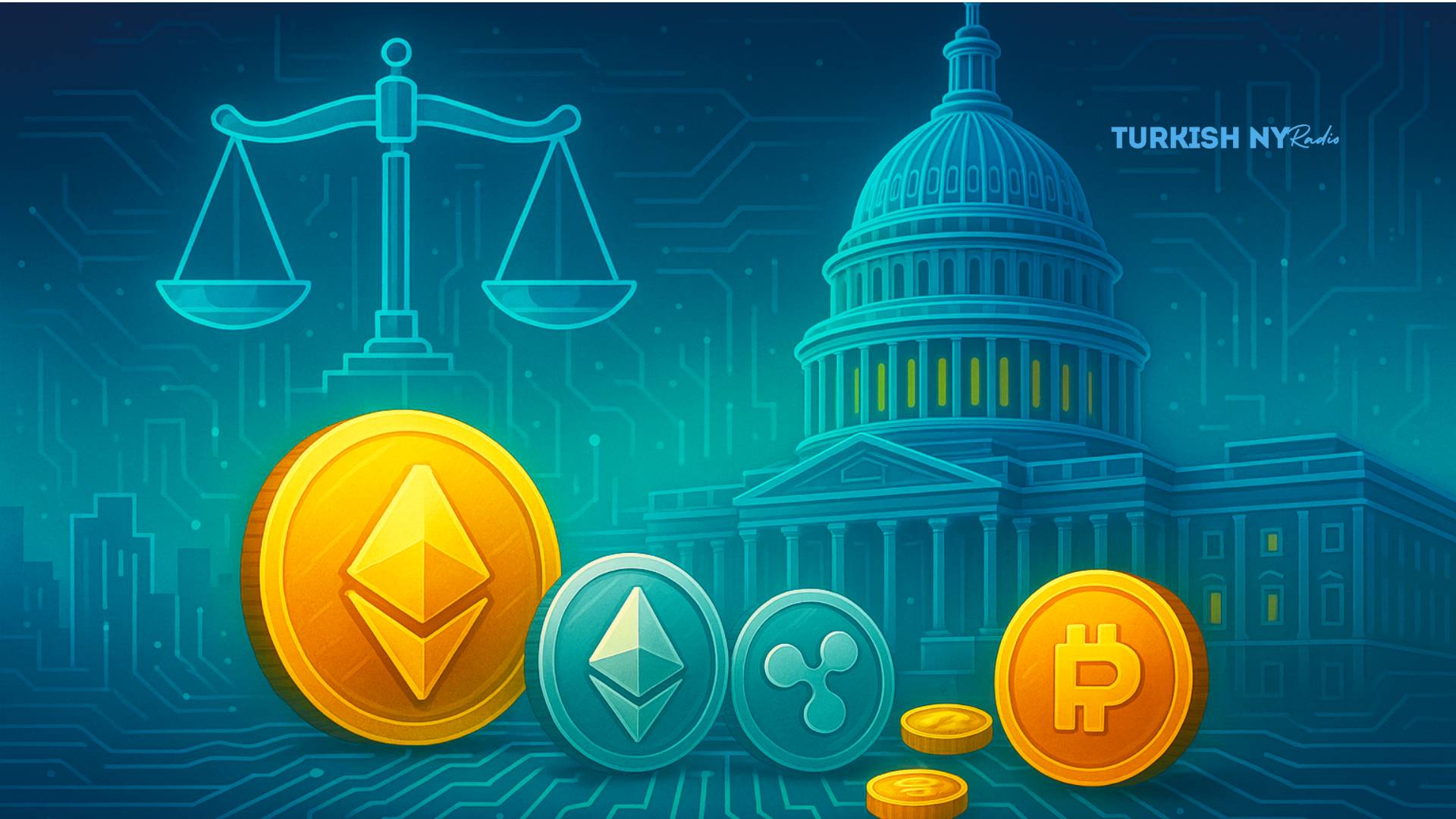
A New Era for Regulatory Clarity
The SEC crypto regulatory agenda has taken center stage in Washington, signifying one of the most significant developments in how the United States intends to regulate digital assets.


The agency’s recently announced regulation strategy focuses on clearer frameworks for cryptocurrency issuance, custody, and trading. For years, cryptocurrency companies and investors have requested openness.
Regulators are now proposing a road to clarity that has the potential to reshape how markets work and foster innovation.
SEC Chair Paul Atkins hailed the proposal as a watershed moment, stating that “clear rules of the road for the issuance, custody, and trading of crypto assets” are critical to balance investor protection with innovation.
His remarks underscore the agency’s shift from strong enforcement to structured recommendations, offering Wall Street and the digital asset industry something to work with.
Cross-Agency Collaboration Promotes Cohesion
One of the most prominent parts of the SEC crypto regulatory agenda is its collaboration with the Commodity Futures Trading Commission. The two agencies launched a cooperative endeavor to monitor cryptocurrency-related commodities transactions, including leveraged and margined retail goods.
This collaboration is seen as a reaction to years of fragmented supervision, with various agencies often issuing contradicting conclusions. The uniform approach not only adds clarity, but it also gives investors confidence that supervision would be similar across markets.



ETFs and tokenized assets are on the horizon
Another key development related to the SEC crypto regulatory agenda is the possibility of easier access to bitcoin exchange-traded funds. Regulators are developing general listing rules that may dramatically simplify the licensing process for ETFs linked to popular cryptocurrency.
Market experts predict that this move may hasten institutional adoption, with major cryptocurrencies and even memecoins possibly entering conventional investing portfolios.
Beyond ETFs, tokenized securities are benefitting from the changing environment. Recently, a US-based company became the first to tokenize its stock, enabling shares to be exchanged as blockchain-based tokens.
This invention, together with supporting policies, has the potential to disrupt existing equities markets by providing 24/7 liquidity and quick settlement, putting blockchain at the core of global finance.
From Enforcement to Growth: Project Crypto
The goal is also linked to a wider strategy plan known as Project Crypto, which seeks to minimize regulatory uncertainty and promote long-term development. For years, crypto companies faced the continual prospect of enforcement action.
The SEC crypto regulatory agenda reframes this dynamic by clarifying terminology, improving custody regulations, and establishing avenues for legitimate token issuance.
Market experts consider this a major change in tone. Instead of restricting innovation, the SEC seems to be dedicated to creating a framework for blockchain enterprises to grow in accordance with well-defined laws.
The consequences for entrepreneurs, developers, and institutional investors are significant, as the United States may reclaim leadership in an area that it has previously risked losing to other governments.
Market and Investor Reactions:
The announcement of the SEC crypto regulation agenda has inspired confidence among traders and institutions alike. Some experts believe the revisions would decrease entrance hurdles for conventional investors, but blockchain innovators envision a path that balances compliance and inventiveness.
However, concerns persist about how fast laws will be adopted and if all authorities will stay aligned as the digital asset market expands.
Investors are already preparing for prospective ETF approvals, while companies investigating tokenization see new prospects under the changed framework. As one top analyst pointed out, this is less about short-term price changes and more about laying the groundwork for the next decade of development.
Conclusion
The SEC crypto regulatory agenda is a watershed moment for US financial markets. By emphasizing transparency, cooperation, and innovation, regulators are ushering in a new era in which digital assets are incorporated into the larger economy under specific regulations.
While obstacles exist in implementation, the move away from unpredictability and enforcement and toward organized development might be just what the business needs to thrive. For investors, developers, and institutions, the route ahead seems more clear than ever before.
Glossary of Key Terms
Custody: The safekeeping of digital assets by qualified institutions.
Tokenization: Converting traditional assets into blockchain-based digital tokens.
ETF (Exchange-Traded Fund): An investment product tracking assets, traded on exchanges like stocks.
Commodity Regulation: Oversight of products such as derivatives or leveraged trading involving crypto.
Decentralization: The distribution of control away from a central authority in blockchain systems.
Rulemaking Agenda: The formal roadmap published by the SEC outlining regulatory priorities.
FAQs for SEC crypto regulatory agenda
1. What is the SEC crypto regulatory agenda?
It is the SEC’s 2025 roadmap to create clearer rules for digital asset issuance, custody, and trading.
2. How will ETFs be affected?
The agenda introduces generic listing standards that could accelerate approvals for crypto-based ETFs.
3. Why is collaboration with other regulators important?
It ensures consistent oversight between securities and commodities regulators, reducing market confusion.
4. What is Project Crypto?
It is a broader initiative under the agenda aimed at shifting from enforcement-driven actions to growth-oriented frameworks.