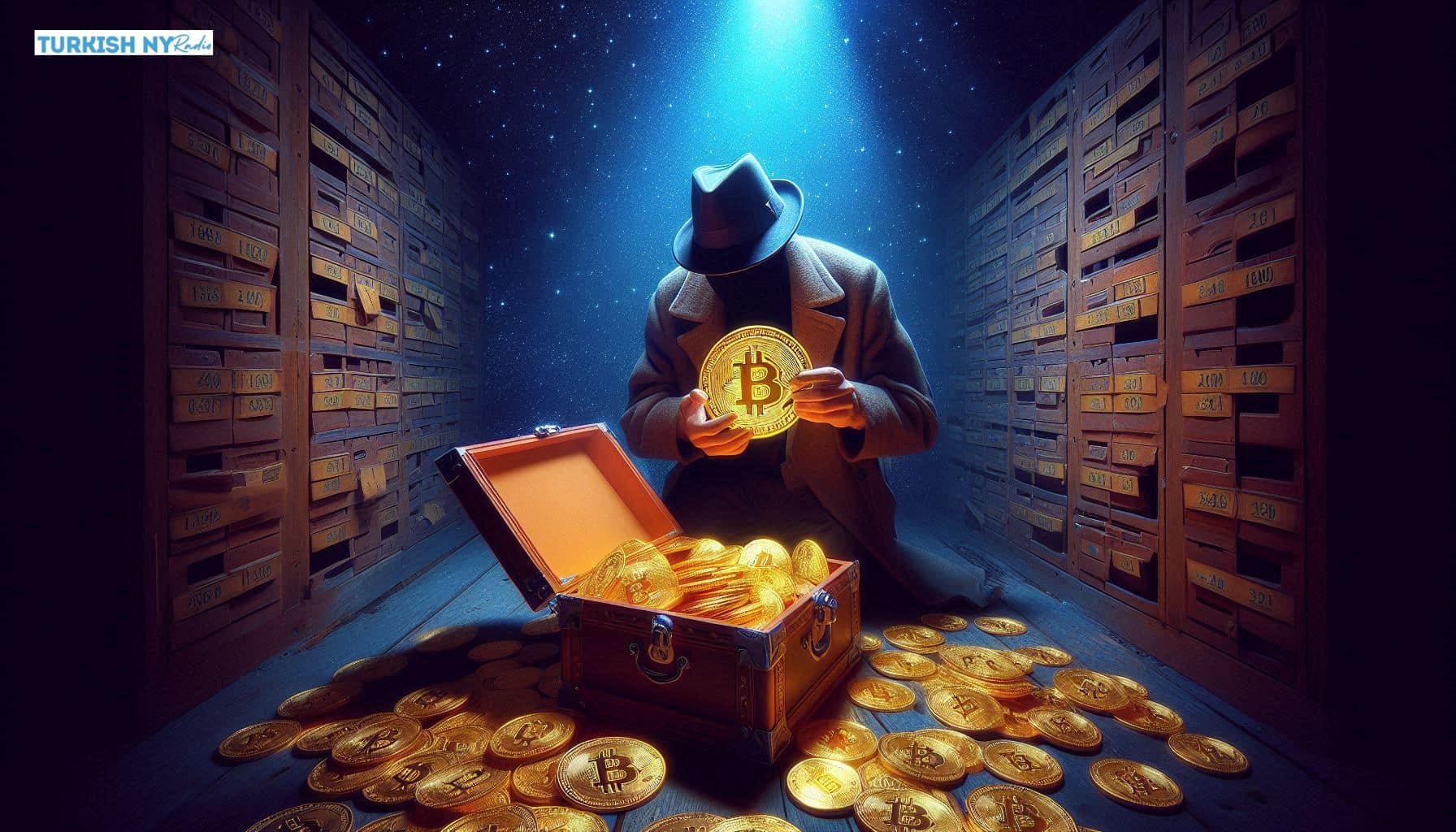
Based on available data, the Satoshi Bitcoin stash refers to the massive, dormant wallet holdings attributed to Bitcoin’s anonymous creator, Satoshi Nakamoto. Estimates suggest this stash is 1.1 million BTC, mined in Bitcoin’s early years and left untouched for over a decade. What would the world look like if those coins ever moved?
Recent blockchain observations show isolated awakenings from early wallets, not definitively Satoshi’s, stirring speculation about dormant supply returning to markets. But so far, the Satoshi stash remains dormant.


Estimating Satoshi’s Holdings: What the Data Shows
Researchers analyzing mining patterns, especially the Patoshi Pattern, attribute early mining blocks to Satoshi. Based on this, many believe he mined 1.1 million BTC across 22,000+ blocks between 2009–2010, before mining ceased in 2010–2011.
Others use more conservative figures. Sources reports ranges between 600,000 and 1.1 million BTC, depending on assumptions used.
Also read: Killing Satoshi Puts Bitcoin’s $120 Billion Secret on the Big Screen
Wallet Inactivity and Dormancy
What gives weight to the Satoshi narrative is the prolonged inactivity of these addresses. Many wallets suspected to belong to Satoshi have never made outgoing transactions. That dormancy for 15+ years adds mystery and reduces the chance of accidental movement.
But inactivity doesn’t prove ownership. Some analysts warn that wallet patterns may be misattributed or that Satoshi used other hidden keys.
Moves From Satoshi-Era Wallets, But Not Satoshi
In 2025′ some ancient wallets mined in 2010 moved coins after years of silence; some 50 BTC outputs; or combined 250 BTC from several addresses.
In July 2025; a more dramatic move occurred; a wallet inactive since 2011 transferred 40,009 BTC ($4.7B) to major exchanges. While widely discussed as a “Satoshi-era wallet”; analysts caution there is no definitive link to Satoshi himself.
Also, other dormant wallets totaling 8,500 BTC moved to Galaxy Digital after 14 years. These moves show that early Bitcoin addresses are active from time to time, but they don’t mean the “Satoshi Bitcoin stash” is waking.
What Could Trigger the Satoshi Bitcoin Stash to Move?
No one knows for sure if Satoshi’s coins will ever move, but there are some possible scenarios that could trigger it.
The first is Lost Keys. If the private keys were lost or in cold storage, a rediscovery could unlock access. Satoshi (or heirs) might move coins for personal use, estate planning or philanthropy.
Moving coins could be a signal of confidence in Bitcoin, protest or renewed leadership.
If quantum computing or security threats grow, moving coins to more secure addresses might be a precaution.
Each scenario comes with risk and speculation. The stakes are so high that even a small move would be under intense scrutiny.


Immediate Market Impact: Panic, Volume Surges and Volatility
If Satoshi’s stash moved, the market would go ballistic. Price Shock and Panic Selling may ensue as
many would interpret the move as “selling” or loss of confidence and sell en masse and liquidate.
Order books would be flooded. Spreads would widen. Market depth would collapse fast as sellers dump.
With high demand, fees would skyrocket. Miners would prioritize high fee transactions and temporarily centralize block inclusion.
Big exchanges would halt withdrawals or trading to maintain stability. Short-term shock could tank price 20-50% (or more), but Bitcoin’s fundamentals and supply cap would help it recover in weeks to months.
In mid-2025, old miner wallets were awakened (not Satoshi’s), and the price dipped, but the market absorbed it.
If 1.1 million BTC were released and the magnitude was much bigger than anything we’ve seen so far.
Consequences, Technical and Security Realities
The movement of coins from the creator would raise existential questions for many investors. Some would see it as betrayal or lack of confidence. Others would see it as reaffirmation or redistribution. Institutional funds (ETFs, banks) would scrutinize the timing and intent before deploying capital.
Governments could see this and decide they would enforce tax rules, demand disclosure or launch investigations into ownership wallets.
There would be a frenzy and scammers could pose as Satoshi or provide false triggers to lure in unsuspecting holders.
Developers might propose temporary changes such as fee caps, block limits; to mitigate volatility. But that would risk community backlash as Bitcoin’s ethos rejects reactive centralization.
Some think dormant wallets might be vulnerable to future quantum attacks. Moving to safer address types (e.g. SegWit or Taproot) could be a preventive measure.
Speculative Scenarios if the Stash Moves
| Scenario | Description | Likely Outcomes |
| Gradual Distribution | Move small sums over months/years | Minimal shock, market adjusts, gradual supply increase |
| Aggressive Sell-Off | Large, sudden liquidation | Price crash, margin liquidations, credibility hit |
| No Movement (Status Quo) | Remains untouched indefinitely | Speculation continues, markets unaffected |
| Identity Reveal + Move | Satoshi returns and moves coins | Intense attention, narrative shift, regulation spike |
Also read: Who Tried to Erase Bitcoin History? Satoshi’s Statue Found in Pieces
Expert Commentary and Perspectives
Vitalik Buterin (Ethereum co-founder) said Satoshi’s disappearance made Bitcoin more decentralized. He said the creator stepping back preserved the protocol’s independence.

Michael Saylor also calls Bitcoin holdings a “gift to humanity,” which is what he thinks Satoshi may have meant by not touching the coins.
Some blockchain analysts doubt recent wallet movements are from Satoshi, citing pattern mismatches.
Conclusion
Based on the latest research, Satoshi Bitcoin stash is still one of crypto’s biggest mysteries. While miner wallets have woken up from time to time, no confirmed transfer from Satoshi’s core holdings has ever happened. The dormant 1.1 million BTC is still out there; a silent giant that could shake the markets if it moves.
A deliberate; managed reallocation might calm the markets but a sudden dump could cascade into fear, price drops and regulatory backlash. Ultimately, whether his coins move or stay frozen forever, the Satoshi Bitcoin stash is a narrative fuel; a reminder of Bitcoin’s mystery, strength and the enduring power of decentralization.
100-Word Summary
Satoshi Bitcoin stash estimated at 1.1 million BTC has never been spent since early mining days. Some early miner wallets have moved coins in 2025 but none proven to be from Satoshi. A movement of this size could trigger panic, mass liquidation and regulatory scrutiny. Whether the stash awakens or remains silent forever, it’s a powerful symbol.
Glossary
Dormant Wallet: A wallet that hasn’t sent any transactions in years.
Patoshi Pattern: A crypto pattern in early Bitcoin blocks; to identify blocks mined by Satoshi.
On-Chain: Transactions on the blockchain (public; traceable).
Liquidity Shock: When many sell orders hit the market and overwhelm buyers causing prices to drop.
Quantum Threat: When quantum computers can break private key cryptography.
Frequently Asked Questions About Satoshi Bitcoin Stash
How many BTC does Satoshi have?
Estimates range from 600,000 to 1.1 million BTC.
Has the stash moved?
Not from the core wallets. Some early miner wallets (but not Satoshi’s) have moved coins after long dormancy.
What would happen if it moved?
Immediate market shock, price drops and ripple effects across crypto, then gradual stabilization.
Could it be good if it moved?
If done transparently and slowly; it could be seen as a sign of confidence in Bitcoin’s maturity.
Why hasn’t it moved?
Theories include Lost keys, intentional renunciation, death or leaving the network leaderless.