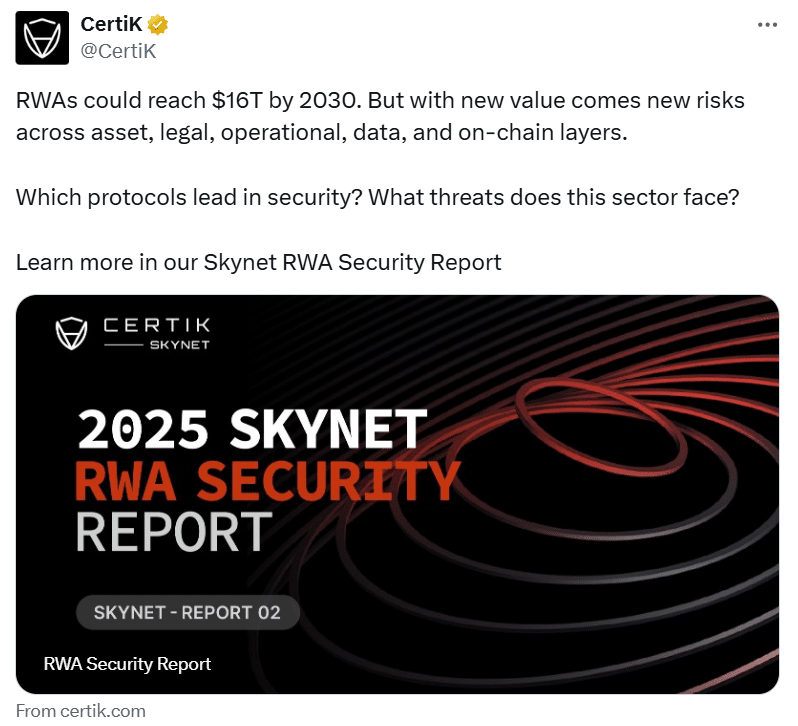
The tokenization market for real-world assets (RWA) is rapidly expanding. According to the 2025 Skynet RWA Security Report, the market could reach $16 trillion by 2030. This growth is driven by both institutional interest and blockchain advancements.
As of now, tokenized U.S. Treasuries alone are projected to hit $4.2 billion this year. The rise of tokenization is reshaping traditional financial markets.


Institutional Interest Drives Tokenization Growth
The growth of the tokenization market is being largely fueled by institutional adoption. Financial institutions and blockchain-native firms are increasingly turning to tokenization. This shift allows them to leverage tokenized real-world assets for better yield opportunities and liquidity management.
The tokenization market spans various sectors, including private credit, trade finance, and money market funds. Traditional financial institutions are actively exploring the use of these digital assets to enhance financial services.
Key Areas of Growth in Tokenization
Tokenization is expanding across multiple asset classes. Traditional financial institutions are now using tokenization to digitize a wide range of assets. These include everything from debt instruments to commodities.
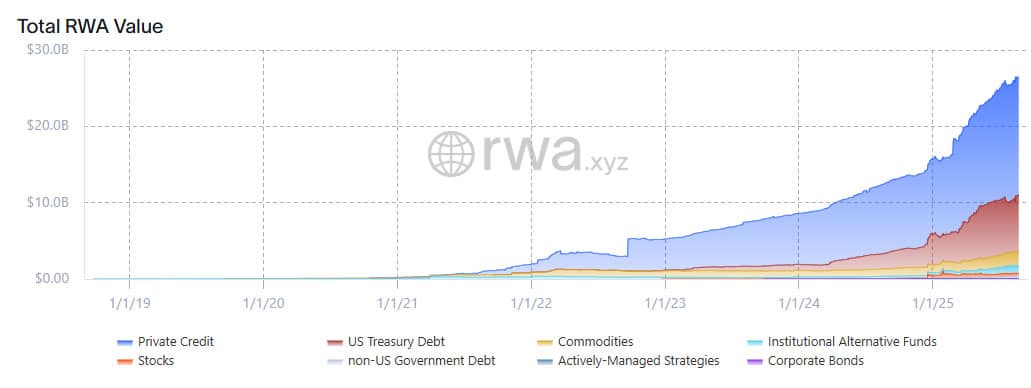
According to the Skynet report, the rise of blockchain-based tokenization platforms is facilitating this transformation. As tokenization continues to expand, private credit and U.S. Treasuries remain the dominant sectors. Together, they make up nearly 90% of the tokenized market’s value.
Regulatory Frameworks Fuel Institutional Adoption
Regulatory clarity is one of the main factors helping tokenization gain traction. Hong Kong, Singapore, and the U.S. are setting regulatory frameworks to accelerate institutional entry. These regulatory guidelines offer clarity and stability, essential for widespread adoption.
Skynet notes that as platforms become more compliant with regulations, institutional investors will have more confidence in tokenized assets. This legal framework paves the way for easier market entry and expansion of tokenized products.
Challenges Facing Tokenization Market Growth
Despite rapid growth, the tokenization market faces some challenges. One of the key hurdles is the limited secondary market liquidity. The market needs standardized risk controls to ensure long-term sustainability. Skynet’s report also highlights concerns around varying legal treatments across jurisdictions.
Additionally, cybersecurity risks and smart contract vulnerabilities remain significant issues. The report emphasizes the importance of using regulated, qualified custodians with secure infrastructure to mitigate these risks.
Addressing Market Liquidity and Security Issues
Liquidity issues and security concerns are slowing the tokenization market’s full potential. Skynet’s report stresses the importance of secure, regulated custodians for digital assets. These custodians can help build investor confidence in tokenized products.
Furthermore, market liquidity is a critical factor that needs to be addressed. Without improved liquidity, the full benefits of tokenization cannot be realized. Industry experts suggest that with better liquidity and security, the tokenization market will reach its projected $16 trillion value.
Bridging the Gap for Retail Investors
While the tokenization of real-world assets is gaining ground, many retail investors are still left out. Access to tokenized products is currently limited for the average investor. Bridging this gap may require the creation of regulated intermediaries.
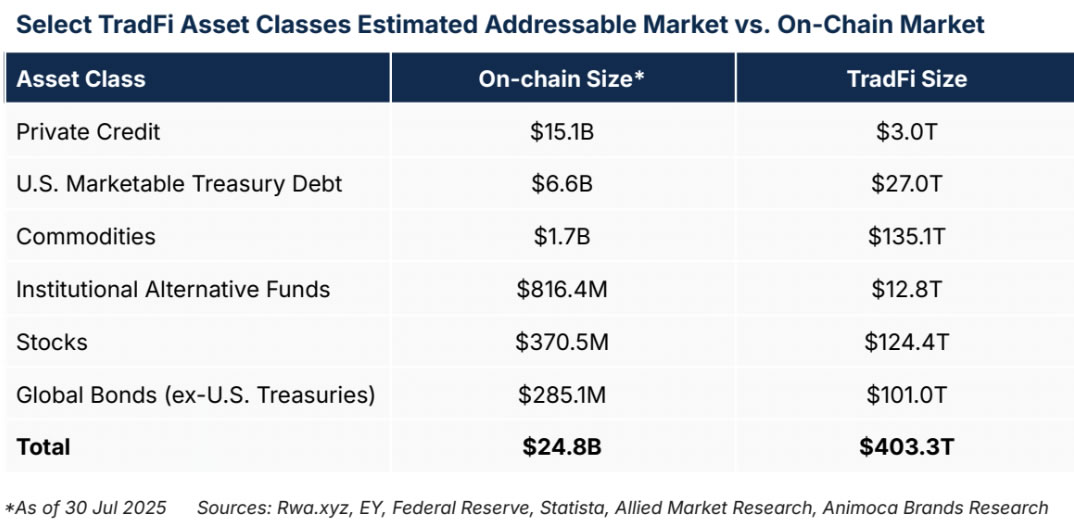
Simplified on-ramps that align with existing investor protections are essential for making tokenized assets more accessible to retail investors. The report also highlights that the traditional finance (TradFi) market is a $400 trillion addressable opportunity, emphasizing the long-term growth potential of tokenization.
Ethereum’s Leading Role in Tokenization
Ethereum continues to dominate the tokenization market. The blockchain platform holds a 55% market share in tokenized real-world assets, including stablecoins. Ethereum’s position in the market is bolstered by its security, liquidity, and the vast ecosystem of developers.
Additionally, when layer-2 networks like ZKsync Era, Polygon, and Arbitrum are included, Ethereum’s market share increases to 76%. The strength of Ethereum’s network and its ongoing development make it the leader in the tokenization space.


Momentum Behind Tokenization
The market of tokenization is demonstrating strong signs of traction. The current overall size of the market for tokenized real-world assets stands at an all-time -high of $26.5 billion. This is an increase of 70% over the year to date.
Researchers note that institutional confidence is struggling to increase and this is contributing to its rise. As tokenization further develops, the total market will see a soaring rate of growth. The combination of the conventional finance world and decentralized finance (DeFi) is a driving force behind this change.
Conclusion
The tokenization sector is a market that is about to grow exponentially soon. This change is being wrought by institutional interest, regulatory structures, and the innovations behind the blockchain.
Although the market liquidity and security issues have not yet gone away, the promise of the tokenized assets is undeniable. Ethereum is taking the lead, and by 2030 this tokenization industry is expected to reach a $16 trillion mark.
Also read Solana’s Tokenized Stock Market Triples in Two Weeks, Surges Past $48M
Summary
The real-world asset (RWA) tokenization market is expanding fast and is expected to be worth $16 trillion in 2030. Institutional interest on tokenization and the power of blockchain technology is challenging the very fabric of traditional financial markets.
Ethereum has a share of 55% with its security and liquidity being key players. Despite such obstacles as the lack of market liquidity and security, the trend towards merging of traditional and decentralized finance helped to drive the growth of this industry
Frequently Asked Questions (FAQs)
1- What is driving the growth of the tokenization market?
The growth of the tokenization market is driven by institutional adoption and advancements in blockchain technology.
2- How does tokenization impact traditional financial markets?
Tokenization reshapes traditional financial markets by digitizing real-world assets and improving liquidity and yield opportunities.
3- What are the challenges facing tokenization?
Challenges include limited secondary market liquidity, varying legal treatments, and cybersecurity risks in the tokenization market.
3- What is Ethereum’s role in the tokenization market?
Ethereum leads the tokenization market, holding a 55% market share, due to its security, liquidity, and vast developer ecosystem.