This article was first published on TurkishNY Radio.
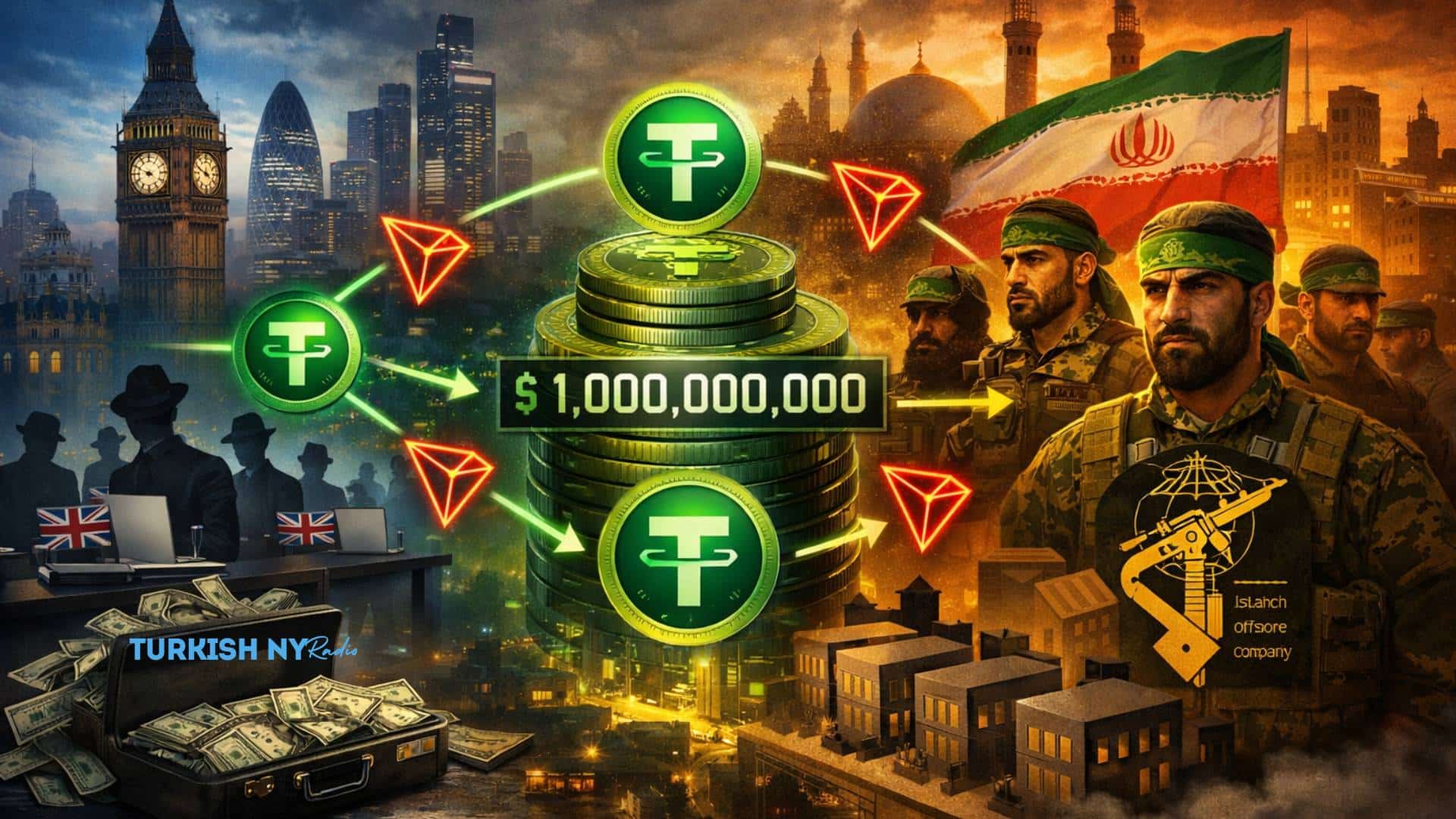
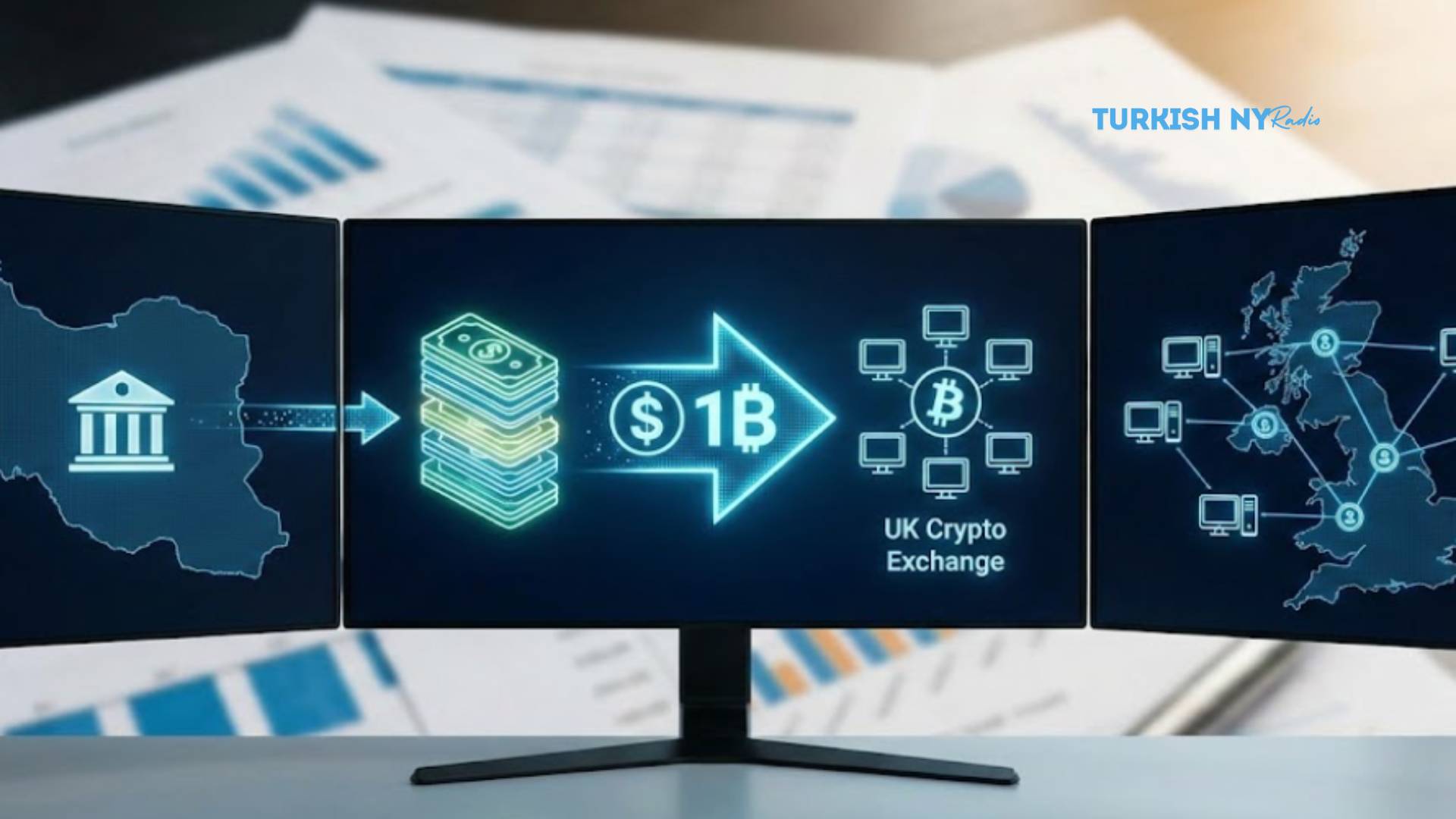
A January 9, 2026 case study from blockchain intelligence firm TRM Labs says 2 UK-incorporated exchange brands, Zedcex and Zedxion, were used as offshore settlement infrastructure for Iran’s Islamic Revolutionary Guard Corps. TRM estimates about $1.0B in IRGC-linked value moved through the operation from 2023 to 2025, representing roughly 56% of total volume across that window.


The pattern in the numbers
TRM estimates about $23.7M in IRGC-linked flows in 2023, roughly $619.1M in 2024, and about $410.4M in 2025, while the IRGC share fell to about 48% as other activity increased. The report says the share peaked at about 87% in 2024, a concentration level that suggests the rail was doing routine work for a single high-risk ecosystem rather than picking up incidental exposure.
Why most of it ran through USDT on TRON
According to TRM, transfers were conducted almost entirely in USDT on the TRON blockchain. USDT is treated as a dollar proxy, and TRON is commonly used for low-fee transfers, so the combination can behave like a settlement corridor when traditional banking routes are blocked.
For observers, the key indicator is behavior, since repeated large-value stablecoin movements on a low-cost network tend to look more like payments infrastructure than speculative trading.
Two brands, one operational core
TRM argues the 2 brands operated as a single enterprise despite separate UK registrations, which can blur beneficial ownership and complicate enforcement. The report also says parts of the exchange stack appeared nested in white-label infrastructure from ChainUp, while other wallet layers were bespoke, a mix that can make the surface look standard even when the wallet plumbing behaves like a clearing hub.
A direct sanctioned counterparty link
TRM reports that in late 2024, over $10M in USDT moved directly from a wallet it attributes to the exchange and the IRGC to addresses controlled by Sa’id Ahmad Muhammad al-Jamal.
U.S. Treasury sanctions and OFAC listings identify al-Jamal as a designated individual linked to a network supporting the Houthis and tied to the IRGC-Qods Force. TRM highlights that the transfers did not pass through obvious intermediaries, which is why the episode reads as purposeful use of infrastructure rather than accidental exposure.

What this means for markets and users
Stablecoin rails carry operational risk that rarely shows up in a price chart. If enforcement pressure leads to account closures, payment processor disruptions, or token freezes, access can change quickly, with little warning, even for users with no connection to sanctioned actors.
Conclusion
The case study frames sanctions evasion in crypto as an infrastructure problem, where the decisive question is who controls the platform, the wallets, and the off-chain touchpoints, not who sent a single transaction.
If the findings hold up under wider scrutiny, the market should expect focus on beneficial ownership transparency, disciplined wallet screening, and faster coordination between exchanges, issuers, and enforcement agencies, because stablecoin rails move value at internet speed, for regulators and supervisors.


FAQs
What does the report allege?
It alleges that Zedcex and Zedxion, incorporated in the United Kingdom, processed about $1.0B in IRGC-linked stablecoin flows from 2023 to 2025 and operated as one exchange in practice.
Why does USDT on TRON matter?
The report says most transfers used USDT on TRON, a combination optimized for low-cost, fast settlement that can support repeated high-value movement.
Who is Sa’id Ahmad Muhammad al-Jamal?
U.S. Treasury sanctions and OFAC listings describe him as a designated financier linked to Houthi support networks and the IRGC-Qods Force, and TRM alleges over $10M in USDT was sent to addresses it associates with him.
Glossary of key terms
Stablecoin: A crypto asset designed to track a fiat value, usually $1, to reduce volatility.
Wallet attribution: The process of linking blockchain addresses to a real-world entity using behavioral and technical signals.
Beneficial ownership: The individuals who ultimately control a company, even when shell entities sit on paper.
Wallet screening: Compliance checks that flag exposure to sanctioned or high-risk addresses.
References