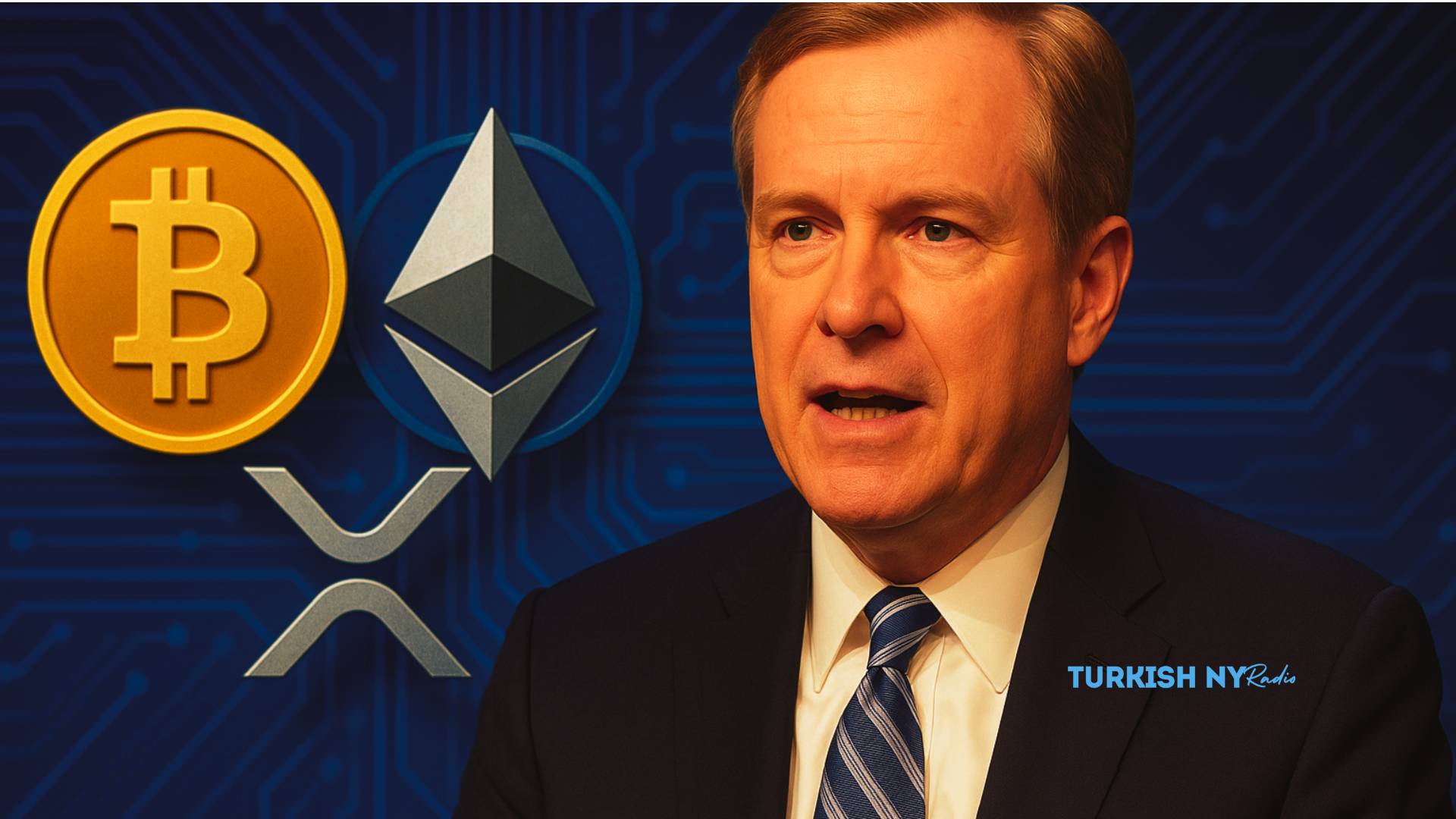
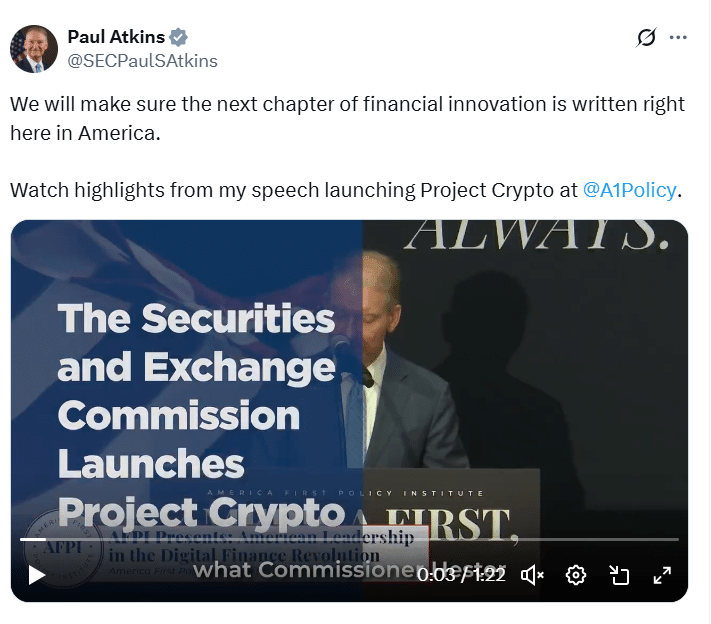
In a bold and decisive action, SEC Chair Paul Atkins has launched the Project Crypto initiative, a comprehensive regulatory reform endeavor targeted at giving clarity and momentum to blockchain innovation within American borders.
The Project Crypto Initiative marks a new chapter in US crypto
Standing in front of an audience of legislators, developers, and institutional leaders, Atkins highlighted that “the next chapter of financial innovation must be written right here in the United States.” His message was clear: the days of strict enforcement are passed, and the regulatory environment is now geared toward promoting growth.


The Project Crypto program is rapidly becoming the foundation of US digital asset policy. It lays the groundwork for updated securities law, simplifies token categorization, and enables regulatory space for on-chain capital markets to thrive domestically.
Inside Project Crypto: Reforming the Rules for the Future
The Project Crypto effort offers significant reforms, including as precise definitions for digital assets, new paths for tokenized securities, and a shift away from retroactive enforcement. This framework promotes innovation by providing exemptions for token disclosures, easier registration for token issuers, and flexible oversight for digital financial platforms.
In what many saw as a dramatic regulatory shift, Atkins asked SEC departments to write new crypto guidelines in weeks, not months. He underlined,
“We’re eliminating the guessing. “American entrepreneurs should not have to go offshore to innovate legally.” This structure allows platforms that offer trading, lending, staking, and token issuance to operate under a single regulatory license, which aligns with the developing “super-app” paradigm in fintech.
Atkins’ quest for transparency includes regulations that promote both self-custody and intermediary services, making the ecosystem more inclusive of institutional and retail actors. This is the type of structured yet adaptable basis that many in the business have long sought.
National coordination gains speed as the CFTC joins the mission
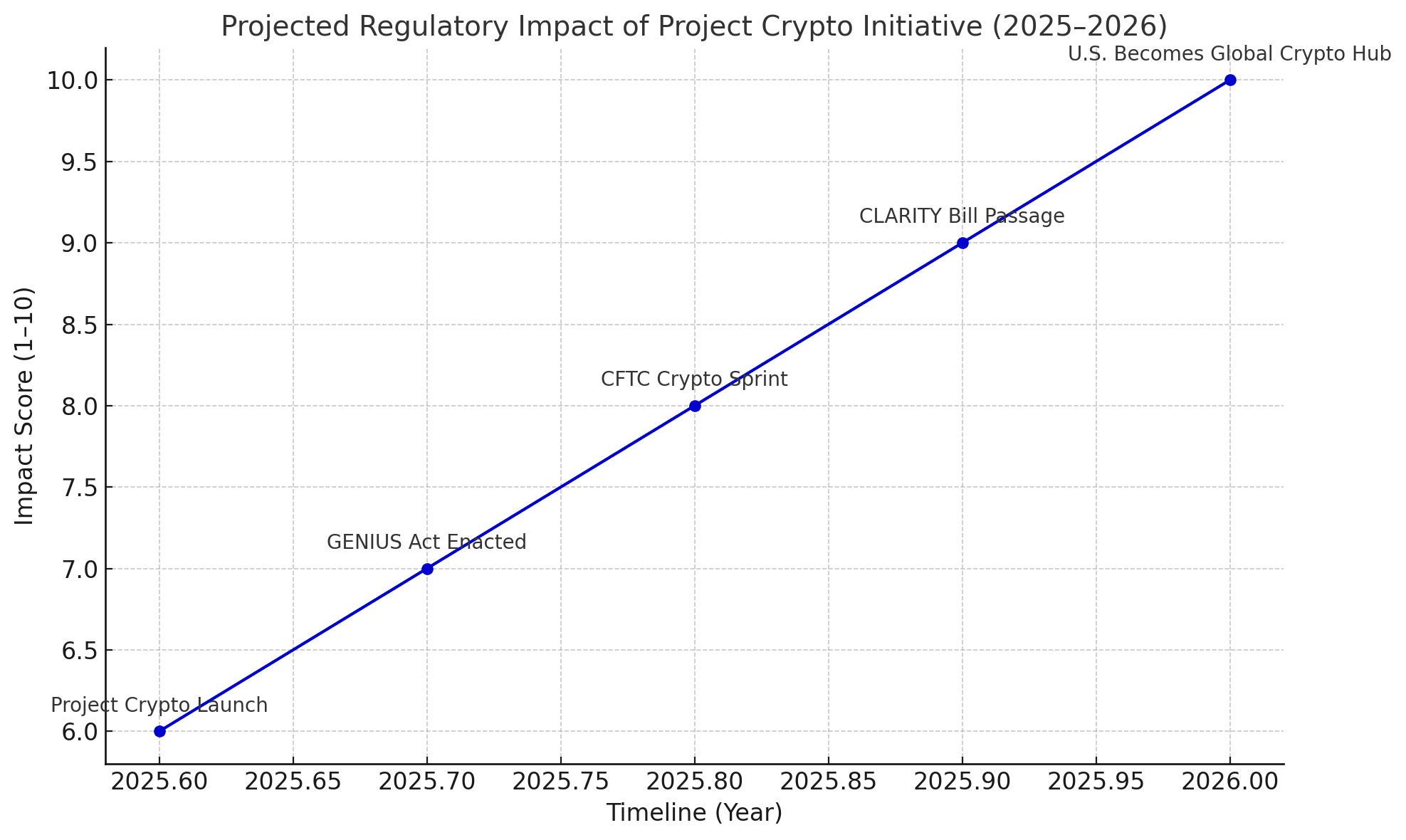
Along with the SEC’s measures, the Commodity Futures Trading Commission (CFTC) launched the “Crypto Sprint,” a related program that permits regulated trading venues to offer and settle spot cryptocurrency contracts under government restrictions.
The two agencies’ agreement represents a watershed moment in US crypto governance, granting legitimacy to blockchain-based financial systems.
Furthermore, the legislative engine is moving quickly. The recently passed GENIUS Act has already set clear rules for fiat-backed stablecoins, such as mandated one-to-one reserves and disclosure requirements.
Meanwhile, work on the CLARITY Bill continues, with the goal of defining crypto assets and how they are treated across federal authorities. These legislative mechanisms, when combined with the Project Crypto effort, result in a complete regulatory framework for digital money in the United States.
Industry Experts Call It a Definitive Moment
Experts in the crypto, legal, and financial industries are applauding the Project Crypto proposal as a watershed moment in reestablishing the United States as a worldwide leader in blockchain development.
One policy strategist commented, “Paul Atkins has flipped the script, this is the most crypto-forward framework we’ve seen from any major jurisdiction.” Insiders in the industry think that these regulations will bring back cash, expertise, and innovation that had previously been moved abroad.
Notably, Atkins’ enforcement team has indicated a shift toward “back-to-basics” concepts. Fraud will be pursued, while legitimate ventures will be supported. This shift in tone has already begun to repair confidence between regulators and developers, which had previously been strained.
The Future of Crypto Innovation is American
The Project Crypto effort is more than just a policy; it represents a change in direction. It reaffirms the United States’ readiness to lead in the global digital economy. By removing legal uncertainty and encouraging public-private collaboration, it lays the groundwork for the next phase of tokenized banking.
For investors, developers, and institutions, this indicates a regulatory climate that encourages rather than punishes innovation. The United States may now be the destination, not the impediment, for Web3 growth.
FAQs
What is the Project Crypto initiative?
It’s a U.S. SEC-led regulatory reform to modernize crypto laws, offering clear rules for tokens, licensing for digital platforms, and safe pathways for tokenized securities.
How does Project Crypto differ from past policy?
It replaces ad-hoc enforcement with proactive regulation, creating a predictable framework for innovation within U.S. borders.
What does this mean for crypto businesses in the U.S.?
They now have a pathway to compliance without needing to relocate offshore, thanks to clearer classifications and regulatory licensing options.
Glossary of Key Terms
Project Crypto initiative: A regulatory program launched by SEC Chair Paul Atkins to reform crypto asset policy in the U.S.
Tokenized Securities: Traditional financial assets like stocks or bonds represented on a blockchain as digital tokens.
Super-App Model: A unified platform offering multiple financial services such as trading, lending, and staking under one license.


GENIUS Act: A law setting national reserve and reporting standards for fiat-backed stablecoins in the U.S.
Crypto Sprint: A CFTC-led initiative enabling federally regulated trading venues to list spot crypto assets.