![Sun [New]](https://s2.coinmarketcap.com/static/img/coins/64x64/10529.png)


This article was first published on TurkishNY Radio.
From the newly released minutes from the Federal Reserve’s most recent policy discussion, policymakers are becoming less confident in announcing victory over inflation. Although rates of interest remained steady, the general mood of the conversation implies that officials intend to leave raising options open if inflationary trends persist.


For investors who started off pricing in gradual cuts further this year, the fresh discussion about Fed rate hikes represents a significant reversal in expectations.
Inflation Growth Slows, Compassion becomes Low
In accordance with the meeting minutes, some officials voiced worry that, while inflation is lower than its high, it is not falling rapidly enough to justify relaxing policy. Inflation in the services sector and inflation in wages remain key issues.
One official stated that “greater confidence” is required before any move toward rate cuts. Until then, the likelihood of Fed rate hikes continues in the policy toolset.
The Federal Open Market Committee (FOMC) finally decided to hold rates unchanged. However, private exchanges indicated that some members feel more tightening may be necessary if inflation figures surprises on the upside.
This shifting tone indicates that Fed rate hikes seem no more a distant possibility, but rather a conditional response linked immediately to new data.


Stocks Respond to Hawkish Signals.
Financial markets responded rapidly to the ramifications. Treasury rates moved up, stocks exhibited fluctuation, and risk-prone assets stumbled.
Investors had widely anticipated rate stability, followed by modest reduction. The reappearance of Fed rate hikes as a serious probability is prompting a rethinking.
“Policy remains data-dependent,” one policymaker stated in the minutes. That statement has become crucial to recognizing Fed’s strategy. If inflation pauses or recovers, Fed rate hikes may be used to boost the Federal Reserve’s credibility.
Tighter monetary conditions frequently limit liquidity and weaken momentum in the cryptocurrency and other speculative asset markets. The increased focus on Fed rate hikes may consequently impact on the willingness to take risks in the near term.
Strong Labor Market Complicates the Outlook
The method of choice is becoming more difficult as the job market remains robust. Unemployment is low, and customer spending has not declined considerably.
From a policy sense, this resiliency allows the Fed to retain its tight posture. Some authorities worried that acting too fast to loosen policy risked undoing hard-earned advances against inflation.
This prudence is why discussions about Fed rate hikes keep emerging. Policymakers appear keen not to repeat previous mistakes by relaxing financial conditions prematurely.
Others on the committee, however, prefer to wait until inflation clearly increases before tightening any more. The argument emphasizes that Fed rate hikes are not assured, but they are not out of the question.
What Comes Afterwards?
The route forward is greatly dependent on incoming economic statistics. Inflation statistics, wage patterns, and customer demand will impact expectations for the next meeting.
If pricing pressures continue to ease, the rationale that for remaining steady rises. If inflation proves sticky, however, Fed Rate Hikes may shift from possibility to action.
For now, markets face a period of uncertainty. The central bank has made one thing clear: flexibility remains paramount, and Fed Rate Hikes remain a viable response if conditions demand it.
Conclusion
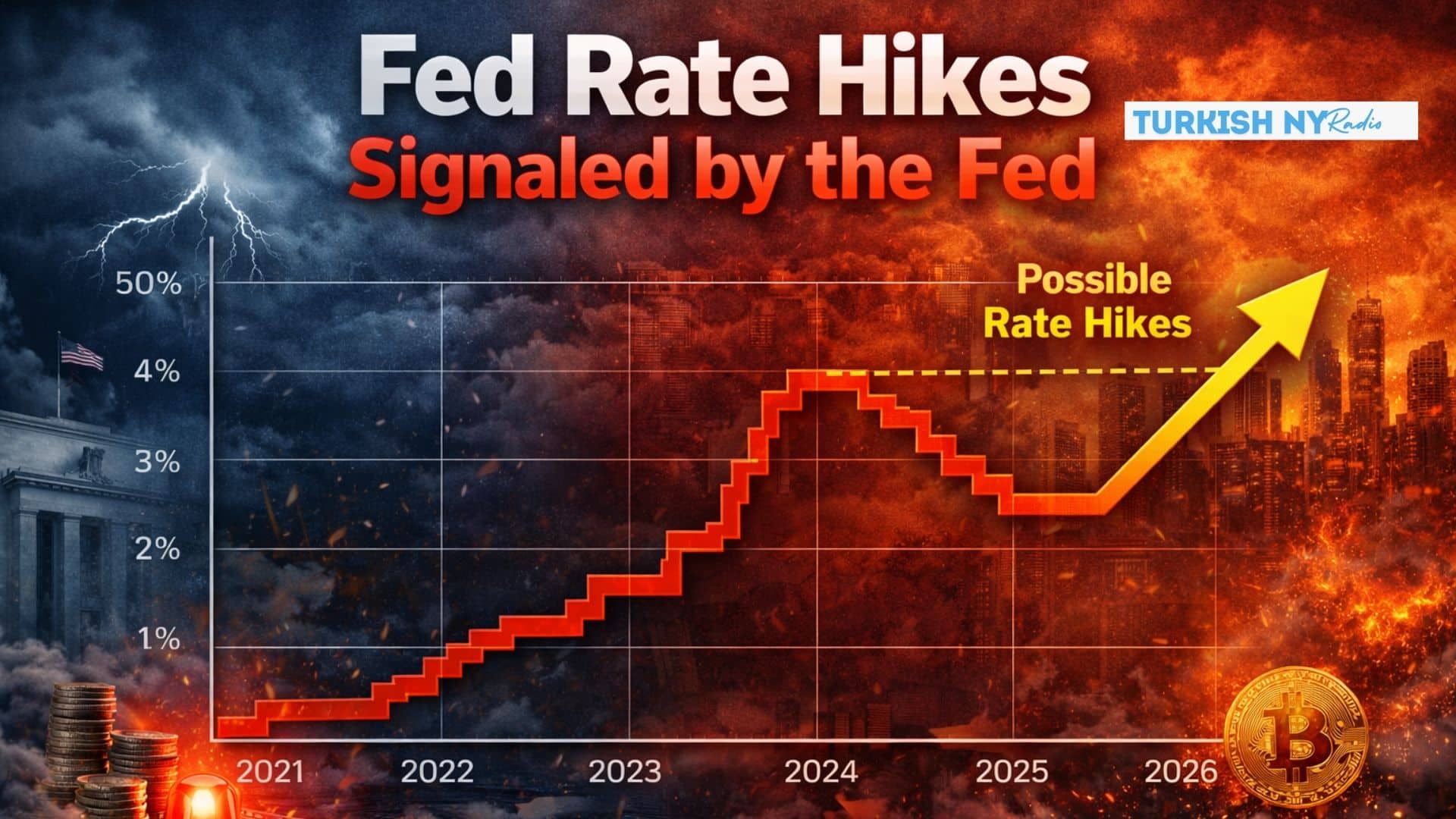
The US Federal Reserve is not hiking interest rates right now, but it is conveying a signal. Policymakers have the ability to take action if price inflation does not collaborate. The return of Fed rate hikes into government conversations shifts the narrative away from imminent easing and toward cautious caution.
As economic data unfolds, investors will be watching closely. The next few months could determine whether Fed Rate Hikes become reality, or remain a warning.
Summary
The US central bank kept its key interest rate unchanged, but warned that tighter fiscal stimulus is expected if expansion continues. Authorities stressed data dependence while expressing worries regarding service costs and price limitations. The market responded cautiously as expectations swung away from assured rate drops. While no imminent action is expected, Fed rate hikes are another time being discussed again, generating unpredictability for stocks, bonds, and cryptocurrency markets in the coming months.
Glossary of Key Terms
The Federal Reserve (Fed): Is the US financial institution in charge of monetary policy.
FOMC: The Federal Open Market Committee, which determines the cost of interest.
Inflation: Is the level at which costs for items and offerings rise.
Monetary Policy: Refers to the efforts taken by central banks to control economic development while maintaining price stability.
Hawkish: Supporting tougher policies to combat hyperinflation.
FAQs for Fed Rate Hikes
1. Are there any Fed rate hikes occuring at the moment?
No, rates were remained stable, but future rises are conceivable.
2. Why do people could the Fed hike interest rates yet again?
Sustained price increases or solid economic indicators may warrant stiffer policy.
3. How do Fed rate hikes effect stock markets?
They often raise interest rates while reducing volatility.
4. Which industries are most vulnerable to rate increases?
Innovation, growth companies, and cryptocurrency frequently respond significantly.
5. Whenever is the Fed’s next decision expected to be?
The next planned FOMC meeting will use current financial information to influence deliberations.