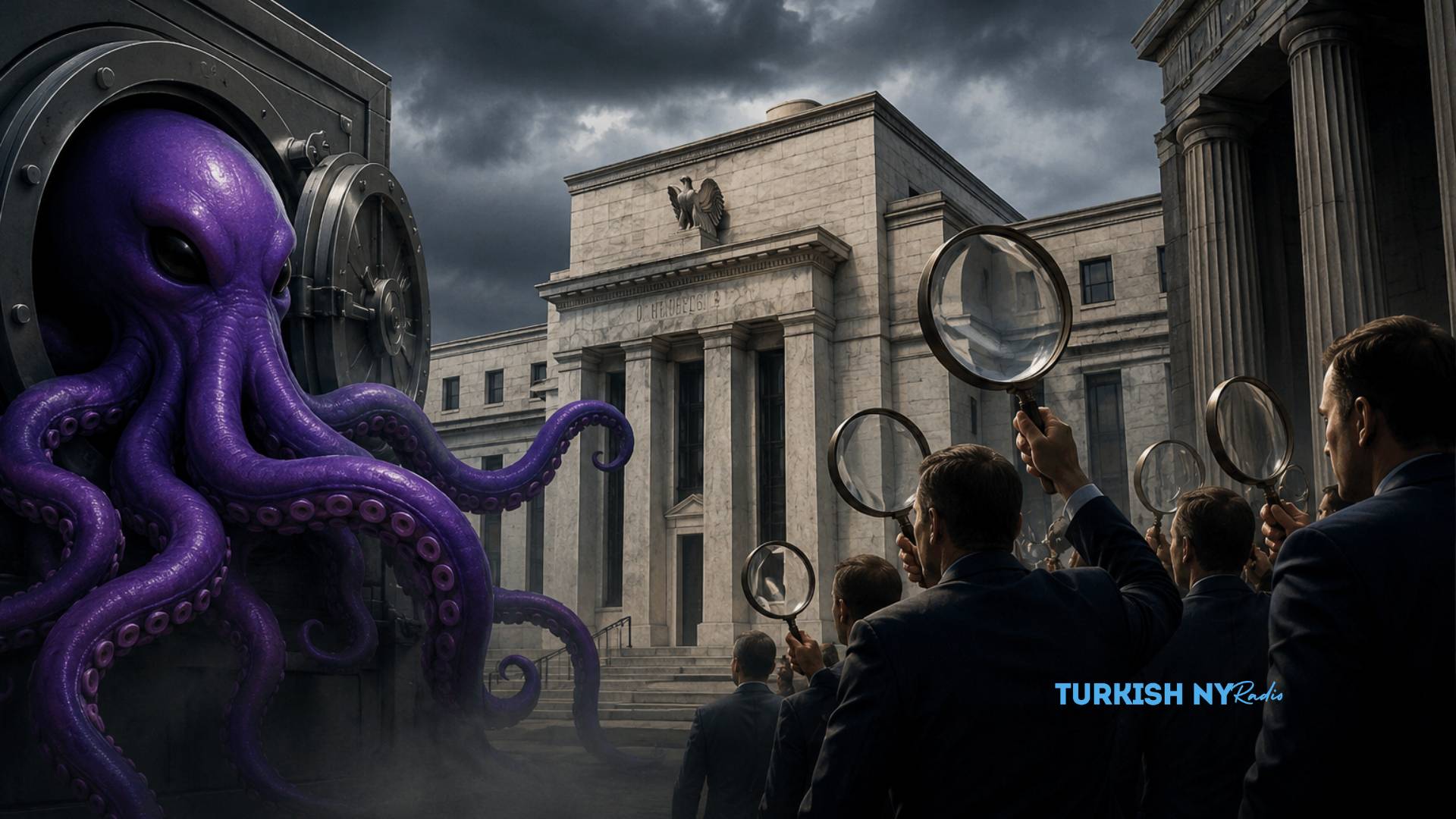
When Kraken Financial secured a limited-purpose master account with the Federal Reserve Bank of Kansas City in March 2026, it felt like a genuine turning point for the crypto industry. Direct access to the Federal Reserve’s payment rails, without relying on intermediary banks, had been something crypto firms had chased for years without success.
That narrow opening, however restricted, carried enormous symbolic weight because it made Kraken the first digital asset firm to access the Fed’s core payment infrastructure. That milestone is now facing its first serious regulatory challenge, and the scrutiny is coming from an unexpected direction.


On June 18, 2026, the Independent Community Bankers of America sent a formal letter to the Kansas City Fed urging it to reassess the terms of Kraken Financial’s account before the initial one-year term runs its course. The ICBA is asking the Federal Reserve to weigh tighter restrictions, a suspension, non-renewal, or outright termination of the account entirely.
The Kraken Fed account situation has quickly become one of the most consequential regulatory flashpoints in the US crypto payments space, and the outcome will likely shape how dozens of other crypto firms approach their own bids for direct central bank access.
What the Kraken Fed Account Actually Allows and Why It Matters
The Kansas City Fed granted Kraken Financial, operating under Wyoming-based Payward Financial, a limited-purpose account under its Tier 3 review process. The conditions are deliberately narrow. The account permits access to Fedwire Funds only, with no intraday credit, no discount-window credit, no interest on reserve balances, and absolutely no use by the broader Kraken exchange or affiliated Payward Group subsidiaries.
In plain terms, it is not a full banking relationship. What the Kansas City Fed essentially did was invent a new tier of access to fit Kraken’s specific profile, a move that legal analysts at Sullivan and Cromwell described as the Reserve Bank tailoring a solution that had no formal statutory basis in either the Federal Reserve Act or the Board’s own Account Access Guidelines.
For crypto firms, the appeal is obvious regardless of the account’s narrow scope. Gaining direct access to Fedwire removes the dependency on commercial bank intermediaries, which have historically been reluctant to service crypto businesses. Direct access means faster settlement, lower friction, and a level of institutional legitimacy that previously felt completely out of reach for the sector.
ICBA’s Case Against the Kraken Fed Account
The ICBA is not making a vague argument. Its letter lays out specific concerns around operational risk, legal exposure, reputational damage, illicit finance vulnerability, and what it describes as a troubling regulatory precedent for allowing an uninsured, non-federally supervised entity into the Federal Reserve’s payment network.
ICBA President and CEO Rebeca Romero Rainey had already gone on record in March 2026 stating that granting nonbank entities and crypto institutions access to master accounts, traditionally reserved for highly regulated insured depository institutions, poses meaningful risks to the banking system.
At the center of the ICBA’s argument is the supervision gap. Kraken Financial sits outside the traditional federal bank examination perimeter. It is not subject to the same ongoing oversight that federally insured depository institutions face, and the ICBA contends this creates a genuine blind spot for the Federal Reserve, particularly around anti-money laundering procedures and Bank Secrecy Act compliance.
That argument found internal support from an unexpected source. On May 20, 2026, the Federal Reserve Board requested public comment on a payment account proposal that would open limited access to legally eligible non-insured institutions. Fed Governor Michael Barr dissented, stating plainly that he could not support the proposal because it lacked sufficiently specific and robust safeguards to protect against accounts being used for money laundering and terrorist financing by institutions the Fed does not supervise.
He noted specifically that the proposal contained no provisions allowing the Federal Reserve to examine or inspect AML and Bank Secrecy Act compliance procedures at those institutions. The ICBA letter references Barr’s dissent directly, using it to build the case that the Kansas City Fed moved too quickly when it approved Kraken’s account.

The Crypto ATM Data That Sharpened the Entire Debate
The ICBA’s letter draws heavily on investigative reporting published by the International Consortium of Investigative Journalists in May 2026, which traced billions of dollars in Bitcoin transfers from major crypto exchanges directly to crypto ATM operators.
According to blockchain researchers who reviewed those transactions, Kraken had transferred at least $1.1 billion worth of Bitcoin to crypto ATM operators in recent years, with more than $700 million going to Coinhub and at least $245 million flowing to Byte Federal. Kraken told the ICIJ it takes its regulatory obligations seriously and maintains robust compliance controls, including rigorous onboarding procedures and enhanced monitoring standards for all business relationships.
These are transaction-tracing figures, not legal findings or adjudicated violations. Even so, the numbers gave the banking lobby a concrete and publicly documented anchor for its concerns, at a time when crypto ATM fraud had already become a significant and worsening problem across the United States.
The FBI’s 2025 Internet Crime Complaint Center report recorded 13,460 complaints tied to cryptocurrency ATMs and kiosks, with losses totaling roughly $389 million. That represents a 23% rise in complaints and a 58% increase in losses compared to the prior year.
Victims aged 60 and older accounted for approximately $257.4 million of those losses across 6,188 complaints, adding a serious consumer protection dimension to what was already a heated policy debate. The acceleration in kiosk fraud has triggered a wave of state-level responses, including Minnesota considering an outright ban on crypto ATM machines, Connecticut suspending an operator’s license, and West Virginia enacting new licensing requirements.
Where the Kraken Federal Reserve Account Case Stands Now
As of June 22, 2026, no public record shows the Kansas City Fed initiating a termination process or finding Kraken Financial in violation of its account conditions. The ICBA letter, while pointed, does not carry enforcement authority on its own. It creates a public record of opposition and applies political pressure, but the Kansas City Fed retains full discretion over whether to modify conditions or allow the account to move toward renewal.
The broader policy environment is also in flux. On May 19, 2026, President Trump signed an executive order directing federal banking regulators to evaluate how uninsured depository institutions and non-bank financial companies access Federal Reserve payment services.
The following day, the Fed released its formal payment account proposal, which would create a constrained alternative to a traditional master account for legally eligible institutions focused on payments. The Fed Board also encouraged Reserve Banks to pause decisions on Tier 3 access requests until the payment account policy is finalized, which the agency suggested would occur on or before December 31, 2026.
The Kraken Fed account case is being watched closely across the crypto industry precisely because its resolution will set a working precedent. If the account survives with its current conditions intact, it becomes a blueprint that other firms, including Circle, Paxos, Fireblocks, and Anchorage Digital, which have received conditional OCC approvals, can reference when pursuing their own access to federal payment infrastructure. If the Fed imposes new restrictions or declines renewal, direct access to US payment rails will remain a constrained and uncertain affair for the foreseeable future.
Conclusion
The fight over the Kraken Fed account is bigger than Kraken. It reflects a fundamental tension in US financial regulation between opening the payment system to innovation and maintaining the supervisory frameworks that protect consumers and preserve systemic stability.
The Kansas City Fed now finds itself at the center of that tension, with a decision that will shape the trajectory of crypto payment infrastructure in the United States for years to come. The ICBA has done what trade associations do best: it has created a paper trail, forced a public conversation, and made non-renewal politically safer than approval. What happens next depends entirely on whether the Kansas City Fed views the one-year experiment as a success worth extending or a liability worth containing.
Frequently Asked Questions
What is the Kraken Fed account?
It is a limited-purpose master account granted to Kraken Financial by the Federal Reserve Bank of Kansas City in March 2026. The account provides access to Fedwire Funds only, under a narrow set of conditions, and does not extend to the broader Kraken exchange or affiliated entities within the Payward Group.
Why is the ICBA opposing it?
The Independent Community Bankers of America argues that Kraken Financial operates outside the federal supervisory perimeter that applies to insured depository institutions, creating unacceptable risks around illicit finance compliance, reputational exposure, and the precedent it sets for other crypto firms seeking similar access.
Can the ICBA force the Kansas City Fed to cancel the account?
No. The ICBA can formally object and create a public record of opposition, but the Kansas City Fed retains full authority over the account’s conditions and renewal timeline. The June 18 letter is a form of regulatory lobbying, not a binding directive.
What is Fedwire Funds?
Fedwire Funds is the Federal Reserve’s real-time gross settlement system for large-value, time-sensitive payments between financial institutions. Access to it allows institutions to settle transactions directly through the central bank rather than through intermediary commercial banks.
Glossary of Key Terms
Master Account: A deposit account held directly at a Federal Reserve Bank, giving the holder access to the Fed’s payment services and settlement infrastructure, historically limited to federally insured depository institutions.
Fedwire Funds: The Federal Reserve’s large-value payment system used for real-time, final settlement between financial institutions, forming the backbone of the US dollar payment system.
Tier 3 Review: The most intensive level of Federal Reserve scrutiny applied to master account applications from institutions that are not federally insured or supervised by a federal banking agency.
ICBA (Independent Community Bankers of America): A trade association representing thousands of community banks across the United States, known for actively lobbying on behalf of traditional banking interests in regulatory proceedings.
AML (Anti-Money Laundering): A framework of laws, regulations, and institutional procedures designed to prevent criminals from disguising illegally obtained funds as legitimate income through financial channels.
Bank Secrecy Act (BSA): A US federal law requiring financial institutions to assist government agencies in detecting and preventing money laundering, including requirements for suspicious activity reports and customer due diligence.
Sources