![Sun [New]](https://s2.coinmarketcap.com/static/img/coins/64x64/10529.png)


This article was first published on TurkishNY Radio.
Oslo Airport Bitcoin is more than just news; it is now a valid payment mechanism for passengers transiting through Norway’s biggest international airport. Duty-free shoppers may now use Bitcoin to pay for their purchases, highlighting how online currency is slowly making its way into everyday life, including on trading screens.


Duty-free shopping receives a digital upgrade
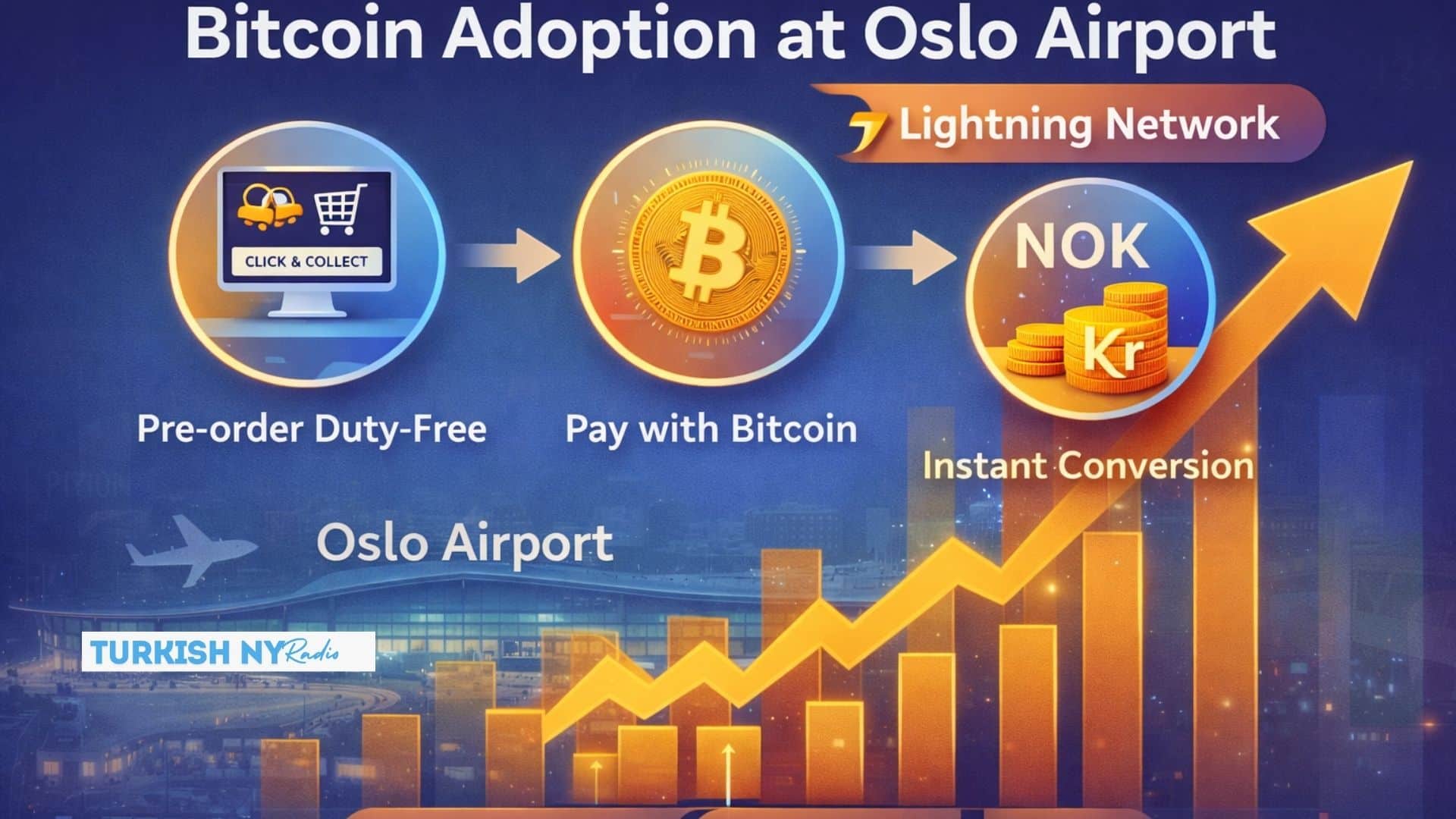
At the heart of this development is Oslo Airport’s acceptance of Bitcoin via its click and pick up service. Passengers may pre-order duty-free products online and pay with Bitcoin at the time of pickup. Prices are clearly indicated in Norwegian krone, so customers always know what they are paying.
A source familiar with the deployment noted, “This aims to simplify travel easier. Some clients actually live in a digital economy, payments should reflect that.”
Also read: The Rise of ‘Gulf Oil Bitcoin’: Why Oil-Rich States Are Building BTC Exposure
Why Lightning Makes It Work
What makes Oslo Airport Bitcoin practical is the use of the Lightning Network. This technology allows transactions to go through in seconds with very low fees. For busy travelers grabbing last-minute purchases, speed is everything, and long confirmation times would not work in an airport setting.
A payments expert noted, “Lightning turned Bitcoin from a slow payment method into something that actually fits retail.”
Retailers Avoid Price Swings
One major reason airports are open to this model is that Oslo Airport Bitcoin payments don’t expose shops to crypto volatility. Bitcoin payments are instantly converted into local currency, meaning retailers still receive Norwegian kroner, just like with card payments.
A Perfect Fit for Overseas Travelers
Airports welcome passengers from all around the world, with many already using cryptocurrency wallets. By accepting Bitcoin, Oslo Airport is adapting to how worldwide travelers are living and making purchases, compared to forcing everyone to use a single payment method.
This strategy also aligns with Norway’s overall image and a country that encourages innovation while maintaining strong consumer safeguards.
Setting an Example Others May Follow
While a few airports have tested crypto in limited ways, Oslo Airport Bitcoin stands out because it’s tied to mainstream duty-free shopping. Observers believe this could encourage other major airports to look seriously at Bitcoin payments if passenger interest grows.
For Bitcoin supporters, this move feels symbolic. Using crypto in a place as ordinary, and as global as an airport, helps normalize it.


Conclusion
The opening of Oslo Airport’s Bitcoin payments demonstrates how far cryptocurrency has progressed when combined with the appropriate technology. Fast transactions, straightforward pricing, and immediate conversion result in a paradigm that benefits both customers and retailers. If effective, this might subtly change the way individuals pay while traveling.
Also read: Strive Accelerates Bitcoin Accumulation With $500 Million Preferred Stock Offering
Summary
Oslo Airport Bitcoin payments at represent a significant step toward widespread cryptocurrency adoption. Travellers may now pay purchasing duty-free purchases with Bitcoin utilizing a lightning-fast mechanism that settles quickly in local currency. The design eliminates risk for shops while providing flexibility to passengers. As a significant worldwide gateway, Oslo Airport’s decision might encourage various airports to consider Bitcoin as a viable financial option.
Glossary of Key Terms
Bitcoin: Is a stateless digital coin designed for transactions among peers.
Lightning Network: A technique that allows for quick, affordable payments using Bitcoin.
Click & Collect: Is an organization that allows clients to buy through the internet and choose up in-person.
Duty-free: Airport-based retail items sold free various local taxes.
Crypto wallet: Is a digital instrument for managing and spending cryptocurrency.
FAQs for Oslo Airport Bitcoin
1. Where can Bitcoin be used at Oslo Airport?
Bitcoin is available for duty-free purchases made through Click & Collect.
2. Are prices shown in Bitcoin?
No, prices remain listed in Norwegian kroner.
3. Is the Lightning Network required?
Yes, it enables fast and efficient payments.
4. Do retailers hold Bitcoin after payment?
No, payments are converted instantly into local currency.
5. Could other airports adopt this model?
Yes, strong traveler demand could encourage wider adoption globally.
Sources