When the Federal Reserve announced its latest Fed rate cut, trimming the benchmark rate by a quarter point, it sent ripples through Wall Street, Main Street, and every household budget in between. Chair Jerome Powell’s cautionary note,
“A further reduction in the policy rate is not a foregone conclusion,” left Americans wondering what comes next. Here’s what this Fed rate cut means for your wallet and your financial game plan moving forward.


The Big Picture: Why the Fed Hit the Brakes
This Fed rate cut comes amid growing economic uncertainty. Inflation has cooled, but growth is slowing, and the government’s partial shutdown has blurred the data the Fed relies on. As Powell put it, “We’re making decisions with one eye closed.”
Financial planner Stephen Kates from Bankrate.com said on X, “Markets overreact when Powell speaks, but the direction is clear rates are easing.” Experts forecast up to four more cuts by 2026, but that’s no guarantee.


Savings: Lock In Your Gains Before They Shrink
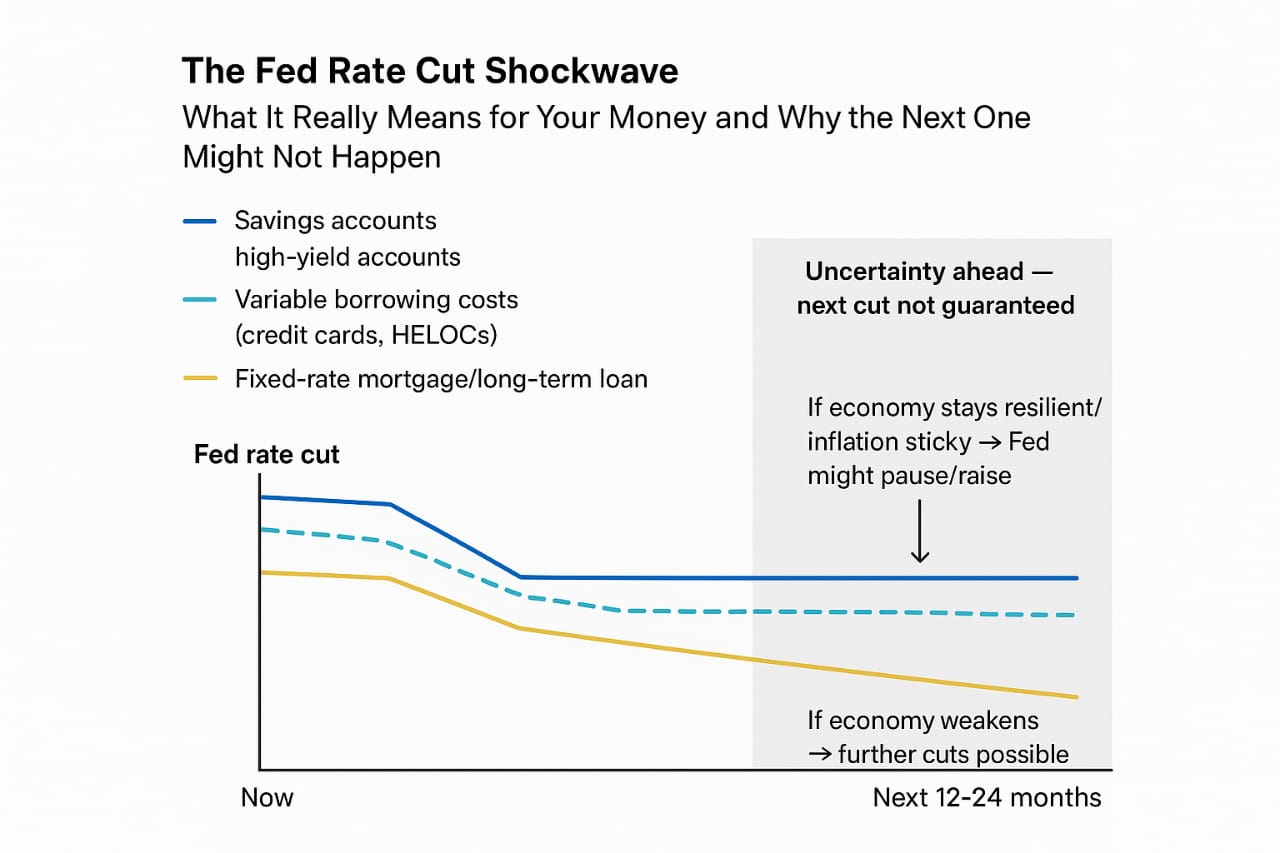
Right now, high-yield savings accounts are offering around 4%, outpacing inflation by roughly one percent a rare win for savers. But this Fed rate cut could be the beginning of a downward slide. “Those rates are going to slowly trickle down,” Kates noted.
If you’re holding a fixed-rate CD, relax you’re safe. But if you’ve been waiting to open one, do it soon. As one financial expert put it, “Skate to where the puck is going. This isn’t going to be the last Fed rate cut we see.”
Credit Cards: Small Relief, Big Opportunity
WalletHub estimates that this Fed rate cut could save credit card users $1.92 billion in interest over the next year. That’s good news but the average APR is still around 24%. LendingTree’s Matt Schulz told Reuters, “Rates will likely fall more by year-end, regardless of what the Fed does in December.”
If you’re juggling debt, consider zero-interest balance transfers or calling your issuer for a rate match. And improving your credit score could amplify the benefit of this Fed rate cut.
Mortgages and Housing: Breathing Room Ahead
Mortgage rates, closely tied to the 10-year Treasury yield, have dropped to 6.26% after this Fed rate cut. While the decline isn’t seismic, it’s meaningful for homebuyers and those looking to refinance.
Financial strategist Doug Boneparth told Reuters, “If you’re waiting for a massive drop in rates, you’ll miss opportunities along the way.” That means now may be a sweet spot for locking in a refinance or exploring adjustable-rate mortgages.
Investments: A Mixed Bag for Markets
This Fed rate cut may provide short-term market optimism, especially in sectors like housing, tech, and consumer credit. But volatility looms. As Powell hinted, the Fed’s path is uncertain and markets don’t like uncertainty.
Long-term investors should see this as a reminder to diversify, not chase headlines. As Boneparth put it, “Fixed income is still a decent income driver.”
Conclusion
The Fed rate cut is both a lifeline and a warning. Borrowers get a break, savers may lose a bit of yield, and investors should tread carefully.
The Fed’s next move will hinge on inflation, job data, and political clarity. Until then, stay agile and don’t bet your financial future on another Fed rate cut just yet.
For more news, visit our platform.
FAQs about Fed rate cut
1. How does the Fed rate cut affect my savings?
You may see savings yields start to decline slowly over the next few months.
2. Will my mortgage rate go down?
If you’re on an adjustable-rate mortgage, yes, fixed-rate loans will be less affected.
3. Should I refinance my loans now?
It could be smart to act soon before rates plateau or rebound.
4. Is another rate cut likely this year?
Not certain — Powell says it depends on incoming economic data.
Glossary
-
Fed Rate Cut: A reduction in the Federal Reserve’s benchmark interest rate.
-
Basis Point: One-hundredth of a percentage point (0.01%).
-
High-Yield Savings Account: A savings account offering above-average interest.
-
Refinancing: Replacing an existing loan with a new one, usually to get a lower rate.