
This article was first published on TurkishNY Radio.
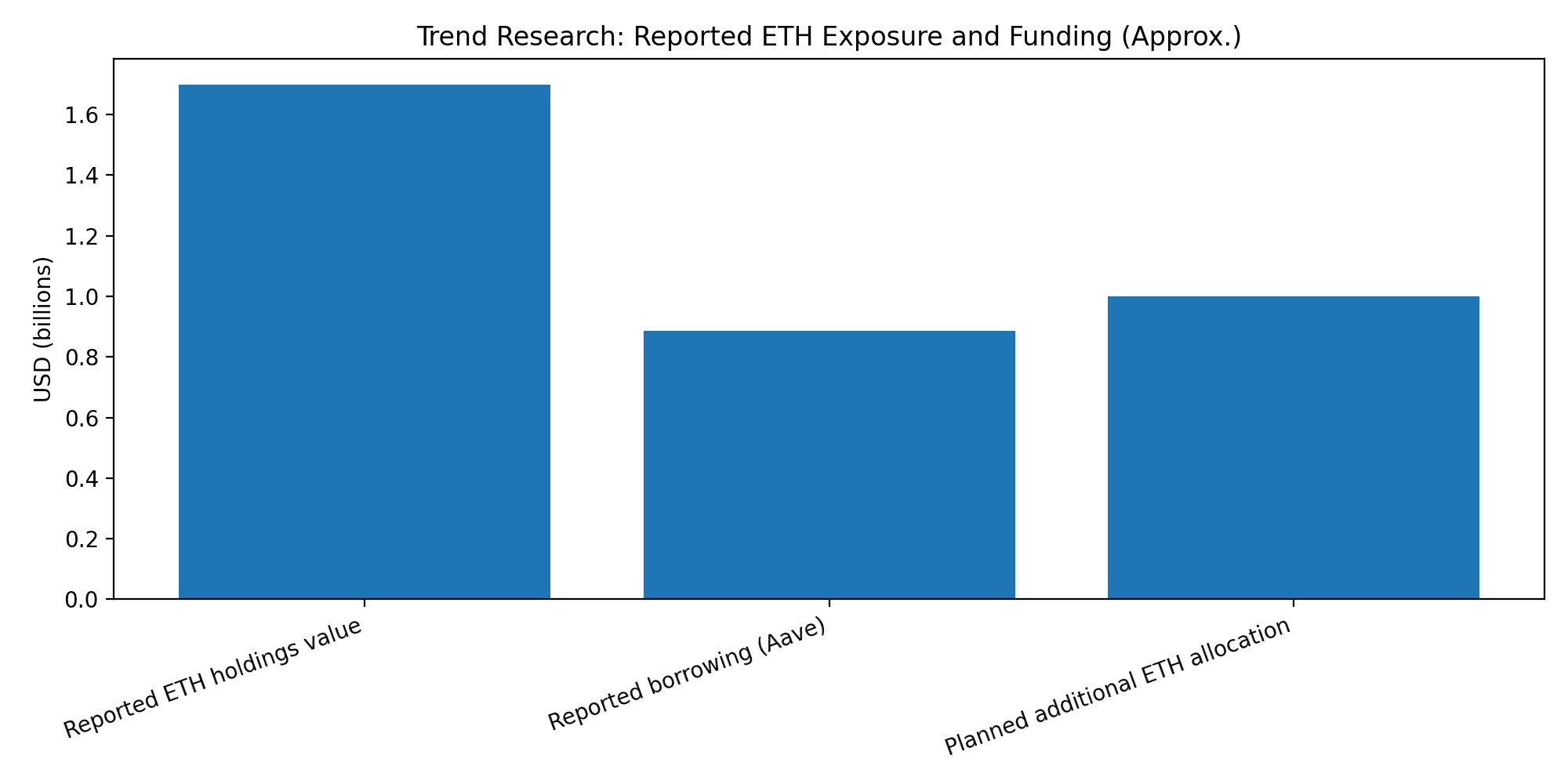
Trend Research is back in the Ethereum spotlight after its founder, Jack Yi, signaled a fresh wave of buying that could total another $1,000,000,000. The message was blunt: the firm is preparing additional capital to keep accumulating ETH, and Yi attaching a public warning against shorting added fuel to an already noisy market.


The headline number is big, but the more interesting part sits underneath it. Large ETH purchases have already pushed Trend Research into the conversation of top holders, and multiple reports tie the strategy to borrowing on a major DeFi lending protocol, which turns this from simple conviction into a leveraged bet on time and volatility.
Jack Yi ETH accumulation story behind the headline
In recent days, reports said Trend Research bought an additional 46,379 ETH across multiple transactions, lifting total holdings to roughly 580,000 ETH. That balance, based on the same reporting, was valued around $1.7B at the time, a scale that puts the firm above most corporate ETH treasuries tracked in public discussions.
Yi’s new statement about preparing another $1B effectively tells the market the accumulation is not finished. No clear timetable was included in the public messaging, which leaves room for interpretation: it could be a near-term buying plan, or it could be capital earmarked to deploy in phases when liquidity and price conditions look right.
Leverage turns a whale trade into a risk story
Several reports also pointed to a financing layer that changes how traders read the move. The same coverage described Trend Research as borrowing roughly $887M via Aave, often characterized as close to 2x leverage. In plain terms, leverage can make gains feel faster when price trends up, but it also tightens the margin for error if ETH drops hard or collateral values swing.
One report put the estimated average entry around $3,208, while ETH was near $2,920 at the time of publication, implying the position was underwater on paper. That detail matters because it frames the “do not short” warning as more than bravado. It is also a public signal that the firm expects time to do the heavy lifting, even if the trade looks uncomfortable in the short run.
Why this matters for Ethereum’s market narrative
Big buyers do not automatically mean a straight line up, and a higher balance does not magically erase sellers. Still, aggressive spot accumulation can influence sentiment, especially when it arrives during choppy price action and traders are leaning into leverage on both sides.
More importantly, the purchase wave revives a familiar Ethereum question: is ETH being treated as a productive asset, or just a ticker to swing trade. For longer-term holders, the answer often ties back to fundamentals that do not trend on social media but do show up over time: network usage, fee pressure, Layer 2 activity, staking participation, and total value locked across applications.

Those indicators help explain whether demand is organic, meaning users are consuming blockspace and services, or mostly speculative, meaning price is moving faster than adoption. The market can do both at once, but it rarely sustains both forever.
The shorting warning is a message to traders, not a guarantee
Yi’s warning against shorting ETH will get repeated because it reads like a challenge. In reality, it is better understood as positioning: a large holder stating confidence while building size, likely to discourage momentum shorts and signal staying power to the market.
If the strategy relies on borrowing, traders will also watch for on-chain hints of stress, such as collateral moves, repayment activity, or transfers toward exchanges. Separate monitoring notes have also pointed to borrowing and exchange deposits tied to wallets labeled in public tracking discussions, which is the kind of detail that can quickly shift the story from “accumulating” to “managing risk.”


Conclusion
Trend Research preparing another $1B for ETH is a loud signal, but the real news is the structure: a massive balance, recent buys that pushed holdings toward 580,000 ETH, and reports of leverage layered on top. The setup can amplify upside if Ethereum rebounds, yet it also adds fragility if volatility spikes.
For everyone else, the clean takeaway is simpler: big money is still willing to build ETH exposure, but the market will judge the move not by the headline, but by execution, risk control, and what Ethereum’s real-world usage does next. This article is for information only and is not investment advice.
FAQs
What did Jack Yi say about buying ETH?
He said Trend Research is preparing another $1,000,000,000 allocation to continue buying ETH and publicly advised against shorting Ethereum.
How much ETH does Trend Research reportedly hold now?
Reports said the firm’s holdings rose to roughly 580,000 ETH after a recent 46,379 ETH purchase.
Why is leverage part of this story?
Multiple reports described borrowing around $887M through Aave, which can magnify gains in a rally but increases liquidation and volatility risk if ETH moves sharply lower.
Glossary of Key Terms
ETH: The native asset of the Ethereum network, used for transactions, securing the network through staking, and paying fees.
Shorting: A trade that profits if an asset’s price falls, typically by borrowing and selling first, then buying back later at a lower price.
Leverage: Borrowed capital used to increase exposure, which can increase returns and also increase losses.
Aave: A decentralized lending protocol where users can borrow against posted collateral, with liquidation risk if collateral value drops.
Average entry price: The blended cost basis of a position, useful for estimating whether a holder is in profit or in a paper loss.