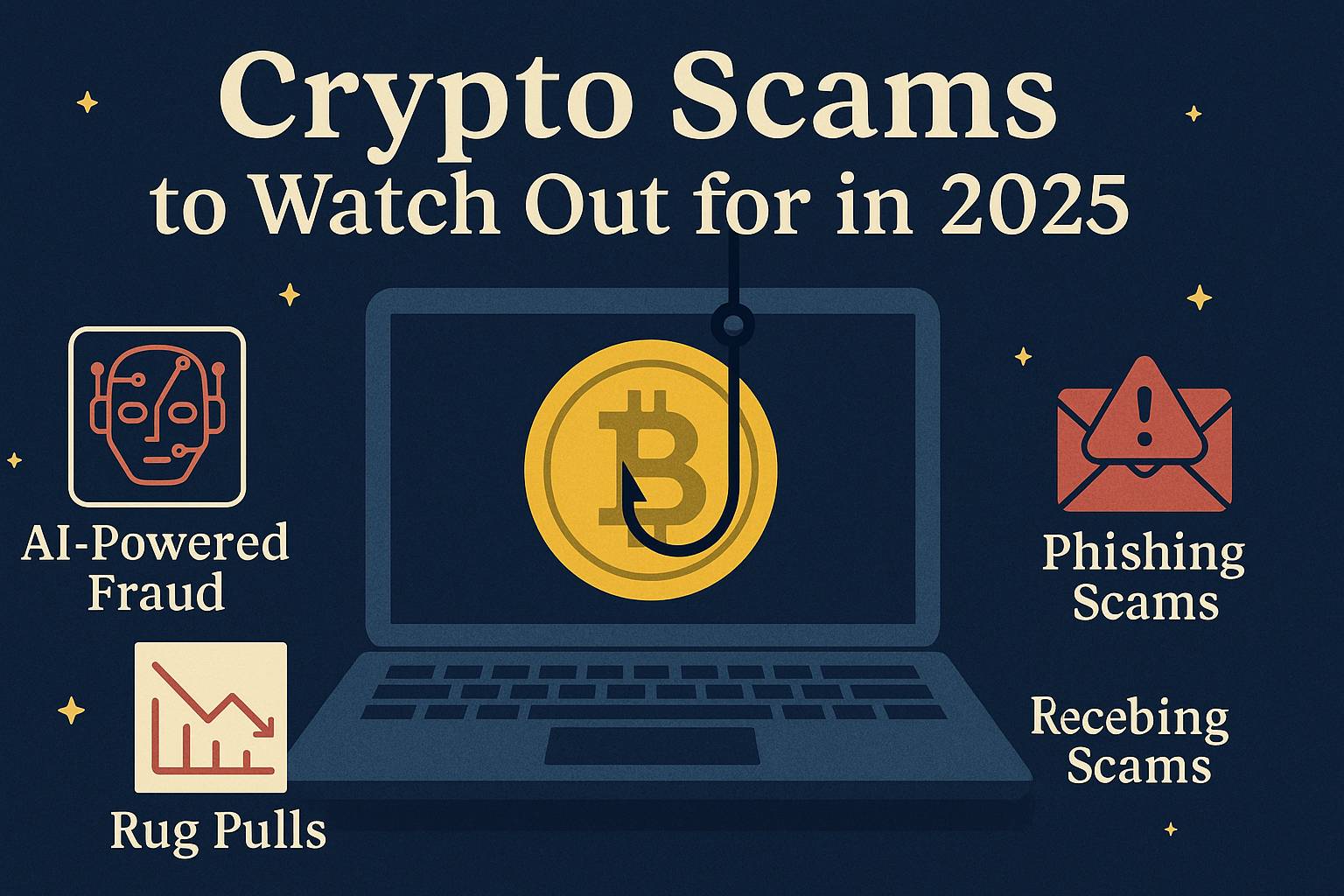
Cryptocurrency promises innovation and independence, but by 2025, it’s also home to some of the most sophisticated crypto scams and frauds in digital history.
Fraudsters use cutting-edge techniques, psychological manipulation, and market euphoria to steal from both novice and experienced investors. However, awareness remains the most effective weapon. This report exposes the frauds that will shape the year, as well as prudent strategies to keep valuables secure.


The Rise of AI-Powered Deception
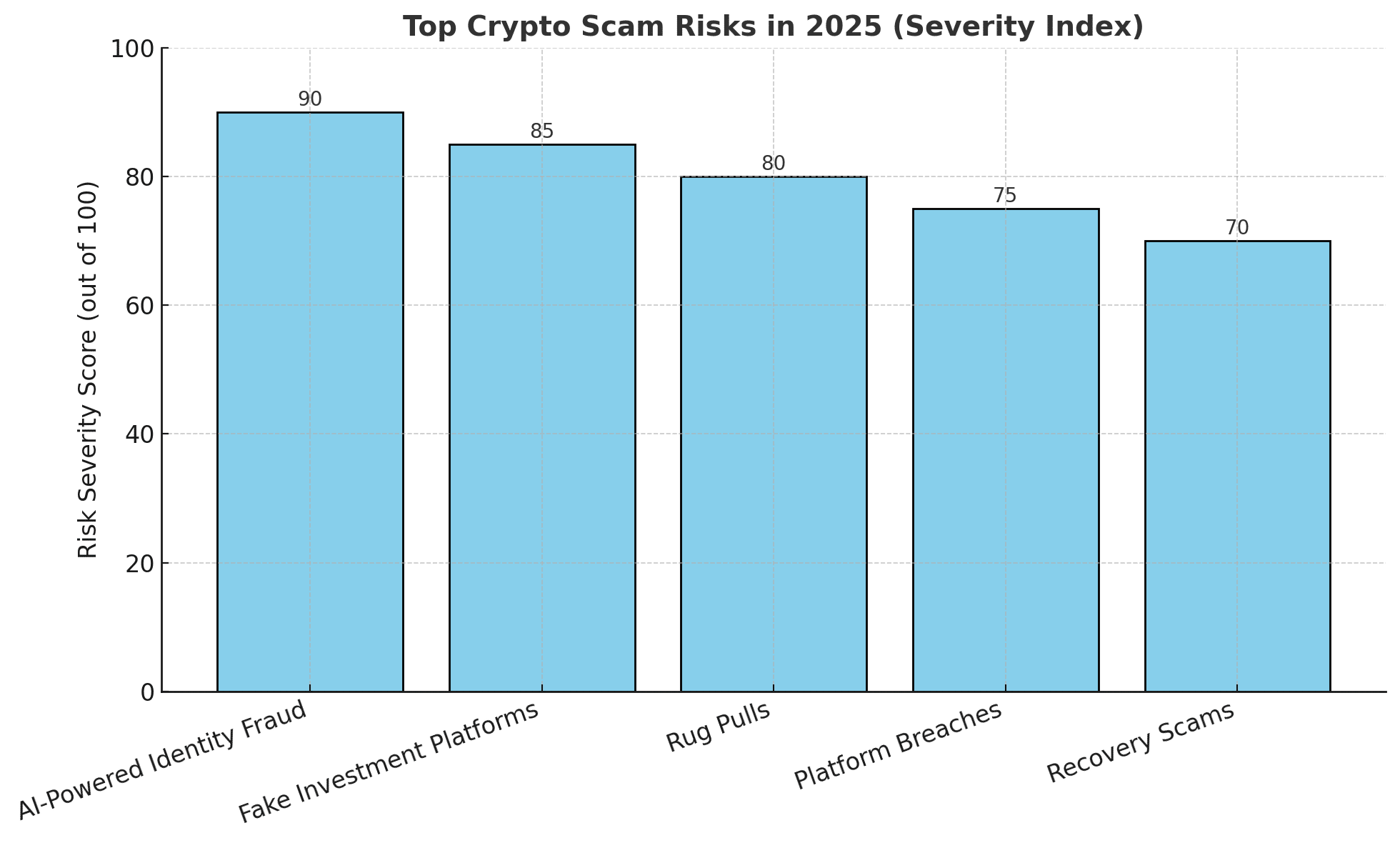
Scammers in 2025 don’t only guess passwords; they also replicate identities. Artificial intelligence can now generate voice mimics, convincing films, and even complete fraudulent websites that mimic legal transactions. Criminals employ these methods to avoid scrutiny and coerce investors into making quick, irreversible transactions.
Security analysts emphasize that any unsolicited request for funds, no matter how legitimate it appears, should be viewed as hostile until validated independently.
Illusion of Instant Riches
High-yield cryptocurrency investing platforms are making a comeback, but in a more risky way. These crypto scams promise daily returns or double-your-money promises, backed up by fancy dashboards and forged transaction logs. New investors, drawn by sophisticated marketing, frequently overlook the lack of verified blockchain records or audited financial statements.
The golden rule remains unchanged: if the profits appear to be assured, it is most certainly a fraud.
Rug Pull Royalty: Meme Coin Disasters
High-profile meme-coin disasters have dominated news. Argentina’s “$LIBRA” token rose after a presidential endorsement, but crashed minutes later, costing investors hundreds of millions of dollars.
Former SafeMoon executives were convicted in May 2025 for misrepresenting locked liquidity to benefit themselves.
These incidents demonstrate that dazzling token marketing may conceal missing riches.
Massive Hacks and Platform Breaches
Systemic thievery is on the rise. By mid-2025, crypto scams had drained over $2.17 billion in assets globally, almost double the previous worst year. A single ByBit hack was responsible for $1.5 billion of that amount.
Meanwhile, Coinbase disclosed a hack in which insiders colluded to provide criminals user data. They demanded $20 million as ransom.
These stories demonstrate the need to continuously earn and verify platform confidence.
The New Face of Rug Pulls
Rug pulls have moved beyond meme coins. Scammers will build comprehensive ecosystems in 2025, complete with decentralized applications, liquidity pools, and influencer endorsements, before disappearing with investor cash.
To achieve credibility, some people even manufacture regulatory clearances or form alliances.
Before investing funds, blockchain experts propose having smart contracts verified by reliable auditors and keeping track of liquidity lock data.
Hacked Platforms and Insider Leaks
Not every theft involves market manipulation. Some originate from within. Exchange hacking and insider collaboration may jeopardize thousands of accounts overnight. The threat here is twofold: stolen assets and stolen data, which may be utilized in phishing or blackmail attacks.
Using cold storage wallets for long-term holdings remains the most secure countermeasure.
Recovery Scams: Second Attack
Victims frequently suffer a painful twist: being pursued again by scammers posing as recovery agents. They offer to recover stolen bitcoin in return for upfront payments or access to wallets. Instead, they cause more losses.
Financial gurus caution that no credible recovery service requires money before properly restoring assets.
Recognizing Red Flags
Certain warning signals appear in most frauds. Requests for fast action, confidentiality, or bitcoin payment should be viewed with skepticism. Misaligned details, such as minor differences in URLs, inexplicable contract addresses, or a lack of verified contact information, are typical warning signs.
Experts advocate routinely double-checking information with blockchain explorers, official channels, and community forums.
Creating a Personal Defense Strategy
Avoiding crypto scams requires determined behavior rather than perfect understanding.
For larger assets, start with hardware or cold storage wallets.
Second, activate multi-factor authentication for all platforms. Third, never click on unsolicited links, especially those from seemingly recognizable senders.
Finally, keep a healthy suspicion about “limited-time opportunities” and celebrity endorsements, which are regularly used in crypto scams operations.
Building Shields: How to Avoid Crypto Scams
To verify, utilize trustworthy official platforms, double-check URLs or smart-contract addresses using explorers, and study whitepapers or reliable sources. Avoid receiving unsolicited investment proposals.
Second, protect your devices with VPNs, updates, and reliable software. Back up your private keys offline. Avoid promises of big rewards that come at no risk.
Third, protect yourself from social engineering by pausing before responding to urgent communications, validating claims through independent channels, and swiftly reporting questionable conduct.
Conclusion: Vigilance Is The New Currency.
The digital asset market is a frontier, and like any frontier, it draws both pioneers and predators. In 2025, the sophistication of crypto scams need a combination of technology, skepticism, and community awareness.
By developing solid verification habits and avoiding emotionally charged judgments, investors may safeguard not just their investments but also their long-term faith in this innovative business.
Disclaimer: This article is for informational purposes only and does not constitute financial advice. Readers should conduct independent research before making investment decisions.
Glossary of Terms
Rug Pull – When developers abandon a project and withdraw investor funds.
Cold Storage Wallet – An offline wallet that secures crypto from online threats.
Phishing – Fraudulent messages designed to trick recipients into revealing private keys or passwords.
Liquidity Pool – A pool of funds in decentralized finance used for trading without intermediaries.
Smart Contract Audit – A review of blockchain code to detect vulnerabilities.
Multi-Factor Authentication (MFA) – A login process requiring two or more verification methods.
Blockchain Explorer – A tool that allows users to view transaction data on a blockchain.
Frequently Asked Questions
What is the biggest crypto scams risk in 2025?
AI-powered identity fraud and fake investment platforms lead the threat list.
How can I avoid a rug pull?
Verify smart contract audits, check liquidity lock data, and research the team’s credibility.
Should I store crypto on an exchange?
For long-term holdings, cold storage wallets are safer than keeping assets on exchanges.
Are celebrity-endorsed crypto projects safe?
Not always. Many use fake endorsements to create hype and credibility.
What is a recovery scam?
A secondary fraud targeting victims of earlier scams, promising fund recovery for a fee.
Sources/References