The U.S. Securities and Exchange Commission has recently told issuers of LTC, XRP, SOL, ADA, and DOGE-based proposed crypto ETF products to pull back their 19b-4 filings.
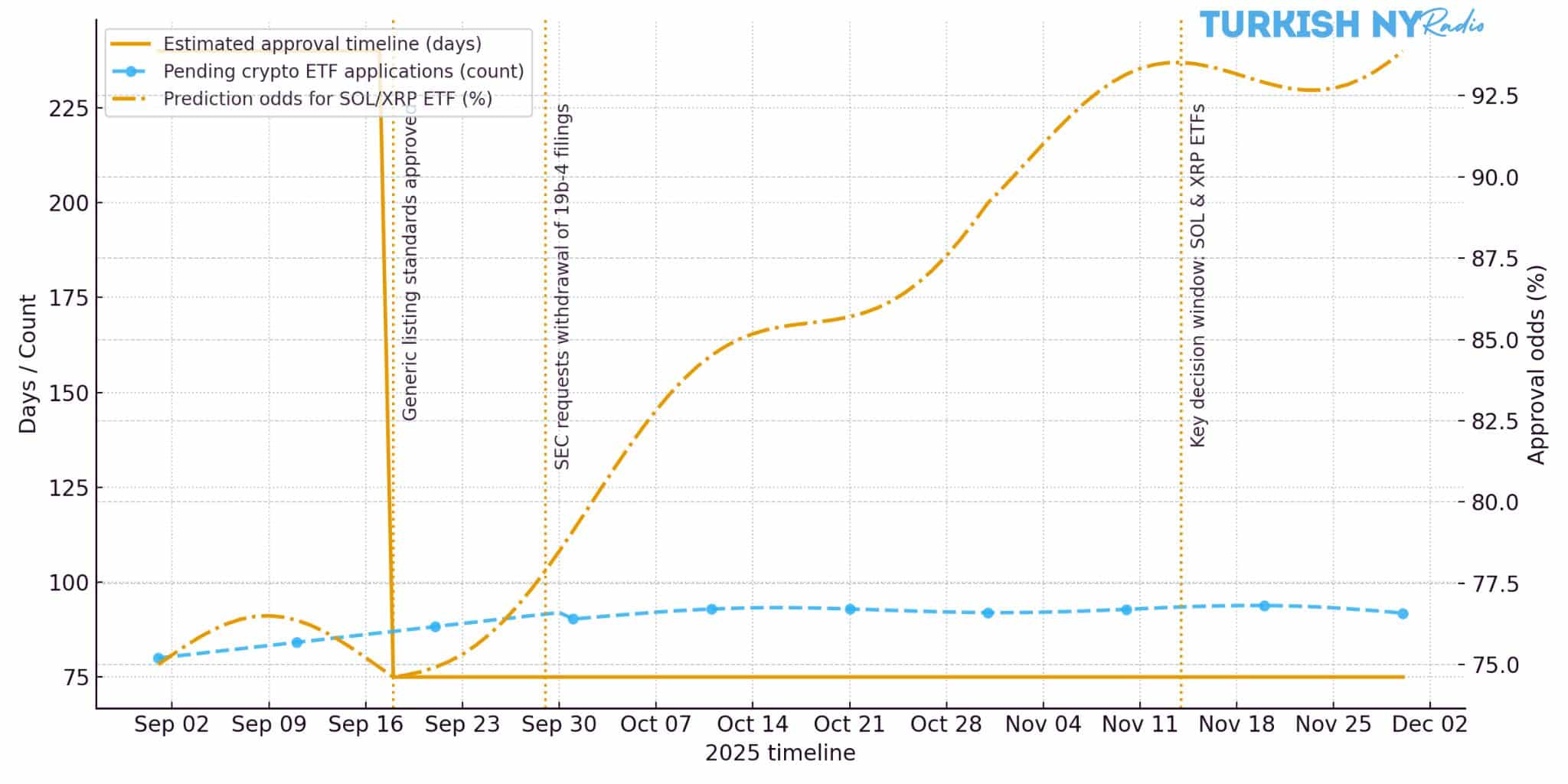
That is an instruction that tells of a structural change, not so much a rejection. On Sept. 18, 2025, the SEC officially adopted generic listing standards for commodity-based and digital asset ETFs.


Exchanges can list new crypto ETF products that satisfy the eligibility requirements without having to rely on individual 19b-4 amendments.
As a result of that change, issuers are told to withdraw 19b-4 filings and go through the S-1 registration process the way traditional spot crypto ETFs must launch. The change is designed to shrink the window for approvals from as much as several months to perhaps 75 calendar days under certain circumstances.
Crypto ETF Approval Shifts Under Generic Listing
Previously, every crypto ETF had this dual path:
A rule change for listing authority at the exchange level 19b-4 and the issuer’s own S-1 registration. Enabled by the SEC’s generic listing approval, exchanges such as Nasdaq, Cboe BZX, and NYSE Arca will be able to list spot crypto ETF products that meet set criteria without requiring custom approvals.
That clears out one significant procedural hurdle and shifts regulatory scrutiny to the S-1 stage. The SEC specifically authorized Grayscale’s Digital Large Cap Fund (GDLC) under the new measure.
GDLC has BTC, ETH, XRP, SOL, and ADA exposure and is the first multi-cryptocurrency product to benefit from the accelerated route. The move fast-tracks a framework through which crypto ETF proposals can navigate regulatory processes, with the SEC in position to green-light S-1s faster if all requirements are met.
Also Read: Crypto ETFs Approval: SEC to Decide on 16 Crypto Funds
ETF Pipeline, Deadlines & Outlook
That’s in addition to over 90 crypto ETF applications presently pending review by the SEC. Several face critical decision dates. For example:
Franklin Templeton’s respective SOL and XRP applications are, meanwhile, being tentatively set for Nov. 14, 2025.
BlackRock’s proposed add-on for staking in its Ethereum trust is set to expire on Oct. 30.
Other suggestions tied to DOGE, ADA, and LTC range from October to November.
Prediction markets and analysts both give firm odds that Solana and XRP ETFs will finally clear by the year-end, with procedural hurdles now reduced.
Thanks to generic listing, the S.E.C. doesn’t have to follow that schedule so closely: If the S-1s are ready, approvals can come earlier or even outside of fixed windows.
Strategic Effects & Industry Response
The move to withdraw isn’t a statement of disfavor but one of reorientation. Some issuers are now able to avoid duplicative 19b-4 filings in order to focus resources on operational readiness custody, valuation, liquidity, risk disclosures, and compliance within the S-1 construct.
The move also could benefit various ETF providers, such as Grayscale, 21Shares, and VanEck. The streamlined procedures allow for quicker launches and easier access to capital markets with altcoin-based crypto ETFs.
Reddit forums such as CryptoCurrency explain the withdrawal memo in terms of procedural alignment rather than regulatory animus. Over on X (Twitter), crypto policy journalists spotted that the SEC’s action was a direct result of approval for the generic listing rule.
Also Read: SEC’s Crypto ETF Clash: New Rules Ignite Opportunity and Concern
Price Scenarios After ETF Arrivals
| Asset | Bull Case | Base Case | Bear Case |
| LTC (Litecoin) | $125 – $145 | $105–$125 | $85–$105 |
| XRP | $3.40 – $3.80 | $2.80–$3.40 | $2.20 – $2.80 |
| SOL (Solana) | $220–$260 | $170 – $220 | $140 – $180 |
| ADA (Cardano) | $1.10–$1.30 | $0.80–$1.10 | $0.60–$0.85 |
| DOGE (Dogecoin) | $0.30 – $0.38 | $0.22–$0.30 | $0.15–$0.25 |
Final Insight
This guidance from the S.E.C. is not an about-face, then, but rather a recalibration. It paves the way for crypto ETFs and lowers barriers to altcoin exposure through regulated products.
Now execution depends on the S-1 and issuer discipline. The coming wave of approvals may also reshape the structure of crypto investment offerings in the United States.
More crypto news on crypto ETF, expert analysis, and price forecasts is available now on our crypto news platform
Summary
The SEC has requested LTC, XRP, SOL, ADA, and DOGE ETF issuers to withdraw 19b-4 filings after the approval of generic listing standards. This modification will simplify the approval process for crypto ETFs by eliminating repetitive tasks and placing attention on S-1 registration.
Cryptocurrency exchanges can now fast-track altcoin ETF launches under streamlined rules, with Solana and XRP ETF decisions expected soon in a sign that diversified crypto products will be more accessible to investors.
Glossary of Key Terms
Crypto ETF
A crypto ETF (exchange-traded fund) is essentially a bundle of cryptocurrencies rolled into one unit that people can buy and sell on stock exchanges.
19b-4 Filing
This is a formal letter that exchanges send to the SEC requesting approval for new product listings. Think of it like getting a permit before you open a store.
S-1 Registration
An S-1 is a dense document that companies file with the Securities and Exchange Commission ahead of launching an investment product. It’s the same concept as checking on a car before it can hit the road.
Generic Listing Standards
These are pre-established rules that exchanges can use to list products without having to go to the S.E.C. each time and ask for special approval—basically, using a fast lane at the airport.
Altcoin
Any cryptocurrency other than Bitcoin. That has led to the creation of such things as Ethereum, Solana, Cardano, Dogecoin, and Litecoin different sodas compared with Coke.
Exchange-Traded Product (ETP)
A type of financial product that mirrors the price of assets (like crypto or stocks) and is traded on exchanges. Like buying a gift card whose value fluctuates based on what it’s pinned to.
Custody
In the world of finance, custody refers to how we keep financial assets safe. For the crypto ETFs, it’s like a bank vault securing those coins so investors don’t have to handle them themselves.
Approval Odds
The chances of the SEC greenlighting a crypto ETF. Investors track these odds in the same way that sports fans study betting lines before a big game.


Frequently Asked Questions About Crypto ETFs
Q1. Why did the SEC request issuers to stop filing for altcoin crypto ETFs?
The decision was made through the adoption of generic listing standards by the SEC, which replace both 19b-4 filings and clear a regulatory path for crypto ETFs just focusing on S-1 registration and compliance rigging.
Q2. Does this rule change impact the cost or availability of crypto ETFs?
No additional costs are added. The change streamlines things, possibly speeding up launches and providing investors earlier access to altcoin ETFs like XRP, SOL, ADA, DOGE, and LTC.
Q3. What are the major benefits of SEC generic listing standards for crypto ETFs?
Generic listing will alleviate regulatory logjams, facilitate speed to market for altcoin products, and provide enhanced clarity for issuers, while also ensuring investor protection can be assured within the context of a sound, proven framework that is consistent with how exchange-traded products have operated in other asset classes (including physical commodities).
Q4. Could security or compliance risks hike with Velocity for crypto ETF approvals?
Investor safeguards remain intact. The SEC demands thorough S-1 disclosures, stringent custody solutions, and operational compliance to make the launch of an altcoin ETF transparent, secure, and trustworthy.