This article was first published on TurkishNY Radio.
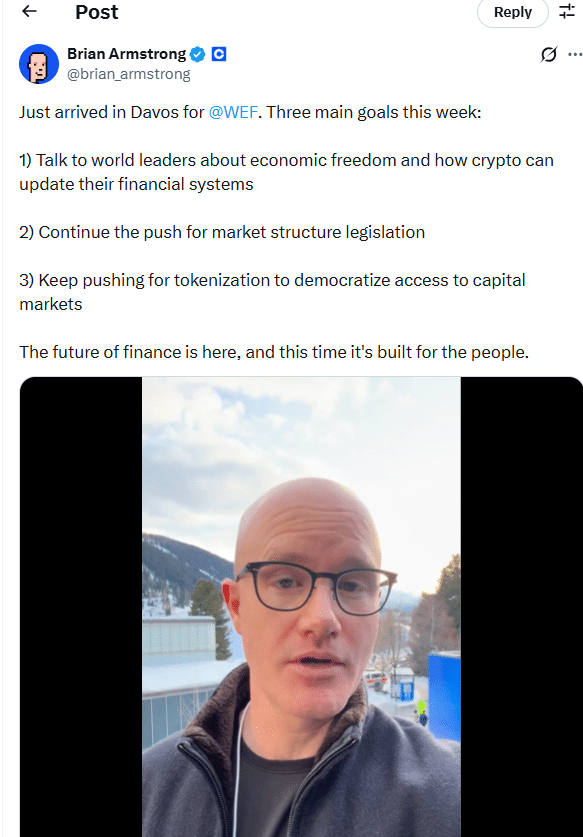
Coinbase CEO Brian Armstrong says he will carry US talks on the crypto market structure bill to Davos this week as lawmakers struggle to keep the legislation on schedule.


Armstrong shared the update in a video posted on X. He said Coinbase will stay active in the policy process during the World Economic Forum. He also said he plans to meet several bank CEOs.
Coinbase Pushes Compromise as Market Structure Bill Faces Agency Debate
Armstrong described the effort as practical and solution-driven. He said Coinbase wants to find terms that work for both crypto platforms and traditional lenders. He added that these discussions will be shared with lawmakers and the administration.
The crypto market structure bill aims to clarify how digital assets should be regulated in the United States. The main question is whether tokens fall under securities rules or commodities oversight. That distinction decides which agency has power.
Also Read: US Crypto Bill 2025 Sets Guardrails for Tokens, Regulators, and Builders
The bill would also reshape oversight of spot crypto markets. Under the draft described, the Commodity Futures Trading Commission would gain a larger role. This has been a long-standing goal of several major exchanges.
Supporters say the plan could reduce confusion. They believe clear rules can unlock safer growth. They also argue that better definitions can improve investor protection.
Coinbase Pulls Back After Draft Review
Coinbase recently pulled support for the crypto market structure bill. Armstrong said the newest Senate Banking text contains too many issues. He posted online that Coinbase cannot support the bill as written.
The statement drew attention because Coinbase often positions itself as a compliant player. It also carries weight in Washington due to its size and market reach. Industry observers see Coinbase’s view as a signal that compromise remains difficult.
Armstrong said the bill includes policy choices he cannot accept. He warned the language could harm innovation while failing to create workable clarity. He said better edits are needed before the bill can move forward.
Tokenized Equities Become a Major Flashpoint
Armstrong pointed to what he called a de facto ban on tokenized equities. Tokenized equities refer to stock-like products issued or represented on blockchain rails. Advocates argue they could reduce friction in settlement and trading.
Some banks and regulators remain cautious about the idea. They worry about investor safeguards and market structure impact. Armstrong warned that overly strict language could shut the door on a key area of innovation.
The dispute shows how sensitive the bill has become. It is no longer only about crypto exchanges. It now touches future market design.
DeFi and Privacy Concerns Add More Tension
Armstrong also raised concerns about restrictions affecting decentralized finance. DeFi platforms often rely on open-source smart contracts and user-controlled wallets. Many do not operate like traditional intermediaries.
He also flagged privacy issues. Policymakers often push for stronger monitoring tools to prevent misuse. Crypto advocates argue that privacy features can still coexist with compliance.
Armstrong warned that broad limits could harm lawful uses. He suggested unclear language could lead to sweeping enforcement. He also argued the Market Structure Bill could shift too much influence to the Securities and Exchange Commission.
Stablecoin Rewards Debate Splits Banks and Crypto
Stablecoins became another pressure point in the crypto market structure bill debate. One key issue is rewards programs. Banks want limits that prevent crypto firms from mimicking deposit interest.
Crypto advocates warn that broad bans could choke off product design. They argue rewards can be tied to activity rather than passive holding. They also say stablecoins can support payments and commerce.

The draft would restrict paying interest only for holding a stablecoin. It would still allow rewards linked to payments or loyalty programs. Disclosure rules would be set by the SEC and the CFTC.
That fine line is now central to negotiations. Both sides fear the other is gaining an advantage.
Senate Banking Markup Paused as Talks Continue
Coinbase’s break came as the Senate Banking Committee prepared to mark up the bill. The committee then postponed its session. Bipartisan negotiations are still ongoing.
Chairman Tim Scott has said stakeholders remain engaged. That suggests the Market Structure Bill is not dead. Still, delays increase risk. Each pause invites more lobbying and more edits.
The longer the timeline stretches, the harder consensus becomes. Markets also stay in a holding pattern. Many firms want a clear rulebook to plan product strategy and compliance.


Conclusion
Armstrong says Davos will be a new venue for advancing talks on the crypto market structure bill. His goal is to bring banks closer to a compromise draft that lawmakers can pass. The next version of the Market Structure Bill will likely depend on stablecoin rewards, tokenized equities, and agency jurisdiction. If those points remain unresolved, progress could stall again.
Also Read: Brazil’s New IOF Crypto Tax Brings Rules, Surveillance and Bigger Bills
Appendix: Glossary of Key Terms
Crypto market structure bill: A proposed U.S. law that would establish rules for crypto tokens, exchanges and oversight responsibilities.
Token taxonomy: The classification of a token into whether, in the United States, it should be treated as a security or a commodity.
SEC: The U.S. Securities and Exchange Commission, which regulates the securities markets and a lot of token disclosures.
CFTC: The Commodity Futures Trading Commission, a U.S. regulator that regulates commodities and might oversee spot crypto markets.
Spot crypto market: A trading market on which crypto assets are purchased and sold for settlement right away.
Stablecoin rewards: Rewards provided to users for holding or utilising stablecoins, widely disputed as interest-like rewards.
Tokenized equities: Blockchain-based representations of stock exposure that seek to streamline trading and settlement.
Frequently Asked Questions About Market Structure Bill
1- What is the crypto market structure bill?
It is a proposed US framework to define how crypto tokens and exchanges are regulated.
2- Why is Coinbase discussing the Market Structure Bill at Davos?
Armstrong wants direct talks with bank leaders to reduce friction and shape a workable draft.
3- Why did Coinbase pull support for the latest draft?
The company says the text includes major policy issues that could restrict innovation.
4- What role would the CFTC play under the proposal?
The bill could expand CFTC authority over spot crypto trading markets.
Reference