This Article Was First Published on TurkishNY Radio.
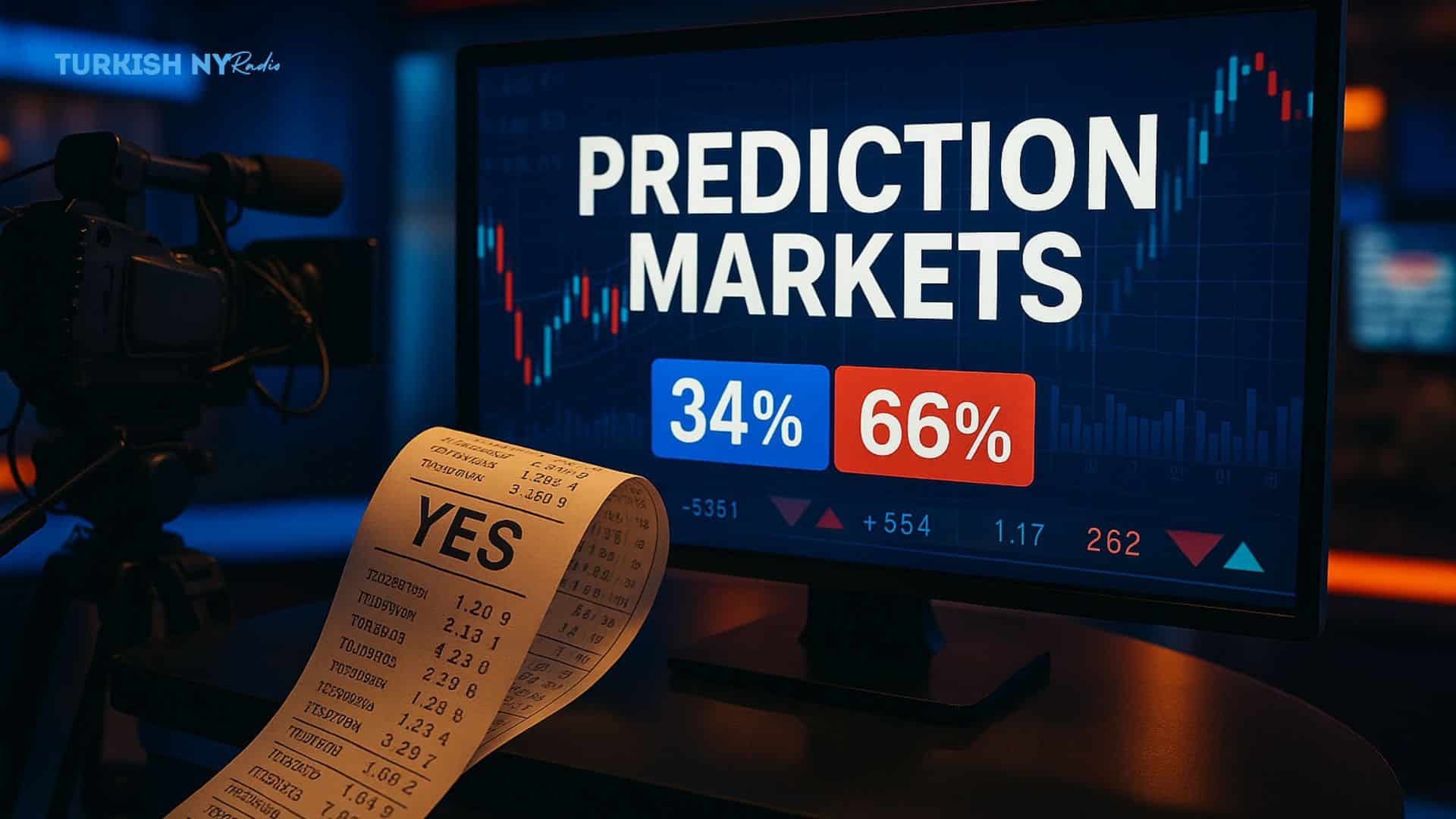
Prediction markets are moving into mainstream media. Kalshi has signed new partnerships with major news networks. The deals will place event odds on TV and online platforms.


The shift comes as Polymarket prepares a return to the U.S. market. Competition is rising fast. So is public attention.
CNBC and CNN Bring Prediction Markets to TV Audiences
Prediction markets data from Kalshi will appear on CNBC starting in 2026. CNBC plans to use real-time probabilities on TV and digital products. The network also plans an on-air ticker. It will show shifting odds as events change. CNBC will also link to market pages hosted on Kalshi’s site.
CNN announced its own Kalshi partnership a day earlier. It named Kalshi its official prediction market provider. CNN plans to use real-time probabilities across TV segments and social content.
Also Read: Polymarket U.S. Launch Marks New Era for Regulated Prediction Markets
On-air integration will be guided by CNN’s chief data analyst, Harry Enten. Coverage will focus on elections and the economy.
Prediction Markets Gain Demand as Kalshi and Polymarket Compete
Prediction markets let users trade on real-world outcomes. Prices reflect crowd belief. They often move faster than polls. They also react quickly to news. Supporters say they add clarity. Critics say they can be misunderstood.
Still, demand is growing. Media networks now see them as a fresh signal.
Kalshi has gained ground during this shift. It has expanded distribution through news partnerships. It has also posted strong trading activity. Polymarket remains a close rival. It is now pushing to regain the top position.
Why CNBC Is Adding Prediction Markets
Prediction markets are becoming a tool for business coverage. Newsrooms need ways to explain uncertainty. Probabilities can do that in simple form. A live ticker can show change over time. That makes it easy for viewers to follow.
CNBC says Kalshi’s data will support its reporting. It wants a clearer view of fast-moving events. The network expects the data to help explain market reactions. It also expects the feature to boost audience engagement.
CNN’s Focus on Elections and Economic Shifts
Prediction markets are popular during election seasons. They also react to inflation prints, rate decisions, and jobs data. CNN plans to use Kalshi’s odds in those areas. It will place the probabilities into segments and digital posts.
CNN’s approach centers on explanation. The aim is to translate complex outcomes into a simple number. That can help people compare scenarios. It can also guide how stories are framed.
Kalshi Funding and Token Plans
Prediction markets firms are attracting large capital. Kalshi recently completed a major funding round. The deal lifted its valuation into the top tier of fintech startups. The funding gives it more runway. It can invest in products, compliance, and partnerships.
Kalshi has also pushed into crypto rails. It launched tokenized versions of event contracts on Solana. Each contract can exist as a tradable token. Users can hold them in standard wallets. This setup may widen access. It may also enable new trading tools.
Volume Growth and New Scrutiny
Prediction markets have seen sharp growth in trading volume. Kalshi reported record activity in November. Weekly volume also surged above major milestones. That kind of growth can attract more users. It can also bring more attention from critics.
Kalshi has faced claims of market manipulation. Critics argued that outcomes could be gamed. The company’s founder rejected those claims. He called them baseless. Disputes like this may increase as the sector grows.
Polymarket’s U.S. Push Heats Up the Race
Prediction markets rivalry is tightening. Polymarket is preparing to return to the U.S. It says waitlisted users will get access to a new American app. This follows regulatory steps tied to U.S. oversight.
Polymarket also posted strong volume in November. It is trying to regain momentum. It has pursued distribution deals as well. One partnership targets fantasy sports users. The firm has also discussed launching a token. It wants to expand its platform under a regulated structure.
Institutional Liquidity Interest Is Rising
Prediction markets need deep liquidity to scale. Large trades require stable order books. Institutional firms can help with that. Galaxy Digital has held talks with both Kalshi and Polymarket. Early testing is underway. The effort could grow if demand stays strong.
Conclusion
Prediction markets are entering a new phase. Media deals are turning odds into a daily signal. Kalshi is gaining reach through CNBC and CNN. Polymarket is pushing back with a U.S. return plan. Funding, volume, and tokenization are adding fuel. The next step will be trust. Platforms must prove integrity as the audience grows.
Also Read: Polymarket Launches Mini App in World App, Bringing Prediction Markets to Millions


Appendix Glossary of Key Terms
Event Contracts: Yes-or-no contracts tied to a specific outcome or date.
Implied Probability: The market’s estimated chance of an outcome based on price.
On-Air Ticker: A live TV graphic showing changing odds or probabilities.
Liquidity Provider: A firm or trader that helps keep markets active and tradable.
Market Maker: A participant posting buy and sell prices to reduce spreads.
Tokenized Contracts: Event contracts issued as crypto tokens for wallet-based trading.
Frequently Asked Questions About Prediction Markets
1- What are prediction markets
They are trading venues where contracts track real-world outcomes. Prices can imply probabilities.
2- Why are TV networks using prediction markets
They can show uncertainty in a simple format. They also update fast during breaking news.
3- When will CNBC start showing Kalshi data
CNBC plans to start using the data in 2026.
4- What is tokenized prediction trading
It means event contracts can be represented as crypto tokens. They can be stored and traded via wallets.