
China has once again stepped onto the global stage with a move that could reshape digital finance. The People’s Bank of China has officially opened a digital yuan international operations centre in Shanghai, setting the tone for what many see as the next chapter in central bank digital currency adoption.
Officials called the launch a “historic inevitability” in the progression of modern payments. The centre is designed to oversee cross-border use of the digital yuan, improve settlement efficiency, and provide a link between traditional finance and blockchain rails.


With three distinct platforms, covering payments, blockchain services, and digital asset interfaces, the facility signals that Beijing is moving from pilot programs to real-world operations.
Why the Digital Yuan Centre Matters Now
The timing is notable. Global markets remain uneasy, and trust in existing financial systems is being tested. China’s push with the digital yuan reflects not just domestic ambition but a desire to shape how international settlements work. Analysts say this is about more than technology, it’s about influence.
At the recent launch, Deputy Governor Lu Lei emphasized that “the foundation of international finance is shifting, and the digital yuan must be part of that evolution”.
His remarks point to a long-term plan: position the e-CNY as both a domestic tool and a cross-border option, especially for trade partners looking for alternatives to dollar settlements.
Digital Yuan and the Dollar Question
This centre adds fuel to ongoing speculation that China intends to chip away at dollar dominance. By setting up a dedicated hub, the digital yuan can be tested for large-scale international use.
The strategy ties into Beijing’s larger efforts, including its Cross-Border Interbank Payment System, designed to function as an alternative to SWIFT.
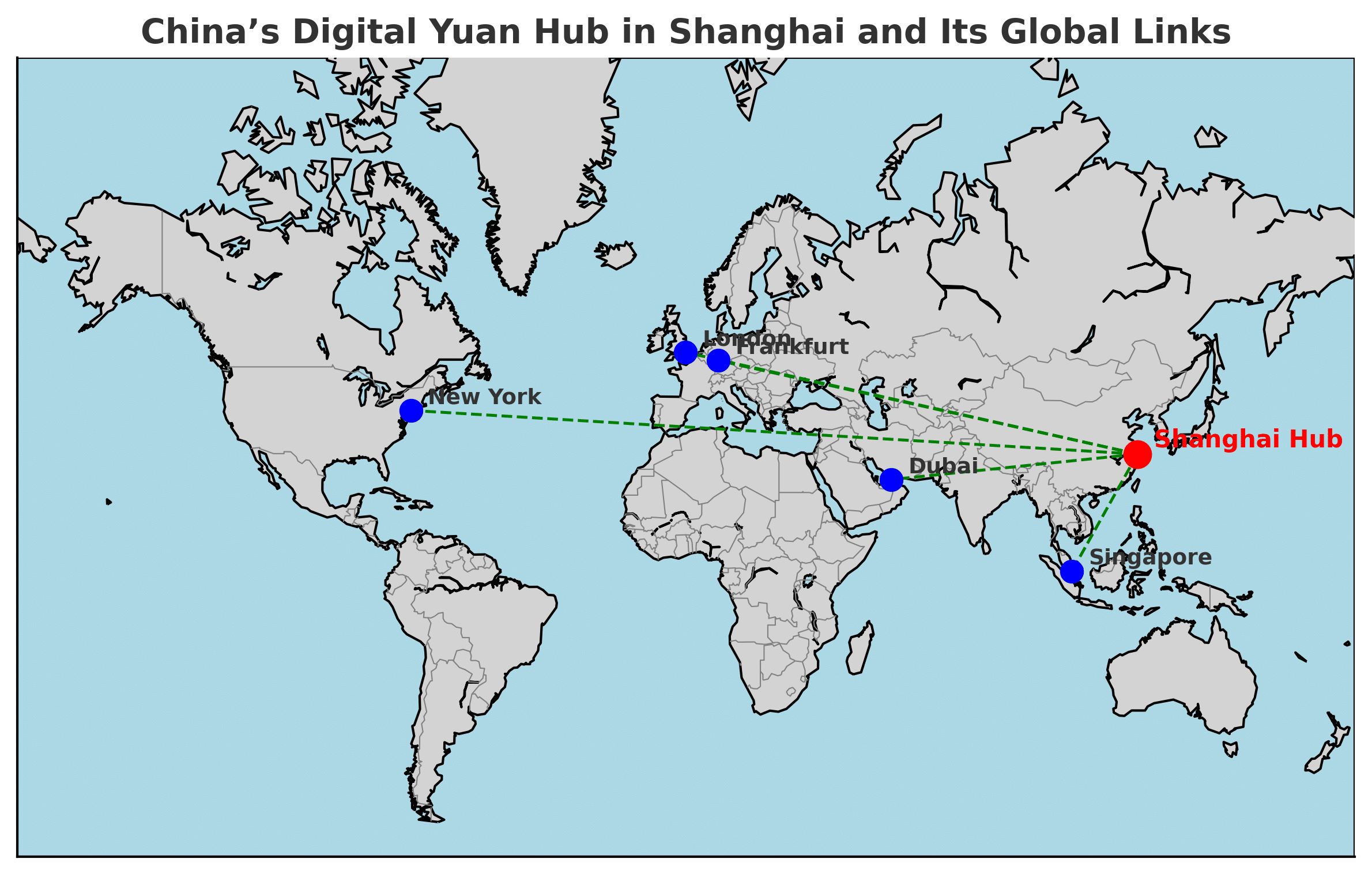
One strategist wrote on X, “The new hub isn’t just about CBDCs, it’s about building a parallel system that gives China leverage in global finance”.
That sentiment echoes what many in Washington and Brussels have long feared: the digital yuan becoming a tool of economic statecraft.
Technical Backbone of the New Centre
What stands out about the Shanghai hub is its infrastructure. The digital yuan platform integrates a cross-border payments channel, blockchain-based messaging systems, and an asset interface to connect with existing financial systems. It isn’t flashy, it’s plumbing. But in payments, plumbing is everything.
Observers point out that China is framing the digital yuan hub as “open and inclusive.” Yet, as history shows, Beijing prefers controlled inclusion.
This approach could mean that while foreign entities might connect, they’ll do so under strict conditions. The balance between openness and control will likely define whether the digital yuan scales internationally or remains regionally focused.
Global Ripple Effects
Other countries are paying close attention. The International Monetary Fund has urged central banks to think carefully about how non-bank players and fintechs can be included in CBDC ecosystems.
China is already ahead on that front, allowing select intermediaries to handle e-CNY wallets. That flexibility could give the digital yuan an edge as adoption spreads.
Projects like mBridge, a multi-CBDC experiment involving China and several other central banks, could also plug into this new hub.
If successful, it may pave the way for real-time transactions between multiple CBDCs, creating a new financial architecture that looks nothing like today’s dollar-centric order.
Conclusion
China’s new operations centre is more than another step in the digital yuan experiment. It is a clear statement: Beijing wants to lead the conversation on how digital money flows across borders.
While critics argue that adoption is still thin, the infrastructure is now in place.
The question is no longer whether the digital yuan matters. The real question is how far and how fast it will spread—and what that means for a financial system long dominated by the U.S. dollar.
FAQs about China’s new digital yuan
Q1: What is the purpose of China’s new digital yuan hub?
It manages cross-border settlements, blockchain services, and integration with traditional finance systems.
Q2: Why is this important globally?
It signals China’s intent to position the digital yuan as a serious alternative for cross-border payments.
Q3: How does this affect the U.S. dollar?
Analysts believe it could gradually reduce reliance on the dollar in trade settlements, though it remains early days.
Q4: Will other countries adopt similar models?
Yes, several central banks are studying China’s approach as they build their own CBDC frameworks.
Glossary
Digital Yuan (e-CNY): China’s central bank digital currency, issued by the People’s Bank of China.
CBDC: Central Bank Digital Currency, a digital form of national currency.


SWIFT: The dominant global messaging system for cross-border payments.
CIPS: China’s Cross-Border Interbank Payment System, an alternative to SWIFT.
mBridge: A multi-CBDC project connecting several central banks for cross-border transfers.
Blockchain Infrastructure: The underlying technology that records and validates digital transactions.