Bolivia’s newly elected president, Rodrigo Paz Pereira, has announced a revolutionary plan to deploy blockchain technology across government systems to fight corruption and rebuild public trust.
After two turbulent decades of socialist rule under MAS, Paz’s administration signals not just a political shift but a digital one.


Speaking in La Paz on Monday, the president declared, “It’s time to make corruption technologically impossible.”
His announcement sparked intense discussion across the Americas, as Bolivia positions itself as one of Latin America’s most ambitious adopters of blockchain governance.
Blockchain as the Weapon Against Corruption
The blockchain initiative will focus on making every government contract, license, and procurement process transparent and tamper-proof.
By recording transactions on a decentralized ledger, the government aims to eliminate hidden deals, fake invoices, and political favoritism.
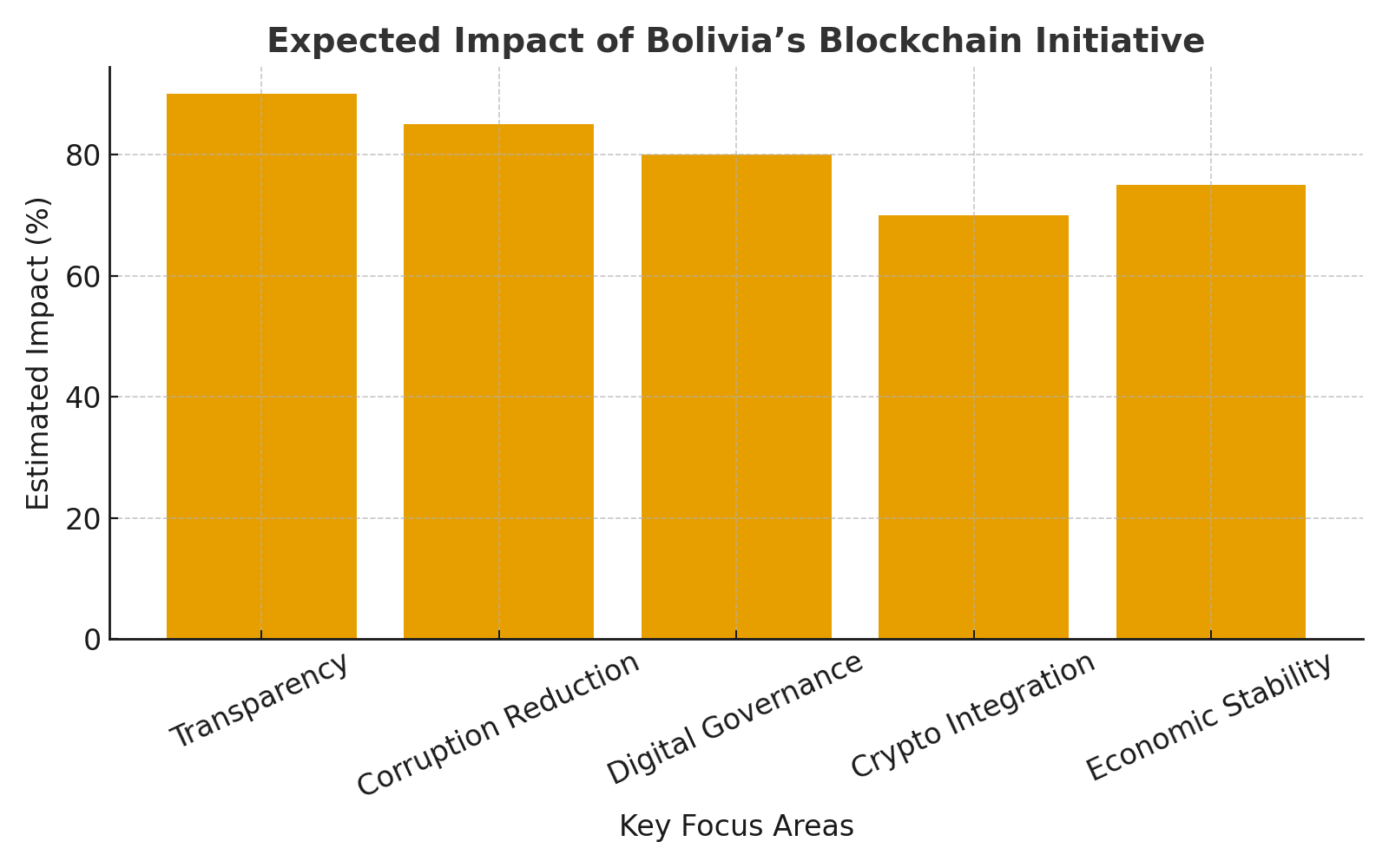
According to a report by Cointelegraph, Paz’s administration plans to introduce smart contracts for all public-sector tenders, ensuring automatic payments only after verified delivery.
“Every peso spent by the government will be visible and traceable,” Paz said in an interview with El Deber.
Experts believe this could set a precedent for how developing nations handle accountability.
“Bolivia is proving that technology and ethics can walk hand in hand,” tweeted crypto policy analyst Carla Fernández (@CarlaF_Blocks) on X.
Crypto for Economic Stability
In addition to transparency, Paz’s government plans to launch a foreign-exchange stabilization fund backed partly by declared crypto assets.
This would allow citizens and businesses to integrate their digital holdings into the national economy.
As MoneyCheck reported, the Central Bank of Bolivia, after lifting its crypto ban in 2024, will help manage the fund to diversify reserves.
The move comes amid dollar shortages and inflationary pressures that have strained the Bolivian economy.
Financial strategist Diego Salvatierra commented, “Including crypto in national reserves is a bold step, but it could attract global investment if managed wisely.”
Challenges on the Digital Frontier
Despite the optimism, critics caution that blockchain is no magic wand. Analysts warn that without robust institutions, audits, and trained personnel, corruption might simply migrate to new loopholes.
Still, the momentum appears unstoppable. Paz has promised pilot programs within six months and full digitalization of procurement records by the end of 2026.
A Latin American First?
While countries like Brazil and Chile have explored digital governance reforms, Bolivia’s full-scale integration of blockchain into anti-corruption frameworks marks a first in the region.
It aligns with a growing trend toward transparency tech from Estonia’s e-governance to Singapore’s data-driven oversight systems.
If successful, Bolivia could transform from one of South America’s most corruption-plagued economies into a model of digital democracy.
Conclusion
Rodrigo Paz’s push for blockchain transparency is more than a technological experiment it’s a moral statement.
For a nation weary of scandals and economic instability, this initiative could restore faith in public institutions and redefine what good governance looks like in the digital age.


If Bolivia can make corruption “technologically impossible,” as Paz envisions, the ripple effects could inspire governments far beyond the Andes.
For more news, visit our platform.
FAQ
1. What is the main goal of Bolivia’s blockchain plan?
To increase transparency and eliminate corruption in public spending.
2. Will cryptocurrencies become legal tender in Bolivia?
No, crypto will not replace the boliviano; it will supplement economic reserves.
3. When will the blockchain system launch?
Pilot programs are expected within six months of President Paz’s inauguration.
4. Could blockchain really end corruption?
It can’t end it alone—but it makes corruption harder to hide.
Glossary of Key Terms
-
Blockchain: A decentralized, immutable ledger used to record transactions.
-
Smart Contract: Self-executing code that automates transactions based on preset conditions.
-
Crypto Assets: Digital currencies like Bitcoin and Ethereum, held or traded online.
-
Decentralization: The distribution of power and data across a network instead of one central authority.