
A significant chorus of economists and politicians are revising Bitcoin’s place in national economic planning, bringing the concept of a Bitcoin reserve asset into conventional policy talks for the first time.
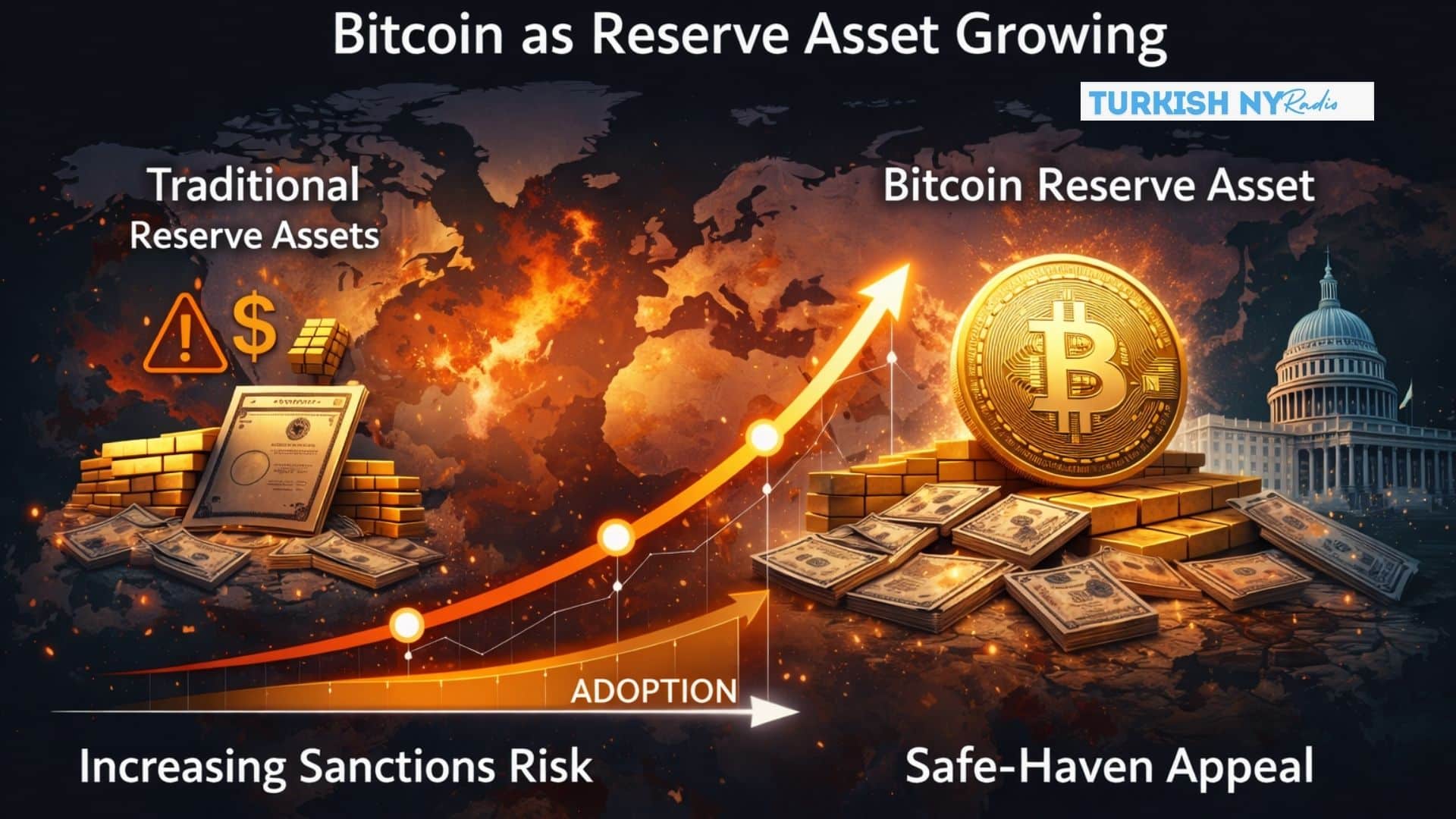
Ongoing international conflicts and sanctions have shown flaws in conventional monetary reserves such as US Treasury bonds and gold, prompting some experts to claim that Bitcoin’s international technological nature makes it especially robust when access to traditional assets is restricted. As worldwide reserve management faces new challenges, the idea of a Bitcoin reserve asset is evolving from a fringe suggestion to a genuine topic of discussion.


Sanctions Reveal Vulnerabilities in Traditional Reserve Assets
The deep freeze of foreign-controlled state assets throughout geopolitical crises has prompted several nations to examine how “safe” their reserves actually are. Analysts contend that availability, rather than stability, has emerged as a key requirement.
Dr. Alan Greene, a macro-strategist, noted:
“A reserve is only valuable if you can actually use it during a crisis. That’s where digital assets enter the conversation.”
Bitcoin, with its decentralized ledger and global transferability, is increasingly evaluated as a Bitcoin reserve asset capable of functioning even under extreme sanctions or network blockades.
Digital Portability: A New Strategic Advantage
While U.S. dollar reserves, sovereign bonds, and gold remain dominant, analysts warn that they all depend on centralized intermediaries, custodians, or physical infrastructure. Bitcoin does not.
A January policy paper highlighted that a nation could still mobilize a Bitcoin reserve asset even if cut off from international financial systems. This property has ignited debate in regions facing heightened geopolitical risk.

Taiwan, Eastern Europe, and Emerging Markets Enter the Conversation
Countries with high exposure to geopolitical shocks are quietly studying the feasibility of adding small allocations of Bitcoin to their reserves. Taiwan’s legislative advisors recently discussed whether a Bitcoin reserve asset could serve as a digital hedge during potential blockades.
Though no formal commitments have been made, the mere fact that such discussions are occurring marks a notable shift from previous years, when Bitcoin was dismissed outright as too volatile for official reserves.
Controversy Among Monetary Authorities Continues Prevalent.
Although rising interest rates, major financial regulators remain wary. The Swiss National Bank and numerous European central banks have opposed the concept of incorporating a Bitcoin reserve asset, citing instability, legal ambiguity, and liquidity issues.
An EU policy advisor commented:
“For governments, volatility is not just a risk, it’s a liability. Bitcoin must overcome perception barriers before gaining true reserve legitimacy.”
Still, the pressure to diversify reserves in an increasingly fragmented global system ensures the Bitcoin reserve asset discussion will continue.
A Developing, Not Decided, Policy Shift
Whether Bitcoin will ultimately join gold and dollars as part of official reserves remains uncertain. But what is clear is that the Bitcoin reserve asset debate has permanently entered the global financial landscape.
Conclusion
The rise of the Bitcoin reserve asset debate reflects a broader transformation in how nations evaluate economic security. As political tensions reshape the reliability of traditional reserves, Bitcoin’s unique traits, portability, neutrality, and resilience, are becoming harder for policymakers to ignore. The road to widespread adoption remains long, but the momentum behind Bitcoin as a Bitcoin reserve asset suggests the conversation is only just beginning.
Summary
This piece of writing delves into the rising worldwide discussion around establishing a Bitcoin reserve asset in reaction to sanctions and geopolitical dangers. As states confront limited access when compared to conventional reserves, authorities are looking at Bitcoin’s mobility and impartiality as strategic benefits. Although certain nations are cautiously considering minor investments, big central banks are hesitant due to unpredictability concerns. The conversation represents a significant shift in reserve plan of action, with Bitcoin positioned as a viable hedge in a period of increasing political and economic volatility.
Glossary of Key Terms
Reserve Assets: Monetary instruments held by authorities to ensure stability in the currency and provide emergency finance.
Sanctions: Are either economic or political restrictions imposed by a specific country on another nation.
Bitcoin: A decentralised digital currency that operates without a single governing body.
Liquidity: Refers to how quickly an item may be purchased and sold without impacting its price.
Geopolitical Risk: The financial consequence of political wars, sanctions, or destabilization.
FAQs for Bitcoin Reserve Asset
1. What is the reason are countries looking at Bitcoin as a reserve asset?
Growing restrictions and access threats have revealed vulnerabilities in conventional reserves.
2. Does Bitcoin currently being utilized by any central banks?
Although a few tiny governments officially support Bitcoin, but interest is growing.
3. What exactly is the biggest danger of utilizing Bitcoin as a reserve asset?
Flexibility is the biggest concern.
4. Will Bitcoin be confiscated like traditional reserves?
Not readily, as its autonomous network provides unique security.
5. Can Bitcoin overtake gold or US Treasury bonds?
Doubtful in the short future, although it might act as a backup reserve.