![Sun [New]](https://s2.coinmarketcap.com/static/img/coins/64x64/10529.png)




This article was first published on TurkishNY Radio.
The Bitcoin price dips after a sharp escalation in U.S.-Iran tensions unsettled global markets and pushed traders toward safer positions.


The decline followed confirmation from the White House that a naval blockade of the Strait of Hormuz would take effect immediately, marking a clear shift from diplomacy to direct action.
According to the official White House transcript, President Donald Trump announced the decision after negotiations in Islamabad failed to reach agreement.
The talks had been facilitated by Pakistan but ultimately broke down over Iran’s stance on its nuclear program.
Markets reacted quickly. The Bitcoin price dips to an intraday low of $70,617 before recovering slightly above $71,000. The move reflects how closely crypto is now tracking global risk sentiment rather than operating in isolation.
Bitcoin Price Dips as Oil Rally Pressures Markets
At the same time, energy markets moved in the opposite direction. According to TradingView data, oil prices surged close to 10%, briefly touching $105 per barrel.
The Strait of Hormuz remains one of the most sensitive chokepoints in global trade, carrying roughly one-fifth of the world’s oil supply.
This surge mattered for crypto. As oil climbed, broader market sentiment shifted. Traders reduced exposure to volatile assets, which helps explain why the Bitcoin price dips during the same window.
This pattern is not new. Similar reactions have appeared during previous geopolitical shocks, where rising energy costs and uncertainty tend to weigh on liquidity and risk appetite.
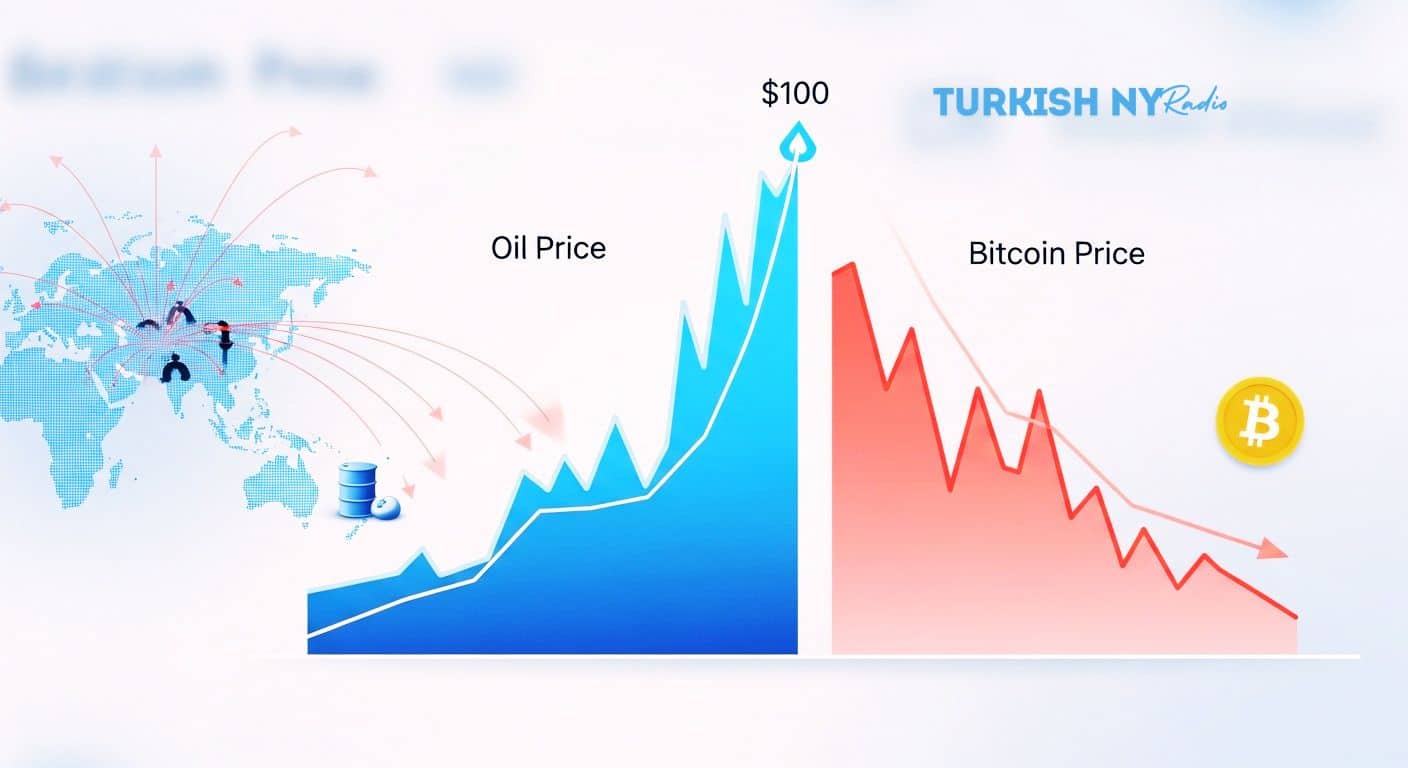
Bitcoin Price Dips as Talks Fail, Risks Rise
The breakdown in negotiations signals more than just a temporary setback. According to the White House statement, President Trump made it clear that Iran’s refusal to abandon its long-term nuclear ambitions was the central obstacle.
“the nuclear issue was the only point that really mattered,”
he said.
Reports also suggest that Iran introduced additional demands, including financial compensation and access to frozen assets.
At the same time, there are claims that naval mines have been deployed to pressure shipping routes, with some transit payments allegedly requested in Bitcoin.
In response, U.S. forces have been authorized to clear mines and intercept vessels complying with those demands.
This escalation adds another layer of uncertainty, reinforcing why the Bitcoin price dips are now closely tied to geopolitical developments.
On-Chain Data Suggests No Panic Selling
While price action reflects caution, blockchain data tells a more measured story. According to Blockchain.com, Bitcoin’s hash rate remains near peak levels, indicating that network security and miner participation are stable.
Additional insights from Glassnode show that long-term holders are not rushing to sell. Exchange balances also continue to decline, suggesting that coins are being held rather than moved for immediate liquidation.
This creates a contrast. Even as the Bitcoin price dips, underlying data does not yet point to widespread distribution or a breakdown in market structure.
Support Levels Come Into Focus
Traders are now watching key price zones closely. The Bitcoin price dips have brought the asset back toward the $70,000 level, which remains an important psychological threshold.
Holding above $68,000 could support a period of consolidation. A move below that level, however, may expose downside toward the $62,000 range, based on historical liquidity zones tracked on TradingView.
Short-term direction will likely depend less on technical signals and more on how the geopolitical situation evolves in the coming days.

Bitcoin Increasingly Moves With Global Markets
What stands out is the broader shift in how Bitcoin behaves. The Bitcoin price dips are no longer driven only by crypto-specific events. Instead, they are increasingly linked to oil prices, geopolitical tensions, and macroeconomic signals.
This reflects a market that has matured but also become more interconnected. As institutional participation grows, Bitcoin is being treated more like a macro-sensitive asset, reacting to the same pressures that influence equities and commodities.
For now, stability in global conditions may determine whether Bitcoin holds its ground or faces further downside.
Summary
- The Bitcoin price dips as tensions between the U.S. and Iran escalate, shaking global markets after a naval blockade announcement.
- Oil climbing above $100 has made traders more cautious, pulling money away from riskier assets like crypto.
- Bitcoin slipped to around $70,600 before recovering slightly near $71,000.
- Despite the drop, on-chain data suggests holders remain calm.
- The $68,000 level is now key, with global events likely guiding Bitcoin’s next move.
Glossary of Key Terms
1. Bitcoin Price Dips
This simply means Bitcoin’s price drops for a period of time, often due to global events, market fear, or investors pulling money out of risky assets.
2. Risk-Off Sentiment
This is when investors get cautious and prefer safer investments instead of riskier ones like crypto, usually during uncertain economic or political situations.
3. Strait of Hormuz
A very important shipping route for oil. If something goes wrong here, it can quickly affect global oil prices and, in turn, financial markets.
4. Geopolitical Risk
Refers to tensions or conflicts between countries that can impact markets. Things like wars or sanctions often influence investor decisions and asset prices.
5. Oil Price Surge
A sudden jump in oil prices, usually caused by supply concerns or conflict. This can make markets nervous and affect assets like Bitcoin.
6. On-Chain Data
Data that comes directly from the blockchain, showing how Bitcoin is being used like transactions, wallet activity, and whether people are buying or holding.


7. Hash Rate
The total computing power securing the Bitcoin network. A high hash rate usually means the network is strong and running securely.
8. Support Level
A price level where Bitcoin tends to stop falling because buyers step in. It’s often seen as a safety zone by traders.
FAQs About Bitcoin Price Dips
1. Why does Bitcoin price dips during geopolitical tensions?
When global tensions rise, investors usually play it safe. They move money into stable assets, which often leads to selling pressure and causes Bitcoin price dips in the short term.
2. Does oil price increase affect Bitcoin price movements?
Yes, it can. When oil prices climb, it often signals uncertainty in the economy. That makes traders cautious, and Bitcoin price dips as investors reduce exposure to risky assets.
3. Is Bitcoin still secure and stable despite price drops?
Yes, Bitcoin remains technically strong. The network continues to run smoothly, and most long-term holders aren’t selling, showing confidence even when prices move lower during uncertain periods.
4. What should traders expect next after Bitcoin price dips?
Traders should keep an eye on key price levels and global news. If tensions ease, prices may stabilize, but ongoing uncertainty could keep Bitcoin moving unpredictably in the near term.