![Sun [New]](https://s2.coinmarketcap.com/static/img/coins/64x64/10529.png)

![BitTorrent [New]](https://s2.coinmarketcap.com/static/img/coins/64x64/16086.png)



This article was first published on TurkishNY Radio.
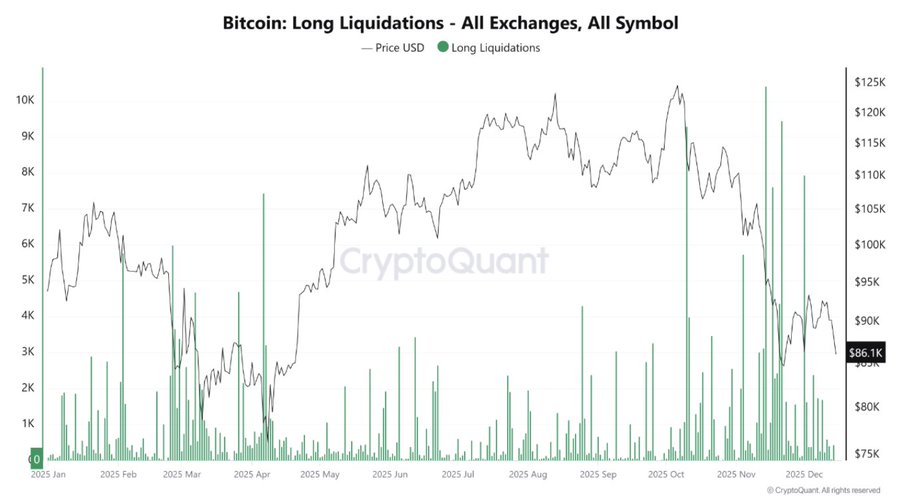
Bitcoin price weakness this week unsettled parts of the market, but analysts say the drop reflects a technical reset rather than a loss of confidence. Market data shows the recent Bitcoin price decline was driven mainly by forced liquidations.


Highly leveraged traders were pushed out as prices slipped. Automatic sell-offs followed. The move looked sharp, but it was not fueled by fear-driven selling.
Bitcoin Price Dip Tied to Leverage Reset, Not Panic Selling
The broader picture behind the Bitcoin move remains stable. Spot market selling remained limited. Long-term holders held their positions. Institutions did not rush for exits. The decline appears linked to leverage being cleared from the system.
Also Read: Bitcoin ATM Expansion Grows in Texas With 200 Planned ATMs
The fall in Bitcoin price began after leveraged bets turned risky. Traders borrowed heavily to bet on upside. When prices dipped, liquidation thresholds were hit.
Positions closed automatically. This pushed Bitcoin lower in a short time. Such chain reactions are common during leverage-heavy periods.
Spot Market Activity Stayed Calm
Despite the drop, spot selling was muted. On-chain data shows no surge in Bitcoin moving to exchanges. Most holders stayed patient.
This shows the Bitcoin price decline was not driven by panic. It was mostly a derivatives-driven move. That distinction matters for long-term outlooks.
Long-Term Holders Show Confidence
Long-term holders continued to hold through volatility. Their behavior signals trust in Bitcoin’s long-term value. Institutional wallets also showed limited movement. This steady base helped prevent a deeper slide in Bitcoin price. It also reinforced market resilience during the pullback.
U.S.-listed spot Bitcoin ETFs saw continued outflows. These redemptions removed a key source of demand. Earlier inflows helped lift the Bitcoin to record levels. The reversal has made recovery harder. ETF flows now remain a major factor shaping short-term price action.
Bitcoin Price Trades Sideways Near $87,000
After the drop, Bitcoin stabilized near $87,000. Trading has remained narrow. Buyers and sellers appear cautious. The lack of fresh catalysts has limited momentum. Until new demand appears, Bitcoin may continue to move sideways.
Economic signals also influenced Bitcoin’s behavior. Recent U.S. jobs data showed slower hiring. Unemployment edged higher. Inflation, however, remains elevated.
This mix complicates expectations around Federal Reserve policy. Investors remain unsure about the timing of rate cuts. That uncertainty has dampened risk appetite.
Deleveraging Seen as a Healthy Reset
Market observers say deleveraging can be constructive. Excess risk is removed. Leverage levels normalize. This lowers the chance of sudden crashes later.
From this view, the Bitcoin pullback strengthens market structure. It prepares the market for steadier growth ahead.
What Could Move Bitcoin Price Next
Institutions have not shown signs of panic. Many appear to be waiting. They are watching macro trends and ETF flows. This patience suggests the Bitcoin dip has not shaken long-term conviction. Strategic positioning remains intact.
Analysts point to several triggers. A return of ETF inflows could lift the Bitcoin. Clear signals from the Federal Reserve may also help. Reduced leverage across markets could create a more stable base. Until then, volatility may remain controlled.
Conclusion
The recent Bitcoin decline was technical in nature. Liquidations, ETF outflows, and macro uncertainty drove the move. Spot demand stayed steady.
Long-term holders showed confidence. Rather than signaling weakness, the pullback reflects a market reset. For seasoned investors, this remains part of Bitcoin’s normal cycle.
Also Read: Fed’s 25 bp cut shakes crypto as Bitcoin whipsaws around key levels


Appendix: Glossary of Key Terms
Leverage: A trading strategy that employs borrowed money to amplify investors’ positions.
Liquidation: This is the forced closing of leveraged positions when your losses reach certain limits.
Spot Market: The buying and selling of real Bitcoin only, without leverage (derivatives).
Hodlers: Investors who hold on to their Bitcoin for the long term.
Bitcoin ETFs: Exchange-traded funds that reflect activity around the price of Bitcoin.
Deleveraging: Process of unwinding excessive leverage in the system by closing positions.
MACD: A technical indicator that measures the strength of a trend.
Frequently Asked Questions About Bitcoin Price
1- Why did the Bitcoin price fall recently?
The drop was caused mainly by leveraged liquidations, not panic selling.
2- Did investors dump large amounts of Bitcoin?
No. Spot market selling remained limited.
3- How do ETF outflows affect Bitcoin price?
ETF redemptions remove steady demand and can slow price recovery.
4- Are long-term holders still confident?
Yes. On-chain data shows holders remained steady.
References