This article was first published on TurkishNYR.
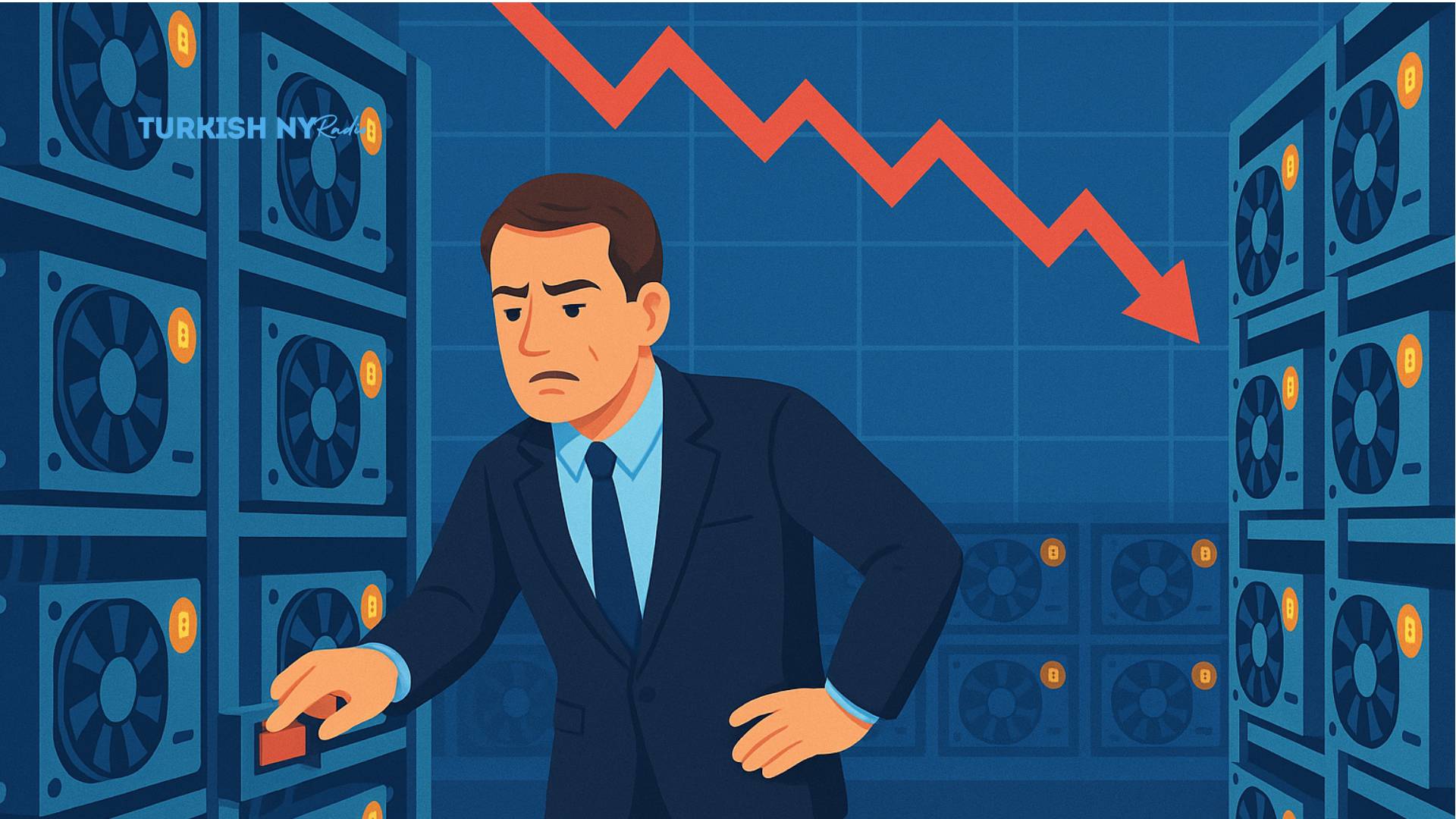
Bitcoin miners are living through one of the toughest profitability cycles in the network’s history. Revenue per unit of computing power has dropped to record or near record lows, electricity costs remain elevated, and mining difficulty is still close to its peak range.


The result is simple and brutal: even modern, efficient rigs often fail to break even, so operators are shutting machines off and rethinking business models.
This is no longer a niche industry story. The squeeze on miners affects market sentiment, network security dynamics, and the wider perception of proof of work as an economic system.
Hashprice Slides To The Floor
The key number in this story is hashprice, as this metric tracks the expected daily revenue, in dollars, for a given amount of Bitcoin mining power, usually measured per petahash per second (PH/s).
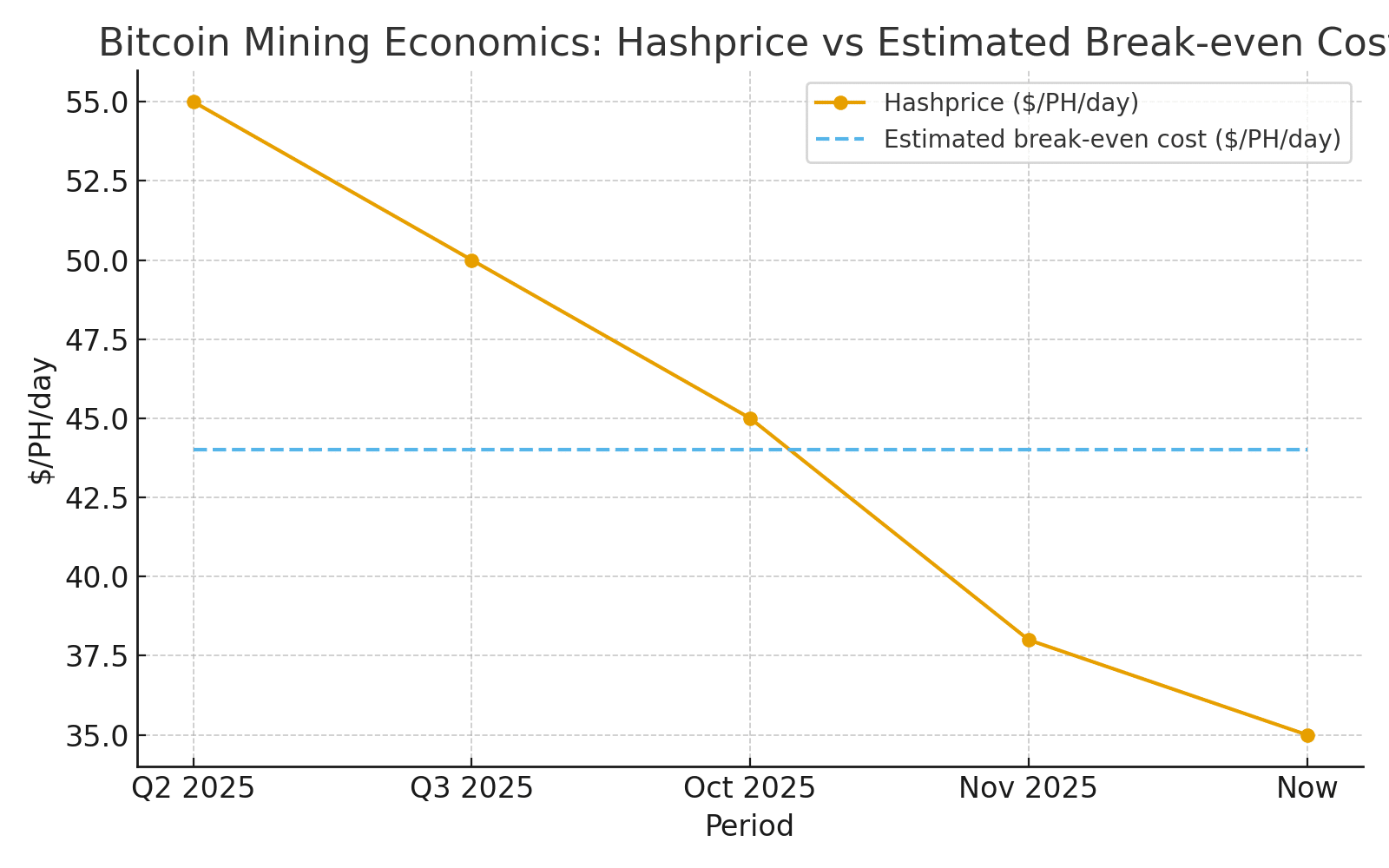
Recent data shows hashprice hovering around $38 per PH per day, after briefly dropping below $35 in late November. For many industrial-scale miners, around $40 per PH per day is the rough break-even level once power, hosting, staff, and maintenance are included.
Other analyses put the low even more starkly. One industry report describes hashprice falling almost 50% in a short window to around $34.20 per PH per day, a historic low that erased the average operator’s gross margin.
High Hashrate, High Difficulty, Low Profit
Paradoxically, the Bitcoin network itself looks very strong on paper. Aggregate hashrate remains above 1 zettahash per second, near record highs for total computing power protecting the chain. Difficulty, the parameter that controls how hard it is to mine a block, recently sat around 149 trillion after only a small downward adjustment.
In other words, miners continue to throw enormous computing power at the network. Yet each unit of that power earns less than at any time before. Analysts describe this mix as a “high security, low profitability” phase. The protocol appears healthy, but the business model for many miners is under real stress.
Why Even New Rigs Often Fail To Break Even
Many operators upgraded to new generation ASICs with efficiency figures below 25–30 joules per terahash (J/TH). In past cycles, that kind of hardware could ride out deep price corrections. Today, even those machines struggle if power is not very cheap.
Several factors are stacking up at the same time:
-
The 2024 halving cut the block subsidy from 6.25 BTC to 3.125 BTC, instantly reducing block rewards by 50% while difficulty and hashrate remained elevated.
-
Transaction fees are relatively low, so they do not meaningfully offset the reduced subsidy.
-
Electricity prices rose in many regions, and miners in markets above $0.05–$0.06 per kWh often require extremely efficient hardware to stay cash flow positive.
-
Analyses of current economics suggest payback periods for some new machines stretch beyond 1,000 days, while the next halving is expected in roughly 850 days, which would trigger another revenue cut if Bitcoin doesn’t double or more.
For miners with older rigs or average power prices, running the machine can simply mean burning cash every hour.
Key Crypto Mining Indicators To Watch
For traders, analysts, and policymakers who follow crypto markets, several indicators matter in this environment:


-
Hashprice
-
Measures revenue per unit of hashpower, often in $/PH/day.
-
Directly captures miner income pressure. A slide toward the low $30s per PH is a clear warning signal.
-
-
Hashrate: Shows the total network computing power. Sustained levels above 1 ZH/s indicate a very secure chain but also strong competition among miners.
-
Difficulty
-
Adjusts roughly every two weeks to keep block times near 10 minutes. When difficulty stays high while hashprice falls, miner margins compress.
-
-
Energy Cost Per kWh
-
Often, the single largest operating expense. At rates above $0.07–$0.08 per kWh, even modern rigs can struggle to achieve break-even levels.
-
-
ASIC Efficiency (J/TH)
-
Lower numbers mean better efficiency. Fleets with machines worse than 30 J/TH often require very cheap power, around $0.05 per kWh or less, to stay profitable.
-
-
Miner Capitulation Signals
-
Metrics such as the Hash Ribbon indicator track when hashrate moving averages cross in ways that historically align with miner stress and network-level capitulation. Recent data shows such a signal after a hashrate drop of about 15% from the all time high, paired with a hashprice collapse toward the mid $30s.
-
Together, these metrics describe the health of proof-of-work economics much better than price alone.
How Miners Are Responding
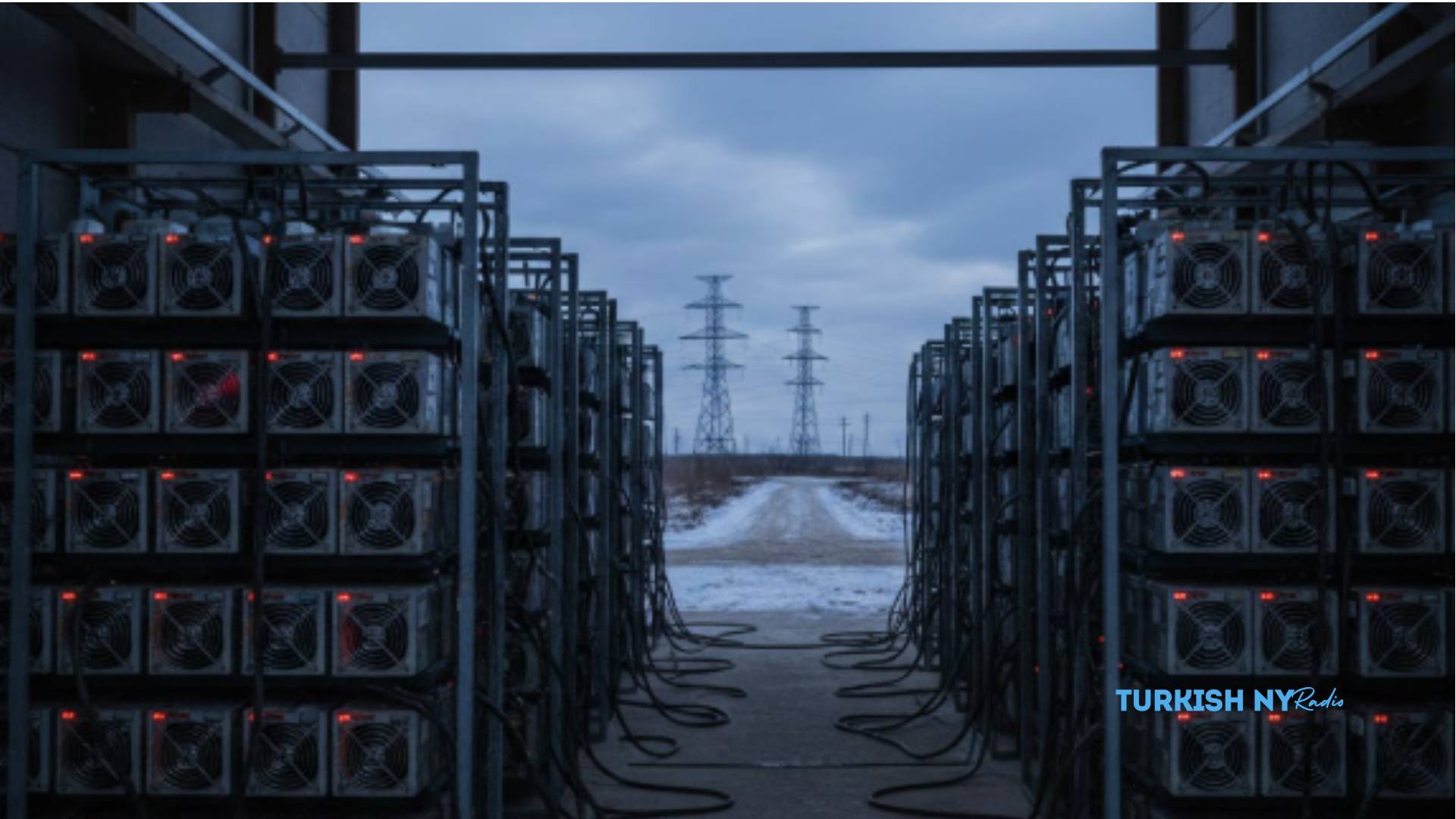
The current squeeze is forcing real world decisions in server rooms and boardrooms.
-
Selective shutdowns and curtailment
Operators are turning off older or less efficient rigs first, sometimes running only during off peak power hours. In many regions, fleets that cannot secure power below $0.05 per kWh are going dark. -
Hunting for cheaper energy
Some miners are moving to regions with stranded hydro, gas flare capture, or long-term power purchase agreements that lock in low rates. Others are negotiating flexible contracts that pay miners to curtail during grid stress. -
Pivoting to AI and high-performance computing
Several listed mining companies are repurposing sites for artificial intelligence and cloud workloads. Their advantage lies in existing access to large power capacity, industrial cooling, and hardened facilities. Some firms have already signed multi-billion-dollar AI hosting and compute deals that may offer more stable cash flow than pure Bitcoin mining. -
Consolidation and distressed asset sales
As margins compress, weaker operators are selling ASIC inventories at discounts or merging with better capitalized rivals. Prior cycles saw similar clearance phases where machines changed hands at a fraction of original cost.
This reshaping of the mining landscape is gradual but significant. Capital, talent, and power contracts are flowing toward operators that can survive a long period of low hashprice.
What This Means For Bitcoin And Proof Of Work
For the Bitcoin network, miner shutdowns do not necessarily signal an immediate security crisis. Difficulty will continue to adjust, and the protocol is designed to handle fluctuations in hashrate. Historically, severe miner capitulation phases often coincided with market bottoms and later recovery.
However, the pattern in 2025 raises new questions. If a growing share of industrial miners directs capital and energy toward AI data centers instead of Bitcoin, future hashrate growth may slow and ownership of remaining mining capacity may become more concentrated. That dynamic could influence debates about decentralization, environmental impact, and long term network resilience.
For many investors, there is a simple takeaway. Under current conditions, holding Bitcoin directly can look more attractive than running a marginally profitable rig, unless an operator enjoys extremely cheap energy and best in class equipment.
Conclusion
Bitcoin mining is facing one of its hardest economic tests so far. Hashprice has fallen toward the low $30s per PH per day, while hashrate and difficulty remain close to record levels. That combination delivers strong security but punishing economics for a large part of the mining sector.
Miners who survive this cycle will likely share the same traits. They will run very efficient hardware, secure cheap and flexible power, diversify revenue streams, and manage balance sheets conservatively. The rest will switch off machines, sell assets, or shift to other computing workloads.
The story of this capitulation phase is therefore not only about rigs turning off. It is about a maturing industry discovering where proof of work remains economically sustainable in a world of rising power costs and new competition for energy.
Frequently Asked Questions
1. Why are Bitcoin miners shutting down rigs if the price is still high by historical standards?
Bitcoin may trade at a high nominal price, but miner revenue per unit of hashpower has fallen sharply while energy and equipment costs remain elevated.
2. Is Bitcoin mining still profitable in 2025?
Mining remains profitable for operators with very efficient ASIC fleets, low all in power costs, and access to scale. Miners with older rigs or electricity above about $0.06 per kWh often face negative margins.
3. Does miner capitulation put the Bitcoin network at risk?
Miner exits can reduce hashrate in the short term, but the protocol automatically lowers difficulty. Historically, the network has remained secure through prior capitulation events and later attracted new investment when conditions improved.
4. Why are some miners moving into AI and cloud computing?
AI and high-performance computing workloads can provide long-term contracts and more predictable revenue than mining. Miners already control large power footprints and cooling infrastructure, which can be adapted for GPU based data centers.
5. What should analysts watch to gauge miner health?
Key indicators include hashprice, difficulty, hashrate, ASIC efficiency, typical power costs, and on chain data about miner selling behavior.
Glossary Of Key Terms
ASIC (Application Specific Integrated Circuit)
Specialized hardware designed to perform Bitcoin mining calculations much more efficiently than general purpose computers.
Hashrate
The total computing power pointed at the Bitcoin network, usually measured in terahashes, exahashes, or zettahashes per second.
Hashprice
An industry metric that shows expected daily revenue per unit of mining power, usually in dollars per petahash per second per day.
Mining Difficulty
A parameter that adjusts every 2,016 blocks to keep average block time near 10 minutes, regardless of how much hashrate is online.
Joules Per Terahash (J/TH)
A measure of ASIC efficiency. Lower values mean the machine uses less energy to produce the same amount of hashpower.
Halving
A scheduled event in the Bitcoin protocol that cuts the block subsidy in half. The 2024 halving reduced the reward from 6.25 BTC to 3.125 BTC.
Miner Capitulation
A phase when unprofitable miners shut down rigs or sell reserves, often after long periods of margin pressure.
Proof Of Work (PoW)
The consensus mechanism used by Bitcoin. Miners expend energy to solve cryptographic puzzles, secure the network, and receive block rewards.