


This article was first published on TurkishNY Radio.
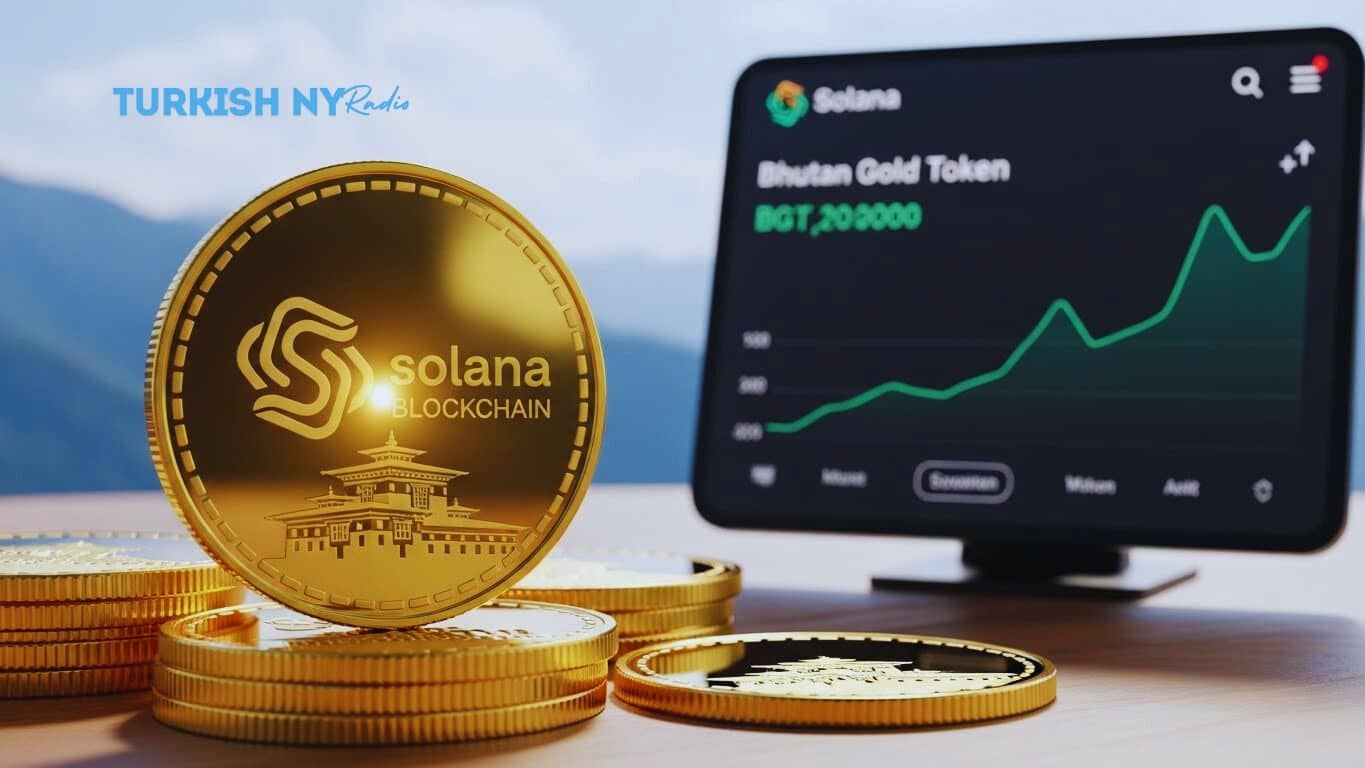
Bhutan has taken another major step in its digital-asset roadmap with the launch of the Bhutan TER token, a Solana-based digital asset backed by audited physical gold.


The token is issued through Gelephu Mindfulness City and managed by DK Bank, reinforcing Bhutan’s push to align national resources with modern financial technology.
By linking gold reserves to an on-chain system, the initiative gives users a way to interact with a secure digital version of gold while operating under a regulated framework.
The TER token taps into Solana’s fast, scalable infrastructure, allowing for quick settlement and broad accessibility. This setup offers the convenience of blockchain transactions without compromising the trust and oversight associated with traditional gold ownership.
Why Solana Powers Bhutan’s Tokenized Gold System
Solana was selected as the base network because of its ability to handle large transaction volumes at low cost. DK Bank, Bhutan’s first licensed digital bank, will supervise both issuance and custody, ensuring full regulatory compliance.
This model merges the security of physical gold reserves with transparent blockchain verification. TER holders receive digital proof of ownership recorded permanently on Solana, meaning each transaction is traceable and resistant to tampering.
Industry analysts on X (formerly Twitter) have pointed out that Solana continues to gain ground in real-world asset tokenization due to its performance, reliability, and adoption by major financial platforms.
Gelephu Mindfulness City
Gelephu Mindfulness City, the issuer of the TER token, is shaping itself into a hub for digital-focused investment and economic development.
The city’s long-term plan includes tokenized commodities, blockchain-based reserves, and programmable financial services designed to attract international partners.
Government reports released earlier this year show that Bhutan is aiming to build a technology-driven economy supported by green initiatives and modern financial infrastructure.
Conversations on Reddit reflect steady global interest, with community members noting Bhutan’s methodical approach to merging national strategy with blockchain systems.
Gold Market Conditions Strengthen the Appeal of TER
As of December 2025, gold trades around $2,410 per ounce, supported by concerns about inflation, currency instability, and geopolitical uncertainty.
Since the TER token reflects the value of physical gold, its pricing typically moves in line with global gold charts, giving holders a digital alternative without exposure to high-volatility assets.
Recent data from Tokenized Markets Research (2025) indicates that the market for tokenized precious metals has grown to $4.7 billion, driven by interest in assets that offer verifiable backing and digital mobility.
This trend has helped position the TER token as a regulated and transparent option within the broader gold-token ecosystem.
Smaller Nations Turn Toward Digital Reserve Tokens
Bhutan’s launch follows Kyrgyzstan’s introduction of USDKG, a gold-backed digital asset tied to the U.S. dollar. The first $50 million issuance of USDKG marked a significant step for Central Asia, and Bhutan’s TER initiative builds on a similar strategy.
Both tokens highlight how smaller countries are turning to gold-backed digital assets to reinforce economic stability and improve financial access.
Findings from the OECD’s Digital Asset Working Group show increasing interest in tokenized commodities supported by strict auditing and regulated custody.
Members of Reddit’s Gold community have observed that gold-backed tokens appeal to users who want verifiable reserves without relying on physical storage.
A Model for Future Real-World Asset Tokenization
The Bhutan TER token presents a structured example of how governments can blend traditional assets with blockchain systems. By combining oversight, fast transaction networks, and gold-backed assurance, TER creates a framework that other nations exploring digital reserves may choose to study.
Interest in regulated digital commodities continues to rise across South and Central Asia. With the launch of TER, Bhutan adds momentum to the shift toward national digital-commodity strategies grounded in transparency, compliance, and real-asset support.
Summary
Bhutan has rolled out the TER token, a Solana-based digital asset backed by fully audited gold reserves and issued through Gelephu Mindfulness City.
DK Bank oversees its custody, ensuring regulation and transparency while benefiting from Solana’s fast settlement capabilities.
The launch fits into Bhutan’s push toward a more digital-driven economy. As global interest in tokenized gold grows, TER helps place Bhutan among countries using digital reserve assets to boost economic stability and attract new investment.
Glossary of Key Terms
1. Tokenized Gold
Digital tokens that represent real physical gold stored in secure vaults. Each token corresponds to an actual amount of gold, making ownership simple, transferable, and trackable on a blockchain.
2. Bhutan TER Token
A Solana-based digital asset backed by independently audited gold reserves. Issued through Gelephu Mindfulness City, it combines regulated banking standards with the transparency of blockchain records.
3. Solana Blockchain
A fast and cost-efficient blockchain built to handle large transaction volumes. Its performance makes it a popular choice for financial applications and real-world asset tokenization.
4. DK Bank
Bhutan’s first licensed digital bank and the official manager of the TER token. It oversees issuance, custody, compliance checks, and reserve audits under Bhutan’s regulatory framework.


5. Real-World Asset Tokenization (RWA)
A method of turning physical assets—such as gold, real estate, or commodities into digital tokens. This makes them easier to access, trade, verify, and move across borders.
6. Gelephu Mindfulness City
A special economic zone in Bhutan focused on digital development and innovation. It is responsible for issuing the TER token and integrating tokenized assets into its economic model.
7. Audited Gold Reserves
Physical gold that has been reviewed and confirmed by independent auditors to ensure it is authentic, accurately recorded, and securely stored. These reserves support the value of every TER token.
8. Gold Token Price
The market value of a gold-backed digital token. It generally follows global gold prices, allowing holders to track gold performance through a digital asset.
Frequently Asked Questions About Tokenized Gold
1. What is Bhutan’s TER token and how does it work?
TER is a digital asset on Solana that’s backed by fully audited gold reserves. It provides secure on-chain ownership, regulated oversight, and fast settlement through DK Bank’s licensed digital platform.
2. How does the value of the TER token relate to gold prices?
The value of TER moves in line with global gold prices. It gives holders a digital way to track gold’s market performance without exposure to unpredictable crypto speculation.
3. Is the TER token secure and regulated for international holders?
Yes. DK Bank handles issuance, custody, and compliance, ensuring all reserves are audited and recorded on Solana. The system operates under Bhutan’s regulated framework for added transparency and safety.
4. Will TER offer additional features or expansion in the future?
Future plans include broader international availability, enhanced on-chain reporting, and deeper integration with Gelephu Mindfulness City’s digital systems as Bhutan continues building its real-world asset tokenization model.