This Article Was First Published on TurkishNY Radio.
The Bank of England is quietly signaling that it will not support sweeping changes to the UK’s ring-fencing rules, according to people with direct knowledge of early talks. These rules were built after the 2008 banking crisis to keep everyday banking separate from riskier trading activities.


While the government wants to modernize parts of the framework, the Bank of England believes that going too far could weaken the financial guardrails that protect millions of households.
Also read: How the UK Plans to Bring Bonds, Securities, and Gilts Onto the Blockchain
A Caution Regulator in a Changing Landscape
Officials involved with the conversations indicate how the Bank of English is willing to back only minor changes, not the comprehensive reform that certain ministers have suggested. The core issue is how much freedom large banks should have in using retail deposits for investment-style operations.
One person close to the talks described the central bank’s view bluntly: “This isn’t the moment to blur the line between basic banking and high-risk activity.” According to the source, the Bank of England believes the ring-fencing structure still plays an important role in preventing a repeat of the failures seen nearly two decades ago.
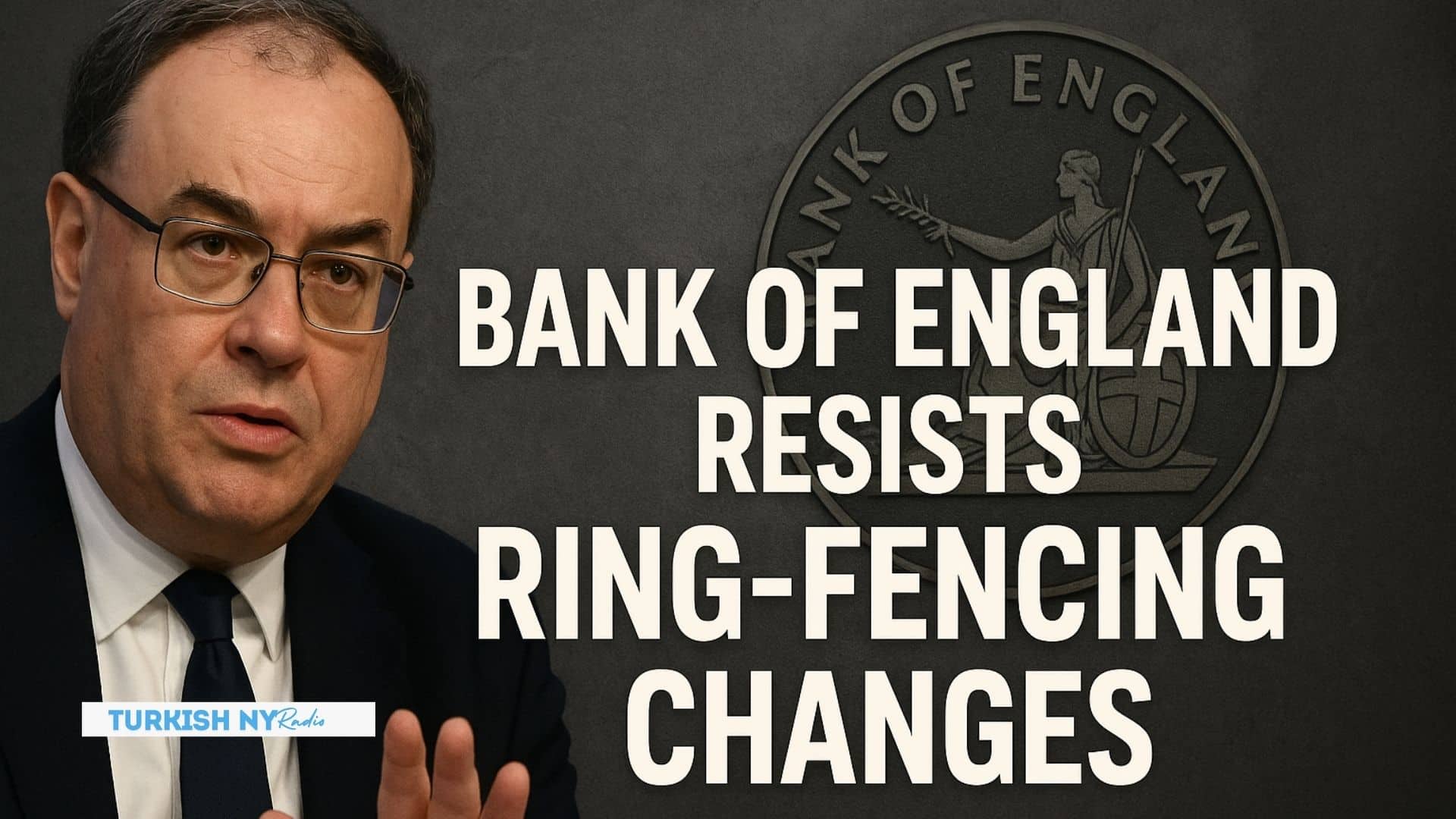
Bank of England explores ways to loosen ring-fencing rules for UK banks” formerly Twitter


Openness to Small, Practical Tweaks
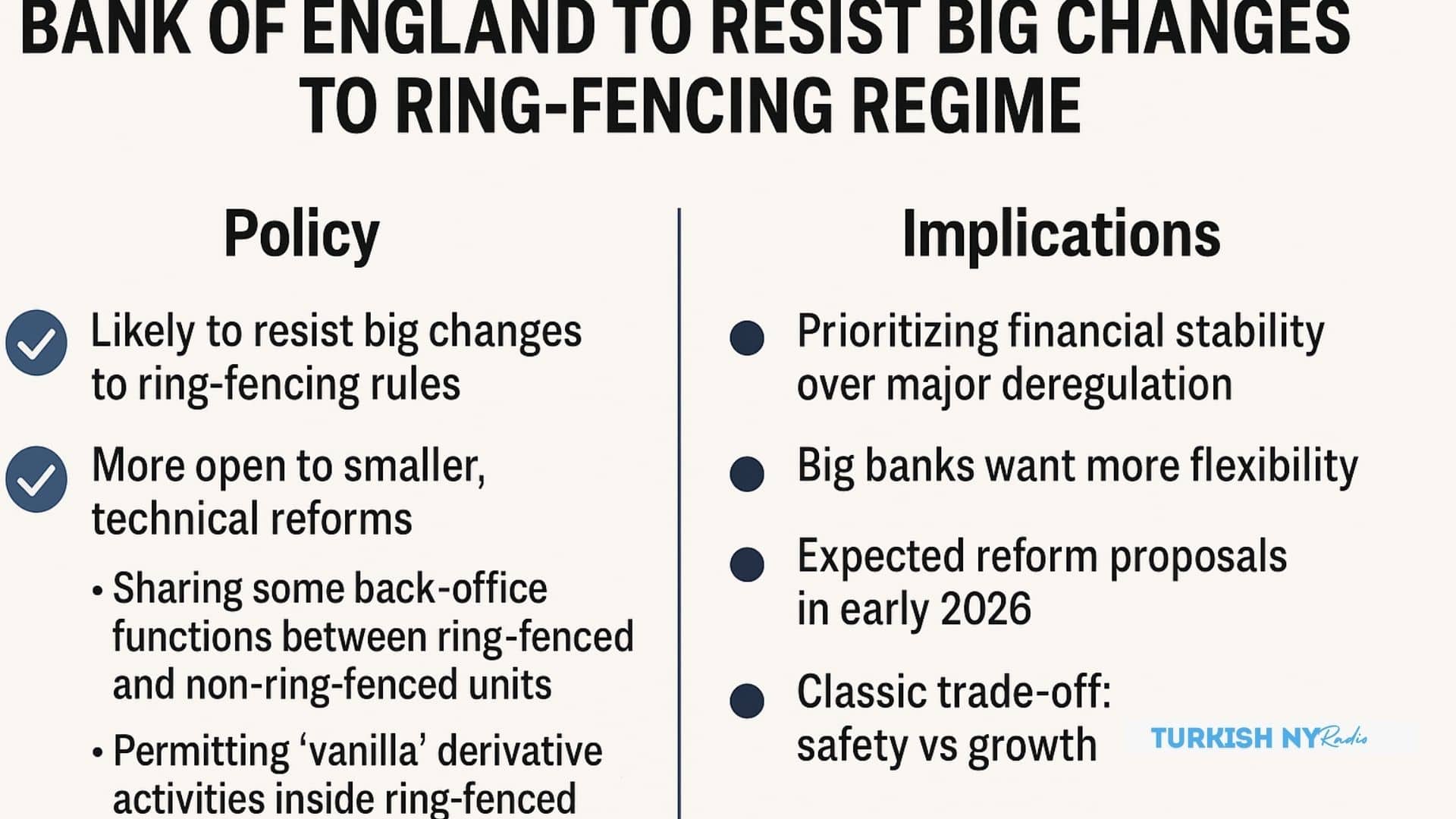
Even so, the Bank of England isn’t completely opposed to change. Officials are reportedly open to letting banks share more internal functions across different divisions, and to allowing simple derivatives inside ring-fenced units. These ideas are seen as operational improvements rather than structural reforms.
“It’s less about rewriting the rules and more about removing unnecessary friction,” said a regulatory adviser familiar with the discussions. The Bank of England views these smaller steps as a way to ease burdens on banks without weakening consumer protections.
Government pressure builds
Tensions are rising between the regulator and the Treasury, which is pressing for measures that it believes would improve competitiveness and investment. Financial Minister Karen Reeves has openly backed updating the regulations, claiming that the system has grown too restrictive.
However, the Bank bank England currently remains cautious. Governor Bailey has frequently stated that any change must retain financial stability at its core. One adviser said the central bank’s stance is shaped by “a long memory” of the global crisis and concerns about rising economic fragility.
In the meantime, UK banks have resumed their lobbying efforts, claiming that certain aspects of the framework lock up money and hinder flexibility. However, the Central Bank of England believes that the system reduces risk while making it simpler to manage possible breakdowns.
Conclusion
As the Ministries of Finance prepare to announce formal plans for the beginning of 2026, the Bank of England appears to be creating clear boundaries. The bank is open to discussing limited changes, but it is firmly opposed to adjustments that would weaken the protections set in place throughout the preceding financial crisis.
For the time being, the debate highlights a common dichotomy in British economic policy: how to achieve an agreement between invention and stability, yet avoiding repeating previous mistakes. In this sense, the Bank of English appears to be wary about acting prematurely.
Also read: UK Stablecoin Ownership Limits Spark Backlash from Crypto Industry
Summary
The Bank of English opposes substantial revisions to the UK’s ring-fencing policies, claiming that any changes may weaken safeguards put in place following the 2008 financial crisis. While amenable to minor changes, the bank’s leadership remain cautious as government officials and large lenders advocate for deeper reforms. The debate concentrates on how to strike a balance between financial stability and competitiveness, with official suggestions likely in 2026. For the time being, the Bank of England advises taking a gradual and cautious approach to any regulation revision.
Glossary of Key Terms
Ring-fencing: A safeguard separating retail banking from riskier investment activities.
Retail Banking: Everyday banking services like deposits, personal loans, and mortgages.
Investment Banking: High-risk financial activities including trading and corporate finance.
Derivatives: Financial contracts whose value is linked to another asset.
Regulatory Reform: Changes introduced to update or improve financial rules.
FAQs for Bank of England’s Surprise
1. Why is the Bank of England opposed to big changes?
Because it believes that major reforms will erode the economy and exposes retail customers to greater risk.
2. Which reforms does the Bank is going to support?
Limited changes, such as common back-office services and the ability to create basic derivatives.
3. What exactly does the Department of Treasury want?
Broader modernization will make UK financial institutions more competitive.
4. When can fresh proposals be released?
According to official projections, the date will be in early 2026.
5. Why is ring-fencing important?
It safeguards consumer deposits by separating them from high-risk financial transactions.
Sources