![Sun [New]](https://s2.coinmarketcap.com/static/img/coins/64x64/10529.png)


![BitTorrent [New]](https://s2.coinmarketcap.com/static/img/coins/64x64/16086.png)

This article was first published on TurkishNY Radio.
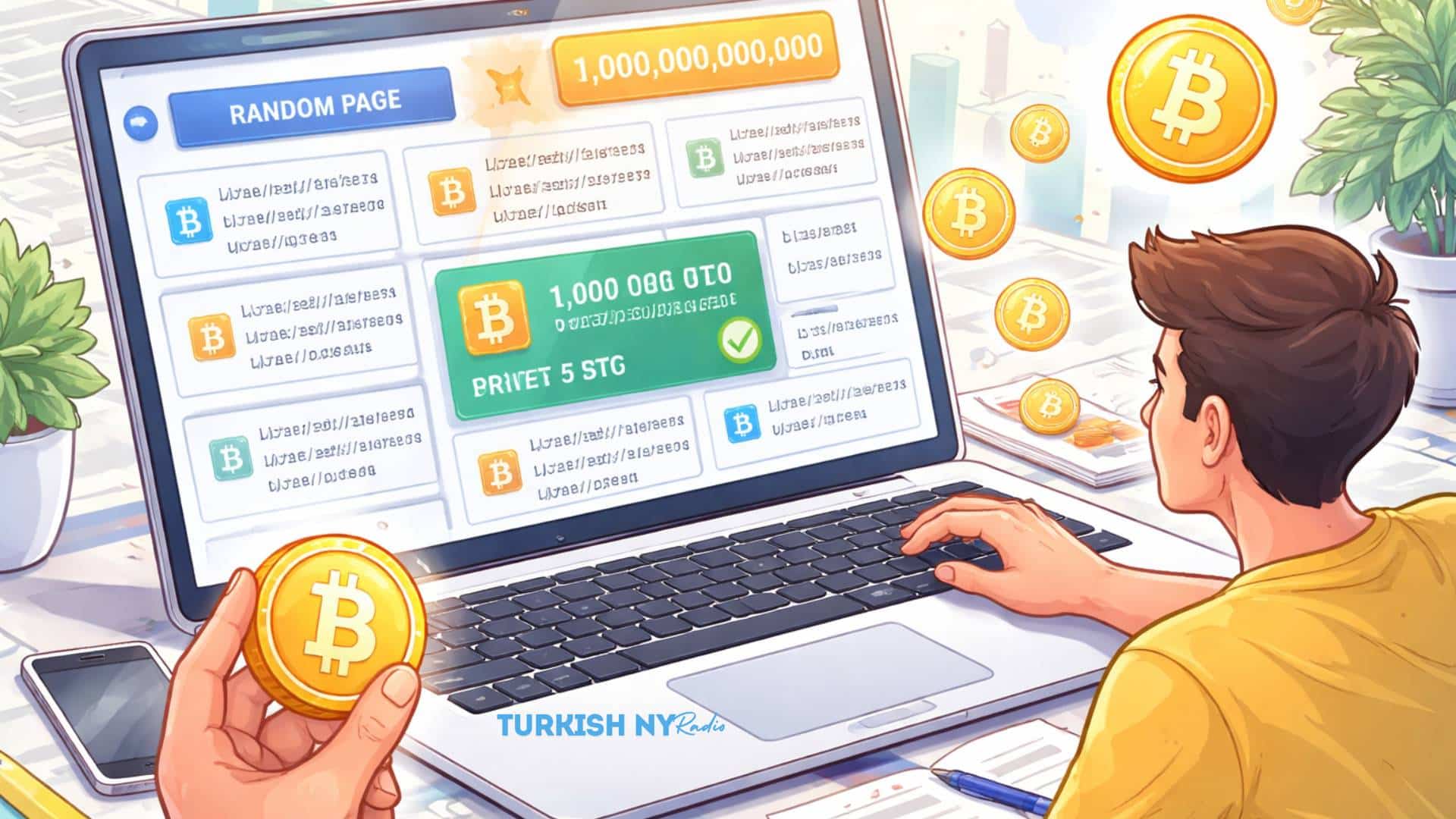
A fresh story is a page that lets anyone “play” a Bitcoin lottery for free by generating random private keys and checking whether the linked addresses hold funds. The pitch sounds almost mischievous: keep refreshing, keep scanning, and maybe a funded wallet appears like a forgotten winning ticket.


The problem is that the rules of Bitcoin were designed to make this kind of luck effectively impossible. The Bitcoin private key lottery has become popular not because it is a realistic way to find coins, but because it turns a hard-to-grasp security concept into something visual, clickable, and oddly addictive.
That clickability is also what makes it easy to misunderstand, especially for newer readers who see balances, keys, and address strings and assume there must be a crack in the system. What they are actually seeing is a math lesson dressed up as a game.
How the Bitcoin private key lottery actually works
A Bitcoin private key is a 256-bit number. In plain terms, it is an unimaginably large range of possible values that wallet software uses to prove ownership and sign transactions. A public key is derived from the private key, and an address is then derived from the public key using hashing. This is the everyday plumbing behind self-custody, even if most users never look under the hood.
The lottery-style site does not store a literal database of every key. That would be physically unrealistic. Instead, it generates keys on the fly, arranging them into pages and using the page number as a deterministic input so the same page can be reproduced again later. It is a clever trick for browsing a space that cannot be indexed in the traditional sense.
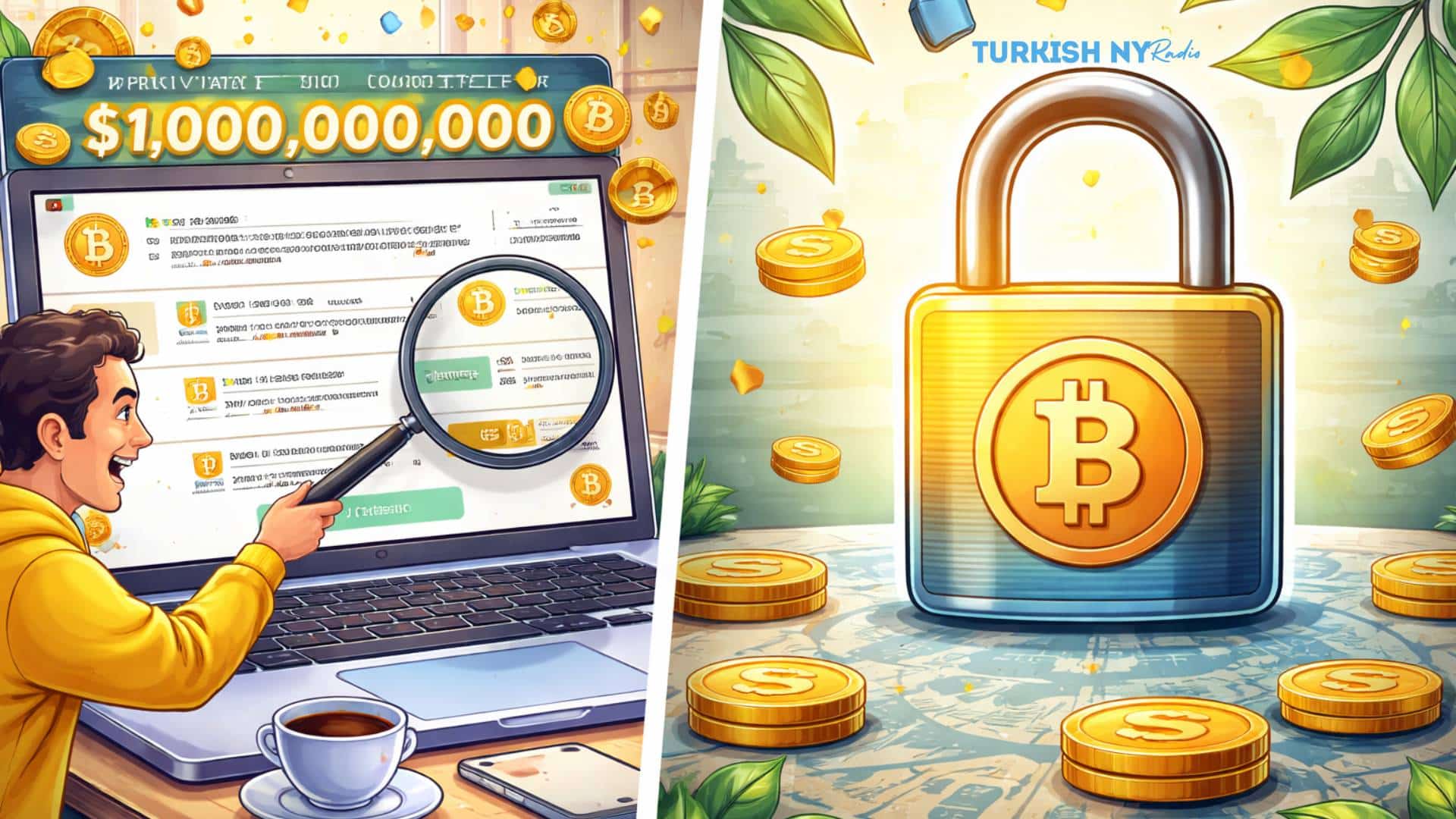
This is where the gimmick earns its educational value. Showing private keys and corresponding addresses in bulk, it creates the sensation of searching, even though the search space is so large that the act remains symbolic. For anyone watching the Bitcoin private key lottery for a few minutes, the experience tends to swing from curiosity to disbelief, which is exactly the point.
The odds are not just bad, they are practically nonexistent
To “win,” one generated key must match a key that controls an address with a non-zero balance. Around early February 2026, reporting tied to the trend referenced roughly 58,000,000 Bitcoin addresses with a non-zero balance, which sounds enormous until it is placed next to the scale of possible addresses.
Bitcoin addresses are commonly described as living in a 160-bit hash space because the address is derived from a 160-bit hash of the public key. That yields about 2^160 possible address outcomes, while private keys span 2^256 possibilities. Either way, the numbers involved are beyond any practical brute-force attempt.
Some versions of the story translate this into lottery-style odds, such as a 1 in 2.8 × 10^38 chance for a small batch of generated keys to include a funded address. The exact figure varies by assumptions, but the takeaway holds steady: even wildly optimistic computing scenarios do not make brute forcing realistic on human timescales.
In other words, the Bitcoin private key lottery does not expose a weakness in Bitcoin. It is exposing how easily the human brain underestimates exponential scale.
The real risks are boring, and that is why they work
If brute force is not the threat, what is. In practice, losses usually come from compromised devices, fake wallet apps, phishing links, leaked seed phrases, and social engineering that pressures people into handing over access. These attacks succeed because they target behavior, not cryptography.
This is also why stories like the Bitcoin private key lottery can be useful, as long as the reader walks away with the right lesson. Bitcoin security is not a vibe. It is a system built to make random guessing futile, while everyday mistakes remain the soft underbelly that criminals exploit.
The ethical line matters too as finding a key that controls funds and trying to move those funds would still be unauthorized access to someone else’s property. A near-impossible event does not become a moral loophole simply because the math is dramatic.

What traders should watch instead of viral key games
The market angle here is not the lottery itself, it is what people do with stories like it. Viral narratives can draw attention, but they do not move price on their own. Price responds to liquidity, positioning, macro conditions, and flows.
For readers who want indicators that actually help explain Bitcoin’s behavior, the number of addresses with a non-zero balance is often tracked as a rough participation signal, although it is not a direct proxy for unique users because one person can control many addresses.
Distribution snapshots also matter. Wallet concentration data can help explain why thin liquidity can magnify moves, especially when larger holders rebalance into or out of strength.


That is where the Bitcoin private key lottery becomes an odd mirror for the real market. It dramatizes security, but the trading world is driven by simpler forces: how much capital is moving, where it is sitting, and how fast liquidity can absorb it.
Conclusion
The Bitcoin private key lottery is a tempting headline because it combines money, mystery, and the fantasy of getting rich without permission. Underneath, it is something more grounded.
It shows why Bitcoin self-custody remains secure against brute-force guessing, while also reminding readers that the real security battle is fought at the human layer, not the mathematical one. For market participants, the practical path is clear: focus on fundamentals and risk hygiene, not viral shortcuts.
Frequently Asked Questions
What is the Bitcoin private key lottery in simple terms?
It is a webpage that generates private keys and displays the related addresses so users can refresh endlessly as if they are searching for a funded wallet, even though the odds are effectively zero.
Does this mean Bitcoin can be hacked by guessing keys?
No, the keyspace and address space are so large that random guessing is not considered a practical attack method, even with extreme computing assumptions.
Why do some people still take it seriously?
Because the interface makes the process feel tangible and the prize framing sounds intuitive, while exponential scale feels abstract, even to experienced readers.
Glossary of key terms
Private key: A secret 256-bit number used to sign transactions and prove control over funds.
Public key: A value derived from the private key that can be used to verify signatures without revealing the private key.
Bitcoin address: A destination identifier derived from hashing the public key, commonly described in a 160-bit space context.
Non-zero balance address: An address that holds more than 0 BTC, often tracked as a participation trend metric over time.
References