
This article was first published on TurkishNY Radio.
The loudest crypto stories usually come with fireworks: a price spike, a liquidation cascade, a meme coin sprinting past reason. But 2025 told a different story under the surface, where the real shift was paperwork, rulebooks, and regulators finally speaking in complete sentences.


When policy stops being a guessing game, capital tends to behave differently, and that is exactly what happened as crypto licensing became clearer across several key jurisdictions.
This is not a victory lap for the industry, and it is not a crackdown story either. It is something more practical, and honestly more important for long-term adoption: a set of governments started defining who can operate, under what standards, and with what consequences if they cut corners.
The result is a market that can price regulatory risk with more precision, the same way it prices inflation surprises or earnings misses in traditional finance.
Why crypto licensing clarity changes the market faster than a new narrative
Markets do not just move on hype as they also move on friction. When exchanges, custodians, issuers, and brokers do not know what rules they will be held to next quarter, they hedge by limiting services, restricting regions, or charging higher spreads. That uncertainty shows up in thinner liquidity, wider funding swings, and sudden “risk-off” days that feel irrational until someone remembers the legal unknowns.
When crypto licensing becomes legible, three things start happening at once. First, compliance budgets become predictable instead of open-ended. Second, larger institutions stop treating the sector like a temporary experiment. Third, retail users get fewer “sorry, not available in your region” surprises, because platforms can design around known requirements.

United States: stablecoin rules push toward a single federal lane
In the United States, the meaningful 2025 shift centered on stablecoins, with a federal framework taking shape after the GENIUS Act was signed in July 2025. That matters because, before this direction, stablecoin issuers often dealt with a patchwork of state-level licensing that made nationwide operations expensive and slow.
For markets, the stablecoin angle is not a niche detail. Stablecoins sit at the center of exchange liquidity, on-chain settlement, and cross-border transfers. A clearer framework can reduce the “regulatory discount” that traders silently apply to stablecoin-heavy venues and improve reserve discipline.
In plain terms, when crypto licensing rules for stablecoins look more standardized, liquidity tends to look more reliable, and that can dampen panic during stressful weeks.
European Union: MiCA turns “passporting” into a practical advantage
The European Union’s story is less about one dramatic bill and more about execution. MiCA made the idea of a single authorization, usable across member states, feel operational rather than theoretical. For businesses, that reduces repeated applications and conflicting interpretations. For users, it can raise the baseline for disclosures and custody behavior across the region.
What is underappreciated is how much this influences product design. A platform that knows it can scale across 27 countries under a unified approach can justify deeper investment in compliance tooling, customer support, and security reviews. That is where crypto licensing stops being an “admin problem” and starts shaping user outcomes, like fewer shady token listings and more consistent treatment of complaints.
Dubai: VARA’s updated rulebooks narrowed the gray zones
Dubai’s regulator for virtual assets updated its activity-based rulebooks in May 2025 and set a compliance deadline of June 19, 2025. Even without reading every clause, the signal is obvious: clearer definitions, tighter risk oversight, and less room for “we thought that was allowed.” In a market where reputations can flip in a weekend, this kind of clarity affects who chooses to base operations there.
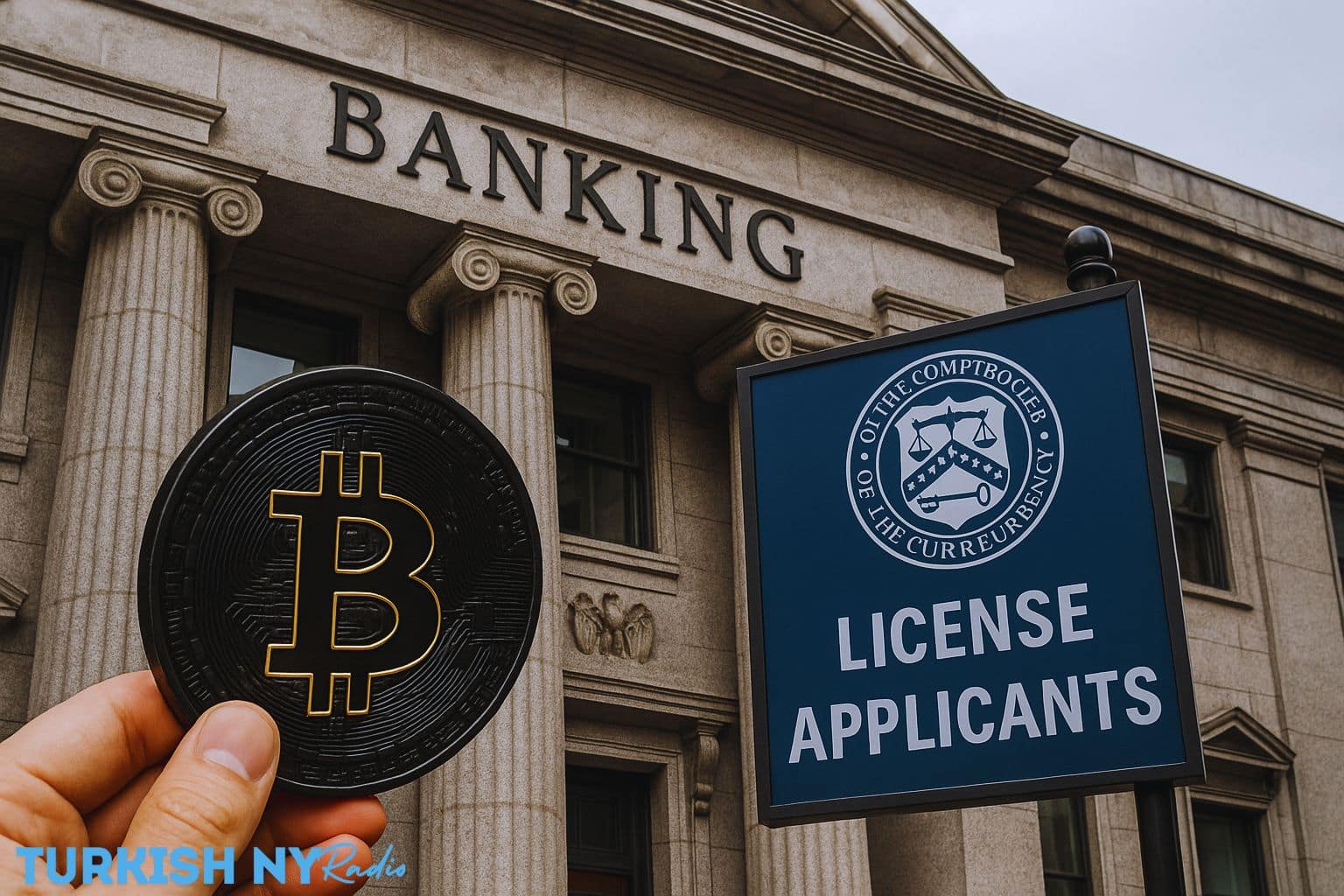
For investors watching from the outside, Dubai’s approach is also a reminder that regulatory certainty is not always the enemy of growth. It can be the scaffolding that lets serious firms build without constantly worrying that the floor will shift. The more concrete crypto licensing gets in major hubs, the harder it becomes for bad actors to hide behind confusion.
Hong Kong: stablecoin licensing goes live, with real expectations attached
Hong Kong implemented a regulatory regime for stablecoin issuers under a Stablecoins Ordinance that took effect on August 1, 2025, requiring a licence for issuing fiat-referenced stablecoins. Reuters reporting around the rollout also emphasized that initial licenses were expected to be limited, and that regulators were cautious about market expectations.
This matters because stablecoins are where policymakers tend to draw a hard line. Redemption promises and reserve management are not marketing copy. They are systemic. When crypto licensing includes explicit expectations on reserves, governance, and redemption mechanics, the market can better separate credible issuers from those running on vibes and thin collateral.
United Kingdom: a unified regime starts to look less abstract
The UK spent 2025 moving toward a broader framework that pulls cryptoasset activities into the familiar structure of financial regulation. HM Treasury published draft provisions on April 29, 2025, and later updates noted that final legislation was laid in Parliament on December 15, 2025. The FCA also published consultation material in December 2025 on regulating cryptoasset activities under the planned expansion of its remit.
What changes here is not just legality, but accountability. A clearer route for crypto licensing under a mainstream financial rulebook can encourage firms to build long-term, while also making enforcement more straightforward when firms try to bend the rules.
What this does to key crypto indicators that investors actually watch
Regulation sounds distant until it shows up in the numbers. In 2025, clearer licensing pathways began feeding into indicators that serious market participants already track.
Liquidity is the first giveaway. When licensing is unclear, market makers price extra risk into spreads, and depth disappears faster during volatility. With clearer frameworks, order books can look sturdier, especially in the most regulated venues.
Stablecoin supply and stablecoin velocity matter more than many price-only traders admit. When stablecoin issuers operate under clearer rules, the market often gains confidence in settlement rails, which can support healthier spot volumes and reduce sudden liquidity droughts.
Derivatives metrics respond quickly too. Funding rates, open interest, and liquidation intensity reflect how comfortable traders feel about leverage. When crypto licensing reduces the odds of abrupt service suspensions or surprise restrictions, the leverage cycle can become slightly less chaotic, not tame, just less brittle.
The competitive map is shifting, and the market will follow
The deeper point is that jurisdictions are competing on clarity. Some will attract issuers and trading venues. Others will become safer consumer markets. Some may excel at institutional custody. Over time, that reshapes where liquidity lives and which platforms become default rails.
In that world, crypto licensing is not a headline accessory. It is part of the valuation framework, like cost of capital, counterparty risk, and operational resilience. Traders who treat regulation as background noise will keep getting blindsided by structural shifts they did not bother to price in.
Conclusion: the industry did not get easier, it got more legible
2025 did not remove risk from crypto. It made the risk more readable. That is a big difference. When rules become clearer, the market can punish weak players faster, reward compliant infrastructure sooner, and bring in capital that used to stay on the sidelines.
The long-term winners are rarely the loudest projects. They are the ones built to survive audits, redemptions, and stress tests, because crypto licensing is increasingly written for reality, not for slogans.
FAQs
What is crypto licensing, in plain terms?
Crypto licensing is the legal permission a firm needs to offer specific digital asset services, such as exchange trading, custody, brokerage, or stablecoin issuance, under defined supervisory rules.
Why did stablecoins get so much regulatory attention in 2025?
Stablecoins touch payments, trading liquidity, and cross-border transfers, so governments focus on reserves, redemption rights, governance, and risk controls to reduce consumer and systemic risk.
Does clearer licensing automatically mean crypto becomes safer?
Clearer licensing can reduce certain risks, like fraud enabled by regulatory ambiguity, but it does not remove market volatility, smart contract bugs, or poor risk management by users.
How can readers track whether regulation is affecting the market?
Readers can watch liquidity depth, stablecoin supply trends, derivatives funding rates, exchange inflows and outflows, and custody announcements from regulated providers, because these often shift when legal clarity improves.
Glossary of Key Terms
Stablecoin: A crypto token designed to track the value of a fiat currency, commonly used for trading, payments, and settlement.
Custody: The secure holding of client assets, typically requiring strict controls, audits, and segregation of funds in regulated environments.
Passporting: A regulatory concept where authorization in one jurisdiction can allow a firm to operate across a wider region under shared rules.
Funding rate: A periodic payment in perpetual futures markets that reflects whether leverage demand is skewed long or short.
Open interest: The total value of outstanding derivatives contracts, often used to gauge leverage and positioning risk.
Regulatory risk premium: The extra “discount” markets apply when future enforcement or rule changes are unpredictable, often visible through weaker liquidity or higher spreads.


References