• Home
  • About Us
  • Terms and Conditions
  • Privacy Policy
  • Disclaimer
  • Contact
27 January Tuesday, 2026
  • tr Türkçe
  • en English
TurkishNY Radio
No Result
View All Result
  • Home
  • Cryptocurrency
  • Business
  • Economy
  • Home
  • Cryptocurrency
  • Business
  • Economy
No Result
View All Result
  • tr Türkçe
  • en English
TurkishNY Radio
No Result
View All Result
Bitcoin Bitcoin (BTC) $95,261.57 ↓ -0.05%
Ethereum Ethereum (ETH) $3,288.55 ↓ -0.06%
Tether USDt Tether USDt (USDT) $1.00 ↓ 0.00%
BNB BNB (BNB) $936.88 ↑ 0.81%
XRP XRP (XRP) $2.06 ↓ -0.16%
Solana Solana (SOL) $143.94 ↑ 1.52%
USDC USDC (USDC) $1.00 ↑ 0.01%
TRON TRON (TRX) $0.31 ↑ 0.69%
Dogecoin Dogecoin (DOGE) $0.14 ↓ -1.31%
Cardano Cardano (ADA) $0.40 ↑ 1.28%
Bitcoin Cash Bitcoin Cash (BCH) $592.58 ↑ 0.05%
Monero Monero (XMR) $626.65 ↓ -8.54%
Chainlink Chainlink (LINK) $13.72 ↑ 0.24%
UNUS SED LEO UNUS SED LEO (LEO) $9.06 ↑ 1.81%
Hyperliquid Hyperliquid (HYPE) $24.83 ↑ 0.87%
Stellar Stellar (XLM) $0.23 ↓ -0.45%
Sui Sui (SUI) $1.79 ↑ 1.00%
Zcash Zcash (ZEC) $405.35 ↑ 0.15%
Ethena USDe Ethena USDe (USDe) $1.00 ↑ 0.01%
Avalanche Avalanche (AVAX) $13.56 ↓ -1.36%
Litecoin Litecoin (LTC) $74.59 ↑ 3.87%
Dai Dai (DAI) $1.00 ↑ 0.01%
Hedera Hedera (HBAR) $0.12 ↑ 1.10%
Shiba Inu Shiba Inu (SHIB) $0.00 ↑ 1.59%
Canton Canton (CC) $0.13 ↓ -4.54%
World Liberty Financial World Liberty Financial (WLFI) $0.17 ↑ 1.92%
Toncoin Toncoin (TON) $1.71 ↓ -0.15%
Cronos Cronos (CRO) $0.10 ↑ 1.09%
PayPal USD PayPal USD (PYUSD) $1.00 ↓ -0.02%
Polkadot Polkadot (DOT) $2.13 ↑ 1.14%
World Liberty Financial USD World Liberty Financial USD (USD1) $1.00 ↓ -0.02%
Uniswap Uniswap (UNI) $5.35 ↑ 1.09%
Mantle Mantle (MNT) $0.95 ↑ 0.75%
Bittensor Bittensor (TAO) $275.98 ↓ -0.05%
Aave Aave (AAVE) $175.26 ↑ 2.58%
Bitget Token Bitget Token (BGB) $3.78 ↑ 0.56%
Pepe Pepe (PEPE) $0.00 ↑ 0.89%
OKB OKB (OKB) $114.57 ↑ 0.43%
Internet Computer Internet Computer (ICP) $4.12 ↓ -6.23%
NEAR Protocol NEAR Protocol (NEAR) $1.74 ↑ 1.23%
Ethereum Classic Ethereum Classic (ETC) $12.84 ↑ 2.02%
MemeCore MemeCore (M) $1.58 ↓ -3.37%
Tether Gold Tether Gold (XAUt) $4,594.44 ↑ 0.05%
Aster Aster (ASTER) $0.72 ↑ 1.46%
PAX Gold PAX Gold (PAXG) $4,608.64 ↓ -0.01%
Ethena Ethena (ENA) $0.22 ↓ -0.72%
Pi Pi (PI) $0.21 ↑ 0.51%
Global Dollar Global Dollar (USDG) $1.00 ↓ 0.00%
Polygon (prev. MATIC) Polygon (prev. MATIC) (POL) $0.15 ↓ -1.49%
Worldcoin Worldcoin (WLD) $0.56 ↓ -0.49%
KuCoin Token KuCoin Token (KCS) $11.43 ↓ -0.40%
Sky Sky (SKY) $0.06 ↑ 6.41%
Aptos Aptos (APT) $1.82 ↑ 1.68%
MYX Finance MYX Finance (MYX) $5.42 ↓ -1.28%
Ripple USD Ripple USD (RLUSD) $1.00 ↓ -0.03%
Cosmos Cosmos (ATOM) $2.53 ↑ 2.55%
Arbitrum Arbitrum (ARB) $0.21 ↑ 1.87%
Ondo Ondo (ONDO) $0.39 ↑ 2.39%
Kaspa Kaspa (KAS) $0.04 ↓ -1.67%
GateToken GateToken (GT) $10.39 ↑ 0.40%
Render Render (RENDER) $2.29 ↑ 4.64%
Algorand Algorand (ALGO) $0.13 ↑ 3.22%
Filecoin Filecoin (FIL) $1.52 ↓ -0.86%
OFFICIAL TRUMP OFFICIAL TRUMP (TRUMP) $5.38 ↑ 0.89%
Midnight Midnight (NIGHT) $0.06 ↓ -1.51%
Pump.fun Pump.fun (PUMP) $0.00 ↑ 2.40%
Dash Dash (DASH) $82.13 ↓ -12.23%
VeChain VeChain (VET) $0.01 ↑ 3.78%
Quant Quant (QNT) $80.61 ↑ 9.51%
USDD USDD (USDD) $1.00 ↓ -0.01%
Story Story (IP) $2.71 ↑ 8.86%
Bonk Bonk (BONK) $0.00 ↑ 1.69%
Flare Flare (FLR) $0.01 ↓ -0.44%
XDC Network XDC Network (XDC) $0.04 ↓ -0.86%
Sei Sei (SEI) $0.12 ↓ -0.18%
Pudgy Penguins Pudgy Penguins (PENGU) $0.01 ↑ 1.88%
PancakeSwap PancakeSwap (CAKE) $2.12 ↑ 4.44%
Jupiter Jupiter (JUP) $0.22 ↑ 2.98%
Stacks Stacks (STX) $0.37 ↑ 1.60%
Optimism Optimism (OP) $0.34 ↑ 1.48%
Tezos Tezos (XTZ) $0.62 ↑ 6.97%
Virtuals Protocol Virtuals Protocol (VIRTUAL) $0.98 ↓ -0.27%
Artificial Superintelligence Alliance Artificial Superintelligence Alliance (FET) $0.28 ↑ 2.33%
Nexo Nexo (NEXO) $0.99 ↑ 2.86%
Curve DAO Token Curve DAO Token (CRV) $0.44 ↑ 2.45%
Chiliz Chiliz (CHZ) $0.06 ↓ -1.33%
United Stables United Stables (U) $1.00 ↑ 0.01%
Immutable Immutable (IMX) $0.29 ↑ 7.58%
Injective Injective (INJ) $5.40 ↑ 4.75%
SPX6900 SPX6900 (SPX) $0.57 ↑ 1.57%
ether.fi ether.fi (ETHFI) $0.75 ↑ 1.08%
Lido DAO Lido DAO (LDO) $0.61 ↓ -0.98%
Aerodrome Finance Aerodrome Finance (AERO) $0.56 ↑ 0.70%
Celestia Celestia (TIA) $0.59 ↑ 5.79%
Morpho Morpho (MORPHO) $1.34 ↓ -2.60%
First Digital USD First Digital USD (FDUSD) $1.00 ↑ 0.04%
TrueUSD TrueUSD (TUSD) $1.00 ↓ -0.04%
FLOKI FLOKI (FLOKI) $0.00 ↑ 2.67%
DoubleZero DoubleZero (2Z) $0.14 ↑ 10.97%
The Graph The Graph (GRT) $0.04 ↑ 7.19%
Home World

Why Most Crypto Project Hacks End Up Failing

Sami Oliver by Sami Oliver
20 January 2026
in World, Cryptocurrency, en, News
Reading Time: 4 mins read
0
crypto hacks

This article was first published on TurkishNY Radio.

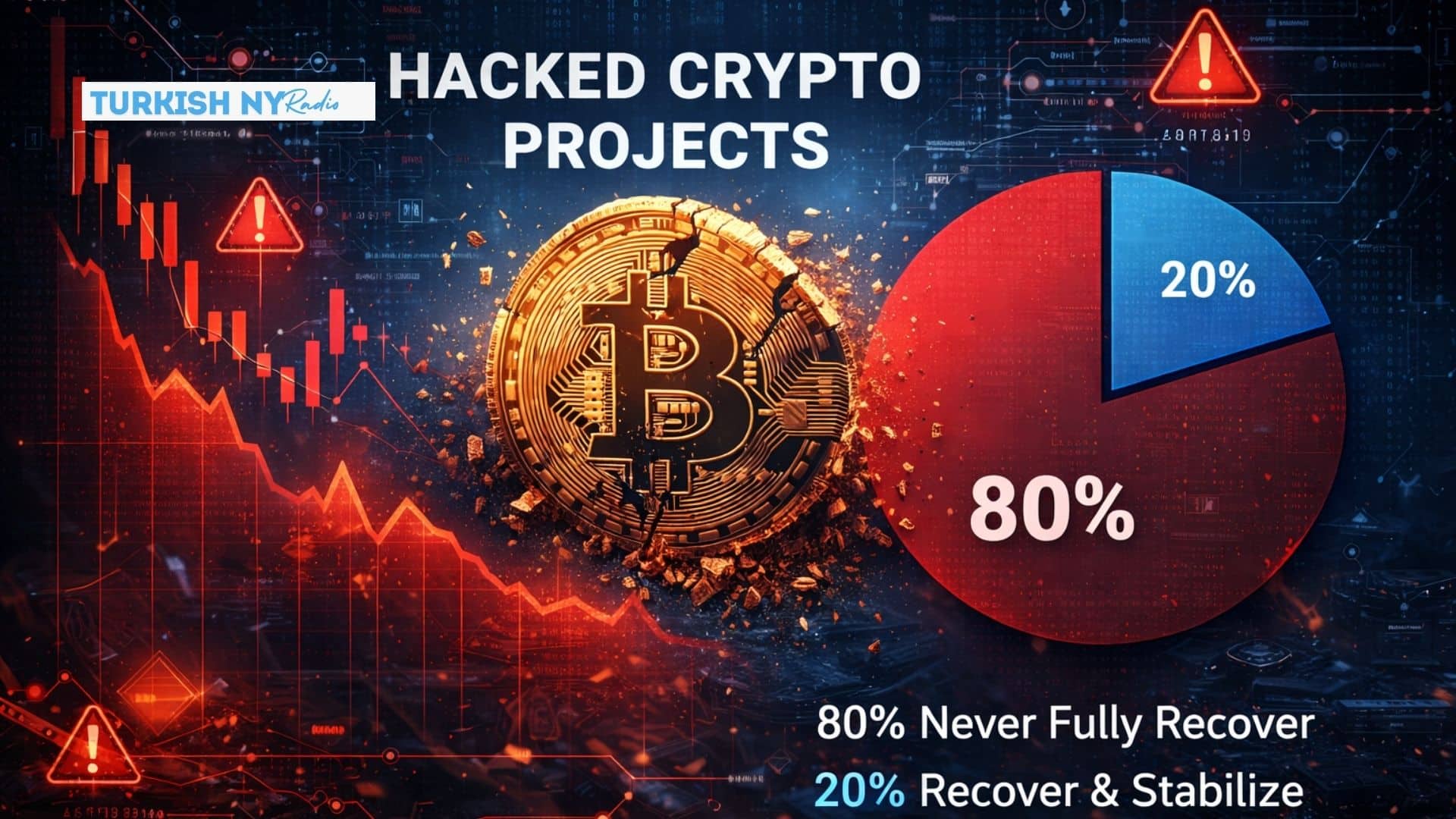
A growing body of evidence suggests that the majority of crypto project hacks leave lasting damage that many teams never recover from. According to an analysis shared by Mitchell Amador, CEO of blockchain security platform Immunefi, nearly 80% of hacked projects fail to return to their previous activity levels.


Table of Contents

Toggle
    • YOU MAY BE INTERESTED
    • How Ripple’s Saudi Bank Partnership Supports Vision 2030
    • Russia Blacklists WhiteBIT: Why the Crypto Exchange Was Banned
  • Most Crypto Project Hacks Have Permanent Consequences
    • Trust Collapse Is More Damaging Than Technical Losses
    • Operational Weaknesses Make Recovery Harder
  • Why the Industry Needs Stronger Response Frameworks
    • Clear Communication Determines User Confidence
    • Security Expectations Have Increased
    • Industry Impact and Outlook
  • Conclusion
    • Summary
  • Glossary of Key Terms
  • FAQs for Crypto Project Hacks
    • 1. What percentage of crypto projects fail after being hacked?
    • 2. What causes long-term damage after a hack?
    • 3. Are technical flaws the main cause of attacks today?
    • 4. Can a project recover if funds are returned?
    • 5. How can projects protect themselves?
    • Sources

YOU MAY BE INTERESTED

How Ripple’s Saudi Bank Partnership Supports Vision 2030

How Ripple’s Saudi Bank Partnership Supports Vision 2030

27 January 2026
Russia bans WhiteBIT

Russia Blacklists WhiteBIT: Why the Crypto Exchange Was Banned

27 January 2026

The findings, first reported by Cointelegraph, highlight how operational breakdowns and trust erosion have become more damaging than the financial loss itself.

Most Crypto Project Hacks Have Permanent Consequences

Trust Collapse Is More Damaging Than Technical Losses

In the primary report, Amador explains that after crypto project hacks, user confidence deteriorates rapidly, often faster than teams can respond. Even when stolen funds are partially recovered, the shock to the community can permanently reduce participation and liquidity.

“The breakdown of operations and trust after an incident, not just the initial loss of funds, is what prevents most teams from recovering,” Amador told Cointelegraph.

The comment reflects a pattern observed across major breaches: token prices fall, markets react instantly, and users shift to safer alternatives, leaving developers with shrinking resources.

Also read: Silent EVM Wallet Drain Targets Ethereum Users Across Multiple Chains

Operational Weaknesses Make Recovery Harder

Although early vulnerabilities were primarily scientific in nature, Amador observes that today’s crypto project hacks and breaches frequently entail operational flaws such as stolen secret keys, mismanaged multisig accounts, or phishing attempts on administrators.
These failures, he cautions, might expose internal flaws that weaken trust more than contract problems.

Because of these issues, teams frequently suspend development, redirect personnel to handle incidents, or engage in internal conflicts, all of which hinder progress and erode community confidence.

crypto project hacks

Why the Industry Needs Stronger Response Frameworks

Clear Communication Determines User Confidence

Amador stresses that after crypto project hacks, communication quality directly influences whether users give a project another chance. Projects that release incomplete information, delay updates, or downplay the severity of a breach often intensify panic.

“Consistent and transparent communication is essential,” he said. “Users need to see that the team understands what happened and can act decisively.”

Security Expectations Have Increased

With financial institutions increasingly getting involved with decentralized markets, the bar for risk management has raised. Experts suggest that obligatory audits, stronger operational protections, and ongoing monitoring are required to avoid future crypto project hacks breaches and mitigate long-term damage.

Industry Impact and Outlook

The findings shared with Cointelegraph underline a critical point: repeated crypto project hacks don’t just affect individual teams, they reduce overall market confidence. Buyers may grow increasingly wary, rules may tighten, and genuine builders may suffer increased expenses as a result of general industry skepticism.

Even yet, Amador feels the ecology has the potential to improve. Organizations that emphasize privacy, retain open communication, and plan for crises are better able to withstand unforeseen assaults.


crypto hacks recovery

Conclusion

Immunefi’s investigation highlights a harsh reality: most crypto project hacks have long-term effects. With approximately 80% of damaged projects unable to restore pace, security must be a top priority for the sector. As threats change, long-term resilience will be dependent on efficient interaction, readiness for operations, and user trust, all of which influence whether a given initiative can survive a breach.

Also read: Crypto Highlights of the Week: Gemini Listing, WLFI Action, and Polygon Fork

Summary

A new assessment from Immunefi, reported by Cointelegraph, reveals that nearly 80% of projects impacted by crypto project hacks never fully recover. Mitchell Amador, the platform’s CEO, says distrust and operational breakdowns, not lost funds, are the leading causes of long-term decline. Human-layer weaknesses, unreliable interaction, and limited funding for growth make recovery much more difficult. The findings show that in order to mitigate the long-term consequences of large breaches, the sector should increase security standards, develop crisis response strategies, and preserve openness.

Glossary of Key Terms

Immunefi is a digital currency security platform focused on bug bounty and vulnerability reporting.

Exploit: Is a mechanism used by attackers to take advantage of a system’s flaw.

Multisig Wallet: A digital wallet that requires multiple signatures to complete payments.

Liquidity: Refers to how easily assets may be exchanged without impacting their value.

Phishing Is an artificial intelligence strategy used to deceive people into disclosing private information.

ADVERTISEMENT

FAQs for Crypto Project Hacks

1. What percentage of crypto projects fail after being hacked?

According to Immunefi’s analysis, nearly 80% never fully recover.

2. What causes long-term damage after a hack?

Loss of trust, operational disruption, and poor communication.

3. Are technical flaws the main cause of attacks today?

Not always, many breaches stem from human-layer vulnerabilities.

4. Can a project recover if funds are returned?

Possible, but rare. Trust erosion often persists.

5. How can projects protect themselves?

Regular audits, secure key management, strong communication, and clear incident-response plans.

Sources

  • Cointelegraph
  • CoinCentral
Tags: crypto hacksCrypto hacks 2025crypto hacks and fraudscrypto hacks recoverycrypto project hackscrypto security breachesCryptoNewsfailed crypto projects
Previous Post

Coinbase CEO Takes Crypto Market Structure Talks to Davos as U.S. Bill Stalls

Next Post

Trump Media Sets Feb. 2 Record Date for Shareholder Token Airdrop

Sami Oliver

Sami Oliver

SIMILAR NEWS

How Ripple’s Saudi Bank Partnership Supports Vision 2030
Cryptocurrency

How Ripple’s Saudi Bank Partnership Supports Vision 2030

27 January 2026
Russia bans WhiteBIT
World

Russia Blacklists WhiteBIT: Why the Crypto Exchange Was Banned

27 January 2026
Asset tokenization
Cryptocurrency

Why Asset Tokenization Is Advancing Slowly but Strategically

27 January 2026

Leave a Reply Cancel reply

Your email address will not be published. Required fields are marked *

Search

No Result
View All Result
DMCA
PROTECTED

Categories

  • Business
  • Cryptocurrency
  • Economy
  • en
  • News
  • Politics
  • World

Recent Posts

  • How Ripple’s Saudi Bank Partnership Supports Vision 2030
  • Russia Blacklists WhiteBIT: Why the Crypto Exchange Was Banned
  • Why Asset Tokenization Is Advancing Slowly but Strategically
  • US Government Bitcoin Reserve Faces New Custody Questions
  • FCA Consultation Signals Major Step Forward for UK Crypto Regulation

Site Navigation

  • Home
  • About Us
  • Terms and Conditions
  • Privacy Policy
  • Disclaimer
  • Contact

TurkishNY Radio

Banner 1
Banner 2
No Result
View All Result
  • Home
  • Cryptocurrency
  • Business
  • Economy
  • tr Türkçe
  • en English

  • English