![Sun [New]](https://s2.coinmarketcap.com/static/img/coins/64x64/10529.png)


This article was first published on TurkishNYR.
The USDKG stablecoin, launched by Kyrgyzstan in late 2025, has drawn global attention by combining a U.S. dollar peg with physical gold reserves. This gold-reserve-based structure, which was subject to full state administration, offers hints at why some emerging markets are considering real-asset-backed stablecoins as a means of increasing trust and velocity in cross-border payments.


What Is the USDKG Stablecoin? A Gold-Pegged Design
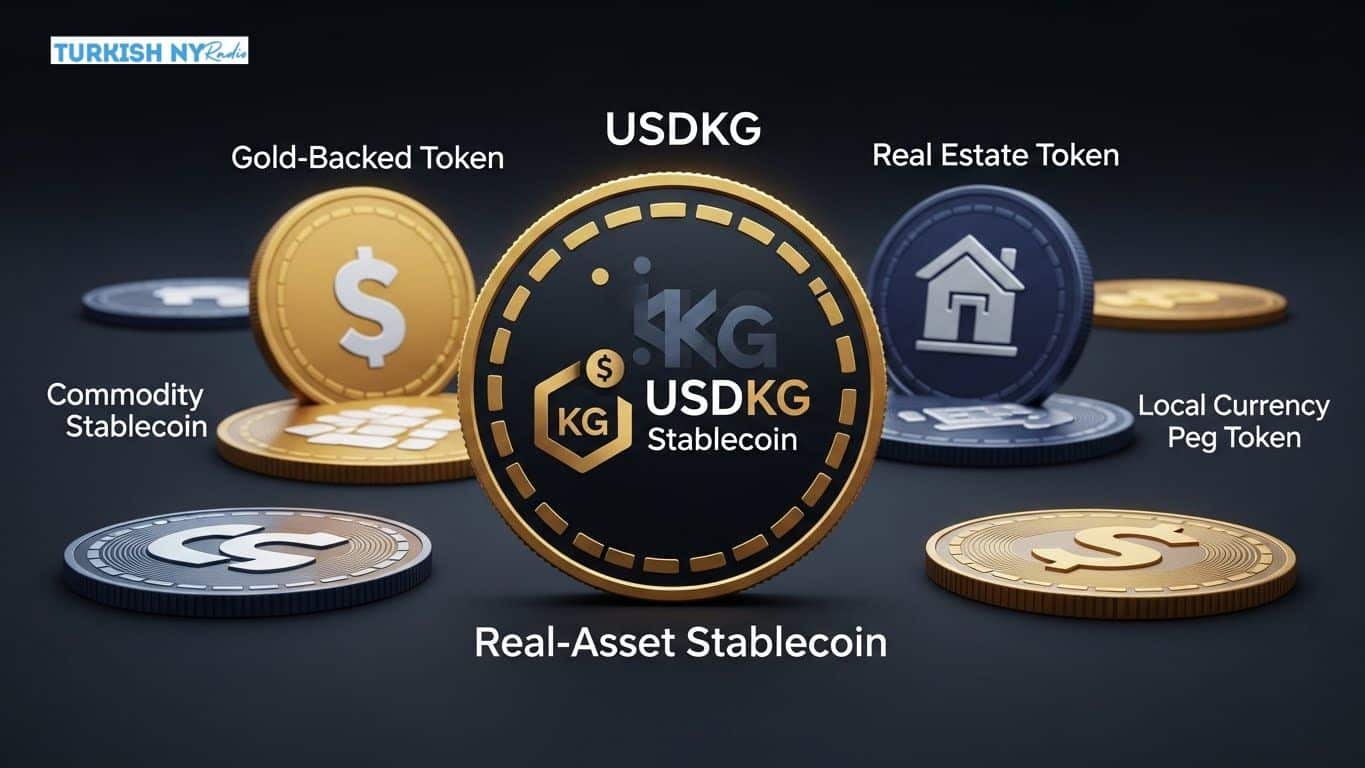
Kyrgyzstan’s USDKG is a 1:1 peg to the US dollar backed by a gold reserve. Launched in December 2025 with an initial 50 million tokens, the USDKG is built on the Tron blockchain (with plans to extend to Ethereum in the future).
The most notable thing about USDKG is that each token actually represents some gold held in secure storage. An Independent audit by Kreston Global confirmed that the gold reserves far outstrip the 50 million tokens issued. In fact, this is about 376kg of sealed gold bars worth roughly $50.3 million.
USDKG is issued by OJSC, a State-owned Virtual Asset Issuer that is very much under the wing of Kyrgyzstan’s Ministry of Finance.
The day-to-day operations and gold management are handled by a licensed private firm under contract. This partnership between government and private sector is designed to bring a bit of both the security of government backing and the transparency from a private firm.
To ensure the integrity of its transactions, USDKG has to adhere to some very strict FATF rules around know-your-customer and anti-money-laundering (KYC/AML) and users have to verify their identities when they want to cash in their tokens.
The officials responsible for USDKG are keen to point out that this isn’t some central bank digital currency or a replacement for the Kyrgyz som, it’s actually something rather different, a complementary tool for much faster and cheaper international transactions.
Why Gold and State Backing in an Emerging Market?
So why did Kyrgyzstan go for the gold – backed model? Well the official reason is that gold gives stability and trust- and these are two things that are vital for emerging markets.
In Kyrgyzstan, remittances from places like Russia account for 30% of the GDP, so having a currency that people can rely on is important. USDKG has decided to use the dollar as its unit of account, but instead of relying on traditional banking or US Treasurys, it is anchored to gold that’s less prone to inflation.
Gold has a long history of retaining its value and in Kyrgyzstan it accounts for 30-40% of the country’s exports. By contrast to the more traditional reservations, gold is something that can actually be seen, touched and verified.
Auditors physically checked the bars and verified each serial number.
For ordinary businesses and families in Kyrgyzstan, USDKG is supposed to make sending remittances quicker and cheaper than using traditional banks.
The International Monetary Fund points out that stablecoins like USDKG can cut the cost and hassle of international money transfers in half.
USDKG can move money 24/7 on the blockchain at a low fee and still keep the dollar price that most savers and traders in Kyrgyzstan are used to.
But this time, government oversight and regular audits are in place to ensure everything is above board, officials are claiming that USDKG’s gold is perfectly stable and transparent and that makes it more reliable than many other stablecoins out there.
So, in a nutshell, USDKG is saying that in a country that’s heavily reliant on remittances, people want the stability of the dollar but they may be skeptical of some of the newer, more complex ways of doing this kind of thing.
By turning to something like gold, they hope to tap into some of that existing trust and offer a way of securing value that’s more obvious and reliable.
Asset-Backed vs. Fiat Stablecoins – Evolving Models
Most popular stablecoins such as USDC and USDT are propped up by US bank deposits or Treasuries and, in doing so, raise some transparency red flags.
A lot of critics question whether these fiat reserves are properly audited or even accessible.
Meanwhile, USDKG takes a different approach by pegging to USD value while holding a physical stash of gold. This hybrid model has its appeal in emerging markets where government-linked issuers and commodity reserves tend to hold more weight.
Not all real-asset approaches are going to succeed, of course. Take Venezuela’s oil-backed Petro, for example, which was seen as opaque and largely failed in reality.
On the other hand, projects such as Pax Gold (PAXG) or Tether Gold (XAUT), which explicitly tie each token to audited bullion, have found real traction.
Kyrgyzstan’s USDKG sits somewhere in between – it acts like a dollar stablecoin for cross-border trade, but the collateral backing it is gold, a globally recognized asset.
This “hybrid” design is to strike a balance between predictability and compliance, not sending any perceived geopolitical signals.
Market signals suggest that this commodity focus is gaining some traction. Even large crypto players are now holding more physical gold. A notable example for instance is Tether, the issuer of USDT, which is essentially one of the world’s biggest private gold holders.
USDKG has become one of the emerging breed of “real-asset stablecoins” and shows off some serious transparency. Its smart contracts are up for all to see and its reserves are independently audited, which is rare in the asset-backed world.
Regulatory and Transparency Hurdles
Kyrgyzstan has had a Virtual Assets Law on the books since 2022, covering exchanges, miners and issuers alike. USDKG itself is issued under this framework and is being overseen by the Finance Ministry, which gives it a clear legal status.
USDKG has also put in place some robust KYC and AML measures to bolster trust. The recent Kreston audit, for instance, didn’t just count the gold bars, it actually tracked every single movement of the bullion and even verified the on-chain wallet controls.
This level of scrutiny really addresses some of the common concerns people have about asset-backed tokens.
Several Asian and Middle Eastern governments are also starting to write the rules for tokenization and asset-backed digital currencies.
What Kyrgyzstan has shown is how to do that responsibly, keeping the blockchain transparent while still imposing the same checks and balances (identity verification, audits) that any bank would.
Conclusion
It is clear that USDKG stablecoin is showing emerging markets that real-asset-backed stablecoins can be a practical tool for finance.
Kyrgyzstan’s gold-backed model, fully audited, government-sponsored but independently managed, is highlighting a trend where transparency and regulation are baked into crypto innovation.
That approach can redefine the stablecoins in emerging economies: it combines a securities-grade reliability of real-world assets with the efficiency of blockchain, and makes cross-border payments cheaper and more trustworthy at the end.
Glossary
Stablecoin: A cryptocurrency created with the intent of maintaining a stable market value, whether by pegging it to an asset or fiat currency.


Real-Asset Backing: Backing a stablecoin by real physical items such as gold or other commodities. This is supposed to be a way of giving people confidence in the coin and helping it retain value.
Pegged Currency: A currency that’s fixed at a certain rate to another one.
Remittance: Money sent by people who are overseas back to their home country.
KYC/AML: Know Your Customer and Anti-Money Laundering laws that require people to prove who they are and where they are from.
Frequently Asked Questions About USDKG Stablecoin
What is the USDKG stablecoin?
The USDKG is a brand new digital currency from Kyrgyzstan that launched in December of 2025. It’s pegged 1:1 to the US dollar but what sets it apart is that it’s backed by physical gold that’s stored away in vaults.
Why back the currency with gold rather than cash?
The argument for taking a position in gold is that it’s a tangible, sound reserve that people can depend on. The difference is that unlike bank deposits, physical gold can also be audited in person. And in countries like Kyrgyzstan, where inflation and currency uncertainty are very real dangers, a gold-backed coin can feel like a safer option.
How does USDKG measure up against other stablecoins?
Legacy stablecoins like USDC or USDT are pegged to cash or government debts and are difficult to verify. USDKG, on the other hand, is backed by gold and it is sovereign issued at that. Unlike other projects, USDKG reports its audits and has a transparent plan for reclaiming money if there is cause to.
What are the risks for asset-backed stablecoins like USDKG?
Even though they’ve got gold reserves and audits and checks in place, there are still risks to think about. There is the possibility that the technical side gets hacked, or there could be economic risks if the local currency becomes unpopular. The IMF has been warning that if stablecoins aren’t managed carefully they can cause problems for the economy.