![Sun [New]](https://s2.coinmarketcap.com/static/img/coins/64x64/10529.png)

![BitTorrent [New]](https://s2.coinmarketcap.com/static/img/coins/64x64/16086.png)

This article was first published on TurkishNYR.
Historical trends show that the second quarter can be good for digital assets, especially after a first-quarter dip, but changing macro pressures and geopolitical rifts are altering investor expectations.


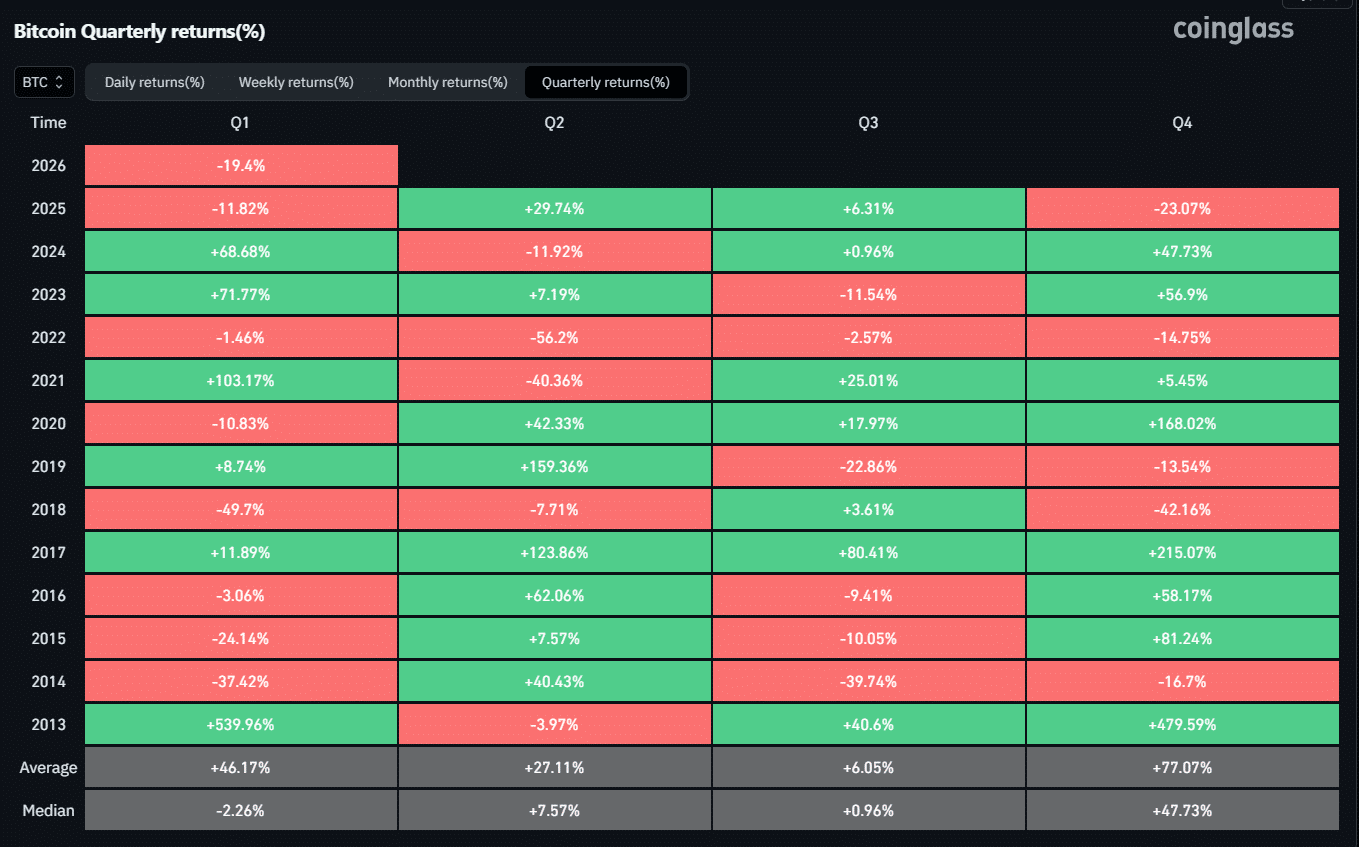
In the 2025 cycle, total markets rallied 23.4% in Q2, with approximately $640 billion entering the market over that time period. Bitcoin similarly surged by about 30% during this timeframe to deliver its best quarterly return of the year.
However, as of March 2026; the overall crypto market still sits over 18% beneath recent cyclical highs, in stark contrast to standard benchmarks such as the S&P 500, which ended out 2025 with a mild decline of around 3.2%.
Q2 Performance: A Historical Norm or a One-Off?
Past cycles provide a useful reference for the Q2 outlook. An argument could be made that the most bullish stretch of the year for crypto was delivered in the second quarter of 2025:
Total market cap of crypto grew +23.4%, BTC return in Q2 2025 was +30%
Those gains followed a rough 12% correction in Q1 2025, demonstrating how the market can rebound from early-year reversals.
Investors usually point to this historical pattern to support a bullish Q2 thesis. However, relying on past cycles to predict future performance is laced with risk when macro conditions are very different.


Macro Data Cast Doubts on the Rally Narrative
New macroeconomic signals might dampen expectations for a strong Q2. U.S. Producer Price Index (PPI) report came in hotter than expected; suggesting inflation pressures that complicate the Federal Reserve’s policymaking stance.
Although markets had fully priced in unchanged interest rates ahead of the report, crypto assets still tumbled negatively nonetheless, with the crypto market dipping roughly 3.24% following the news.
Adding to this; inflation measures including wholesale inflation, have reached 12‑month records of their own, driven largely by soaring energy prices and disruptions to supply. Such inflation trends tend to make central banks wary of lowering interest rates, which raises the opportunity cost of holding risk assets such as crypto.
This is already showing in the markets: cryptocurrencies are trading with more sensitivity to macro data, and BTC has fallen below some key psychological barriers including $70,000; a sign that bullish momentum could well be overloaded by systemic economic pressures.
Geopolitical Tensions Piling More Stress on Markets
Geopolitical risks are also affecting crypto Q2 outlook. The conflict in the Middle East carries far reaching consequences for global markets; crypto included.
Recent strikes against energy infrastructure caused oil prices to spike sharply; Brent crude briefly rose above $119 per barrel causing massive selloff through the market as investors braced for economic disruption.
These developments are prompting traders to re-price risk exposures; and helping fuel a broader pullback in both traditional and digital assets.
Crypto’s Relative Strength and Resilience in the Sectors
Crypto markets have responded well to macro headwinds in recent months.
Spot Bitcoin ETF inflows have remained positive overall in March, and reports noted over $1.5 billion of inflows amid recent volatility. This indicate that institutional interest remains, even if the short-term sentiment is defensive.
On the other hand, crypto has also shown a notable relative performance with respect to traditional safe havens. Sometimes, asset classes such as gold have registered weekly declines that have been nearly two times worse than Bitcoin’s during times of macro stress.
That resilience feeds into the bullish side of the crypto Q2 outlook, with analysts saying that the structural interest in digital assets hasn’t gone away.

Macro Risks Still Loom Large
Despite some pockets of resilience, macro influences remain at play in the behavior of investors.
Citigroup recently cut its 12‑month price targets on major cryptocurrencies because of stalled U.S. regulators progress. Based on its new outlook, the Bank downgraded its target for Bitcoin from $143,000 down to $112,000 with a downside case approaching as low as $58,000 if conditions of recessionary circumstances were to sharpen.
Persistent inflation data, a central banking stance that seems to push rate cuts further out, and geopolitical risk are all potential impediments to any wider Q2 rally.
Conclusion
This leaves the crypto Q2 outlook at a crossroad. History makes a convincing argument that in the past, when there has been a first‑quarter correction, the second quarter was seen as having very strong upside. But the macro and geopolitical atmosphere today is way different from those of previous years .
Inflation pressures, risk‑off sentiment caused by real‑world events, and changing central bank expectations create palpable headwinds.
While strength in some key metrics such as ETF inflows and crypto’s performance against traditional assets, indicates that crypto is not entirely defenseless, the balance of risk shows a reoccurrence of the aggressive 2025 Q2 rally is hardly guaranteed.
So in short, the stage is set for a Q2 rally, but it is now being tested by reality.
Glossary
Producer Price Index (PPI): An index tracking inflation at the wholesale level, and often an early indication of consumer inflation.
Risk‑Off: A market condition in which investors prefer safer assets to riskier ones; such as cryptocurrencies.
Spot Bitcoin ETF: A fund that physically holds Bitcoin and directly tracks its price; allowing for broader investor access.
Safe Haven Asset: An investment that is likely to hold or gain value during times of market turbulence; such as gold.
Inflation Pressure: An economic condition in which prices rise; diminishing purchasing power and often having an impact on central bank policy.
Frequently Asked Questions About Crypto Q2 Outlook
Can crypto rally in Q2?
Historical trends suggest that strong Q2 performance is feasible but current macro risks mean it’s not a given.
How has Bitcoin reacted to recent macro data
The price of Bitcoin has been volatile; falling below key levels like $70,000 as inflation fears and geopolitical and other concerns weigh.
Why do macro risks matter for crypto?
Crypto is behaving more and more like a risk asset; responding to inflation data, central bank policy and geopolitical events.
Is institutional interest still active?
Yes, there has been inflows for spot Bitcoin ETFs.
What might threaten a crypto rally?
Key risks include persistent inflation; delayed rate cuts, geopolitical conflict and regulatory uncertainty.