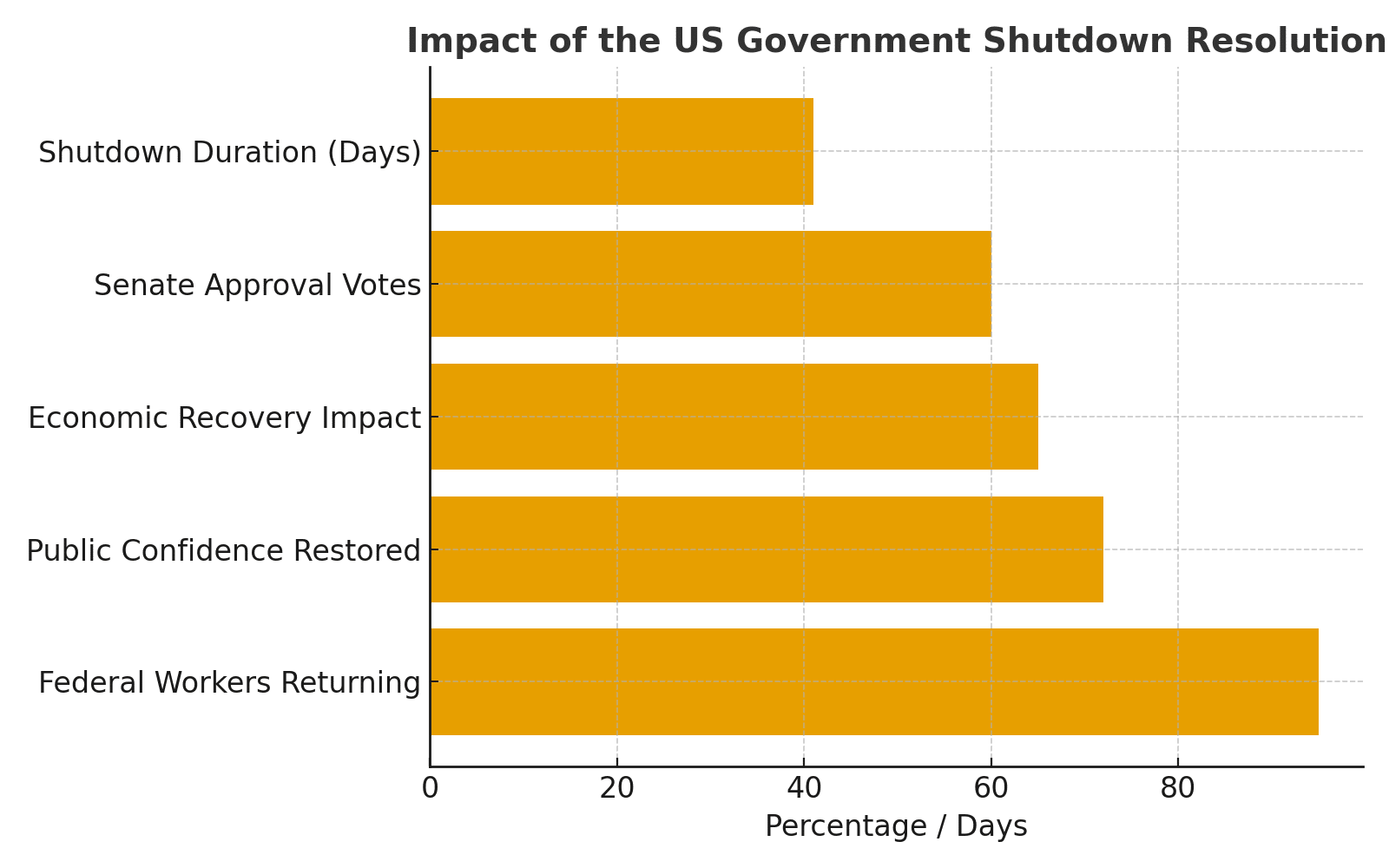
After 41 long days of uncertainty, the U.S. Senate has finally passed a bill to end the US government shutdown, marking a critical turning point for federal employees, families, and the economy. The 60–40 vote restored funding and pushed back workforce cuts until January 30, 2026.
“The government shutting down seemed to be an opportunity to lead us to better policy. It didn’t work,” said Senator Dick Durbin (D-Ill.) on Monday.
The Vote That Broke the Deadlock
The compromise saw almost all Republicans and eight Democrats backing the measure, reopening agencies shuttered since October 1. Speaker Mike Johnson confirmed the bill heads to the House next, calling it “a responsible step toward stability.” President Donald Trump described the deal as “very good.”


What’s in the Funding Bill?
The package funds key programs like SNAP and air safety services and keeps the US government shutdown at bay for now. However, Democrats remain frustrated by the absence of guarantees for Affordable Care Act subsidies. Those talks are deferred to December, a move critics say “kicks the can down the road.”
The Political Fallout
Recent polling from Reuters/Ipsos revealed 50% of Americans blamed Republicans, while 43% pointed to Democrats for the prolonged US government shutdown. Economists estimate the 41-day halt cost the economy billions and disrupted essential federal services.
Voices from the Floor
Senator Lisa Murkowski (R-Alaska) noted on X, “This is not victory it’s survival. We owe the American people a government that works, not one that shuts down every year.”
Senate Majority Leader Chuck Schumer (D-N.Y.) added, “We may have ended this US government shutdown, but let’s be clear, our work to ensure fair funding for healthcare and workers is far from done.”
Markets React
Wall Street responded with cautious optimism. Stocks rose modestly as traders welcomed an end to fiscal gridlock. Analysts say the temporary resolution avoids deeper market volatility but warns that another US government shutdown threat could return early next year.
What Happens Next?
The House vote, expected Wednesday, could quickly send the bill to the president’s desk. Once signed, it will reopen agencies, resume paychecks, and restore confidence at least temporarily in Washington’s ability to govern. Still, without long-term reform, the US government shutdown remains a recurring political weapon.
The Bigger Picture
This short-term win reflects deeper structural issues, polarization, budget brinkmanship, and legislative fatigue. Lawmakers from both sides have acknowledged that unless fiscal talks move toward consensus, America risks reliving another US government shutdown in a few months.


“The American people deserve stability, not shutdowns,” Senator Tim Kaine (D-Va.) said. “We cannot keep governing from crisis to crisis.”
Conclusion
The Senate’s decision to end the US government shutdown is more than a policy fix, it’s a moment of political reckoning. While federal employees and citizens can breathe again, the reprieve is temporary. The real challenge lies in forging durable solutions that protect both governance and public trust before the next deadline looms.
For more news, visit our platform.
FAQs about US government shutdown
1. What caused the 2025 US government shutdown?
A budget standoff over health subsidies and workforce cuts triggered the deadlock.
2. How long did the shutdown last?
It lasted 41 days, the longest in U.S. history.
3. When will the government reopen?
Once the House passes the bill and the president signs it—expected within days.
4. Could another shutdown happen soon?
Yes, funding only extends until January 30, 2026, so another US government shutdown is possible.
Glossary
-
Shutdown: When the government halts operations due to lack of approved funding.
-
Stopgap Bill: Temporary funding to keep agencies running.
-
ACA Subsidies: Financial aid to help Americans afford healthcare under the Affordable Care Act.
-
SNAP: Supplemental Nutrition Assistance Program, offering food benefits to low-income individuals.