In a visit that feels more like a high-stakes chess match than a diplomatic trip, Trump in South Korea has grabbed the world’s attention.
The former U.S. President’s stop in Gyeongju marks one of the most defining moments in U.S.–Asia relations this year one that mixes talk of trade, defense, and nuclear technology in equal measure.
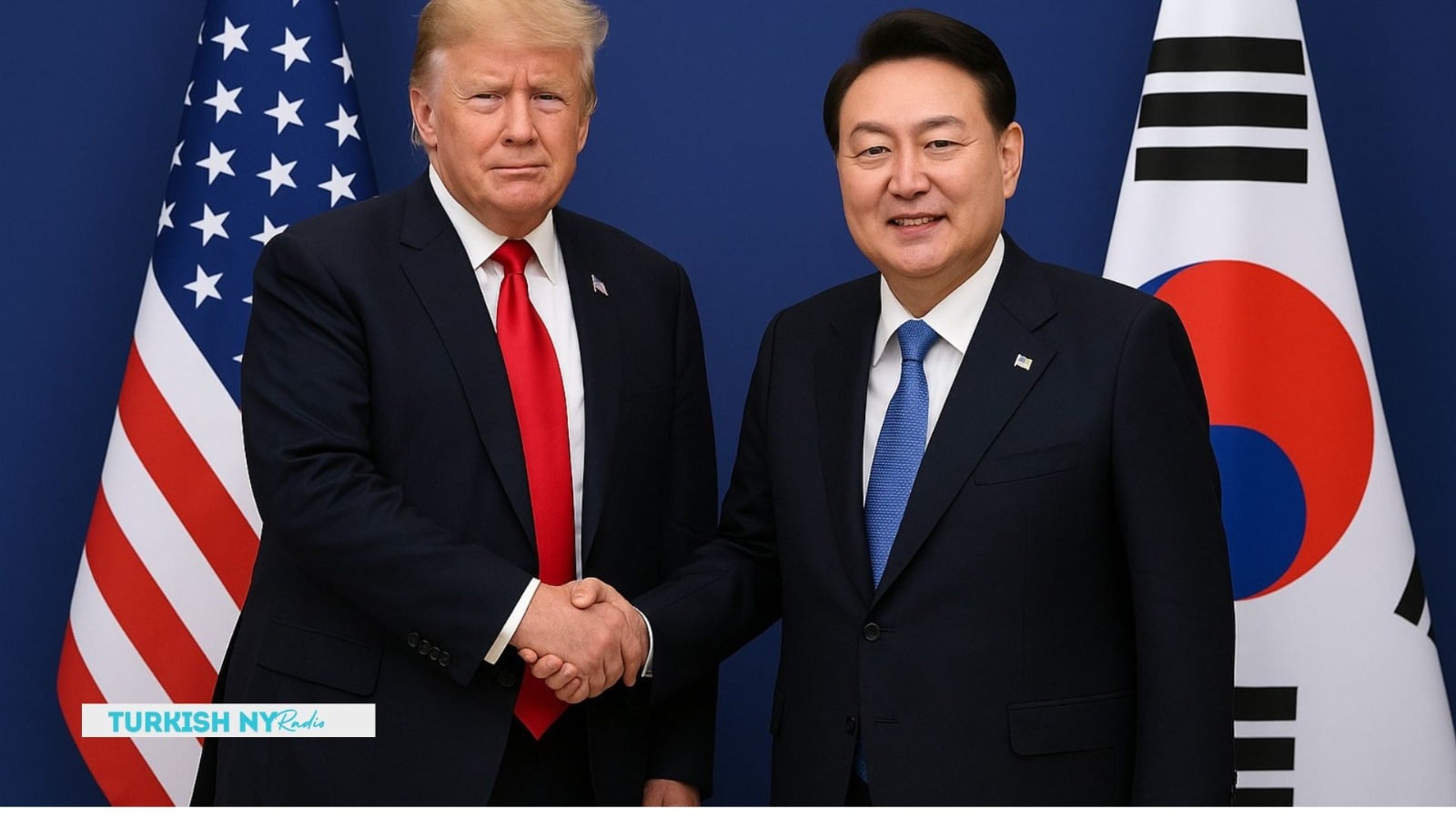
The atmosphere was charged yet cordial as Trump met South Korean President Lee Jae-Myung to discuss a new chapter in what both leaders call a “mutually beneficial alliance.”
From trade tariffs to submarine fuel, the conversations reveal that Trump in South Korea is not just a photo opportunity, it’s a geopolitical turning point.
Lee’s Bold Request: Nuclear Submarine Fuel
During their meeting, President Lee Jae-Myung made a headline-making request U.S. fuel for South Korea’s nuclear-powered submarines.
According to Reuters, Lee emphasized that “these submarines will not carry nuclear weapons, but they will strengthen our ability to monitor regional threats.”
This request signals a potential shift in regional defense strategy, with Trump in South Korea once again pushing the boundaries of alliance cooperation.
Trump reportedly responded positively but stopped short of a commitment, saying, “We’re looking at every way to make this partnership stronger, fairer, and safer for both nations.”
Trade Talks: A Game of Give and Take
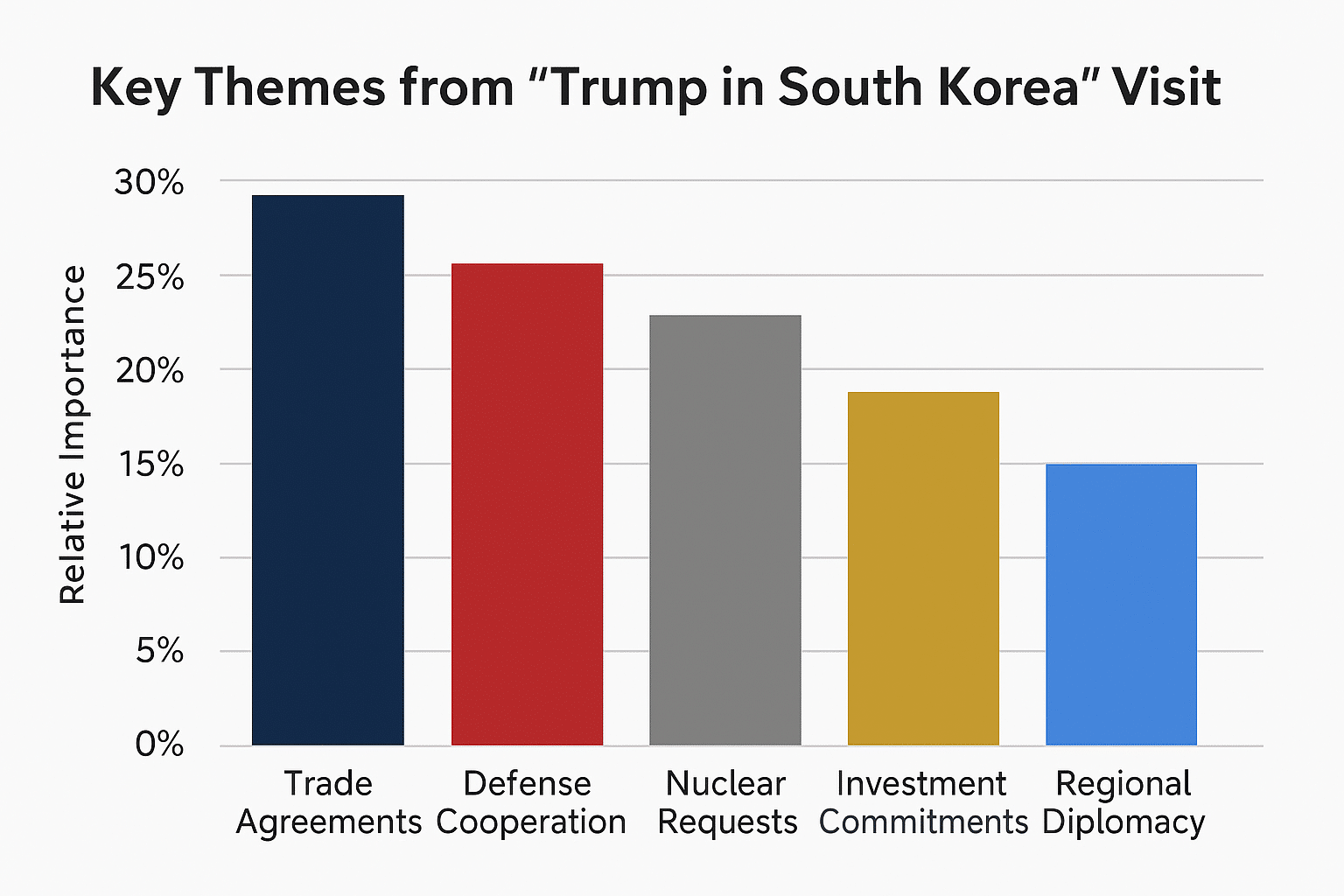
Economic friction and opportunity go hand in hand whenever Trump in South Korea trends. According to Politico, both sides revisited a previous trade agreement that reduced U.S. tariffs on South Korean exports in exchange for billions in Korean investments.
Sources close to the talks told The Financial Times that South Korea pledged up to $350 billion in new U.S.-based projects and energy imports but concerns remain over whether those numbers represent real investments or financial guarantees.
Trump, true to form, described the trade partnership as “a tremendous deal for American workers and Korean innovation,” before adding, “We’re making sure every deal puts America first and our allies right beside us.”
Defense, Protests, and Power Perception
While Trump in South Korea brought moments of ceremony, including the Grand Order of Mugunghwa, South Korea’s highest civilian honor, not everyone celebrated. Demonstrations in Gyeongju highlighted local unease over expanding U.S. influence and nuclear discussions.
Still, defense analysts say the visit underscores a clear message: Washington and Seoul are tightening strategic ties in an increasingly uncertain Indo-Pacific.
As one observer from Yonsei University noted, “When Trump in South Korea makes headlines, it’s never just about trade it’s about power dynamics.”
Regional Ripples: What Comes Next
With the APEC summit underway, Trump in South Korea sets the tone for the next diplomatic moves in Asia. All eyes now turn to Trump’s expected meeting with Chinese President Xi Jinping a moment that could redefine trilateral relations among Washington, Seoul, and Beijing.


Conclusion
The visit proves one thing beyond doubt: Trump in South Korea is more than a diplomatic headline; it’s a strategic recalibration. From nuclear requests to billion-dollar deals, this trip blends ambition with pragmatism.
Whether it reshapes Asia’s balance of power remains to be seen, but one thing is clear the world is watching.
For more news, visit our platform.
FAQs about Trump in South Korea
1. Why did President Trump visit South Korea?
To discuss trade agreements, defense cooperation, and regional stability at the APEC summit.
2. What did South Korea request from the U.S.?
President Lee asked for fuel for nuclear-powered submarines, emphasizing they would not carry nuclear weapons.
3. Did any new trade deal emerge?
Talks are ongoing, but South Korea reaffirmed its $350 billion investment plan in the U.S.
4. Why is the visit significant?
It signals a deeper U.S.–South Korea partnership at a time of rising tensions in East Asia.
Glossary of Key Terms
-
APEC: Asia-Pacific Economic Cooperation, a major regional summit promoting trade and economic collaboration.
-
Tariff: A tax imposed on imports or exports between countries.
-
Nuclear-powered submarine: A submarine using nuclear fuel for propulsion but not necessarily armed with nuclear weapons.
-
Grand Order of Mugunghwa: South Korea’s highest civilian honor.