![Sun [New]](https://s2.coinmarketcap.com/static/img/coins/64x64/10529.png)


This article was first published on TurkishNYR.
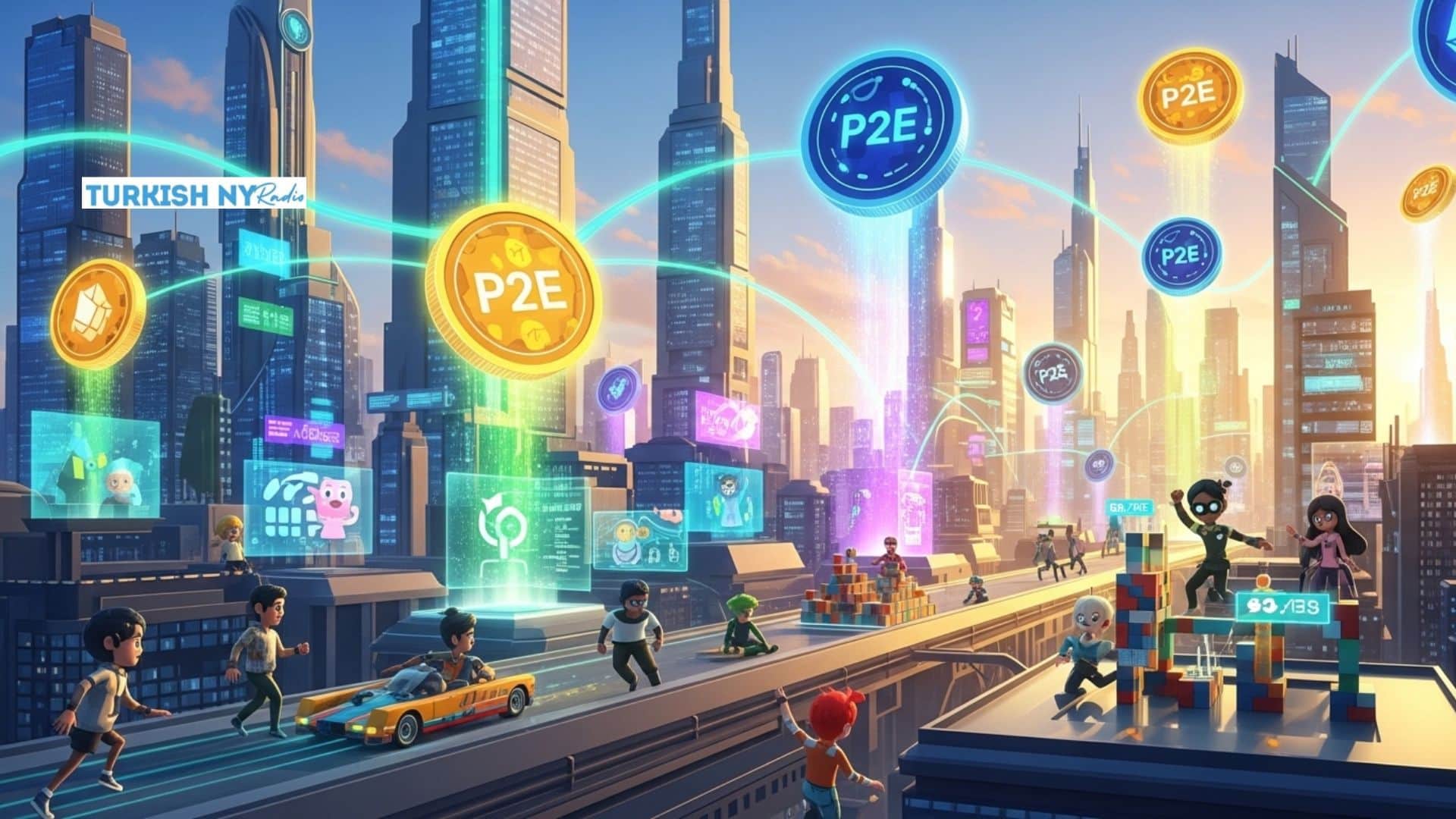
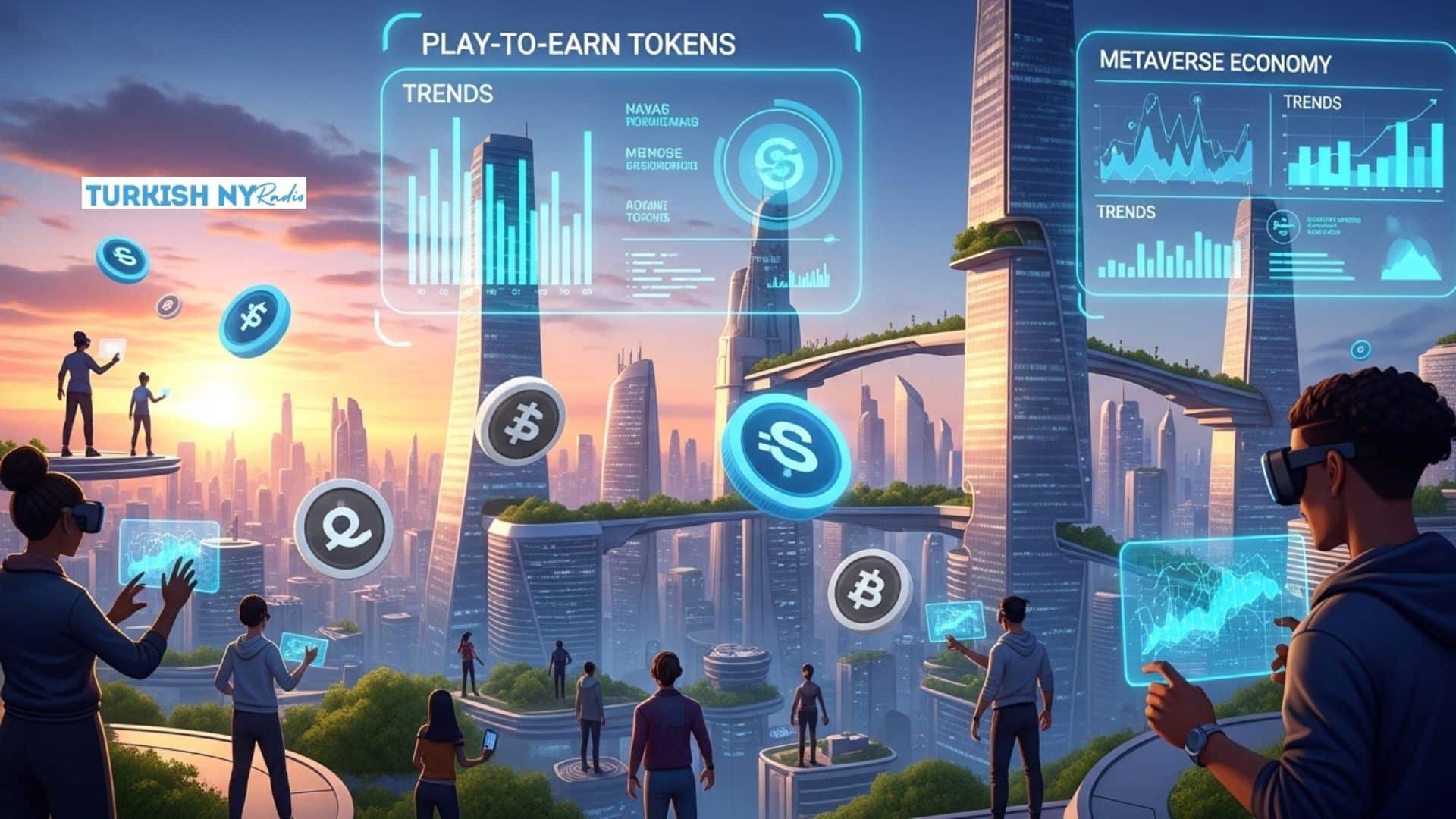
Play-to-earn tokens are creating new digital economies around gaming and virtual worlds. In 2026; blockchain games and metaverses enable players to earn cryptocurrency from playing games or creating assets for it. These tokens are the currency of virtual economies; used as payments for everything from items and land to rewards.


What Are Play-to-Earn Tokens?
In play-to-earn (P2E) games; tokens and NFTs are rewarded to players for achieving certain gameplay milestones. Unlike conventional games; P2E titles provide real economic incentives for players: as they play, they earn native cryptocurrency (or tokens) and often non-fungible tokens (NFTs).
The tokens have market value and are tradable on crypto exchanges, so it’s possible for skilled or committed players to make a real income.
Game currencies, tokens like AXS or SAND, for example; are like in-game dollars. Players use them to purchase virtual land, equipment or cosmetics. The tokens exist outside the game economy and they are traded on open markets.
Many Play-to-Earn tokens give holders voting rights regarding game development or the ability to stake tokens and earn rewards. For example, the AXS token of Axie Infinity allows community members to vote on updates and share in platform fees.
Most of P2E games also includes NFTs (avatars, items, land. These are bought or sold using the game’s token. Decentraland, for example, uses MANA to purchase virtual land parcels. The value of the token is based on demand for these assets.
A metaverse is a shared virtual space, with its own economy and currency. In a crypto metaverse, the platform includes blockchain from the ground up and its economy runs on cryptocurrency and NFTs.
Users can exchange land, digital goods, and services that have real value. Within this environment, play-to-earn tokens serve as both medium of exchange and store of value.
Top 2026 Play-to-Earn Tokens
The economy of several play-to-earn (P2E) games and metaverse platforms are defined by flagship tokens. Here are some of the top play-to-earn tokens and their use cases:
| Token | Project | Use and Utility |
| AXS | Axie Infinity | Governance and staking token for Axie Infinity. AXS holders vote on game updates; staking AXS earns rewards. Axie players earn SLP for play; but AXS drives the platform economy. |
| SLP | Axie Infinity | Smooth Love Potion, the in-game reward token. Players earn SLP for playing; it’s used to breed Axies. (Current market cap ~$22M.) |
| SAND | The Sandbox | Utility token for The Sandbox metaverse. Used to buy land, pay for transactions, and participate in governance. Facilitates Sandbox’s user-generated gaming economy. |
| MANA | Decentraland | Currency of Decentraland. Used to buy virtual land and goods. Decentraland’s economy is powered by MANA for trading NFTs (land, wearables). |
| ILV | Illuvium | Governance and staking token for Illuvium (an open-world RPG). 100% of game revenue is distributed to ILV stakers. Also used for voting. |
| GALA | Gala Games | Multi-game ecosystem token. Used across Gala’s games for in-game purchases and node staking. GALA underwent supply reforms to stabilize tokenomics. |
| IMX | ImmutableX | Layer-2 scaling token (ImmutableX). Powers zero-gas NFT minting and staking on Immutable’s gaming platform. It’s infrastructure rather than a specific game token. |
| DEC | Splinterlands | (Not in WazirX list but prominent.) Earned from playing Splinterlands card game. Used for item creation and marketplace activities. |
| TLM | Alien Worlds | In-game token for the Alien Worlds metaverse. Earned from gameplay; used to rent land and stake for mining rewards. |
There are thousands of other projects. Over 3,500 blockchain game titles are tracked by DappRadar. But the tokens above show the common models: reward tokens (SLP/DEC), governance tokens (AXS/ILV), metaverse currencies (SAND/MANA).
The success of each token relies on its game’s popularity and tokenomics. AXS and SLP were once flying high in 2021 on explosive growth, but fell back as the hype faded. The Sandbox’s SAND and Decentraland’s MANA also surged along with demand for virtual land.
Analyst notes the strong in-play-to-earn (P2E) projects in 2026 are ensuring that their gameplay is balanced with a sustainable token model that delivers fun while still being rewarding.
The Metaverse Economy and P2E
The metaverse economy is the virtual marketplace of items, services and real estate within interconnected 3D realms. Gaming represented a whopping $183 billion of the metaverse economy in 2025. Play-to-earn tokens are at the heart of this because they allow players to get money in the metaverse and inject liquidity into these virtual markets.
Use Cases
Land and Assets: The Sandbox and Decentraland are two platforms where users can buy and develop virtual land with their tokens (SAND, MANA) If you own any of these land parcels, they generate rent, host games and appreciate in value within the metaverse creating revenue streams.
User-Driven Content: Many metaverses include games and experiences that users create. Play-to-earn tokens are spent to build and tokens are earned from using other users creations. The Sandbox, for instance, pledged to draw 50 percent of its content from community creators as of 2026. In this way, Play-to-earn tokens serve a dual purpose; circulating as both investment (e.g. the purchase of land/items) and income (the earnings from creation).
Real-World Convergence: Some companies even pay salaries in crypto or run NFT staking for game economies. For non-gamers, businesses such as virtual advertising or events pay in metaverse tokens. Gaming dominated the metaverse revenues ($183B) and even real estate (virtual land sales) reached $9.1B in 2025, according to the reports.
In essence; play-to-earn tokens and their tokenomics serve as the base layer for most metaverse economy, creating a natural link between game activity and real-world value. Players pay tokens to access experiences (e.g. play premium games) and earn tokens by generating value (winning tournaments, creating content).
Market Trends and Data
Recent data shows both the promise and volatility of Play-to-earn tokens. On-chain analytics reveal:
User Activity: As of early 2026, tens of millions are now playing some form of blockchain game. Some entries have remained massively active. Splinterlands has hung onto tens of millions of battles played since 2021. Meanwhile, new projects like World of Dypians gained 3.6 million monthly users by the end of year 2025 with $44B volume. DappRadar now tracks thousands of active games overall which suggests healthy interest.
Token Prices: Token prices for P2E have been mixed. Most peaked in 2021 and then collapsed. For instance, Smooth Love Potion (SLP, Axie Infinity’s reward token) is at a projected price of about $0.0006 in 2026, many miles away from the all-time high it registered in 2021.
Metaverse tokens, on the other hand, settled down at a relatively higher level. After deep corrections, when metaverse growth picked up in 2025, SAND and MANA also saw renewed buying. Token emission with no economic sustainability only fuels short-lived hype cycles.
Token rewards can be tanked between 80-90% following hype exhaustion. This is why designing sustainable tokenomics is important.
Market Size: The metaverse is huge,projected at $507.8 trillion as at 2025. Within that, blockchain gaming (GameFi) is worth billions. GameFi revenues were reported at $35 billion in 2026 and projected to grow to $176 billion by 2031.
Opportunities and Risks
Pray-to-earn is a double-edged sword. Opportunities include:
New Talent: P2E turns players into entrepreneurs. As many as millions of Gen Z users across a wide range of metaverse games are active on a weekly basis, according to reports; an indication that there is a sizeable and motivated potential workforce who can create value.


Innovation: Cryptocurrency games combine DeFi, NFTs, and gaming. World of Dypians, for example, combines DeFi staking with open-world gameplay. Innovation like this can create fresh ways to game.
Investment: Token economies attract capital. Projects such as The Sandbox have raised enormous sums to build their metaverse, while new P2E studios get funding every month. This fuels better game production.
But the risks and challenges are also serious:
Volatility: The value of P2E tokens is reliant on the number of players and tokenomics. Tokens can tank if user growth stagnates. Many tokens crashed in 2021 due to unrealistic reward schedules. Most new P2E models are more sustainable. Illuvium for example, has revenue going entirely to stakers to provide ILV value.
Regulation: The income in P2E games is often viewed as taxable income. New rules in the U.S. mandate detailed crypto reporting. This means players have to track and report each token they gain as a reward, or every NFT sold. Some jurisdictions have started taxing sales of virtual land and incomes generated in crypto, which can fade the appeal.
Security: Cheating and hacks are what people worry about. That means that as there’s real value in games, fraudsters are attracted. There needs to be strong smart contracts and anti-cheat for projects. A game like Splinterlands, also acknowledged bot mistakes that dominate battles.
Key Statistics
| Metric | Value (2025) |
| Projected metaverse market (2025) | $507.8 billion |
| Gaming share of metaverse economy | $183 billion |
| Blockchain games tracked on DappRadar | 3,500+ titles |
| Total P2E token count analyzed in study (2022) | 174 tokens |
| Example: SLP (Axie) market cap (April 2026) | $22 million |
Conclusion
Play-to-earn tokens are an important driving force in the metaverse economy These tokens allow players to accumulate tangible value based on their gameplay; generating a multibillion dollar virtual economy.
From NFT asset trading to decentralized governance; top P2E tokens like AXS, SAND, ILV and more show a variety of use-cases. Experts caution that P2E token markets can be volatile and speculative.
In the future; play-to-earn tokens will depend primarily on sustainable game design; strong communities and clear regulations. For now, P2E tokens are still a building block of the growing metaverse economy; opening up opportunities for players and developers.
Glossary
Blockchain Game: Game developed on top of blockchain where in-game assets and tokens hold actual cryptographic value.
P2E (Play-to-Earn): Model where players are rewarded with cryptocurrency or NFTs for playing games or creating content.
Metaverse: A virtual environment that may persist over time and across individual views; enabling users to engage with it through avatars. Has its own economy and currency.
NFT (Non-Fungible Token): a unique item on blockchain; whether it be art or virtual land.
GameFi: Game Finance; It refers to the aspect of blockchain gaming that combines financial incentives (P2E; DeFi features) with gaming.
Frequently Asked Questions About Play-to-Earn Tokens
What are play-to-earn tokens?
Play-to-earn token is a cryptocurrency that serves as a reward mechanism for online video games on the blockchain. Players are rewarded these tokens for achieving goals or competing in games.
What role do play-to-earn tokens have in the metaverse economy?
In a crypto metaverse; P2E tokens serve as the currency for virtual transactions. Users spend tokens to acquire virtual land, items and experiences; and earn them by creating content or winning games.
What are some play-to-earn tokens available in 2026?
P2E tokens to watch out for include Axie Infinity’s AXS (and its in-game token SLP). The Sandbox’s SAND; Decentraland’s MANA and Illuvium ILV and Gala Games’ GALA. These tokens power the economies of their respective games for staking, governance, and purchases.
Can play-to-earn tokens be a way for players to earn real money?
Yes, skilled or lucky players can make real money. However; earnings remain uncertain and vary with token prices and game demand. But experts warn that if a game’s economy isn’t sustainable, the value of its token can collapse.
Are play-to-earn tokens regulated?
This area is evolving. Most countries consider P2E earnings taxable income. Until 2026; specialized P2E laws were rare.
References
Disclaimer: this article is for informational purposes only and does not constitute financial or investment advice.