![BitTorrent [New]](https://s2.coinmarketcap.com/static/img/coins/64x64/16086.png)


This article was first published on TurkishNY Radio.
A clean way to think about 2026 is that Layer 1 networks have started competing like cities, not like ideas. Some are built for finance, some for apps that feel like the regular internet, and some for specialized districts. In that frame, top Layer 1 Blockchains are the places where developers keep building, users keep returning, and upgrades arrive without chaos.


A practical framework for judging Layer 1 networks
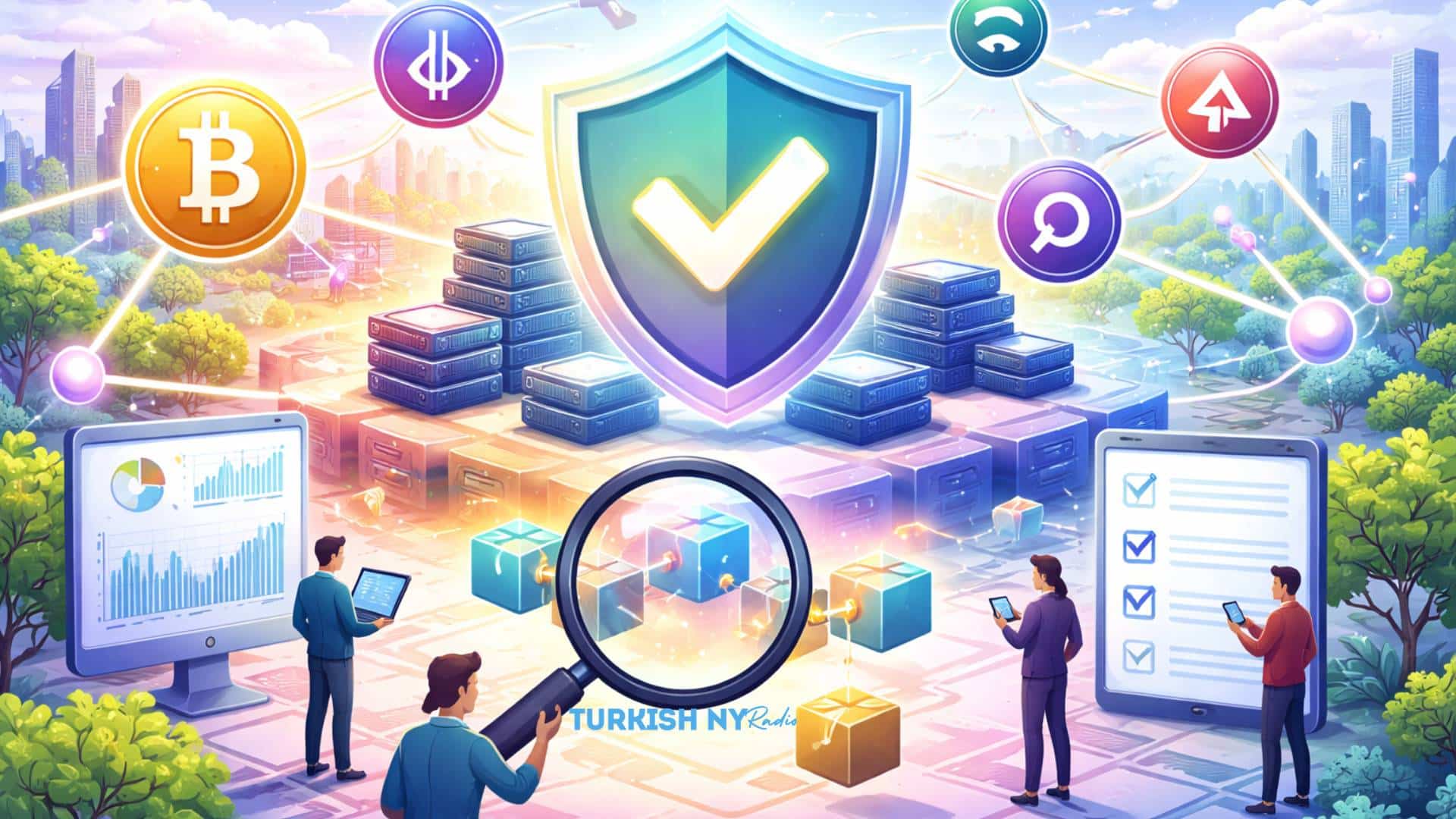
Before naming top Layer 1 Blockchains, it helps to define the scorecard that separates signal from marketing.
The first category is security posture. That includes validator design, client diversity, and the social ability to coordinate upgrades without drama. Second is performance reality, not theoretical peak numbers. Observers watch finality behavior, fee spikes, and how the chain behaves during volatility. Third is developer experience, which is often the hidden kingmaker. Tooling, documentation, audit culture, and debugging time decide whether teams ship or stall.
Fourth is ecosystem density. A chain can have many projects, but if liquidity is fragmented and applications do not compose well, growth can feel shallow. Fifth is governance and upgrade cadence, because 2026 is not a museum. Networks that cannot evolve tend to lose relevance.
Top Layer 1 Blockchains and what each is best at
This educational view of top Layer 1 Blockchains is not a ranking by hype. It is a guide to strengths, tradeoffs, and the kind of activity each chain is positioned to win.
Ethereum: settlement credibility and the rollup economy
Ethereum remains foundational because it is treated as a high trust settlement layer for a broad ecosystem. The key educational point is that Ethereum scaling is increasingly rollup centered, while the base layer focuses on credible security and coordinated upgrades.

Pectra is frequently described as a major upgrade combining coordinated updates, with a scheduled mainnet date in 2025 and a broader set of improvements that become visible as wallets and applications adopt them.
In 2026, Ethereum’s “product” is not just mainnet transactions. It is an entire settlement stack that many teams build around.
Solana: consumer-grade speed and resilience work
Solana’s educational takeaway is that performance can be a design identity, but resilience must keep pace. That is why client diversity is so central to its narrative.
Industry research and technical roadmap discussions highlight Firedancer as a major independent validator client effort and emphasize the value of having multiple clients on the mainnet for fault isolation.
For readers tracking top Layer 1 Blockchains, Solana often represents the clearest attempt at bringing an app store style experience onchain, where fees can stay small and interactions can feel immediate.
Avalanche: app-specific chains without losing connectivity
Avalanche is often taught as a modular approach. Instead of forcing every application into the same execution environment, it supports launching tailored networks that can still connect back to shared infrastructure.
Avalanche9000 was reported as live in December 2024 and positioned as a major upgrade intended to reduce costs and make it easier to launch Avalanche L1 style networks, linked to proposals such as ACP 77.
In 2026, that matters because many builders want control over fees, throughput, and compliance features without abandoning interoperability.
Sui: parallel execution and low latency as a product feature
Sui is best explained as a chain built to treat latency like a first class product metric. Its materials emphasize Mysticeti as a consensus design aimed at very low latency, and research commentary has framed its quick finality as a differentiator for certain applications.
When top Layer 1 Blockchains are evaluated for gaming and consumer experiences, Sui stays in the conversation because “fast” is not just marketing there. It is the difference between usable and abandoned.
Aptos: engineered for predictable parallelism
Aptos is commonly introduced through two pillars: Move and parallel execution. Its more technical publications describe pipelined transaction processing and highly parallel execution designed to leverage hardware resources efficiently.
For 2026 education, the practical lesson is that parallel execution is only valuable if it stays predictable for developers and users. That is where maturity, tooling, and clear upgrade paths become crucial.


NEAR: making multichain feel invisible
NEAR is often framed around chain abstraction, meaning it tries to let users interact across chains without handling the usual complexity. NEAR’s own 2025 review and 2026 lookahead emphasize scaling chain abstraction with a larger MPC network and multichain focus.
In a world where users do not want to learn ten wallets, that approach can be a quiet advantage. It also explains why NEAR remains on watchlists of top Layer 1 Blockchains even when narratives elsewhere feel louder.
BNB Chain: operational scale and roadmap driven performance
BNB Chain is often evaluated as a high throughput environment with strong operational discipline. Its official 2026 roadmap describes continued scaling of performance, execution quality, and resilience, with earlier performance notes citing low fees around $0.01 and fast finality targets.
For 2026, the educational lens is simple: operational consistency attracts builders who care more about shipping than storytelling.
Cardano: governance depth and long horizon design
Cardano is frequently taught as governance forward. Its public communications note a shift toward full community governance via the Plomin hard fork and highlight structured governance roles and action types in its framework.
For top Layer 1 Blockchains, governance is not just politics. It is how a network upgrades without splitting its community or breaking its own rules.
How analysts track real adoption without getting fooled
When top Layer 1 Blockchains are measured honestly, the best practice is to watch behavior that is costly to fake. Developer activity over time is one. Another is whether stable liquidity sticks around during volatile weeks. Observers also track fee revenue patterns, the diversity of applications, and whether usage survives after incentive programs cool off.
Security incidents deserve special attention. A single exploit can undo years of brand building, especially if it reveals weak operational practices. Upgrade discipline matters too. A network that communicates clearly, scopes changes well, and ships upgrades without emergency patches tends to earn trust, even from skeptics.
Conclusion
A 2026 watchlist of top Layer 1 Blockchains is less about predicting a single winner and more about understanding what each network is built to do. Ethereum anchors settlement and rollup ecosystems. Solana pushes consumer grade speed while investing in resilience.
Avalanche leans into modular deployments. Sui and Aptos emphasize parallel execution and latency. NEAR focuses on chain abstraction and smoother UX. BNB Chain brings scale and execution discipline, while Cardano offers governance depth. The right question in 2026 is not “which chain is best.” The better question is “which chain is best for the use case that is actually growing.”
Frequently Asked Questions
What is a Layer 1 blockchain in plain terms?
A Layer 1 is the base network where transactions are ordered and finalized. It defines the rules, security model, and how applications interact with the ledger.
Why do some Layer 1 chains focus on low fees while others do not?
Low fees can support consumer apps and frequent interactions. Other chains prioritize decentralization tradeoffs, security assurances, or settlement roles where higher fees can be tolerated.
Does higher transactions per second guarantee adoption?
It does not. Adoption tends to follow reliable performance, strong tooling, and ecosystems where developers can ship quickly and maintain safely.
Why is governance a key metric in 2026?
Governance determines how upgrades happen, how disputes are resolved, and whether the network can evolve without fragmentation. That becomes more important as real value and real users arrive.
Glossary of key terms
Layer 1 (L1): The base blockchain network that handles consensus, execution, and settlement.
Consensus: The method nodes use to agree on the order of transactions.
Validator: A participant that helps secure the network by verifying and proposing blocks.
Rollup: A scaling approach that executes transactions off the base layer while settling results back to it.
Governance: The processes and rules for changing protocol parameters and approving upgrades.
Sources