![Sun [New]](https://s2.coinmarketcap.com/static/img/coins/64x64/10529.png)


This article was first published on TurkishNYR.
As 2026 rolls around, the conversations around digital assets have gone past the mere act of putting real-world value on-chain.


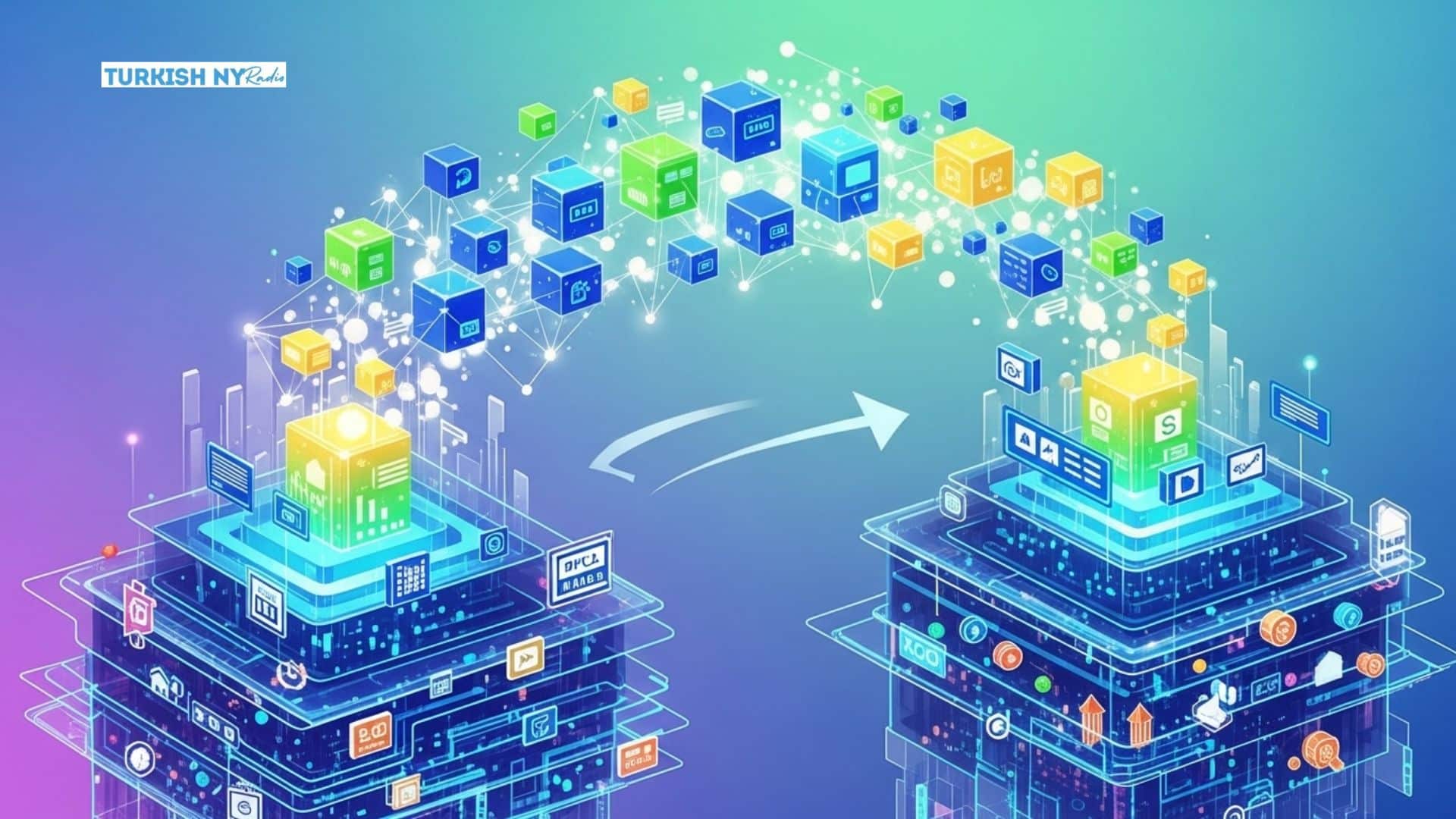
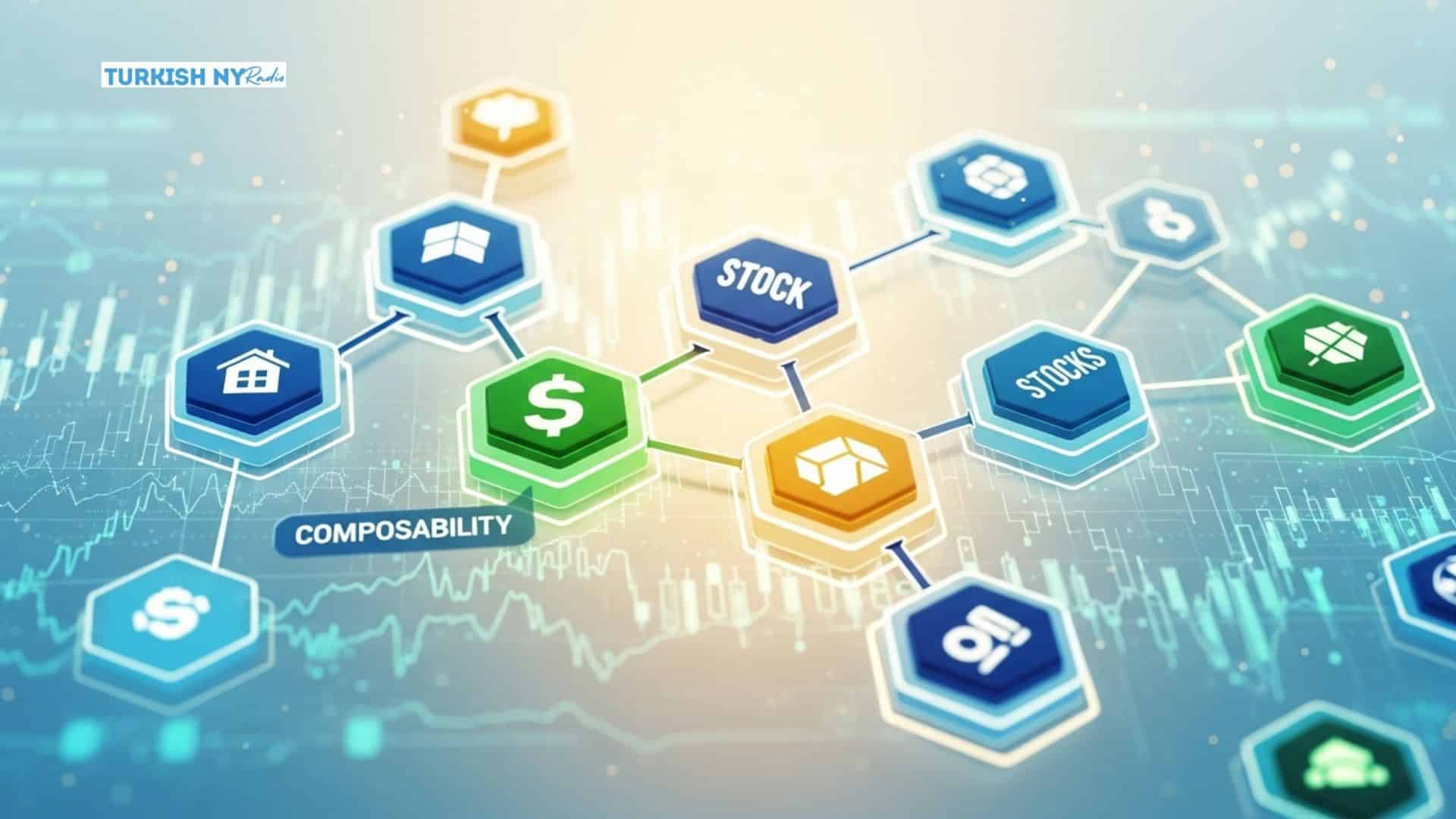
Industry leaders say the real breakthrough will be tokenization composability finance, where a tokenized instrument, whether a security, fund or credit product, can interact freely with other financial tools and settle without traditional intermediaries.


Tokenization used to just refer to wrapping existing assets, such as bonds or shares of stock, into digital form. That first step showed that regulated products could also exist on blockchains, but it didn’t really change how finance operates.
The challenge now is to unlock this deep interoperability and integration, so that tokenized assets function as part of an integrated economic environment, rather than as an independent digital clone of old products.
Composability: What It Is and Why It Matters
The earliest success of tokenization was to prove that regulated assets can really be digitized and traded on a blockchain.
In other words, the first wave of tokenization basically just “replicated” old finance on blockchain, without altering the processes beneath. Today’s industry experts claim that real verifiable tokenization relies on asset composability, that is, viable tokens that actively engage through the blockchain space as opposed to static “wrapped” tokens.
Iindustry veteran Olivier Dang, Head of Ventures at Laser Digital and COO at KAIO recently said that the early generation “got it half right” because most on-chain assets remain wrappers around old systems where settlement, reporting and ownership reconciliation takes place off chain.
He says this model can’t scale because it duplicates, rather than replace existing financial systems.
This real tokenization composability finance is where financial instruments can interact programmatically. For instance, a tokenized government bond could be immediately collateralized in a lending market or autonomously settle via smart contract against a stablecoin without the requirement of days to reconcile.
It makes these digital forms of representation more like active components that can participate in bigger , real-time economic activity.
Industry Progress: Real-World Assets and Financial Integration
A number of real-world projects show the change from early tokenization experiments towards composable finance. Platforms such as Ondo Finance have already started on-boarding regular stocks and exchange-traded funds to the blockchain, so that tokens representing assets like Apple or the S&P 500 can be transferred and traded in decentralized environments.
A recent MetaMask wallets integration also allows users to hold and move more than 200 tokenized stocks and ETFs seamlessly across multiple blockchains.
This type of integration answers the question of why tokenization composability finance is a big deal. It takes assets that are only really investment instruments and turns them into things that can be actively deployed in financial operations such as lending, collateralization or decentralized market-making.
The more that these tokens interact with DeFi protocols on Ethereum, Solana and BNB Chain etc., the more they look like real building blocks for a composable financial ecosystem.
Further, infrastructure providers like Chainlink, which provides real-world data feeds and secure interactions for tokenization platforms in this new wave of decentralized finance (DeFi), are building the bridge required to securely onboard these traditional systems into on-chain environments.
Tokenization platforms’ collaborations with oracle networks are helping institutions bridge the gap between off-chain markets and programmable on-chain infrastructure.
Institutional Adoption: Moving Beyond Proof of Concept
Despite growth in tokenized products, institutional uptake of fully integrated tokenization remains cautious.
Established financial entities such as JPMorgan have reported that although there is growing interest in tokenization, the use of this technology and its adoption within institutional portfolios are yet to catch up due to regulatory ambiguities and absence of unified legal standards. This implies that composability, and not merely the availability of tokens, is really needed for mainstream adoption.
However, real-world assets (RWAs) have continued to grow on blockchain space even with these hurdles. According to Late 2025 on-chain statistics, tokenized RWAs surpassed $18 billion with a wide variety of assets, from government debt to private credit and real estate now representing their digital identity.
This is being led by large asset managers such as BlackRock and Franklin Templeton.
The only difference between early tokenization and tokenization composability finance comes down to integration.
Once institutional tokenized assets are able to move, settle, and interact “natively” with other financial contracts in real time and without the baggage of legacy reconciliation, composability unlocks liquidity, automation, and efficiency that these old systems will never match.
Real-World Examples of Composable Tokenization
One example of composable behavior is the way in which stablecoins have emerged as the natural settlement layer for many crypto markets. Stablecoins are now settling transactions at speeds that traditional systems can’t match.
But though money can move on chain instantaneously, the tokenized assets themselves still often require off-chain reconciliation, introducing an asymmetry between settlement and asset recordkeeping.
Tokenization Composability would close this gap by encoding investor rights, transfer rules, and reporting directly into smart contracts.
This would eliminate intermediaries and the need for manual reconciliation processes, transforming settlement and settlement reporting into a single on-chain event.
This is a movement from batch settlement and sharing of PDFs to programmable finance where asset, money, and settlement occur in the same place.
Tokenization composability also allows for innovation, like tokenized assets being used as collateral in DeFi’s credit markets or automated treasury systems without the human touch.
For instance, tokenized credit funds could be used as collateral, settling instantly against digital currency, effectively creating a seamless credit market on chain.
A comparative summary table showing how composability transforms tokenized finance:
| Feature | Legacy “Wrapped” Tokenization | Composable Tokenization |
| Settlement | Batch-based, delayed (T+1/T+2) | Instant atomic settlement on-chain |
| Interoperability | Isolated (one platform/chain) | Multi-platform use (DeFi integration) |
| Compliance | Off-chain/legacy checks, manual | On-chain rules via smart contracts |
| Transparency | Partial (need reconciliations) | Full (ledger confirms in real time) |
| Use Cases | Simple transfers/trading only | Collateral, lending, automated markets |
| Example Projects | Wrapped funds, tokenized certificates | Composable stablecoins, on-chain funds |
Conclusion: The Future of Financial Markets
The move to asset tokenization composability in finance is long overdue for digital assets. Early generations of tokenized products had shown that assets could reside on blockchain, but did not change the ways of settlement and interaction.
Today, industry progress from MetaMask integrating tokenized stocks to institutional RWA’s growth, means that tokenization can mature into actual infrastructure for financial markets.
By enabling assets to interact, settle automatically, and integrate into financial workflows, composability could change things for global finance and bring in a system where on-chain and off-chain converge into one, efficient market architecture.
Glossary
Composable Tokenization Finance: a protocol in which tokenized assets can interact, settle and interoperate natively with other on-chain financial instruments in real time, graduating from simple wrappers into dynamic market infrastructure.
On-chain settlement: the procedure where deals and ownership records are settled on a blockchain without off-chain intermediaries, thus removing latency as well as reconciliation expenses.
Real-World Asset (RWA): financial products like bonds, stocks or credit that are represented as digital tokens on a blockchain.
Stablecoins: digital tokens that are linked to and backed by real-world fiat currency, which help the price stay stable and facilitate settlement on decentralized finance applications.
Frequently Asked Questions About Tokenization Composability Finance
What is tokenization composability finance?
It’s the next level of digital asset tokenization, where assets not only live onchain but can interact with other digitized instruments, settle in a matter of seconds and take part directly in complex financial constructs without traditional intermediaries.
Why is composability important?
Composability dissolves the barriers between asset representation and active financial integration, bringing tokenized instruments to applications such as automated markets, lending, collateral and treasury management.
Are institutional investors adopting composable tokenization?
Interest from institutions is growing, and we continue to see increasing traction for real world asset tokenization, however full composability adoption is constrained by regulatory clarity as well as infrastructure readiness.
Where do stablecoins fit into this?
Stablecoins show how digital money could settle immediately on chain. Composability takes this concept to assets, such that they too can settle and interoperate with other protocols at blazing fast speeds.
Is this the same as DeFi?
Tokenization is getting those assets on-chain; DeFi’s composability is what allows them transact, settle, and have market value in decentralized apps. And together they encourage a wider use of financial automation.