![Sun [New]](https://s2.coinmarketcap.com/static/img/coins/64x64/10529.png)

This article was first published on TurkishNYR
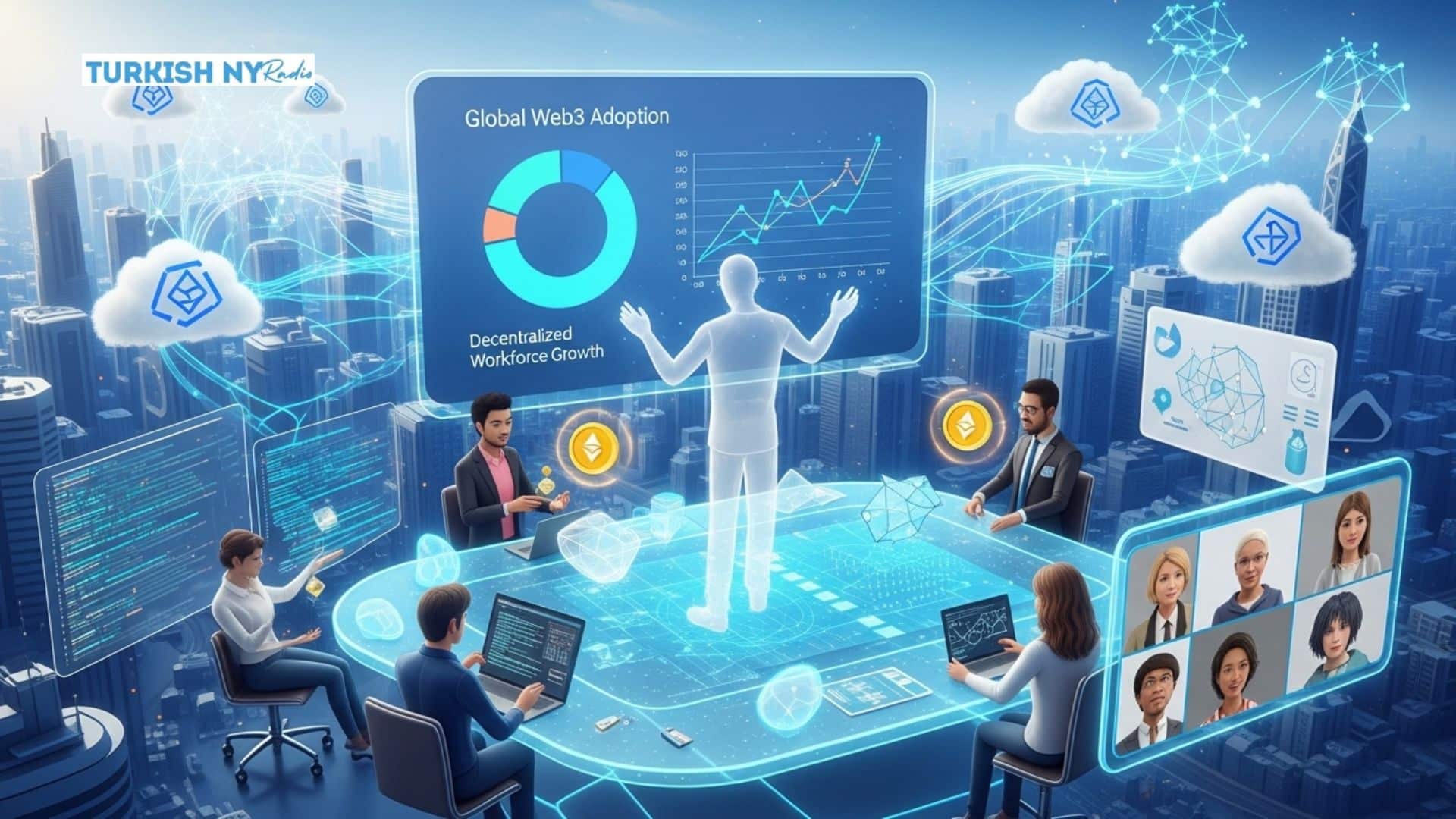
The Web3 job market is moving fast. Approximately 66,500 new Web3 jobs were created in 2025; about a 47% increase from 2024. The demand is greatest in the U,S where remote jobs are also exploding, 27,000+ jobs and counting; up 40% YoY.


There are thousands of open positions among developers that work in web3, either with blockchains, AI jobs, security experts and community managers.
Growth in the Web3 Job Market
Web3 industry reports show that 2025 saw approximately 66,500 new Web3 roles being added; almost half as much as the previous year. This increase comes after the market slowdown in 2022; suggesting a renewed investment and project construction.
Most importantly, the majority of roles are remote and or hybrid. Companies reportedly posted 26,925 remote Web3 jobs in 2025 (up 40%). Growth is predominantly driven by the US, although Asia and particularly Southeast hubs and Europe were not too far behind in terms of total openings.
Non-tech jobs like marketing, operations, compliance are rising quickly as well, and even traditional engineering roles still offer hefty salaries.
Hiring for work in web3 is a swing from hype to execution. Companies are now hiring for delivery and scale, not just innovation.
Web3 is hiring like a proper industry again with demand for roles in 2025 statistically surpassing many old tech sectors. New niches like AI+blockchain roles, privacy engineers, and DAO governance experts are increasingly sought after.


As the market grows, so does the future of work in Web3 careers.
New Work Models and Career Paths
Organizations like Decentralized Autonomous Organizations (DAOs) and blockchain companies provide new types of career paths unavailable in Web2. In a DAO model, there are no traditional managers, contributors propose and vote what is being done. This offers workers control and visibility.
For instance, a smart contract developer could code features on a platform run by the DAO and be paid in tokens while also voting on development plans. These structures enable customized career paths because people can work part-time on multiple projects or switch leadership in a DAO.
Token-based compensation is another Web3 innovation. Salaries (or bounties) for many projects are paid out in cryptocurrencies or governance tokens. Employee incentives are also perfectly aligned with the growth of the company. If one is an early contributor to a protocol, they earn tokens and these tokens appreciate as the platform becomes successful.
Companies are even testing out stablecoin payrolls and on-chain bonuses to attract talent from anywhere in the world (e.g. paying rent from DAOs).
Remote-first is deeply baked into the culture of work in Web3. Web3 projects have embraced this model since inception. As big-tech companies accelerate their return-to-office plans, the resistance of work in web3 also continues to defy the trend.
The 2025 Web3 report found remote jobs actually increased 40% YoY. More candidates than ever now demand full flexibility.
Web3 professionals now expect remote or hybrid work models and value autonomy over location. This creates a lot of talent mobility for the world. For instance, a blockchain engineer from Nigeria can work for a US based startup seamlessly, earning crypto salaries without visas.
New roles and work in web3 are appearing to accommodate these changes. In addition to core tech roles, Web3 companies are hiring more on-chain operations managers, community builders, compliance analysts and growth hackers than ever before.
Blockchain education and bootcamps are training thousands of developers every year. Convergence between AI and Web3 also creates jobs such as developer roles for AI oracles, blockchain data scientist or a security expert with experience in crypto.
In essence, the future of work in Web3 is pointing towards maturation, more full-time roles with clear career prospects, not just freelance gigs.
Skills in Demand and Training
The skills required to work in Web3 are changing. Software skills such as JavaScript are less important than blockchain-specific ones like Solidity or Rust programming, cryptography, smart contract security.
Reports share that 60% of Web3 jobs will require AI-related skills (e.g integrating ML on-chain) by 2026. Among the top wanted skills are zero-knowledge proofs, design of DeFi protocols and tokenomics.
Salaries are a function of scarcity, and an on-chain auditor or ZK engineer can be easily worth more than $200k when experienced.
Education paths have also come up. Online bootcamps and blockchain training programs like Metana, Alchemy University or one of the CryptoJobsList courses, serve this demand.
Because Web3 respects proof-of-work, it’s no wonder that many candidates build an impressive GitHub portfolio of projects and get involved in hackathons. Companies increasingly look at contributions to open-source projects as proof of skill.
As a recent analysis pointed out, real work samples (smart contract code, deployed dApps) are increasingly defining who to hire more than formal degrees.
So, career changers often “reskill” via hands-on learning rather than through academic coursework.
Challenges: Talent Gap, Regulation, and Market Volatility
Despite the boom, work in web3 market does have some obstacles. A big part of the problem is a talent shortage at the top. Talented blockchain engineers and security experts are hard to come by.
According to industry surveys, 75%+ of Web3 employers have difficulty locating qualified programming and cryptography candidates for core contributor positions such as Solidity programming or ZK cryptography.
Many engineers jump between projects chasing better token deals, creating high turnover.
One study found approximately 40% annual turnover in crypto firms. Employers have to compete against large crypto businesses like Coinbase and ConsenSys that can afford high salaries or token packages.
Another related problem is the skills shortage. Work in Web3 requires not just a grasp of coding but also economics, game theory and security. Traditional computer science graduates need retraining. Onboarding can be slow, projects have to train new hires on blockchain fundamentals such as gas optimization or consensus protocols.

One solution is decentralized identity and skills verification. Using blockchain-based credentials (digital résumés) to instantly verify a candidate’s experience. Yet until greater numbers of people have deep Web3 experience, roles that demand “senior execution” are taking longer to fill.
While it’s impossible to predict the future, regulation and legal issues also cast a shadow on the future of work in Web3. Crypto laws vary widely by country.
For example, token-based salaries in India, which are heavily taxed ($30 on crypto profits) makes it difficult to hire locals. Companies also fear potential securities laws violations and the need to obtain money transmission licenses when compensating employees in tokens.
Uncertainty about future regulation of stablecoins, NFTs, DAOs, makes some businesses cautious.
Market volatility is another concern. Work in web3 is often linked to crypto cycles. Bearish periods result in layoffs and bullish booms lead to hiring. Salaries can consist of tokens that are volatile, so a measure of compensation could collapse in a bear market.
This ambiguity has made long-term career planning a challenge. Employees and employers will need to take into account token vesting schedules, tax consequences for receiving tokens instead of cash salary, and potential “rug pulls” (project failures).
Finally, Web3 is also wrestling with diversity and inclusion. The labor force is overwhelmingly male and Western. This narrows the talent pool and can stifle innovation. Proactive measures (bootcamps for underrepresented groups, global hiring policies) are required to increase accessibility.
| Trend/Aspect | Opportunities | Challenges |
| Decentralized Work (DAOs) | – Workers gain autonomy and shared ownership: DAOs let contributors earn tokens and participate in governance..
– Gig-style flexibility: projects hire talent globally without formal employment. |
– Lack of traditional structure: unclear roles and responsibilities in DAOs.
– Regulatory ambiguity: legal status of DAOs and token income is evolving. |
| Remote/Global Workforce | – Access to talent worldwide: teams can hire the best crypto engineers; marketers, or designers anywhere.
– Flexible schedules: asynchronous tools and global timezones boost productivity. |
– Communication barriers: coordinating across time zones and cultures.
– Collaboration: building culture and trust remotely can be hard. |
| Specialized Skills Demand | – High salaries and demand: blockchain devs, AI-Web3 engineers, and security pros command top pay (e.g. $125-$190K for Solidity devs)..
– Diverse roles: from on-chain analysts to DAO operators, many new career paths are emerging. |
– Talent shortage: experienced Web3 engineers and auditors are scarce..
– Skill gap: areas like zero-knowledge proofs and token economics are niche, requiring retraining. |
| Tokenized Compensation | – Innovative pay models: companies offer crypto and token pay, aligning incentives with project success.
– Ownership & perks: employees earn equity via tokens or NFTs; not just salaries. |
– Volatility risk: token values can swing, making pay unpredictable.
– Complexity: negotiating vesting schedules and taxes for crypto salaries can be tricky. |
| Evolving Regulation | – Legitimacy gains: clearer rules (e.g. MiCA in EU, crypto clarity in US) can boost hiring by reducing risk.
– New roles: compliance and legal advisors for crypto are now in high demand. |
– Uncertainty: varying global laws make companies cautious about expansion.
– Compliance burden: startups face heavy documentation and potential fines, slowing hiring. |
Pushing Innovation Without Being Rash
As Web3 develops, experts say hiring strategies need to change. It’s no longer sufficient to ask candidates if they “believe in crypto”, they must have hard skills and vision.
Actionable strategies to navigate the future of work in web3 market include: optimizing resumes for on-chain credentials (e.g. linking GitHub and blockchain profiles), using crypto-native platforms to hunt jobs (like CryptoJobsList or web3.career) and being prepared for interviews that may be non-traditional like completing a coding challenge on-chain.
Employers rely on AI-powered tools to screen for skills but also need a dose of human judgment in order not to be biased in the process. Working with blockchain education programs helps build the talent pipeline.
Those companies that do adapt, by facilitating features such as allowing employees to select crypto benefits or get involved in DAO decision making, will draw top Web3 talent.
Conclusion
The future of work in Web3 is changing in a big way. The surge in hiring and diversity of roles represents an immense amount of opportunity which ranges from global remote work and DAO-based organizations, to tokenized compensation and cutting-edge tech jobs.
However; this future is also fraught with challenges. Severe talent gaps in specialized skills, regulatory uncertainty and the volatility of crypto-based pay. These are various pitfalls that companies and workers must negotiate.
Glossary
Web3: The third-generation internet where services run on decentralized blockchain networks (e.g.; Ethereum). Web3 emphasizes decentralization, user ownership and token economics.
Blockchain: A decentralized ledger system that securely and immutably records transactions.. Blockchains are the technology behind Web3 applications such as cryptocurrencies, smart contracts, and DAOs.
Decentralized Autonomous Organization(DAO): A group that runs as a smart contract or suite of smart contracts with rules established via voting; not by a central authority. DAOs oversee projects or funds; and contributors receive tokens for their labor and rights to participate in governance.
Smart Contract: Self-executing code on a blockchain that automatically enforces agreements (e.g.; transferring tokens when conditions are met). Developers write smart contracts for DeFi; NFTs; and more.
Tokenized Compensation: Payment to team members or network contributors in cryptocurrency tokens instead of (or in addition to) fiat salary.
Stablecoin: A cryptocurrency whose value is pegged to a stable asset (such as the US dollar).
Frequently Asked Questions About the Future of Work in Web3
What is Web3 and how does it transform work?
Web3 is a term describing a decentralized internet, built on blockchain and crypto. In Web3 work, organizations (like DAOs) are community-owned, and workers often get paid in tokens. This offers greater flexibility and a global reach compared with regular jobs.
What kind of work opportunities in the Web3 industry?
Web3 job roles are available, both technical and non-technical. Clear tech jobs are blockchain developers, smart contract engineers, security auditors and data scientists. Non-technical roles include community managers, DAO treasury leads, marketing for crypto projects, compliance officers and more.
How are salaries different in Web3 careers?
Salaries in Web3 are above average for tech generally and often higher for scarce skills. For instance, some senior blockchain developers are able to make between $125K-$190K in 2026. Pay may be in the form of cryptocurrency or tokens, which offers some upside (or a lot of risk). Web3 companies also have customizable perks (crypto bonuses or governance tokens; for instance) in addition to base salary.
What skills are required to get a job in Web3?
Required skills are blockchain programming (particularly Solidity, Rust or Go); experience with decentralized p2p protocols, and crypto. Knowledge in AI/ML integration, smart-contract security and data analysis is in high demand. Employers frequently favor proven experience (GitHub projects; hackathon victories) over credentials.
Are works in Web3 mostly remote?
Yes, historically Web3 has been extremely remote-friendly. Many crypto companies are fully distributed, which means they can hire from anywhere in the world. Hybrid models are also on the rise, but adaptability is still a key requirement for Web3 careers.