This article was first published on TurkishNY Radio.
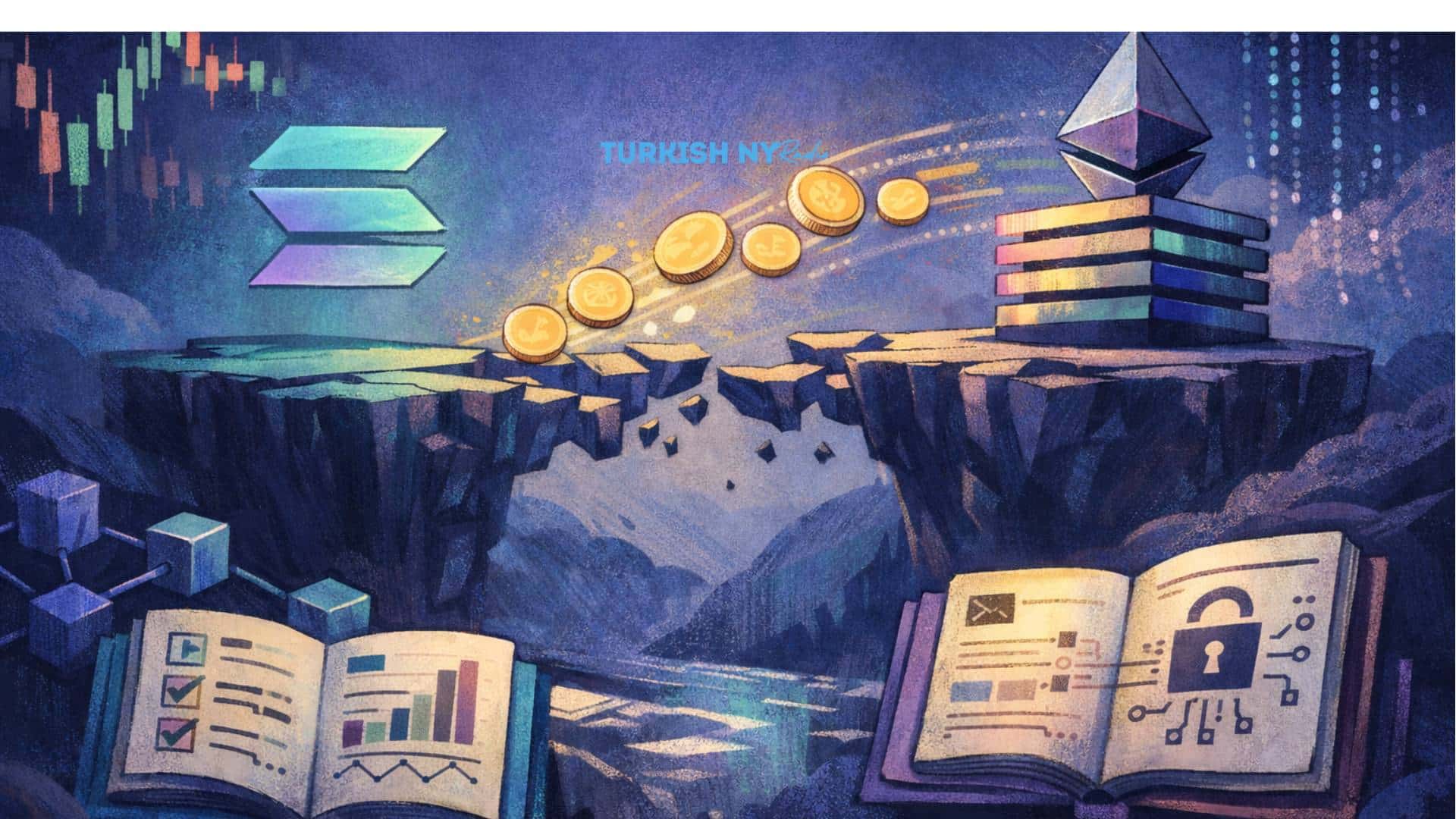
Tokenization is sliding into the real economy the same way online banking did, quietly at first, then all at once. In a televised interview on December 24, 2025, a prominent crypto venture capital partner said the market has room for multiple blockchains and that no single network can realistically carry most tokenized assets. That framing reshapes Solana vs Ethereum from a fan debate into a question of infrastructure choices.


Why is one chain unlikely to own tokenization
The investor used a social media analogy and then dismissed the idea that tokenization must produce one winner, even saying, “They are both Facebook.” The logic is not complicated.
Tokenization spans very different workloads, from regulated cash management to consumer trading, and those workloads stress networks in different ways. In practice, Solana vs Ethereum looks less like a duel and more like a split of roles that changes by product and by user.

Where the money is today, and why it matters
Data cited in the same segment placed Ethereum’s network asset value, including stablecoins, at $183.7B, versus $15.9B for Solana. That gap is not a prophecy, but it is a clue about capital concentration, liquidity depth, and institutional comfort. The interview also noted that Ethereum hosts most stablecoins and much of the core on-chain economic activity.
Stablecoins act like the system’s cash, so the chain that settles more of that activity often becomes the default venue for payments, trading collateral, and redemptions when tokenized products launch. That is why Solana vs Ethereum debates keep circling back to stablecoin share, because it reveals where settlement trust is already forming.
Why Solana keeps showing up in trading-heavy use cases
The same interview argued that Solana handles most trading volume and is “more optimized” for that transaction flow.


That advantage tends to matter when an application needs fast finality, predictable fees, and a wallet experience that feels like a modern app. Tokenization is not only about storing value safely, it is also about moving it smoothly, and this is the lane where Solana vs Ethereum comparisons often tilt toward Solana.

A migration that hints at the future of multi-rail products
One consumer-facing platform has already made the case for mixed infrastructure. A fantasy sports collectibles company announced in October that it would migrate parts of its stack to Solana for performance and openness, while also moving certain balances onto an Ethereum layer-2.
Hybrid decisions like this usually happen when teams stop thinking in slogans and start thinking in bottlenecks, and Solana vs Ethereum could become a routing choice rather than an identity.
Indicators that separate traction from talk
In Solana vs Ethereum terms, tokenization adoption rarely announces itself with a single headline. It shows up in operational signals that compound over months. Stablecoin supply and transfer activity can reveal whether a chain is becoming a settlement rail. Liquidity depth matters because tokenized instruments that cannot trade efficiently will struggle to attract serious issuers.
Fees and throughput should be read together, since cheap execution without liquidity does not create a market, and deep liquidity without scalable execution pushes activity into layered solutions. Security history and uptime matter because institutions rarely forgive operational surprises.
Conclusion
The tokenization market is growing, but it is growing into different shapes at once. Ethereum’s lead in capital concentration and stablecoin activity supports large, compliance-heavy value, while Solana’s strength in transaction flow supports consumer and trading-heavy products.
The likely outcome is coexistence driven by specialization, and the best way to interpret Solana vs Ethereum is to watch where each chain makes tokenization feel safe, boring, and easy at scale.
Frequently Asked Questions
Q: What is tokenization in crypto markets?
A: Tokenization is the representation of an asset or claim as an on-chain token, allowing ownership transfer and settlement to be enforced through software rules.
Q: Why do stablecoins matter for tokenization?
A: Stablecoins behave like cash on-chain, so they often become the settlement and collateral layer that tokenized assets rely on for pricing, financing, and redemptions.
Q: Which is better for tokenization, Solana vs Ethereum?
A: Different tokenized products value different tradeoffs, and in the Solana vs Ethereum debate the better chain depends on whether liquidity depth, compliance tooling, speed, or user experience is the binding constraint.
Glossary of key terms
Tokenization: Converting an asset or claim into an on-chain token that represents rights.
Stablecoin: A token designed to track fiat value, used for settlement and collateral.
Network asset value: The value of assets residing on a chain, often including stablecoins.
Finality: The point where a transaction is considered irreversible.
Liquidity: The ease of trading without materially moving price.
References