![Sun [New]](https://s2.coinmarketcap.com/static/img/coins/64x64/10529.png)



This article was first published on TurkishNY Radio.
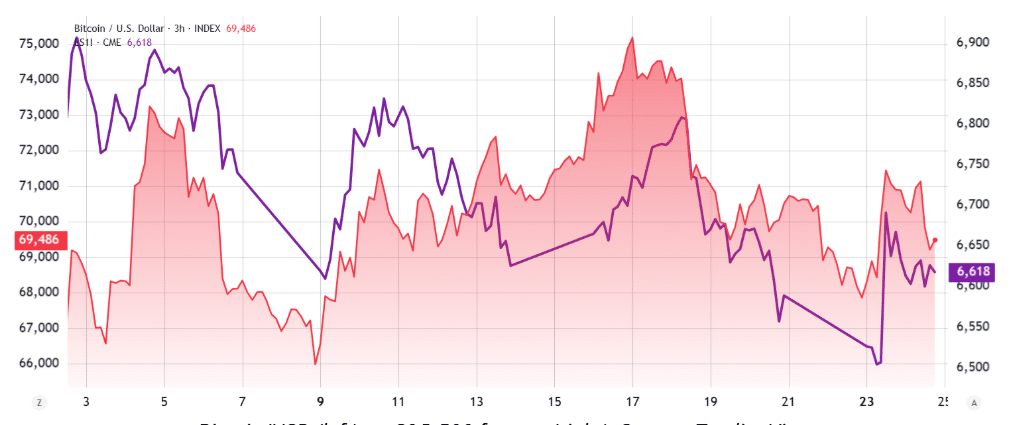
Bitcoin price raged upward on March 23 as markets pivoted after a day of turbulence following headlines for U.S.-Iran peace talks. Within five minutes, the asset had increased from $68,574 to 71,216 for a 3.85% rise before hitting a local high of $71,817.


Because the sharp move came in deep macro uncertainty, it caught attention. The rally still left broader market conditions fragile and continued to crimp confidence in when, or whether, the upmove will break out of a consolidation phase.
The rally was enough to get the price of Bitcoin out of a range that analyst Ali Martinez had called a “no-trade zone.” Roughly 1.72 million Bitcoin was traded in the range of $65,600 and $70,600, making it a highly contested zone.
Price later moved back into that same range. That showed the breakout lacked strong follow-through and that traders were still weighing short-term opportunity against broader macro pressure.
Bitcoin Price Rally Breaks Through Heavy Trading Zone
The move higher was fast and decisive. Bitcoin price jumped through a zone that had already seen large transaction volume, showing that bullish momentum returned quickly once the market reacted to the headline shock.
Still, the return to that range suggested the move was not fully secure. Traders appeared willing to chase strength, but not yet ready to commit to a lasting breakout above the upper boundary.
Realized Price Metrics Still Support Buyers
Despite the volatility, the earlier buying setup remained intact based on realized price metrics cited in the provided material. That suggested some on-chain conditions were still supportive even after the market retraced part of the rally.
This is important because it shows the market is not weak in every area. Some internal Bitcoin signals still point to support, even as the broader backdrop remains difficult.
The larger market picture remained cautious. Fears of a prolonged conflict involving Iran and inflation pressure from oil prices above $85 pushed investors to reduce exposure to risk assets.
Treasury Sell-Off Signals Flight to Liquidity
U.S. Treasuries were under pressure in that period, too. The 5-year Treasury yield climbed to 4.10% , or a nine-month high, as traders look for improved returns.
Unlike on Monday, when the S&P 500 fell to its lowest level in more than six months. That was also a sign of a broader pivot toward liquidity as investors sought cash to cover losses or prepare for more declines.
Higher Oil, War Spending and Inflation Fears Layer Pressure
Iran war sent oil prices over $90, escalating inflation concerns. Rising energy prices would usually make it more difficult for central banks to ease policy, which puts greater pressure on risk-sensitive assets.
The article cited concern, too, about spending related to the war. And investors were already grappling with worries over the U.S. national debt, which had already hit more than $39 trillion and adds to longer-term concerns that could weigh on consumers.
Pertinent Factors Towards a Hike Get More Aggressive
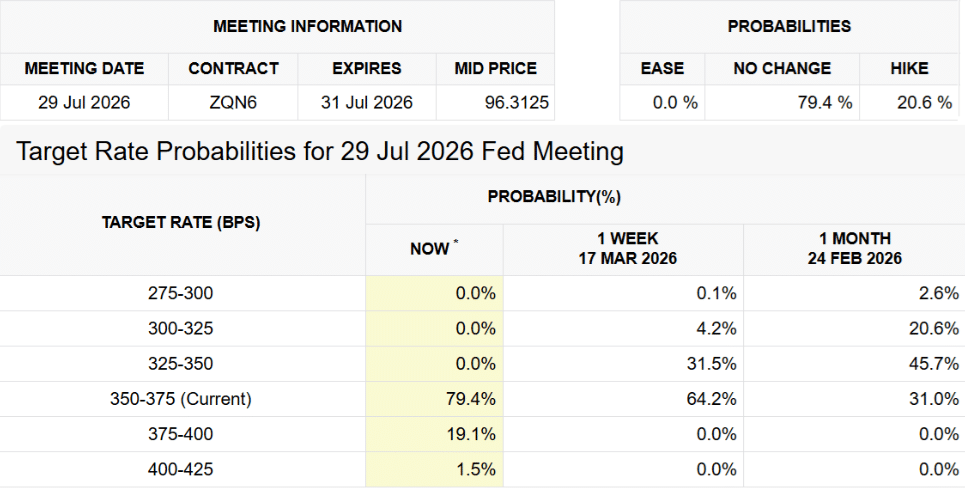
Futures in the bond market were showing a dramatic shift in expectations. The implied probability of a Federal Open Market Committee rate increase by July rose to 20.5% from zero during the prior week.
That was significant for Bitcoin price, as tighter policy usually reduces demand for speculative trades. When expectations for interest rates rise, traders generally avoid assets that depend on broad risk appetite.
Tech Weakness Deepens Market Caution
The provided material also pointed to pressure in major technology stocks. Some of the largest companies, including Google, Meta, and IBM, had posted losses of 10% or more over the previous six weeks.
This added to a wider sense of caution across risk markets. Traders were not only reacting to crypto signals but also to falling equities, rising yields, and persistent inflation pressure.
Why Bitcoin Price Still Faces a $66K Retest Risk
Even with favorable on-chain metrics, the larger macro setup remained unsupportive for a strong bullish trend. The decline in gold prices, alongside selling in Treasuries, pointed to a market focused more on liquidity than on risk-taking.
That is why the threat of a retest near $66,000 remained serious. As long as inflation concerns, war expenses, and tight U.S. monetary policy continue to dominate, Bitcoin price may struggle to hold a clear breakout.
Conclusion
Bitcoin price delivered a strong reaction on March 23, rising sharply after headline-driven volatility hit the market. The move briefly pushed the asset above a major trading zone, but the return to that area showed that buyers still lacked full control.
For now, the market remains split. On-chain data still offers support, but macro risks continue to dominate sentiment. Until those pressures ease, Bitcoin’s price may remain vulnerable to another test of lower levels.


Appendix Glossary of Key Terms
No-Trade Zone: a range of prices around which buying and selling activity is very concentrated.
Realized price: An on-chain metric that measures the average buying price of holders of a Bitcoin.
Risk-Off Sentiment: A market mood where investors shy away from riskier assets and favor safer investments.
Treasury Yield: Investors’ return on U.S. government debt.
FOMC: The Federal Open Market Committee, which sets U.S. monetary policy.
Liquidity: How easily assets can be made liquid (i.e. converted to cash)
On-Chain Indicators: Metrics derived from blockchain data to measure BTC-based market activity.
Frequently Asked Questions About Bitcoin Price
1- Why did Bitcoin price rise so quickly?
It jumped after volatility linked to headlines around U.S.-Iran peace talks triggered a fast market reaction.
2- What is the no-trade zone?
It is the $65,600 to $70,600 range where about 1.72 million Bitcoin were transacted.
3- Why are Treasury yields important for Bitcoin?
Higher yields often reflect tighter financial conditions, which can reduce demand for risk assets like Bitcoin.
4- Why does oil matter for crypto markets?
Higher oil prices can raise inflation fears and reduce expectations for easier monetary policy.