![Sun [New]](https://s2.coinmarketcap.com/static/img/coins/64x64/10529.png)


This article was first published on TurkishNYR.
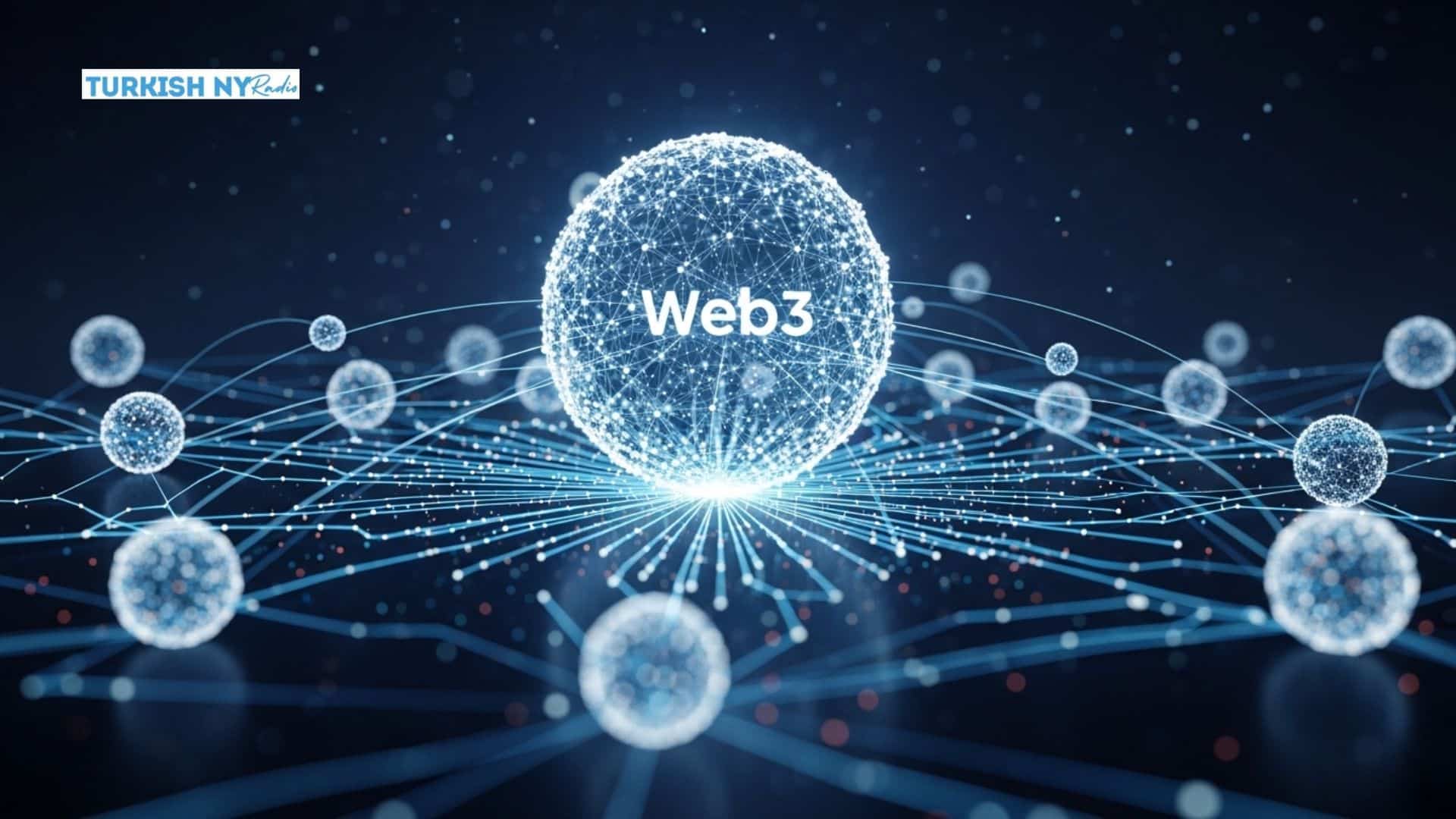
The idea of a decentralized internet keeps materializing as Web3 technology develops. In a decentralized internet, the web is not owned by any one person as power is distributed among users.


The idea is that web3 uses blockchain and peer-to-peer networks to make users, not corporations, the owners of their own data and identities.
Web3 is most commonly described as a new, decentralized internet built on blockchains and it is believed to bring more privacy, security and resilience.
By eliminating central points of control, Web3 networks are designed so that even if some nodes fail or are attacked, the system keeps running.
Web2 vs Web3: Data and Power
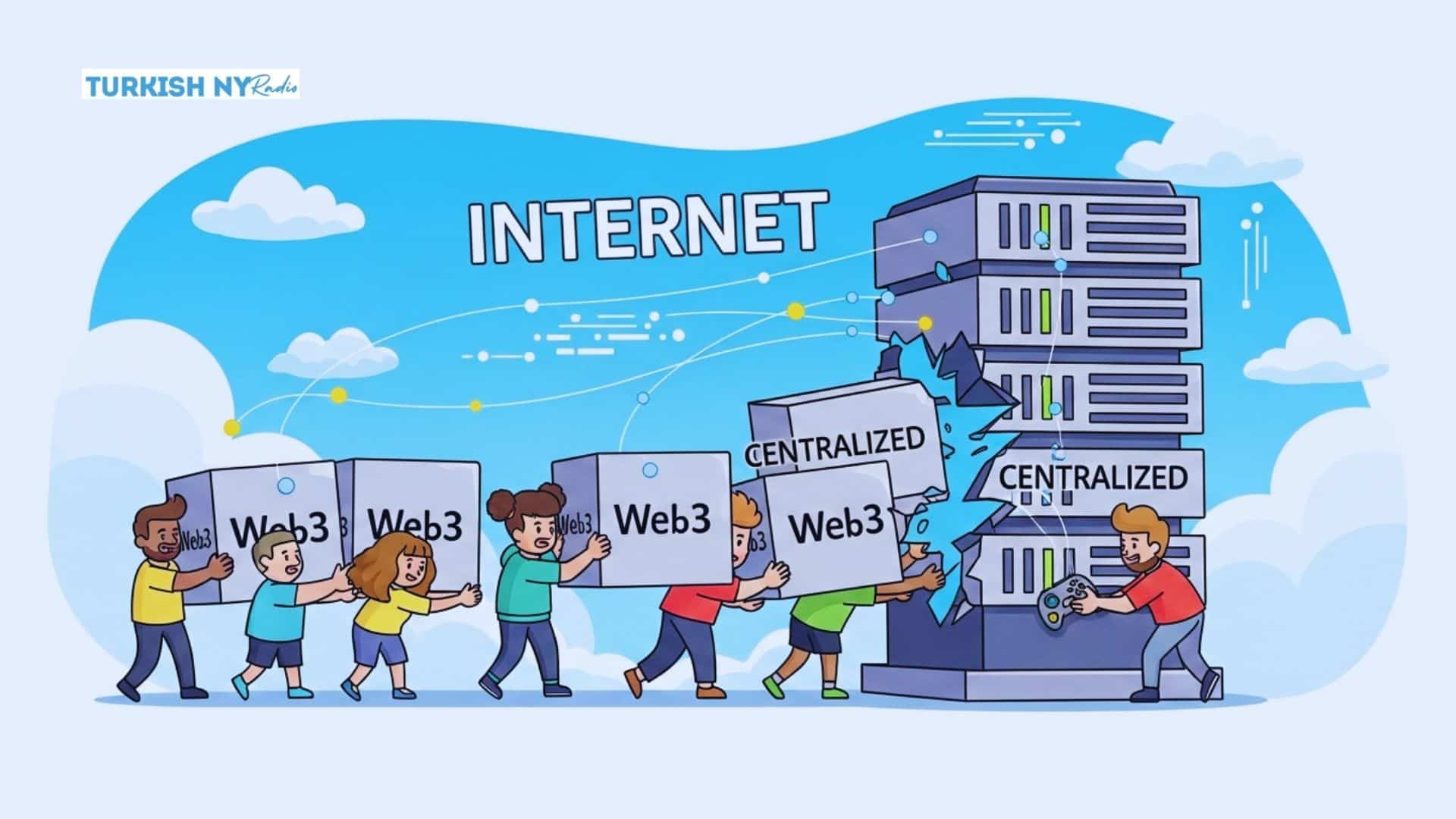
Today’s current Internet (Web2) is ruled by a number of companies commanding user data and infrastructure. By contrast, Web3 is designed to put users in the driver’s seat.
In a decentralized web, users have total control of their data and digital possessions instead of ceding them to platform intermediaries. Web3 proponents also emphasize censorship resistance and trustlessness; information is stored across multiple nodes so no single party can delete or modify it.
This is more secure and has better uptime as there’s no single point of failure within the network.
The following table summarizes the differences between centralized Web2 and the desirable properties of the decentralized Web3:
| Feature | Web2 (Centralized Internet) | Web3 (Decentralized Internet) |
| Data Ownership | Large platforms (e.g. Google, Meta); own and monetize user data. | Individual users own and control their data. |
| Monetization | Platforms monetize attention via ads; users seldom benefit directly from data. | Network tokens and cryptocurrencies enable peer-to-peer transactions and rewards. |
| Security | Centralized servers can be hacked or fail; risking user data. | Decentralized networks promise greater resilience and security. |
| Censorship | Content can be restricted or removed by platform owners. | Protocols resist censorship; content is redundantly stored across many nodes. |
| Trust Model | Users must trust intermediaries (platforms, banks); with data and transactions. | Transactions are “trustless”: smart contracts and consensus handle trust. |
| Failure Points | A single server outage or hack can disrupt millions of users. | No single point of failure; the network remains operational if some nodes go down. |
These contrasts explain why advocates argue that a decentralized internet could enhance user privacy and data sovereignty. Web3 technology does not rely on central databases, but rather distributed ledgers and peer-to-peer networks that eliminate middlemen and give average users more control.
Blockchain: The Foundation of Decentralization
The heart of Web3 technology is blockchain. Blockchain is a distributed database operated by a network of nodes where transactions and data are written in unchangeable blocks, which every node verifies.
This means no single company or server is in control. Rather, every node has a copy of the ledger and follows agreed-upon rules (consensus protocols). For this reason, the blockchain system is not centralized and is not prone to a single point of control or failure.
Smart contracts which are bits of digital code on the blockchain, automatically enforce rules and execute transactions without intermediaries, making agreements transparent and tamper-proof.
By decentralizing trust and computation, blockchain offers the rails for a decentralized internet as services operate on peer-to-peer networks rather than from central servers.
Decentralized Data Storage: IPFS and Beyond
Web3 technology also decentralizes data storage. While traditional websites depend on a few centralized servers, or cloud providers that store and pass along information as users request it, Web3 projects employ peer-to-peer storage networks so that content is spread out across the globe.
A prominent one is the InterPlanetary File System (IPFS); it stores files based on content addressing (hash) instead of location. In IPFS, every data item is assigned a unique content identifier (CID) and is hosted by multiple nodes.
In the case where one of the nodes goes offline, other nodes perform on its behalf to serve content. This makes data censorship-resistant. A good example is when Wikipedia was blocked in Turkey, a copy of Wikipedia was pushed to IPFS in order to provide access to the millions of people who would otherwise have been unable to reach it.


IPFS has scaled quickly. Currently, it reaches approximately 280k unique nodes overall with more than 1 billion separate files (CIDs). It’s such an interesting proposition that even large organizations are looking into it.
There are other decentralized storage projects like Filecoin, Arweave, Storj etc, which use blockchain incentives to reward nodes for storing data. In a decentralized internet, these networks mean data lives on the network instead of any single centralized server.
Blockchain file sharing options, CDN alternatives and content-addressing are important building blocks for a decentralized internet that continues to make information available even when some servers go offline or get censored.
Decentralized Finance and Digital Assets
Web3 technology also provides a way to move money and assets onto the decentralized internet. Cryptocurrencies like Bitcoin and Ethereum; and tokens enable peer-to-peer value transfer without the need for banks.
The Web3 world today has DeFi (lending, exchanges, derivatives), and non-fungible tokens (NFTs) for digital ownership. These mechanisms are fully on-chain and open to everyone.
Billions of dollars circulate on a daily basis in blockchain-based networks without a bank or government agency to certify it.
This on-chain economy powers the decentralized internet by enabling tokens to monetize any information or service. Users can earn or pay tokens directly and creators can sell content or art (as NFTs) without the platform taking a percentage.
Decentralized exchanges facilitate instantaneous crypto trades, crypto wallets make cross-border payments possible and NFT markets enable artists to sell scarce digital art.
All of this runs on smart contract platforms (like Ethereum, Solana and others), representing an internet in which money and assets are governed by the network’s code instead of banks or tech companies.
Decentralized Identity and Governance
Web3 technology envisions a user-owned internet identity. Now, instead of user names and passwords controlled by social media or email companies, individuals have cryptographic keys and decentralized identifiers (DIDs).
A DID is, in essence, a user-owned, blockchain-based identity. That way, users can prove who they are without relying on a central login server or a government ID.
In a decentralized web, every individual and organization can hold separate but verifiable credentials that could be presented anywhere on the network. Transactions or logins are verified by the blockchain rather than by some corporate database.
Governance can also be decentralized. Decentralized Autonomous Organizations (DAOs) are online cooperatives that are run by smart contracts, token holders vote on proposals, and code automates decisions.
In a DAO ecosystem, even the rules of an organization are stored openly and publicly on the blockchain. These ideas fit with the decentralized internet ethics, as communities (not companies) operate critical services. For instance, open-source blockchain protocols are governed by their users via on-chain voting, showing how the balance of power is moving off the ledger from CEOs to community members.
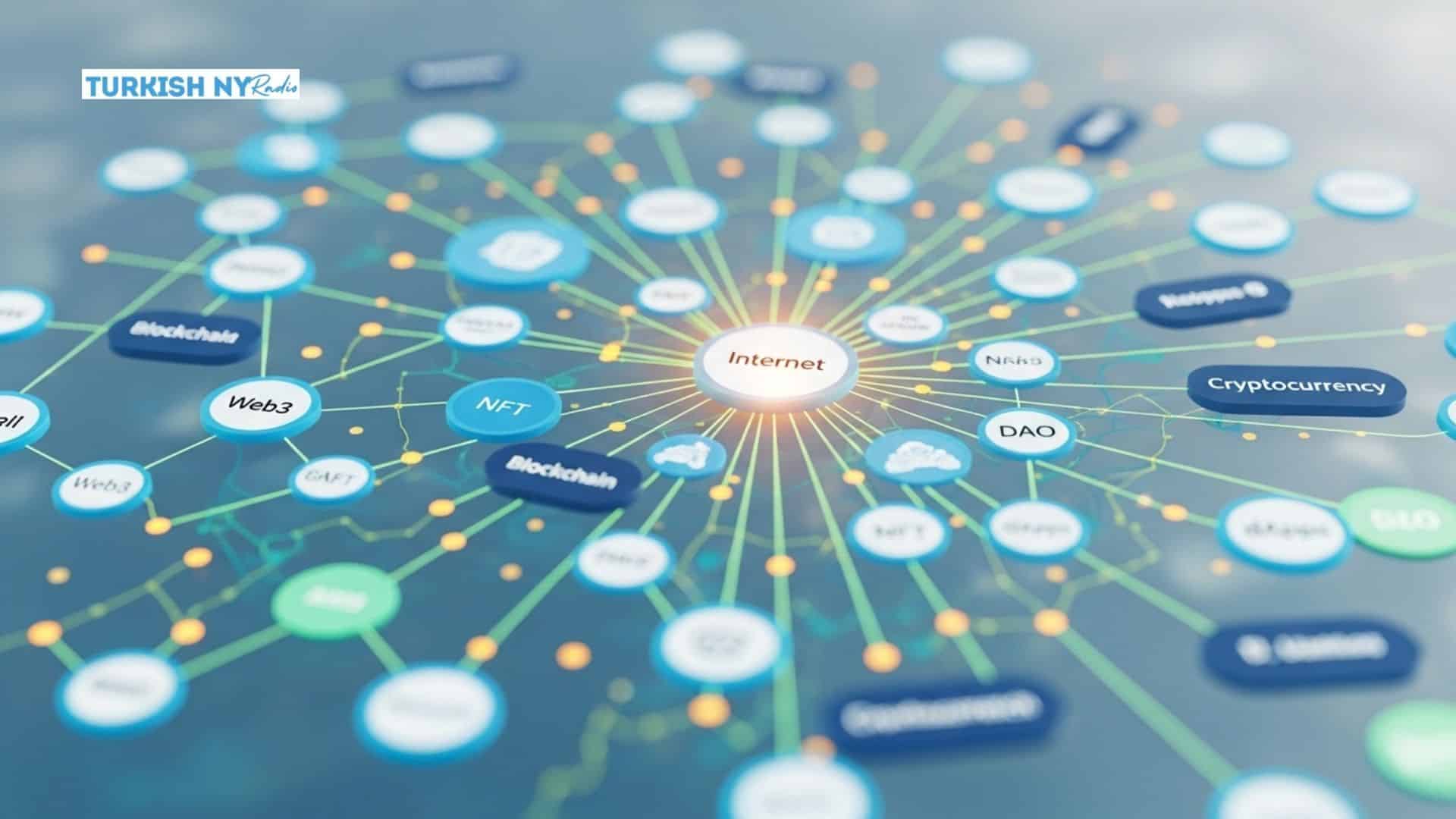
Decentralized Networks and Infrastructure (DePIN)
The hardware of the internet is beginning to diversify as well. DePIN (Decentralized Physical Infrastructure Networks) are projects where users contribute real devices that will be added to a blockchain-based network.
Examples include Helium (community-owned wireless coverage), LEO satellite constellations integrated with blockchain and decentralized GPS networks to name a few. Industry survey has revealed that over 13 million devices now feed DePIN networks everyday indicating a high growth rate.
Governments and corporations are taking this approach for more open connectivity. The very fabric that makes up the internet is also ownable and expandable by participants instead of a single telecom provider, in a Web3-enabled decentralized internet composed of routers, sensors and bandwidth.
This opens up the concept of decentralization beyond software to the very infrastructure of the Internet.
Opportunities and Hurdles
The decentralized internet also comes with its own promise and perils. Advocates claim that Web3 has the potential to restore user privacy and free speech by eliminating centralized gatekeepers.
Decentralized storage networks and censorship-resistant protocols, for instance, hope to make it impossible for any single entity to take down or spy on content. Security can improve, because decentralization means no more single points of failure.
However, experts warn that new challenges need to be addressed. Public blockchains imply that all transactions are public to every node, causing privacy issues if they are not properly encrypted.
Web3 security is in its infancy as there have been massive losses due to misconfigured smart contracts or lost keys. Regulators and standard bodies are pursuing a solutions. The U.S. NIST, for example, is currently looking at the best way to securely roll out decentralized identities and protect users data.
Usability, meanwhile, also remains an obstacle. Running a decentralized application (dApp) often means using new tools (crypto wallets, gas fees and so forth).
In brief, technology analysts see that Web3 is gradually moving from hype to reality. The basic building blocks which are blockchains, token economies, and decentralized storage, are all in place and growing.
Conclusion
Decentralized web3 technology is starting to change the internet. New-generation blockchain platforms, peer-to-peer storage systems and smart contracts are collaborating to give the power back to users.
Instead of surrendering data and identity to corporations, users would relate directly on these networks. There are still challenges to address such as establishing a standard for privacy, dealing with demand and managing regulation and compliance, among other things.
Ultimately, recent developments indicate that Web3 is making good on its promise of a more decentralized internet, clearing the way to an open and user-centred web.
Glossary
Web3: The proposed third generation of the Internet. It is a decentralized internet that uses blockchain technology, where users have control over their data and identities.
Decentralized: A system that does not have a central, single point of control. In computing, it means when data and control are distributed across many independent nodes or users.
Blockchain: Specific type of distributed ledger technology to store data (e.g., transactions) in a series of linked “blocks.” Each of the network nodes validates and records an identical copy of the ledger. This, in turn, creates a tamper-resistant and trustless system.
Smart Contract: A computer code upon the blockchain that is self-executing in nature and can automatically enforce the terms of a contractual agreement when triggering conditions have been fulfilled. It is what enables people to transact on the internet without a third party.
IPFS (InterPlanetary File System): A network for storing files and data. Files are split in pieces, hash-addressed and distributed across numerous nodes.
Crypto Token: a digital asset (cryptocurrency or NFT) that is stored on a blockchain. Tokens might represent money, digital art (NFT) or rights.
DAO (Decentralized Autonomous Organization): Online organizations controlled by smart contracts. Decisions are made by token-holders, and rules are enforced not by managers but by code.
Peer-to-Peer (P2P) Network: A network in which every node (peer) can act as both a client and a server.
DeFi (Decentralized Finance): Financial services provided on blockchains (like trading, lending, insurance). DeFi platforms operate without banks, and anyone with internet can participate directly.
Frequently Asked Questions About Web3 Technology in Decentralization
What is the decentralized internet?
It is the next-generation web created on blockchains and with peer-to-peer networks. In a decentralized internet, power and control are not concentrated in the hands of a small number of corporations but distributed among users and code. User owns the data and interacts directly without central platforms.
How do blockchains make the internet decentralized?
A blockchain is a distributed ledger regulated by multiple nodes. They can all verify transactions, so no party has the monopoly over control. This means that trust and governance are built into the network’s protocol, not supplied by a central authority.
What is IPFS and why is it important?
IPFS (InterPlanetary File System) is a decentralized storage system of files. Rather than storing data on a single server; IPFS scatters files across numerous nodes.
What are Web3 tokens and DeFi?
Web3 tokens (including cryptocurrencies and NFTs); run on blockchains and represent digital assets or access rights. Decentralized Finance (DeFi) uses these tokens to recreate a financial system (trading, lending, payments) without banks.
Why is decentralization beneficial?
Decentralization has the potential to increase privacy, security, and freedom of speech. No single server holds all the data and sensitive user info is less prone to hacks and abuses.