This article was first published on TurkishNY Radio.
There is a reason pilots spend hours in a simulator before carrying passengers. Markets are different from airplanes, but the logic transfers: practice first, then fly. In crypto, the practice tool is paper trading, a method that lets traders place test orders with virtual balances while the market moves in real time.


It is a structured way to develop judgment in a market that runs 24/7 and can swing hard on headlines and liquidations. For a new trader, it is a way to learn the buttons and the basic language of trading. For a more advanced trader, it is a way to stress-test a plan and measure how it performs across changing conditions.
How simulated crypto accounts work
A platform assigns a virtual balance and records every action as if it were real. When price moves, the account value changes. When a trade closes, the simulator reports profit or loss. Some environments estimate fees and show spreads. Others focus mostly on price movement. The best setups also allow stop losses, take profits, and conditional orders, because strategy work is not just about entries.
The key point is that paper trading uses the same charts and price feeds that live traders watch. The difference is settlement. No real funds move, and there is no custody risk. That changes the emotional experience, but it keeps the learning loop tight and inexpensive.
Why it matters in a market built on speed
Crypto is famous for fast rallies and fast breakdowns. That pace rewards traders who can execute calmly. A practice account helps by turning reaction into routine. It also creates a safe place to learn what most beginners underestimate: trading is a risk business before it is a prediction business.
A strategy can be right about direction and still lose if size is too large, stops are too wide, or entries happen in the middle of a volatility spike. Simulation helps a trader see those small errors clearly, because the numbers add up on screen even when the money is not real.
Learn how to practice crypto trading using paper environments
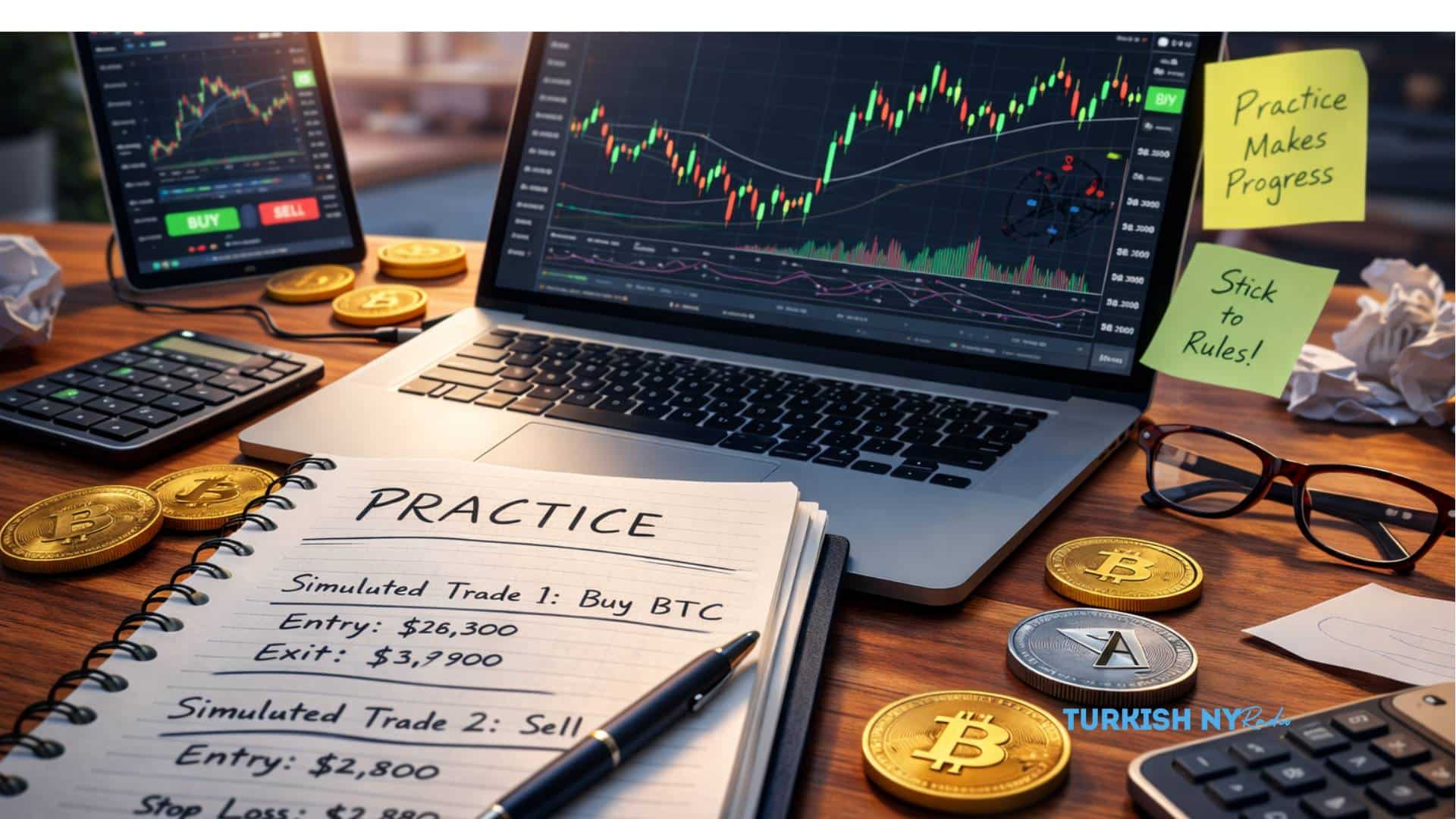
A useful session starts with a plan. Traders who improve tend to choose one setup, one time frame, and one market, then repeat the process until it feels boring. Boring is a compliment in trading, because boredom usually means rules are working.
A common approach is to test a trend-following method first. The trader identifies the higher-time-frame trend, waits for a pullback, and enters only when structure supports the idea. Another approach is range trading, where entries happen near support and exits happen near resistance, with strict stops in case the range breaks.
Whatever the approach, results should be tracked. Screenshots, entry notes, and exit notes matter because memory is selective. A journal also makes it easier to spot whether a trader is actually following rules or improvising after a string of losses.
Indicators that help most traders build a foundation
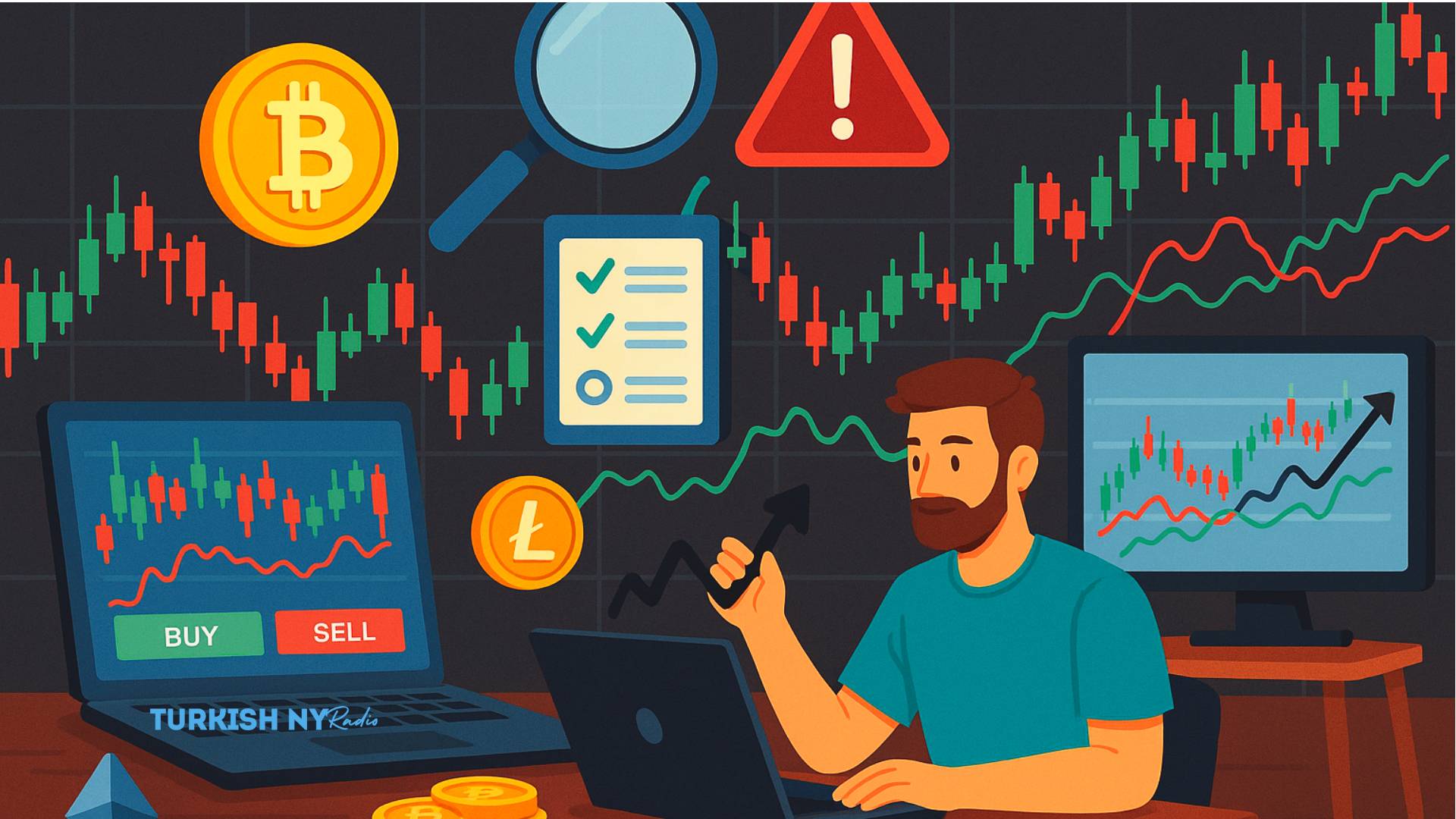
Too many indicators can become a distraction, so most professionals start with a small core. Trend can be framed with moving averages, and structure can be read with simple swing highs and lows. RSI can help when a market is extended, especially in strong moves where late entries are tempting. MACD can support a trend view by showing when momentum shifts, but it should confirm, not command.
Volume provides context. A price move with strong volume often carries more weight than a move that happens on weak participation. For perpetual futures, funding rates can signal when positioning is crowded, and open interest can show whether a move is attracting new exposure or merely squeezing existing positions.
Real-world friction: the part simulators sometimes hide
Even strong practice environments struggle to model every detail. Slippage is common in fast moves, and spreads can widen when liquidity thins. That is why a trader should treat back-to-back perfect fills as suspicious. A realistic test uses conservative assumptions and avoids markets where liquidity is poor.
Fees also matter. A 0.04% fee each way can feel tiny, yet it compounds. During paper trading, a trader can model realistic costs and see how much edge remains after friction. Some active strategies can look great before fees and mediocre after fees. That is not a moral failing. It is math. In a simulator, a trader can adjust assumptions and see how sensitive a strategy is to costs.
The psychological gap, and how to narrow it
The biggest weakness of paper trading is that it does not trigger the same emotional reactions as real risk. A trader can fix part of this by making practice more serious. They can set rules, track drawdowns, and impose limits such as a maximum daily loss, even in a virtual account. They can also avoid resetting the balance after mistakes, because resets remove accountability.
After consistent performance, the next step is tiny live size. The point is not profit. The point is to keep the same behavior when it matters. That transition reveals whether discipline holds under pressure.
A note on safety and responsibility
Crypto trading sits in a financial category where mistakes can hurt. Good practice includes security habits and realistic expectations. Strong authentication, careful device hygiene, and conservative leverage use are part of the craft. The same is true for risk rules. A trader who learns to size positions and respect stops is building a safety system, not just a strategy.
Conclusion
Paper trading is not about pretending to trade. It is about building the muscle memory and decision habits that reduce costly mistakes when real money enters the picture. The best results come from structured repetition, simple indicators used consistently, and honest record keeping. Once results are stable in simulation, small live trades can bridge the emotional gap and turn practice into performance.
FAQs
Is paper trading useful for absolute beginners
Yes, because it teaches order types, risk sizing, and basic chart reading without immediate financial damage. It also helps a beginner discover whether they enjoy the process or only the excitement.
Can paper trading help advanced traders too
Yes. Advanced traders often use it to test new setups, refine execution, or evaluate a market they have not traded before, especially when volatility changes.
What is the biggest mistake traders make in simulation
Many treat it like a video game. They ignore risk limits, reset balances, and chase moves without journaling. That behavior builds bad habits that appear later in real trading.
How should performance be judged
A trader can focus on rule-following first, then look at metrics such as win rate, average win versus average loss, maximum drawdown, and consistency across different market conditions.
Glossary of Key Terms
Paper trading: A simulated trading method that uses virtual funds but follows live market prices.
Position sizing: Choosing how large a trade should be so that a loss does not break the account.
Drawdown: The decline from a peak account value to a later low, used to measure risk and stress.
Liquidity: How easily an asset can be bought or sold without moving the price too much.
Spread: The difference between the best buy and best sell prices available now.


Leverage: Borrowed exposure that can amplify gains and losses, increasing liquidation risk.
Liquidation: A forced position closure that happens when margin requirements are not met.