![Sun [New]](https://s2.coinmarketcap.com/static/img/coins/64x64/10529.png)


This article was first published on TurkishNYR.
Losing access to a wallet can feel like watching a door close in slow motion. The funds are still on the blockchain, visible to anyone, but the owner feels locked out. That gap between “it is there” and “I cannot move it” is where panic, bad decisions, and scams usually show up.


The good news is that many cases are recoverable, and most recoveries come down to methodical work, not luck. The bad news is that rushing, “trying random fixes,” or trusting the wrong helper can turn a recoverable situation into a permanent loss. The safest approach is to treat wallet recovery like evidence handling: slow, clean, documented, and careful.
This guide explains what is happening behind the scenes, what to do first, and how to recover lost crypto wallet access across common situations, from forgotten passwords to missing seed phrases. It also covers the security realities that matter, because recovery is often where criminals hunt for easy wins.
First, Understand What “Wallet Access” Really Means
A crypto wallet is not a container that holds coins. The coins live on-chain. The wallet holds keys, and those keys authorize transactions. In practical terms, “access” means the ability to sign a transaction using the correct private key.


There are three common ways wallets control that signing power:
A seed phrase (usually 12 or 24 words) that can recreate the private keys.
A private key stored directly (often for a single address).
A login system controlled by a company (custodial accounts), where the company holds keys and the user passes identity and security checks.
This distinction matters because a person can recover lost crypto wallet access in a non-custodial wallet only if they still have the seed phrase, private key, or a valid backup that recreates them. If those are truly gone, no customer support team can override math.
The Calm-First Checklist That Prevents Costly Mistakes
Before touching anything technical, the owner should slow down and do three simple things.
First, stop entering sensitive information into random websites or apps. Recovery scams thrive on urgency. Second, write down what is known: wallet type, device used, approximate date created, whether a seed phrase was ever written, and any password patterns that were used at the time. Third, isolate the environment: use a clean computer, update antivirus software, and avoid public Wi-Fi.
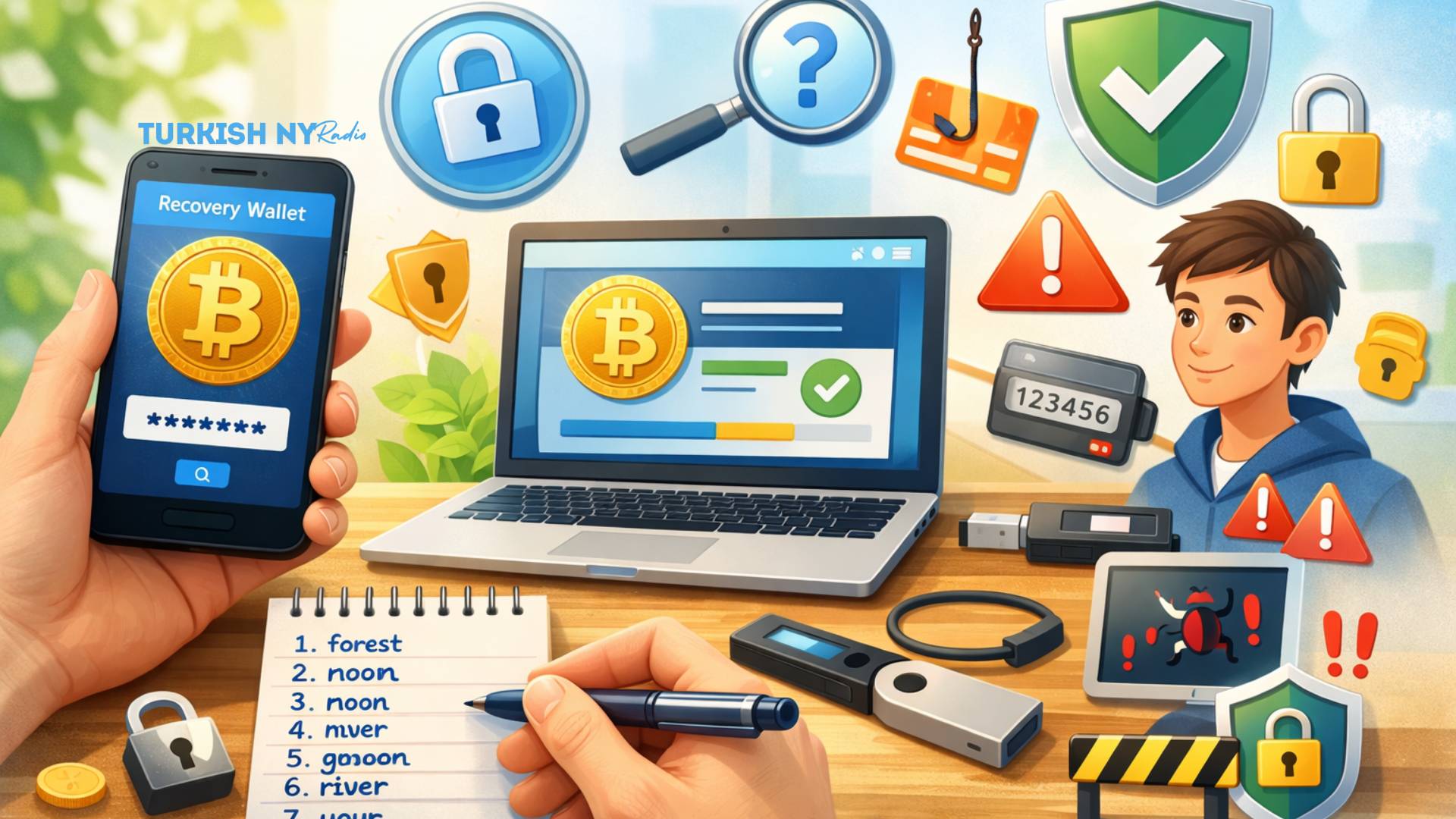
This is also the moment to ask one hard question: what is the asset mix and value? If the wallet holds meaningful funds, the recovery steps should be handled like high-stakes financial work. It is not about drama. It is about reducing risk while trying to recover lost crypto wallet control.
Wallet recovery Basics: The 3 Recovery Paths
Nearly every case fits one of these three tracks:
-
The seed phrase exists, but the wallet is missing or broken.
-
The seed phrase does not exist, but the device still has the wallet data.
-
The wallet is custodial, and access is blocked by login or identity checks.
A safe recovery plan starts by identifying the track, then staying inside it. Many people fail because they mix tracks, like installing five wallet apps and typing words into all of them, hoping something clicks. That behavior increases exposure and does not improve outcomes.
When the Seed Phrase Exists
If the seed phrase is available, recovery is usually straightforward, but there are still pitfalls.
The owner should install the correct wallet app from the official source and choose the option to restore from seed phrase. Then they should enter the words exactly as written, in the correct order. Spelling and spacing matter. Some wallets accept common variants, but it is risky to assume that. If the phrase was written on paper years ago, each word should be checked carefully, because a single wrong word breaks the entire reconstruction.
If the restored wallet shows a zero balance, it does not automatically mean failure. It often means the wallet is looking at the wrong network, wrong derivation path, or wrong account index. Many wallets support multiple account paths, and the user may need to switch to the same settings used originally.
This is a common moment where people think they failed to recover lost crypto wallet access, even though the keys are correct and the funds are still tied to a different path.
If the seed phrase is correct, the owner should immediately move funds to a fresh wallet after recovery, especially if the phrase was ever photographed, emailed, or typed into a computer that could be compromised. Recovery is not the finish line. Safety after recovery is.
When the Seed Phrase Does Not Exist, But the Old Device Still Does
This is the trickier, more technical scenario, and it is where discipline matters. Many mobile wallets store encrypted key material on the device. If the device is still available and the app still opens, there may be a path.
Start with the easiest wins: check whether the wallet app is still logged in, whether it can export the private key, whether it has a built-in backup feature, or whether it can reveal the seed phrase. If any of those options exist, the owner should use them immediately and then secure the result offline.
If the device is damaged, the recovery may involve repairing the phone, extracting a backup, or restoring a previous encrypted backup to a new device. For iOS and Android, cloud backups sometimes contain app data, but many wallets deliberately avoid backing up secrets for security reasons. This is why people often cannot recover lost crypto wallet access after a factory reset, even if they have photos and contacts restored perfectly.
If the app requires a password to unlock, then the recovery problem becomes password recovery. In non-custodial wallets, that password usually encrypts local key storage. There is no “forgot password” link that can reverse it. The only way forward is remembering the exact password or finding a valid backup that bypasses the local encryption. That is frustrating, but it is also the point of encryption: no one else can unlock it either.
When It Is a Hardware Wallet Scenario
Hardware wallets add a layer of physical security, but the recovery principles remain similar. Access depends on a PIN to unlock the device, and a seed phrase as the ultimate backup.
If the PIN is forgotten but the seed phrase exists, restoring on a new device works. If the seed phrase is missing, repeated wrong PIN attempts often trigger a wipe, depending on the device settings. In that case, guessing is a losing strategy. The owner should pause and look for records: notebooks, safes, old setup cards, or any “recovery phrase” storage solution that might have been used at the time.
A hardware wallet does not magically increase recovery odds without the seed phrase. It simply reduces theft risk while it is in use. People who want to recover lost crypto wallet access from hardware setups should think “seed first, device second.”

Custodial Accounts: Recovery Is Identity and Security, Not Cryptography
If the crypto wallet is actually a custodial account on an exchange or broker, recovery usually means passing the platform’s identity and security checks. That can include email access, phone number access, 2FA restoration, and KYC re-verification.
Here the best practice is boring but effective: regain control of the email first, then the phone number, then the 2FA method. If the phone number is lost, a SIM swap or number recovery through the mobile carrier often becomes the critical step. The user should be cautious with “support agents” contacting them first. Legitimate processes follow a ticketing system and do not ask for seed phrases because custodial support does not use them.
This track is often where scammers imitate support and trick people into giving away credentials. A person trying to recover lost crypto wallet access should treat every unsolicited message as suspicious until proven otherwise.
Red Flags: The Scams That Target Recovery Attempts
Recovery attracts criminals because fear lowers skepticism. A few patterns show up repeatedly.
Any helper asking for a seed phrase is not helping. Any website offering “seed phrase validation” is a trap. Any service promising guaranteed recovery without the phrase is almost certainly dishonest. The only legitimate “recovery services” in non-custodial contexts are specialists who help with password reconstruction on local encrypted files the owner already possesses, and even then, they will not promise outcomes.
If someone claims they can reverse blockchain transactions, they are lying. If someone says they can “unlock” funds with a secret tool, they are also lying. The blockchain does not work that way.
The safest posture is simple: the owner should only enter sensitive phrases into a wallet app they chose and installed from a trusted source, on a device they trust. That mindset alone saves more money than any fancy recovery trick.
Practical Recovery Steps by Situation
If the wallet app was deleted, reinstall and restore with the seed phrase.
If the phone was lost, restore it with the seed phrase on a new device.
If the wallet is visible but funds are missing, confirm network, address, and transaction history.
If tokens are not showing, add the correct token contract and confirm the network.
If the issue is “wrong address,” check whether multiple accounts exist under the same seed phrase.
These steps sound basic, but they work because they address the most common causes of “missing funds” reports. Many people think they failed to recover lost crypto wallet access when they are simply viewing the wrong chain or have not added the token display.
Key Indicators That Matter During Recovery
There are a few signals that help determine whether recovery is realistic.
The strongest indicator is possession of the seed phrase or private key. That is the master key. The second-best indicator is possession of an old device that still contains the wallet data and can be unlocked. A weaker indicator is having screenshots of addresses or transaction IDs, because that proves ownership only in a social sense, not a cryptographic one.
Another key indicator is whether the wallet was non-custodial or custodial. Non-custodial recovery is cryptographic. Custodial recovery is procedural. Confusing the two causes wasted time and risky behavior.
Finally, the owner should watch one more indicator: whether anyone else could have seen the seed phrase. If there is any chance it was exposed, the correct response after recovery is to move funds to a fresh wallet quickly. The goal is not only to recover lost crypto wallet access, but to keep it.
Prevention That Saves Real Money Later
Most recovery pain is prevention debt coming due. A few habits change everything.
Write the seed phrase on paper or metal and store it securely. Keep at least two copies in separate safe locations. Never store it in cloud notes, email drafts, or chat screenshots. Use a password manager for account passwords, but do not store seed phrases there unless it is a system designed for high-security secrets and the user understands the tradeoffs.
Enable 2FA with an authenticator app, not SMS, for custodial accounts. Keep recovery codes offline. Review beneficiary or inheritance plans if the holdings are meaningful.
These are not glamorous steps, but they are what make the next “lost phone” event a mild inconvenience instead of a financial disaster. People who take these steps rarely need to recover lost crypto wallet access in the first place.
Conclusion
Crypto wallet recovery is not about clever hacks as it is about having the right key material, keeping the process clean, and refusing to panic. If the seed phrase or private key exists, recovery is usually possible with careful restoration and correct network settings. If the seed phrase is gone but the original device still holds encrypted wallet data, there may still be a path, but it requires patience and realism. If it is custodial, recovery is an identity and security process, and the user should focus on email, phone, and 2FA control.
Most importantly, recovery attempts attract scammers like spilled soda attracts ants. The safest recovery is slow, verified, and boring. That is exactly why it works.
Frequently Asked Questions
Can funds be recovered without a seed phrase?
Sometimes, but only if the wallet data still exists on a device or in a valid backup that can be unlocked.
If the seed phrase is correct, why does the wallet show zero?
Often the wallet is viewing the wrong network or derivation path, or the tokens are not added for display.
Should a user enter a seed phrase into a website to check it?
No. A seed phrase should only be entered into a trusted wallet app during a deliberate restore.
Can customer support restore a non-custodial wallet?
No. Non-custodial wallets are controlled by keys, and support teams do not have them.
What should happen after successful recovery?
If exposure is possible, move funds to a fresh wallet and create new backups immediately.
Glossary of Key Terms
Seed phrase: A set of 12 or 24 words that recreates wallet private keys. It is the primary backup for non-custodial wallets.
Private key: A secret string that authorizes transactions for a specific address. Anyone with it can control the funds.
Non-custodial wallet: A wallet where the user controls the keys directly. Recovery depends on backups like seed phrases.
Custodial wallet: A wallet where a company holds the keys and the user accesses funds through an account and security checks.
Derivation path: A standardized method wallets use to generate addresses from a seed phrase. Different paths can produce different addresses.
2FA (two-factor authentication): A second security layer, often an authenticator code, used to protect account access on custodial platforms.
Network: The blockchain environment where assets exist, such as a main chain or a supported side network. Viewing the wrong network can make balances appear missing.
Sources