• Home
  • About Us
  • Terms and Conditions
  • Privacy Policy
  • Disclaimer
  • Contact
9 February Monday, 2026
  • tr Türkçe
  • en English
TurkishNY Radio
No Result
View All Result
  • Home
  • Cryptocurrency
  • Business
  • Economy
  • Home
  • Cryptocurrency
  • Business
  • Economy
No Result
View All Result
  • tr Türkçe
  • en English
TurkishNY Radio
No Result
View All Result
Bitcoin Bitcoin (BTC) $69,075.96 ↓ -3.13%
Ethereum Ethereum (ETH) $2,038.01 ↓ -4.14%
Tether USDt Tether USDt (USDT) $1.00 ↓ -0.02%
BNB BNB (BNB) $628.53 ↓ -2.29%
XRP XRP (XRP) $1.40 ↓ -4.04%
USDC USDC (USDC) $1.00 ↑ 0.00%
Solana Solana (SOL) $84.12 ↓ -4.82%
TRON TRON (TRX) $0.28 ↑ 0.02%
Dogecoin Dogecoin (DOGE) $0.09 ↓ -4.10%
Bitcoin Cash Bitcoin Cash (BCH) $517.29 ↓ -2.83%
Cardano Cardano (ADA) $0.26 ↓ -3.67%
Hyperliquid Hyperliquid (HYPE) $31.53 ↓ -0.08%
UNUS SED LEO UNUS SED LEO (LEO) $8.35 ↑ 0.99%
Ethena USDe Ethena USDe (USDe) $1.00 ↓ -0.02%
Canton Canton (CC) $0.16 ↓ -3.82%
Chainlink Chainlink (LINK) $8.62 ↓ -3.85%
Monero Monero (XMR) $322.87 ↓ -1.45%
Dai Dai (DAI) $1.00 ↑ 0.01%
World Liberty Financial USD World Liberty Financial USD (USD1) $1.00 ↓ -0.01%
Stellar Stellar (XLM) $0.16 ↓ -3.93%
Litecoin Litecoin (LTC) $53.45 ↓ -3.19%
Zcash Zcash (ZEC) $234.52 ↓ -2.49%
PayPal USD PayPal USD (PYUSD) $1.00 ↓ -0.02%
Hedera Hedera (HBAR) $0.09 ↓ -4.98%
Avalanche Avalanche (AVAX) $8.82 ↓ -4.60%
Sui Sui (SUI) $0.94 ↓ -6.14%
Shiba Inu Shiba Inu (SHIB) $0.00 ↓ -4.12%
Toncoin Toncoin (TON) $1.35 ↓ -4.10%
Cronos Cronos (CRO) $0.08 ↓ -3.32%
World Liberty Financial World Liberty Financial (WLFI) $0.11 ↑ 5.23%
Tether Gold Tether Gold (XAUt) $4,979.27 ↑ 0.19%
PAX Gold PAX Gold (PAXG) $5,011.68 ↑ 0.18%
Polkadot Polkadot (DOT) $1.30 ↓ -4.46%
Uniswap Uniswap (UNI) $3.35 ↓ -5.22%
Mantle Mantle (MNT) $0.63 ↓ -2.15%
Bitget Token Bitget Token (BGB) $2.55 ↓ -3.18%
MemeCore MemeCore (M) $1.37 ↓ -9.15%
Aave Aave (AAVE) $110.68 ↓ -3.15%
Bittensor Bittensor (TAO) $157.97 ↓ -6.12%
OKB OKB (OKB) $74.66 ↓ -2.62%
MYX Finance MYX Finance (MYX) $6.23 ↓ -4.71%
Global Dollar Global Dollar (USDG) $1.00 ↑ 0.21%
Sky Sky (SKY) $0.07 ↓ -0.33%
Pepe Pepe (PEPE) $0.00 ↓ -5.26%
Aster Aster (ASTER) $0.60 ↓ -3.58%
Ripple USD Ripple USD (RLUSD) $1.00 ↓ -0.02%
Ethereum Classic Ethereum Classic (ETC) $8.38 ↓ -3.90%
Internet Computer Internet Computer (ICP) $2.37 ↓ -4.01%
NEAR Protocol NEAR Protocol (NEAR) $1.00 ↓ -6.15%
Pi Pi (PI) $0.14 ↓ -2.46%
Ondo Ondo (ONDO) $0.24 ↓ -6.50%
KuCoin Token KuCoin Token (KCS) $8.30 ↓ -2.93%
Worldcoin Worldcoin (WLD) $0.38 ↓ -5.67%
USDD USDD (USDD) $1.00 ↓ -0.01%
Polygon (prev. MATIC) Polygon (prev. MATIC) (POL) $0.09 ↓ -4.73%
Cosmos Cosmos (ATOM) $1.94 ↓ -1.92%
Ethena Ethena (ENA) $0.12 ↓ -6.75%
Kaspa Kaspa (KAS) $0.03 ↓ -5.04%
Midnight Midnight (NIGHT) $0.05 ↓ -5.02%
Algorand Algorand (ALGO) $0.09 ↓ -4.18%
GateToken GateToken (GT) $6.97 ↓ -0.90%
Flare Flare (FLR) $0.01 ↓ -2.82%
Quant Quant (QNT) $65.81 ↓ -2.65%
Aptos Aptos (APT) $1.02 ↓ -5.42%
OFFICIAL TRUMP OFFICIAL TRUMP (TRUMP) $3.29 ↓ -3.15%
Pump.fun Pump.fun (PUMP) $0.00 ↓ -5.37%
XDC Network XDC Network (XDC) $0.04 ↓ -1.84%
United Stables United Stables (U) $1.00 ↓ -0.03%
Filecoin Filecoin (FIL) $0.91 ↓ -5.01%
Render Render (RENDER) $1.31 ↓ -6.45%
VeChain VeChain (VET) $0.01 ↓ -3.55%
Arbitrum Arbitrum (ARB) $0.11 ↓ -7.74%
Bonk Bonk (BONK) $0.00 ↓ -5.32%
Nexo Nexo (NEXO) $0.79 ↓ -2.73%
LayerZero LayerZero (ZRO) $1.70 ↓ -1.63%
Jupiter Jupiter (JUP) $0.15 ↓ -8.08%
TrueUSD TrueUSD (TUSD) $1.00 ↓ -0.04%
Sei Sei (SEI) $0.07 ↓ -4.28%
Stacks Stacks (STX) $0.26 ↓ -5.82%
Decred Decred (DCR) $26.33 ↑ 8.52%
EURC EURC (EURC) $1.19 ↑ 0.76%
Dash Dash (DASH) $35.45 ↓ -3.55%
PancakeSwap PancakeSwap (CAKE) $1.34 ↓ -2.77%
Tezos Tezos (XTZ) $0.41 ↓ -3.13%
Morpho Morpho (MORPHO) $1.13 ↓ -4.68%
Story Story (IP) $1.22 ↓ -7.93%
Chiliz Chiliz (CHZ) $0.04 ↓ -5.10%
First Digital USD First Digital USD (FDUSD) $1.00 ↓ -0.07%
Pudgy Penguins Pudgy Penguins (PENGU) $0.01 ↓ -5.56%
Optimism Optimism (OP) $0.18 ↓ -5.40%
Lighter Lighter (LIT) $1.52 ↓ -9.18%
JUST JUST (JST) $0.04 ↓ -3.79%
Curve DAO Token Curve DAO Token (CRV) $0.25 ↓ -2.96%
Virtuals Protocol Virtuals Protocol (VIRTUAL) $0.56 ↓ -5.52%
Artificial Superintelligence Alliance Artificial Superintelligence Alliance (FET) $0.16 ↓ -5.27%
Humanity Protocol Humanity Protocol (H) $0.15 ↑ 11.97%
Kaia Kaia (KAIA) $0.05 ↓ -3.97%
Gnosis Gnosis (GNO) $124.00 ↓ -0.44%
AINFT AINFT (NFT) $0.00 ↓ -5.92%
BitTorrent [New] BitTorrent [New] (BTT) $0.00 ↓ -1.23%
Home Economy

How Poisoned Wallet Histories Led to $62M in Crypto Losses

Jonathan Swift by Jonathan Swift
9 February 2026
in Economy, Cryptocurrency, en
Reading Time: 5 mins read
0
address poisoning scam

This article was first published on TurkishNY Radio.

ADVERTISEMENT

Crypto transfers feel instant, but the decision that matters often happens before the transaction hits the chain. One hurried copy, one familiar-looking string, and the money is gone with no customer support line to call.


Table of Contents

Toggle
    • YOU MAY BE INTERESTED
    • Crypto and Banks Clash Over Fed’s Skinny Master Account Proposal
    • Best Crypto Today: Cryptocurrency News Highlights 7 Top Meme Coins as APEMARS Ignites 2026 Surge
  • How an address poisoning scam hijacks a normal transfer
  • The on-chain signals analysts watch when poisoners get busy
  • Why does this scam keep winning against experienced users
  • What safer sending looks like in 2026
  • Conclusion
  • Frequently Asked Questions
    • Glossary of Key Terms

YOU MAY BE INTERESTED

skinny master account

Crypto and Banks Clash Over Fed’s Skinny Master Account Proposal

9 February 2026
image 121

Best Crypto Today: Cryptocurrency News Highlights 7 Top Meme Coins as APEMARS Ignites 2026 Surge

9 February 2026

That is the logic behind the latest wave of an address poisoning scam, where attackers plant lookalike wallet addresses into a victim’s transaction history and wait for a routine send to turn into a costly mistake.

Investigators tracking these patterns have linked more than $62 million in losses since December to poisoning-style incidents, including a January case where a victim sent 4,556 ETH, about $12.2 million at the time, to the wrong destination after copying an address that appeared legitimate inside their history.

The larger December event tied to the same method was roughly $50 million, which shows how quickly one operational error can scale when the transfer size is institutional-grade.

How an address poisoning scam hijacks a normal transfer

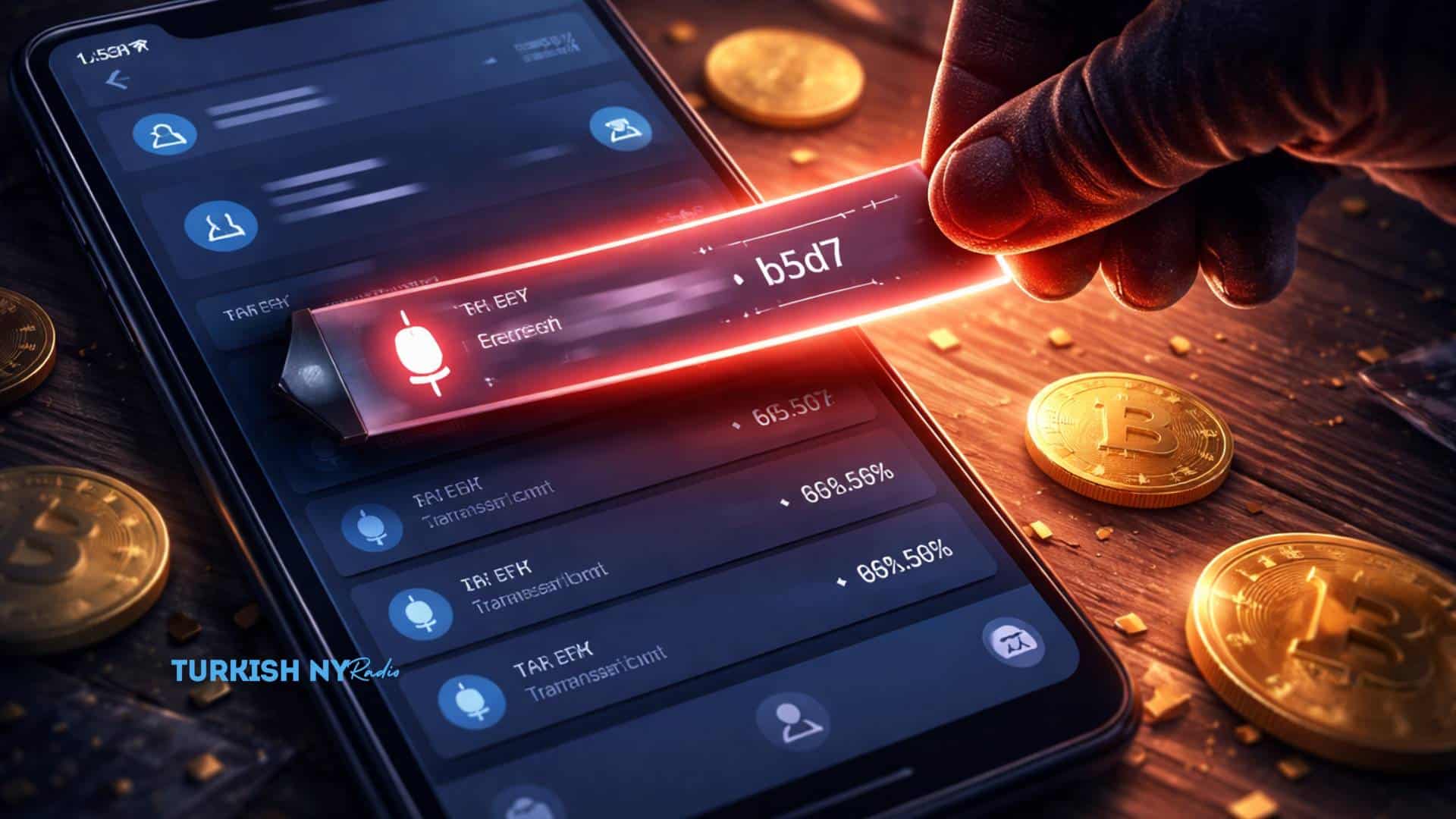
The trick is simple enough to sound ridiculous, until it works. Attackers generate a new wallet address designed to resemble one the target has used before, often matching the first and last characters so it looks correct at a glance. They then send tiny “dust” transfers so that the fake address shows up in the victim’s recent activity.

Later, when the victim copies a recipient from history, the fake entry is sitting there like a landmine, and the funds go to the attacker instead.

What makes the address poisoning scam stubborn is that it does not require a broken blockchain or a compromised wallet app. It leans on human pattern recognition, the same mental shortcut people use when they recognize the right car in a parking lot by color and shape, not by reading the license plate. That shortcut works most days, until it does not.

How Poisoned Wallet Histories Led to $62M in Crypto Losses

The on-chain signals analysts watch when poisoners get busy

Poisoning campaigns leave fingerprints in network data. Analysts typically look for spikes in near-zero value transfers, unusual clusters of tiny transactions hitting many unrelated wallets, and repeated activity from addresses that appear to be farming visibility rather than moving meaningful funds.

When fees drop, this strategy becomes cheaper to run at scale, and the cost to flood histories falls further, which can increase attempts even if the success rate stays low.

This is why the address poisoning scam often resurfaces during periods of lower transaction costs. Attackers are not trying to win every time. They are trying to win once, and one mistake from a high-balance sender can pay for an entire campaign.

Why does this scam keep winning against experienced users

Even seasoned traders can slip because the workflow feels familiar. A sender might be juggling price alerts, moving funds between venues, or responding to a time-sensitive request. The interface shows an address that looks right, the history confirms it has appeared before, and the brain checks out for a second. That second is enough for an address poisoning scam to turn routine operations into irreversible settlement.

The deeper issue is that partial address checking is not verification. Looking at the first 4 and last 4 characters is like confirming a bank account by reading only the first and last digit. It feels comforting, but it is not real control.

What safer sending looks like in 2026

Good habits create friction in the right places. High-value senders increasingly rely on saved address books, allowlists, QR scans, and out-of-band confirmations, especially when moving treasury-level sums. Many also use a small test transfer when the destination is new or when the recipient is provided through a chat message, because a $10 dry run is cheaper than learning the hard way.

Most importantly, a sender should treat transaction history as untrusted input. That one change cuts the address poisoning scam off at the source, because the attacker’s entire plan is built around being copied from the history feed.

Conclusion

The recent $62 million in losses reads like a headline, but it is really a reminder that crypto’s biggest vulnerabilities often sit at the user layer, not inside cryptography. The address poisoning scam survives because it turns convenience into risk and makes a fake address look normal in the place people trust most. In a market that moves fast, the safest edge is not speed. It is process.

Frequently Asked Questions

What is an address poisoning scam?
It is a method where attackers place a lookalike address in a wallet’s history using tiny transfers, hoping the victim copies it later.

Does this mean the blockchain was hacked?
No, it usually means the sender was tricked into selecting the wrong address.

Can funds be recovered after a wrong send?
In most cases, recovery is unlikely unless the recipient voluntarily returns the funds.

Glossary of Key Terms

Address poisoning scam: A social engineering technique that seeds a similar-looking address into history to trigger a mistaken transfer.

Dust transfer: A tiny transaction used to create visibility in a wallet’s activity list.

Lookalike address: A wallet address generated to resemble another by matching recognizable character patterns.

Allowlist: A pre-approved list of recipient addresses used for safer transfers.

Disclaimer: This article is for informational purposes only and does not constitute financial, investment, or legal advice. Digital asset transactions are irreversible and involve risk, so readers should conduct independent research and use professional guidance where appropriate.


Source
Yahoo Finance
Tags: address poisoning scamcrypto scamwalletwallet scam]
Previous Post

Best Crypto Today: Cryptocurrency News Highlights 7 Top Meme Coins as APEMARS Ignites 2026 Surge

Next Post

Crypto and Banks Clash Over Fed’s Skinny Master Account Proposal

Jonathan Swift

Jonathan Swift

A crypto journalist with an understanding of blockchain technology. Skilled in simplifying complex topics for diverse audiences, from beginners to experts. Because I believe in words as they are the children of mind.

SIMILAR NEWS

skinny master account
News

Crypto and Banks Clash Over Fed’s Skinny Master Account Proposal

9 February 2026
image 121
Cryptocurrency

Best Crypto Today: Cryptocurrency News Highlights 7 Top Meme Coins as APEMARS Ignites 2026 Surge

9 February 2026
image 119
Cryptocurrency

Is APEMARS the Top Crypto 2026 to Buy Now with 6.5B Tokens Sold While Hedera and The Graph Make Headlines?

9 February 2026

Leave a Reply Cancel reply

Your email address will not be published. Required fields are marked *

Search

No Result
View All Result
DMCA
PROTECTED

Categories

  • Business
  • Cryptocurrency
  • Economy
  • en
  • News
  • Politics
  • World

Recent Posts

  • Crypto and Banks Clash Over Fed’s Skinny Master Account Proposal
  • How Poisoned Wallet Histories Led to $62M in Crypto Losses
  • Best Crypto Today: Cryptocurrency News Highlights 7 Top Meme Coins as APEMARS Ignites 2026 Surge
  • Is APEMARS the Top Crypto 2026 to Buy Now with 6.5B Tokens Sold While Hedera and The Graph Make Headlines?
  • APEMARS Gains Attention as a Top Meme Coin Presale After 6.3B Tokens Sold While MEW and PEPE in Focus

Site Navigation

  • Home
  • About Us
  • Terms and Conditions
  • Privacy Policy
  • Disclaimer
  • Contact

TurkishNY Radio

Banner 1
Banner 2
No Result
View All Result
  • Home
  • Cryptocurrency
  • Business
  • Economy
  • tr Türkçe
  • en English

  • English