![Sun [New]](https://s2.coinmarketcap.com/static/img/coins/64x64/10529.png)



This article was first published on TurkishNY Radio.
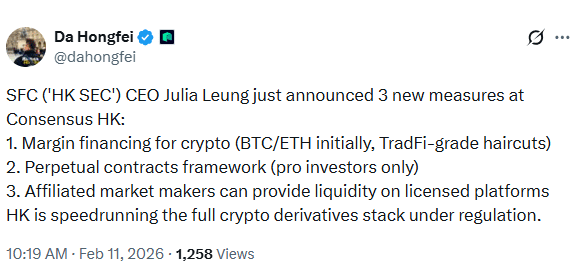
Hong Kong regulators are preparing to launch a formal framework for Hong Kong perpetual contracts. The Securities and Futures Commission (SFC) confirmed that licensed trading platforms will soon be allowed to offer perpetual crypto derivatives .


The move marks a major step in the city’s digital asset strategy. It aims to bring leveraged crypto trading back under local supervision while maintaining strict risk controls.
SFC Introduces Framework for Hong Kong Perpetual Contracts
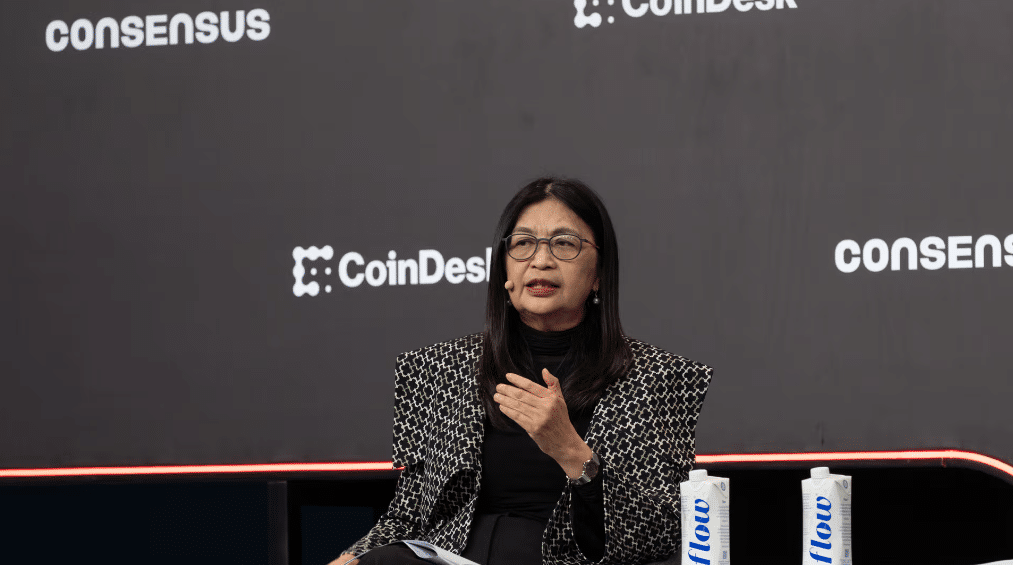
Julia Leung, chief executive of the SFC, announced that the regulator will publish a high-level framework covering Hong Kong perpetual contracts. These products will be available only to professional investors during the initial phase.
The SFC also revealed plans to allow brokers to provide financing backed by Bitcoin and Ether. In addition, licensed platforms may conduct market-making activities through independent units, provided they meet strict governance standards.


Perpetual contracts are derivatives that track assets such as Bitcoin without an expiry date. Many traders in Hong Kong currently access these products through offshore exchanges.
By introducing Hong Kong perpetual contracts, regulators aim to return that activity to supervised markets. The framework focuses on transparency, investor protection, and risk management.
Framework Focuses on Risk Controls
Any platform offering Hong Kong perpetual contracts must have robust internal controls, the SFC said. Such requirements cover margin systems, liquidation processes and transparent reporting.
The regulator is trying to avert sudden failures that might erode confidence of investors. Platforms should also be fair to clients and maintain effective compliance systems.
Access Restricted to Institutions
Hong Kong perpetual contracts will initially be limited to professional investors. Retail clients will not have access at this stage.
The SFC believes that experienced investors are better equipped to manage leveraged risk. This cautious rollout reflects the regulator’s broader approach to complex financial products.
Bitcoin and Ethereum Lead the Rollout
The first phase of Hong Kong perpetual contracts is expected to cover only Bitcoin and Ether. These two assets were chosen because they are the most liquid and widely traded cryptocurrencies.
Limiting the scope allows regulators to monitor risk more closely. It also reduces exposure to smaller and more volatile tokens.
Margin Financing Backed by Crypto
Alongside Hong Kong perpetual contracts, brokers will soon be able to offer financing to clients with strong credit profiles. Eligible collateral will include securities as well as virtual assets.
However, only Bitcoin and Ether will qualify as crypto collateral in the early stages. Regulators cited volatility concerns as the reason for this limited approach.
Market-Making Under Supervision
Licensed platforms that list Hong Kong perpetual contracts may operate market-making units. These units must remain independent from other business lines.
Clear conflict-of-interest rules will apply. The SFC stressed that transparency and fairness are essential to maintaining trust in the market.
Reducing Reliance on Offshore Platforms
Many Hong Kong traders currently use offshore exchanges to access perpetual swaps and other leveraged derivatives. These platforms often operate outside local jurisdiction.
By establishing Hong Kong perpetual contracts within a licensed framework, the SFC hopes to reduce counterparty risk and improve investor protection. Bringing trading activity onshore also enhances regulatory visibility.
Part of a Broader Digital Asset Strategy
The launch of Hong Kong perpetual contracts fits into the city’s larger plan to expand regulated crypto services. Hong Kong already licenses virtual asset trading platforms and has approved spot Bitcoin exchange-traded funds.
Now regulators are moving deeper into derivatives. The combination of perpetual trading, margin financing, and supervised market-making signals a new phase of market development.
Authorities aim to position Hong Kong as a leading hub for compliant digital asset activity in Asia. The approach balances innovation with caution.
Conclusion
The launch of Hong Kong perpetual contracts is a particularly notable achievement for the local crypto industry. The framework aims to merge market access with rigorous protections.
Limiting participation to professional investors, focusing on major cryptocurrencies, and imposing strong compliance standards reflects a careful strategy. If implemented effectively, Hong Kong perpetual contracts could strengthen the region’s regulated derivatives market.
Appendix: Glossary of Key Terms
Securities and Futures Commission (SFC): Hong Kong regulator responsible for securities, futures, and virtual asset trading platforms.
Perpetual Futures: Futures which mimic an asset’s price and lack a fixed settlement date.
Professional investor: An institution or individual of sufficient means, meeting certain regulatory requirements to qualify.
Margin Financing: Brokerage loans to boost trading leverage.
Open Interest (OI); The sum of All contracts that are entered into and not yet offset by a transaction, by delivery or exercise or which have not expired.
Funding Rate: Regular payment of long and short traders with perpetual contracts to co-ordinate positions.
Market-Making: Process of offering continuous bid and offer prices on an exchange platform.
Frequently Asked Questions (FAQ)
1- What are Hong Kong perpetual contracts?
They are leveraged crypto derivatives offered under SFC supervision that track assets like Bitcoin and Ether without an expiry date.
2- Who can trade them?
Only professional and institutional investors will be eligible during the first phase.
3- Which cryptocurrencies will be included?
Bitcoin and Ether are expected to be the first eligible assets.
4- Why is Hong Kong introducing this framework?
The goal is to bring derivatives trading under local oversight and reduce risks linked to offshore platforms.